Japan Powered
open_in_new https://www.japanpowered.com/feed
Exploring Japan Through Anime and History
Feed Info
[2026-10-05T04:26:59.948Z] Updated feed with 10 items
[https://www.japanpowered.com/feed]
Copy Link
Grid View
List View
Flow View
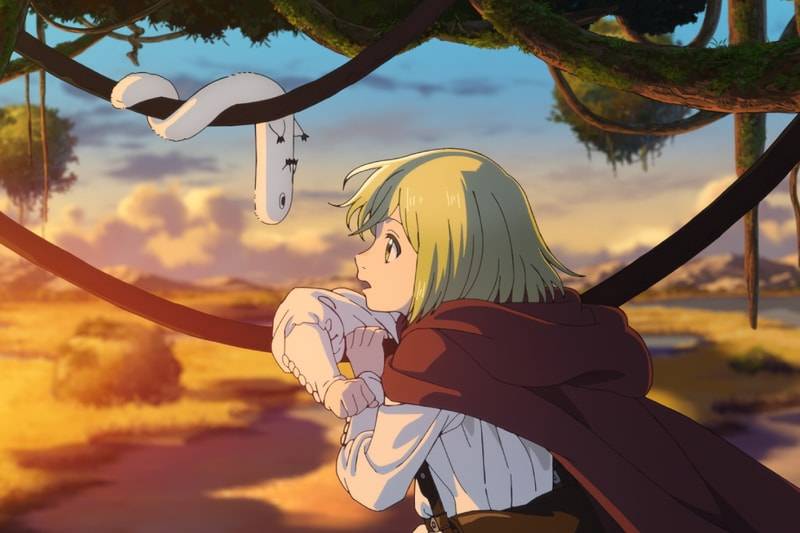
Mono no Aware and the Limits of Words
Consider this, we generally see a man’s life as rather fleeting, like the dew in the evening or the frost of the morning. –Daidoji Yuzan No doubt, as a fan of Japanese culture, you’ve encountered the idea that some Japanese phrases are “untranslatable.” This idea tends to tie with the idea that Japanese culture is too different, too special to be put into English. Chinese culture and the cultures of the old Orient (Egypt, India, Iran, and the rest of the Middle East) fall into the same mystery and inexplicable “otherness.” While this idea has become less prominent as we become more interconnected, and indeed as these cultures adopt (or are forced to adopt) Western cultural norms, it remains in different disguises. “Untranslatable” words remain one of the most common disguises. Words have limitations, of course. They are symbols for ideas, objects, and sensations. What makes words useful also makes them limited. Languages sit within a range of high-context to low-context. High-context languages assume understanding based on the situation. Low-context languages do not assume context, at least as far as any language can avoid assuming context. The differences between high-context languages, such as Japanese, and low-context languages, such as English, leads to the idea of words being “untranslatable.” In some regards, this is true. The Japanese word for understand or know, wakarimasu, assumes a subject within a given context. English doesn’t make sense if you would simply say “understand.” A subject must be defined, and an object should be defined for maximum clarity. English and other low-context languages need the context defined. This leads to low-context languages having more precision but also more words to convey the same idea. “Untranslatable” words which convey complex sentiments within a high-context culture therefore need more words to convey the same sentiment. A one-word for one-word translation isn’t always possible. Likewise, “untranslatable” ideas also work the other direction. It’s difficult to translate precise, little-context-assumed ideas into a highly contextual word or simple phrase. Dutch studies, as Edo period Japanese scholars called Western science and literature, often transliterated words and phrases instead of “translating” concepts one for one. It’s no different from how we in the West transliterate manga instead of using our word comic. Comic doesn’t quite capture what manga is. One such “untranslatable” phrase is mono no aware. If you read Western scholarly works about it, you see most scholars transliterate the term or refer to it as aware rather than translate it. This is a perfectly fine approach, and one I will mostly use for this essay. Scholars also write that mono no aware is a distinct Japanese aesthetic, implying few other cultures express it. Japan certainly portrays the aesthetic in a unique way, which continues in Japan’s literature, art, and even in anime. But mono no aware appears in Victorian photos of dead relatives before they are buried. Mono no aware can also be found in Native American stories and writings. Mono no aware is a common human experience; it isn’t truly “untranslatable.” Mono no aware is define in English as “the pathos of things” or “joyful sorrow.” The idea comes from Zen Buddhism’s focus on seeing the impermanence of life. Zen Buddhism observes how people deny the fact that life is passing and that trying to cling to things that are destined to change are how most people live (Lomas, 2016). The Tale of the Heike, one of Japan’s oldest books, captures this idea: The Gion bell-tolls, sounding the knell that all things must pass. Like the colors of the summer camellia, prosperity is ever followed by decline. The proud do not endure; they are like a dream on a spring night. Even the mighty meet with destruction, until they are as dust before the wind. Motoori Norinaga, an 18th century literary scholar, coined the term mono no aware. The phrase combines aware, sensitivity or sadness, and mono, things. Literally, mono no aware can be read as “thing’s sadness” or “things of sadness” (Lomas, 2016). Although the term was coined in the 18th century, the sentiment rooted during the Heian period. The Heian period (from the late 8th century to the 12th century CE) saw the development of Japan’s syllabaries, leading to the development of prose fiction and poetry. Before then, Chinese writing was used. During this period, reverence for cherry blossoms and plum blossoms, which both serve as symbols for mono no aware developed. Cherry blossoms appear for a short time each spring before disappearing; each time they return, they’re different. No single cherry blossom reappears exactly as it had previously existed. This fleeting uniqueness, here now and gone in a blink, generates the feeling of “things of sadness.” Cherry blossoms are beautiful and appreciated in part because they are fleeting. The sadness of their ending enhances their beauty. Heian literature sought to capture “cherry blossoms” with words. This led to the development of waka poems. The Anthology of Ancient and Modern Poems, or Kokinshu, compiles over 1,100 of these poems around 905 CE. Murasaki Shikibu’s Tale of Genji (another work filled with mono no aware) references this anthology 1018 times (Bell, 2015). Most of the poems trace to older periods, pointing to how the concept of mono no aware predates the Hein period (Japanese Literature, 2018, Duthie, 2023). Waka poems follow 5 metrical units of 5/7/5/7/7 syllable patterns. Waka poems exist in conversation with each other. Like cherry blossoms, they cycle without being the same and emphasizing beautiful fleeting moments with a sad, yet joyful or hopeful, undertone. The Kokinshu places these poems in sequence. Here’s a waka conversation to give you an example (Duthie, 2023): Written by the Nijo Empress Consort: Spring has arrived before the snow has gone; perhaps now the warbler’s frozen tears will melt away at last? Followed by this anonymous poem: Though the warbler that has come to the branches of the plum tree cries to summon the spring, snow continues to fall. And this poem written by Soei, a monk: Perhaps he thinks they are blossoms because spring has arrived? White snow covers the branches on which the warbler cries. This anonymous poem finishes the sequence: So profoundly have my thoughts been suffused by my desires, that the lingering snow appears to me like blossoms. This sequence contains many symbols of mono no aware: a lonely warbler, melting snow, and references to plum blossoms. Besides cherry blossoms. the moon also becomes the most common symbol of this aesthetic sensibility, also from Kokinshu: When I see the light of the moon leaking through the trees I know the heart wrenching autumn has arrived. Poems like these inspired ukiyo-e artists, particularly Katsushika Hokusai. Ukiyo-e, or floating-world picture, are woodblock prints common throughout the Edo period. The word ukiyo-e references the Buddhist description of “this fleeting, sorrowful world” (Bell, 2015). Woodblock prints depicted moments from Edo’s red-light districts, which were called floating worlds because of how temporary and fleeting their pleasures and beauty were. Ukiyo-e artists created some of the earliest mass-produced manga, more like single-panel cartoons. Modern manga artists would build on this long tradition. You can see these symbols throughout manga and anime. We see characters walking to school or work with cherry blossoms fluttering around them. Characters gaze at the moon. But we also see modern versions of mono no aware. The most common, and perhaps the hardest for Westerners to identify, appears during summer. Cicadas chirrup against soft (or absent) background music. The camera pans upward. Dusk reddens the scene, and we see electric lines silhouetted against the sky. The scene captures the end of summer, the transition from teenage student to adult, and references the fleeting, beautifully joyous sadness of life. The Victorian practice of photographing deceased family members is a Western expression of mono no aware. It doesn’t translate as well as Japan’s symbolism of cherry blossoms and even electric lines. The practice strikes us moderns as morbid, but this photography was a celebration of technology (photography was a new, exciting development) and aimed to capture the familial connections the deceased had in life. The contrast of the fleeting moment of life stolen by death and captured by “permanence” of photography, generates a similar sentiment as cherry blossoms, at least among Victorians. For some, decaying homes and barns, slowly being engulfed by nature, represents mono no aware. On an individual level, books, video games, anime, and other media can illicit feelings of mono no aware. They can remind you of happy, former times, which ended too soon and can never return no matter how many times you revisit the story. American culture doesn’t have a society-wide symbol for mono no aware. Instead, American culture has an individualized system where cultural segments and individuals have their own symbols. If I had to pin down a more universal symbol for the sentiment for American culture, I would suggest Friday night high school football. For many people, the ritual of attending these games evokes feelings of mono no aware. Football reminds them of their childhood and teen years, of community, and the fleeting nature of those moments. Where they had once played on the field or cheered as a cheerleader or played as a band member, they now watch their own children or grandchildren. Their joy mixes with a sadness at how their own time has passed and how their children’s time is passing. Of course, if you ask anyone attending a Friday night game, I doubt they will articulate this mix of feelings, caught up in excitement of the game. American culture prefers to keep feelings like mono no aware at arms length. If I had to translate mono no aware into a single English word, I would use either nostalgia or bittersweet. Nostalgia is a little different from mono no aware, but nostalgia contains the feelings of mono no aware. And mono no aware contains nostalgia. Perhaps the better word would be bittersweet. Bittersweet invokes happiness laced with sadness linked to the transience of the moment. High school graduation ceremonies invoke this bittersweetness (as anime loves to show). The event is sweet in that you’ve achieved adulthood but bitter because you must now leave your classmates, teachers, and second home (for better or worse that is what schools become) behind. Bittersweet captures the feeling but doesn’t contain the symbol associations that mono no aware does. Remember that mono no aware is an aesthetic, that is, an artistic expression of the sorrowful happiness surrounding the ephemeral nature of life. We use the phrase as a symbol for those emotions. So, while bittersweet lacks the aesthetic elements of mono no aware, the word more accurately represents the emotions the aesthetic points toward. Words act as symbols for ideas and objects. Symbols, by their nature, have limits. People interpret symbols differently because they have different experiences which compose their frames of reference. This sounds obvious, but in practice people assume words are understood in the same way. This may be true on a surface level. Terms like love, however, invoke a different set of experiences and emotions attached to those experiences. These deeper associates lead to words and other symbols being understood in, sometimes, completely different ways. Cherry blossoms may invoke feelings associated with mono no aware but everyone’s experiences of these emotions differs and with that their understanding of the phrase. This doesn’t mean words aren’t useful. Writing is one of the most magical of human inventions, allowing you to hear my thoughts in your mind and the thoughts of long, long dead people. Remembering the limitations of words helps you be more charitable toward people’s use of those words. Instead of allowing your understanding of their words to trigger you, consider how their experiences influence their use of words compared to your own. Depending on your perspective, you can argue that all words are untranslatable, not across cultures and languages but across individuals. But this slides toward an unhelpful deconstruction. Phrases like mono no aware appear to be untranslatable at first, but all supposed untranslatable words remain linked to the human experience. While these experiences vary, everyone experiences them in some way. This means the words which symbolize these experiences can usually be found. Sometimes a transliteration can work better, but in the case of mono no aware, using the word bittersweet may work better than a transliteration even if the word drops the artistic elements associated with mono no aware. This can be stepped around by using bittersweet as an adjective: bittersweet poems, bittersweet art. But then, mono no aware is more fun to say. References Bell, David (2015) Katsushika Hokusai and a Poetics of Nostalgia. Educational Philosophy and Theory. 47 (6) 579–595, http://dx.doi.org/10.1080/00131857.2014.964158. Duthie, Torquil (2023) The “Kokinshū” as a foundational classic. The New Criterion April 2023. Japanese Literature (2018) Funk & Wagnalls New World Encyclopedia. Chicago: World Book Inc. Lomas, Tim (2016) Untranslatable Words: Mono No Aware, and the Aesthetics of Impermanence. Huffpost. https://www.huffpost.com/entry/untranslatable-words-mono_b_9292490.
 Japan Powered
about 15 hours ago
Japan Powered
about 15 hours ago
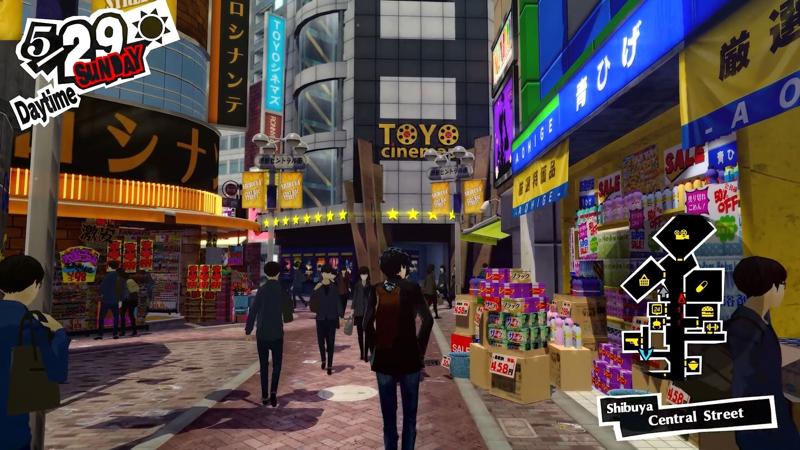
Finished a Video Game and Feeling Depressed? Here’s Why and What to Do About It
Sometimes when you finish a video game, especially a story-based video game, you can come away depressed or feeling in a stupor. Anime can also leave you feeling similarly depressed. Many people scoff at this idea. After all, it’s just a video game! It’s just a cartoon! Avid readers, on the other hand, nod in understanding. Fiction can bring people to tears. Even my jaded self has teared up over an anime, a video game, and a book. Why Does This Happen? Story-based video games can leave you feeling depressed because of their resonance. I’m using the term depression/depressed in the non-medical sense, as in feeling deeply sad for a long period of time, because that’s how people misuse the word. Good fiction will resonate with you, appealing to your emotions, your sense of self, your personal values, and your deepest longings. You feel connected to the characters in the story because the characters have endured similar trials as you have, share personality traits with you, or represent an ideal friend or spouse. The length of time you spend with a game also plays into the feeling of sadness. A long, story-based game like Persona 5 creates a sense of getting to know the characters. Even though you know the characters are fictional, the brain light up in the same way it does when it processes people. In a brain study, researchers found neurons fire based on how personally relevant the stimulus is (Abraham, 2009): Firstly, the findings suggest that one of the factors that guide our implicit knowledge of what is real and unreal is the degree of coded personal relevance associated with a particular entity/character representation. Our associations for people we know personally are even broader and richer than that for famous people. In danger of overstepping the study’s findings (and I caution that this is just a single study), it stands to reason that fictional characters that are coded as personally relevant would create a stronger neural reaction. After all, it’s not unusual to spend 40 to 100 hours with the characters. If we consider the fictional characters as important to us as friends, as some character fans do (waifuism is an example of this), the brain would react as if a friend had left. Again, I have to emphasize that I’m speculating on the neuroscience. The sad feeling you have points toward the relevance and loss you feel when the story ends. Video games encourage dopamine release. Dopamine is a chemical that encourages us to pursue pleasure. Video games can encourage dopamine release, and this may leave you craving that dopamine when the game ends. This craving is one factor that drives people to play multiplayer games. Some of your sadness about the end of a game may be related to this decrease in dopamine. Oxytocin also plays a role as the “attachment” molecule. In an article written by a researcher who studies oxytocin, he reported a proportional increase in oxytocin with people’s feelings of empathy as they watched a film (Zak, 2015). Considering the length of long story-based games, this mechanism may also contribute to your feelings of sadness and loss. If it helps you, I also suffer from post-anime and post-video game blues. When I finished my first play through of Persona 5 Royal, the game left me with the blues. The same when I finished Final Fantasy 7 Remake and Rebirth back-to-back. It doesn’t matter your age or gender identity; our ability to to connect is what makes us human. Sadness isn’t a negative emotion. Uncomfortable, certainly, but not negative. It speaks to how much someone or something means to you. If anything, feeling nothing or wanting to kill your sadness stands as an insult to the story, pet, or person. When you lose an important person in your life, that sense of loss should remain with you. Of course, no video game or anime or book should leave never-healing sadness. That’s a signal of something problematic. People, as long as the blues aren’t debilitating, sure, that should last a long time. That feeling of loss will naturally ease but never end. The adage “Time heals all wounds” is false. Sadness that reappears when something reminds you of that person is a natural testimony of how important that person was for you. Most feelings of sadness are normal and natural. We have a strange belief in modern life that we shouldn’t feel uncomfortable feelings. Anything less than happiness is wrong or bad; the gamut of human emotion is otherwise unhealthy because they feel uncomfortable. This way of thinking is wrong. The fact you feel sad over a video game ending is a good thing. Embracing that feeling is an act of rebellion against the malaise of happiness. What Can I Do About It? I’m not a psychologist or therapist. I’ve found the best approach for a difficult feeling is embrace the feeling. That doesn’t mean act on the thoughts that come with those feelings. Instead, embrace the discomfort you feel. Accept it and hold it close as a validation for how much the story or characters meant to you. Sit with the discomfort; allow yourself to feel it. The discomfort will fade with time, and you will become stronger for it. Fiction allows you to exercise your emotions in a safe place, preparing your for the emotions that will assail you when those close to you die. You can take other actions after you’ve sat with your feelings for a time: Read a book. Take time away from screens for awhile. Reading is a skill that fades if you don’t exercise it. If you can’t focus, you need to practice focus, and reading is the one of the best means to do so. Start with manga and work toward novels if novels are too much at first. Play a different game. Revisit an older game you enjoy. Play a different genre. I like to alternate between platformers and RPGs because of the different play styles. Replay the game. Play the New Game+ setting if the game has it. If you are a completionist, work on completing the game’s different paths. Take a walk. Do something active, preferably outside. Take a walk in a park. Get out and into nature. Trees help your mind and mood. Do something creative. Make fan art or fan fiction about the game. Put your feelings into something creative. Make an unrelated, original work. It doesn’t matter how you do it–painting, drawing, sculpture, writing. Create. Meditate. Everyone needs to meditate in some way. Meditation techniques involve more than sitting still and focusing on your breathing. Some techniques are more active, such as walking meditation. Meditation can be folded into nearly any repetitive action, such as washing dishes. Don’t feel silly for feeling sad after finishing a video game. People don’t make fun of sports fans for feeling bad when their team loses. It’s the same idea. Only sports are more culturally acceptable as an emotional outlet. Stories matter. They provide important material for building your way of understanding and navigating the world. Characters help us understand how real people function and how we can relate to those people. Avoid avoidance. Use fiction and your emotions surrounding it to strengthen yourself for when life will challenge you. If you learn how to handle depression and sadness with fiction, you will be better equipped for dealing with death. You can’t expect to be good at a game as soon as you pick it up. It takes practice. So too, you need to practice handling your emotions before you face a true emotional crisis. The techniques you learn when fiction leaves you sad apply to life’s challenges. References Abraham, A., & von Cramon, D. Y. (2009). Reality = Relevance? Insights from Spontaneous Modulations of the Brain’s Default Network when Telling Apart Reality from Fiction. PLoS ONE, 4(3), 1–9. https://doi-org.oh0164.oplin.org/10.1371/journal.pone.0004741. Zak, P.J. (2015) Why inspiring stories make us react: the neuroscience of narrative. Cerebrum. Feb 2;2015:2. PMID: 26034526; PMCID: PMC4445577.
Japan Powered
8 days ago
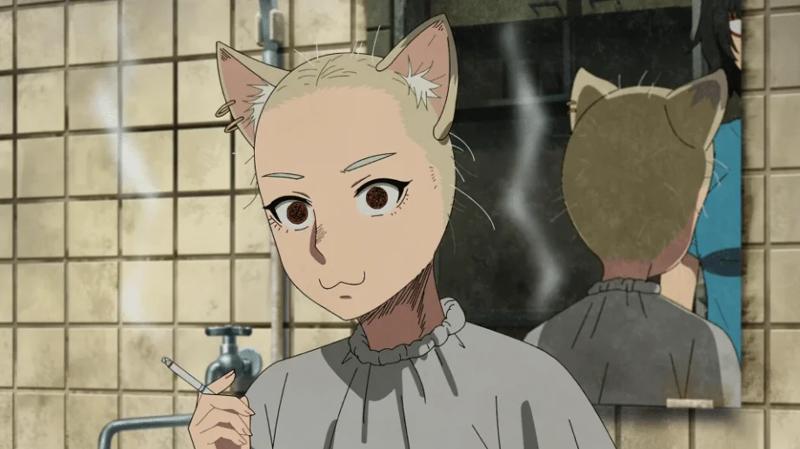
Chainsmoker Cat: Controversy, Commentary, and Censorship
Chainsmoker Cat revels in being lewd, crude, and rude. The comedy follows Yaniko and other beastfolk who live in a small apartment building. Yaniko lives in squalor, which the series uses to disgust the audience, and is addicted to smoking to the point where she can’t do anything (and I mean anything) without a cigarette in her mouth. The other beastfolk have their own addictions. Yakuko smokes marijuana and has a, never stated but heavily implied, heroin addiction. Hameko is a high-school gamer and livestreamer who is addicted to the online attention. Kaoruko, a fellow smoker, likes making others laugh while lacking any comedic skill. She’s the most put together of the crew. Aruko suffers from alcoholism and spends most of the day drinking and sleeping in her room. Finally, the only humans in the apartment, Saori who works as a hentai manga artist and Oya, the landlord, share a kink for beastfolk. The comedy puts these personalities in awkward situations centered on their various addictions, usually with Yaniko disgusting everyone, and body humor. Poop, fart, and sex jokes abound. The lewdness, crudeness, and drug use has led some platforms to yank the anime. Ani-One Asia and Bahamut Animation Crazy pulled the show because of a scene showing Yakuko injecting a “vaccine” and because all the smoking may be in violation of tobacco-use prevention policies. Japan’s Broadcasting Ethics & Program Improvement Organization reviewed the anime, particularly focused on Yakuko’s self-injection scene. The organization eventually decided the anime was within “acceptable limits in terms of freedom of expression” (Parker, 2026; Pineda,2026). The show can’t be misconstrued as promoting smoking, even though it features real cigarette brands, because of how filthy–finger stains, wall stains, foul breath, revolting odor–Chainsmoker Cat shows smoking to be. It’s curious Mevius or any of the brands would tolerate their association with the anime. If anything, Smoking Behind the Supermarket with You could be seen as promoting smoking thanks how it portrays smoking as a cool way to connect with someone. Chainsmoker Cat is designed to be offensive, unlike Smoking Behind the Supermarket with You, which likely plays into the discomfort some feel. The comedy is supposed to be uncomfortable! Despite the low-brow humor, Chainsmoker Cat offers sometimes subtle commentary about despair and the lives of people on the edges of society. All of the characters live on the margin and numb their despair using their various addictions. Beastfolk aren’t treated well. During a scene when the crew plays a board game together, the game bars them from certain actions and jobs because they are beastfolk, relegating them to low-end jobs. Yaniko works various dangerous, dirty, and temporary jobs. She burns the money on cigarettes despite how she has only a year to live; a doctor diagnoses her with lung cancer, which she shrugs off. Yaniko lives in the moment. In another scene, Yakuko wants to go stag beetle hunting, something young boys do. The others criticize her for such a young-boy hobby and don’t go with her. Only Yaniko joins her as Yakuko leaves. The scene illustrates the despair that sits under all the comedy. Whenever any of the beastfolk try to be normal, they’re met with resistance. The stonewalling creates the despair that drives their various addictions. Yaniko’s younger sister, Imoko, shares this marginalization. Imoko loves her elder sister and seeks her well-being throughout various episodes. Imoko is responsible and respected…to a point. Several scenes show Imoko with her human friends on their way to and from high school. Her friends often comment about her cat-like nature. While they appreciate it, Imoko acts like a cat for their laughs. She performs for the humans while her elder sister refuses to perform and confirm. Imoko becomes accepted because of this, but she isn’t portrayed as a equal, even among her friends. The scenes are subtle but noticeable, especially after the board game episode. Even the humans Oya and Saori have some despair about them. Oya is single, and his comedic scenes anchor into his desire for companionship and intimacy. The various sex jokes involving his beastfolk blowup doll and his erections link to scenes where his loneliness comes to the fore. He never moves on any of the beastgirls. He looks out for them in his own way. Although, he has the habit of never knocking; no doubt because he knows he will get to glimpse them in some sort of compromised state or another. But he’s tolerant of them and doesn’t marginalize the girls as the other sections of society does–even if he sexualizes them. Saori despairs of the crushing grind of working as a mangaka chasing deadlines. Her kink for the beastfolk is about the same as Oya’s. She puts the girls in compromising outfits and positions to act as references for her hentai. She pays them for the modeling and doesn’t marginalize the girls even as she sexualizes them in her manga. Oya and Saori split sexualizing away from marginalizing, but both of them exploit the beastfolk’s situation in their own ways. However, they don’t treat the girls as insignificant or as subhuman. Chainsmoker Cat is not sophisticated by any means, despite this social commentary buried under the crude humor. The anime wants us to feel disgusted toward Yaniko in particular, The show wants the audience to laugh at the misfortune and self-inflicted wounds of the characters: schadenfreude, in other words. It pokes fun at how anime fans like catgirls by showing them in as much squalor as possible. Oya and Saori act as stand-ins for the gaze of the audience. Do I recommend Chainsmoker Cat? No. I can’t recommend this story unless you enjoy lewd, crude humor. I felt sorry for the characters more than I felt amused. Although, I admit the scene where Yaniko farts into a loudspeaker while the girls work for a political messaging service was funny, considering how political talk is essentially verbal farting. The commentary about the links between despair and addiction won’t be enough to keep you watching if you don’t enjoy the humor. References Parker, Lewis (2026) Chainsmoker Cat Anime Investigated By Japan’s Broadcasting Ethics Watchdog For ‘Illegal Drug Use’ Depictions. Kotaku. https://kotaku.com/chainsmoker-cat-anime-investigated-by-japans-broadcasting-ethics-watchdog-for-illegal-drug-use-depictions-2000723427 Pineda, Rafael Antonio (2026) Ani-One Asia Also Removes Chainsmoker Cat Anime From Streaming Lineup. Anime News Network. https://www.animenewsnetwork.com/news/2026-08-20/ani-one-asia-also-removes-chainsmoker-cat-anime-from-streaming-lineup/.240773
Japan Powered
15 days ago
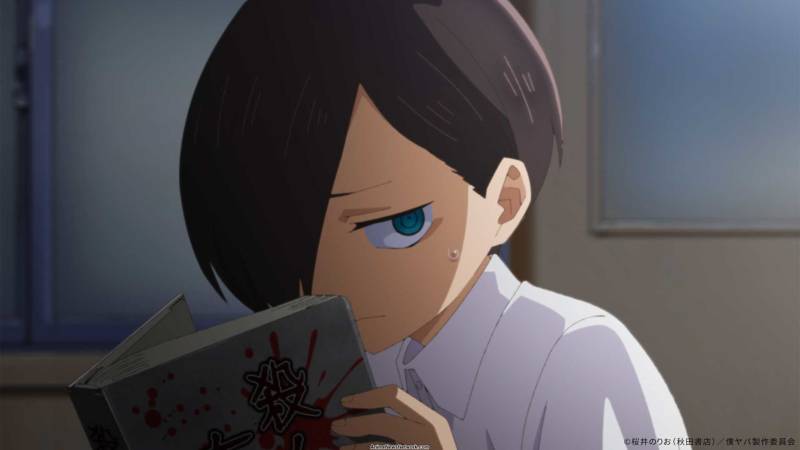
The Dangers in My Heart: Exploring the Dangers of Puberty
Anime and manga focuses on the middle school and high school years because of their natural drama and coming-of-age nature. Anime likes to lean on characters’ lack of social experience, especially with relationships, as drama points. Often, this leads to what I call “meathead” characters, characters which are artificially dense for the sake of the story. Some denseness is natural and comes with the age of the characters. But when a female character pretty-much confesses her affection and the male still says “I don’t think she feels that way,” the denseness becomes artificial. Fortunately, The Dangers in My Heart avoids this problem. The doubts are still there, but the characters are more realistic in their waffling, considering their ages (13 to 14 years old). They reflect and work at changing. Spoilers ahead! Kyotaro Ichikawa begins as your usual outcast loner with a touch of chunibiyo. He fantasizes about murdering his popular classmates, especially the class idol Anna Yamada. But one day he encounters Anna munching on snacks in the school library. The encounter sets them on the junior-high rom-com path. Anna wants to establish a friendship with Kyotaro and maybe more as she comes to know him. Her relationship with Kyotaro follows the reverse of her favorite shojo manga, with Kyotaro playing the role of the shy but kind girl and she the tall and mature boy. Anna and Kyotaro act as balances for each other. Kyotaro is perceptive and reflective, often to a fault. Anna isn’t as perceptive but she’s considerate and caring. Anna works as a teen model and actress while being a glutton for snacks. She tries to act as an adult. She had hit puberty early and developed a woman’s figure, much to the 13-year-old boys’ attention. Most of the other girls in the class have also hit their physical development. But despite her looks, she remains an insecure young girl inside. Kyotaro, on the other hand, doesn’t want to grow up despite being inwardly fairly mature (when his chunibiyo doesn’t afflict him). He hasn’t hit puberty at the start of the story and his chest height on Anna, much to his mixed discomfort and comfort. Kyotaro is a bundle of insecurity and uncertainty, but he’s also kind and strives to do the right thing once he realizes it. And sometimes it takes him some time to realize it. Anna’s friends tend to protect her from the boys and upper classmates who pursue her. In many scenes, they create a physical shield around her and one of them deflects the boy interested in Anna. Once they realize Anna is interested in Kyotaro, they perform various tests to make sure he’s of good character. Moeko Sekine, especially, tests him. Once she finds him a good match for her best friend, she becomes a good friend for Kyotaro too. She often saves them both from embarrassing situations and pushes Kyotaro to step up once she realizes he and Anna share mutual feelings. However, in many scenes her egging makes Anna jealous. In one scene, Anna, Moeko, and the rest of their girl group–including a now-confused Kyotaro–go to Anna’s house to make chocolates for Valentine’s Day. In order to deflect Anna’s mother, Moeko states she and Kyotaro are dating. While Anna understands why, this still fills her with jealousy. The tension of the air drives Kyotaro away. Anna pursues him and convinces him to rejoin them. This doesn’t help his confusion at being treated as “one of the girls” after he and Anna had been slipping into romantic territory. Anna had been growing increasingly flirty and physical with him. She looks for any reason to touch him. Kyotaro eventually apologizes to Anna’s mother about Moeko’s lie and even makes a gamer friend in Anna’s father. Kyotaro’s acceptance by Anna’s friends expands his friend circle, but it also spreads tension between him and his new male friends. Sho Adachi also falls in love with Anna, but unlike Kyotaro, Sho’s affection is based on lust. He knows nothing about Anna. And Sho also has a tendency to blurt out his perverted thoughts. Sho and Kyotaro during the school sports festival confront each other over Anna. While Kyotaro is defeated, Sho comes to understand Kyotaro cares for Anna deeply and remains his friend. Kyotaro’s other friends have their own small plots, such as Kenta and his affection for chubby classmate Hara. They provide the contrast between the developmental levels of the boys, who haven’t yet started puberty, and the girls, who mostly have completed their first developmental stage. The boys stare at the girls’ chests, make perverted comments, and otherwise act immature. Kyotaro, on the other hand, tries to avoid such perverted antics despite his own awaking sexuality. He struggles, like any other 13-to-14-year old, with sudden erections. This makes him feel guilty, especially when it happens in reference to Anna. After being caught in the weather, Anna brings Kyotaro home with her to dry and warm him. She offers him her gym outfit after he takes a hot bath, and then greets him in shorts and a tank top, her normal pajamas. To make matters worse, Anna had also collected his underwear with his clothes to run through the dryer. You can imagine the young teen boy’s reaction to “going commando” while wearing his crush’s clothes. Near the end of the second season, the school trip story beat appears. Kyotaro had skipped previous school trips because he didn’t have any friends. During a video call with him, Anna sees he had kept the handout about the trip he had skipped. He had discussed with her how he was now enjoying school, largely thanks to her. The call convinces her to go with him on the trip, knowing the trip is a milestone for him. But the trip happens during an audition for a film adaptation of Anna’s favorite shojo manga, the manga she and Kyotaro had shared as readers. Anna tries to have fun, but she can’t despite forcing and faking enjoyment. Kyotaro understands that something’s wrong, but he takes several days to piece together just what troubles Anna. She kept the audition a secret from him. Kyotaro confronts her just as she breaks. He confesses that he “likes” her and tells her to go to the audition. Anna is troubled by what she considers her selfishness in wanting to go to the audition, especially because she knows how much the trip means to Kyotaro. Kyotaro eases her guilt and walks her to the train station. In the finale, he returns from the trip and receives a message from her to meet in their usual place. He travels to each of the many locations where they share a memory but is unable to find her. Finally, he finds her waiting at the school library, and there, she tries to enact the final scene of their shared manga. She confesses her love for him, but when they go in for the kiss, they clonk heads. She settles planting a kiss on his cheek. This shows they still have a lot of growing up to do. The Dangers in My Heart explores how puberty confuses with its bodily changes, as Kyotaro struggles with. Kyotaro, by the end of the story, wants to grow up so he can grow to be a better match for Anna. The difference in development among the boys and girls is realistic. Girls often hit puberty earlier, with a second and shorter growth spurt later, than boys. The girls attempt to act more mature while remaining children within. The boys, on the other hand, still act as elementary age in their antics but with a burgeoning awareness of girls. Kyotaro is more mature than the other boys mentally but not physically. Anna is more mature physically but isn’t there mentally. She tries like all the other girls do. The exploration of this dynamic sets up many scenes and misunderstandings, which Kyotaro and Anna eventually navigate through open communication. The communication isn’t easy. It sometimes takes a few episodes, but they eventually talk it out until they understand each other. But, at the same time, they remain the 13 and 14 year-old characters they are. They are trying to emulate mature adult behavior. Both Kyotaro and Anna have good and supportive families, which accept as they are. But meeting each other’s families remains a harrowing experience. The Dangers in My Heart hit all the usual rom-com story beats from the sports festival rivalries to the awkward house-visiting scenes. But through its exploration of puberty and developmental psychology (it shows and doesn’t tell) the story feels fresh. Kyotaro and Anna’s struggles with admitting their feelings for each other feels more realistic than most of the on-and-off rom-coms anime has. The “denseness” doesn’t come off as artificial because both of them make effort to walk toward each other despite their hesitations and misgivings. When characters fail to take even small steps toward their increasing awareness, stories tend to feel artificial and dragged out. Anna’s flirtiness feels natural with how she will bump into Kyotaro or snatch his sleeve. Her attempts at flirting sometimes backfires, leading to her touching her breasts against him in some way. But these events don’t fall into the fan-service situations typical to these stories. Rather, they highlight the characters’ innocence and trying a bit too hard. Kyotaro will snatch Anna’s hand or wrist and tries his best to keep his gaze where it should be. Considering he’s breast level on Anna, that isn’t always easy. He comes to resent the perversity of the other boys as he befriends Anna and her girlfriends. That doesn’t mean he doesn’t enjoy looking, but he doesn’t want to reduce the girls as the other boys do. It helps that Kyotaro has an elder sister. When Anna forgets a bag of items she bought at the convenience store on his bike, Kyotaro sees a package of panty liners. Thinking they are period pads, he rushed through the rain to get them to Anna. This sets up the typical cold-scene beat. Anna is warmed by the gesture while telling him it could’ve waited, that they weren’t period pads. While Kyotaro is a bit embarrassed, he doesn’t fall into the over-the-top reactions typical to many anime. The scene highlights his thoughtful character and his relative maturity against the boys in his class. He drops his chunibyo tendencies over the course of the story. Chunibyo is a term used to reference teens who have delusions of grandeur and ability in a bid to stand out. They believe themselves to have hidden knowledge or secret powers like the ability to see the dead. The delusion provides a way to escape from the realities and pressures of middle school, puberty, and other challenges. At least, it does in anime stories. Love, Chunibyo, and Other Delusions provides the best example of chunibyo. It doesn’t play too far into the story for The Dangers in My Heart. When Kyotaro’s voice begins to change, his anxiety riddled self becomes even more self conscious. But when Anna expresses excitement over his voice changing, he starts to feel better about it. Anna is fascinated by how boys change, as much as the boys are fascinated by how the girls had changed since last year. The Dangers in My Heart doesn’t explore this fascination using fan-service as you’d expect. Sometimes the camera will center on Anna or other girls’ breasts, but this is done to show Kyotaro’s height and point of view. Or it happens as a means of contrast. The girls would be expressing themselves in an immature, elementary-school way which contrasts against their bodies’ development. The contrast serves as a characterization along the story’s themes of growing up. The Dangers in My Heart illustrates the awkwardness of early puberty and the mental conflicts which comes from it. Caught between adulthood and childhood, the traits of both leave the characters feeling “messed up in the head.” Some deal with it by retreating into the delusions of chunibyo. Others deal with it by going into a different sort of chunibyo, an imitation of adulthood. The story has more depth and heart than I had expected. But then, I expect little from rom-coms and comedies in general. Dangers provides a heartful story while showing the struggles everyone goes through in some way.
Japan Powered
22 days ago
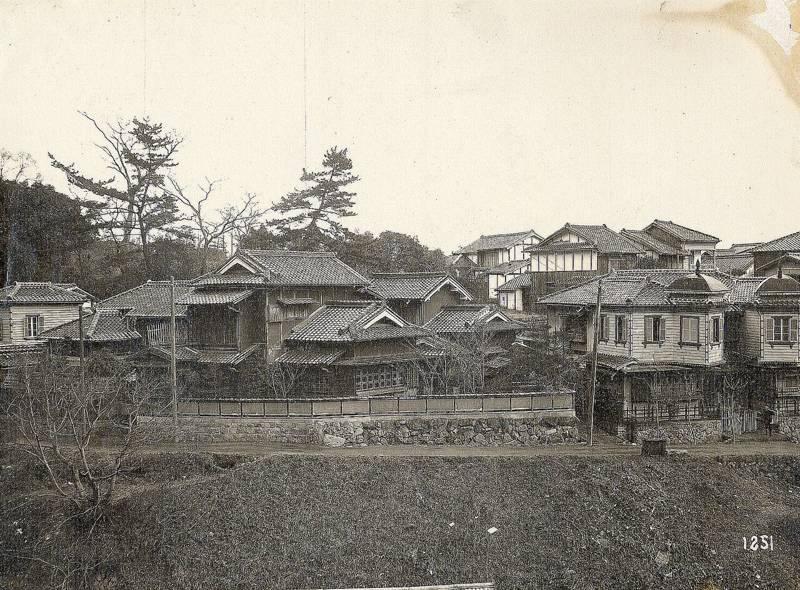
The Spirit of Japan: A Lecture in 1916 Foreshadowing World War II
In 1916, Rabindranath Tagore gave a a series of lectures in Japan. Tagore was a British Indian poet, writer, philosopher, and painter. He became the first non-European to win the Nobel Prize in Literature in 1913. He criticized nationalism and advocated for Indian independence. I came across one of his published lectures given to the the students and members of the Indo-Japanese Association at Keio Gijuku University. The lecture proves interesting in many ways. First, Tagore is an Indian living under British colonial rule, so he has a different perspective from most of the English writers I find from this period. His experiences under British rule leads him to warn Japan about the course it was following at the time. A little historical context: Japan had been opening to the world for the past 50 years at the point Tagore speaks and striving to be recognized as a player at the “international game of poker (where everyone cheats)” through a rapid modernization and militarization program. This push concerns Tagore, who begins his lecture praising Japan’s culture and otherwise has elements of Japonisme. What has impressed me most in this country is the conviction that you have realised nature’s secrets, not by methods of analytical knowledge, but by sympathy. You have known her language of lines and music of colours, the symmetry in her irregularities, and the cadence in her freedom of movements; you have seen how she leads her immense crowds of things yet avoids all frictions; how the very conflicts in her creations break out in dance and music; how her exuberance has the aspect of the fullness of self-abandonment, and not a mere dissipation of display. Tagore highlights a common observation of travelers to Japan at that time. Japan was still transitioning to an industrial country, so the country still had its feet in the Tokugawa period’s nature focus. After the Tokugawa Shogunate had witnessed deforestation at the beginning of its reign, it instituted a partnership with the logging villages to sustain and expand forests. Wood, after all, was the primary building material and source for heat. This top-down and bottom-up approach, coupled with the nature-veneration Shinto has built into it, created these observations. Today, with more people leaving Japan’s rural villages for the work cities offer, this observation and idealism no longer holds. Like most developed nations, people have traded nature’s “language of lines and music of colors” for the concrete and glass of modern cities. But Japan’s relationship with nature, which shares many similarities with Native American cultures, remains a cultural memory–it isn’t entire gone. Tagore continues: In other great countries, signs of man’s power loomed large, and I saw vast organisations which showed efficiency in all their features. There, display and extravagance, in dress, in furniture, in costly entertainments, are startling. They seem to push you back into a corner, like a poor intruder at a feast; they are apt to make you envious, or take your breath away with amazement. There, you do not feel man as supreme; you are hurled against the stupendousness of things that alienates. But, in Japan, it is not the display of power, or wealth, that is the predominating element. You see everywhere emblems of love and admiration, and not mostly of ambition and greed. With the perspective hindsight offers, Tagore’s continued praise and observations here have a false ring to them, but he is setting up for his point later in the lecture. When he delivers the lecture, World War I was well underway. With Japan also at war with Germany. Japanese society, as with nearly all human societies, have power and wealth as predominating symbols at the national level. Of course, within society most people want to live and let live rather than actively move against other people. But, at the time Tagore spoke, Japan was rising on the world stage and was newly seated at the poker table with its entry into World War I on the side of the Allied Forces. Japan still retained an air of exoticism and mystery which would remain the main elements for how foreigners viewed the culture until World War II finally stripped it away. Well, Japan’s mystique still remains for many, but it isn’t the same as the feelings of exoticism which dominated the late 1800s and early 1900s. It’s interesting to see Tagore’s discussion point to how the perspective wasn’t limited to the West but also included British India’s perspective of Japan. Indians too seemed to have viewed Japan through the fading lens of Japonisme. Europe seems to have felt emphatically the conflict of things in the universe, which can only be brought under control by conquest. Therefore she is ever ready for fight, and the best portion of her attention is occupied in organising forces. But Japan has felt, in her world, the touch of some presence, which has evoked in her soul a feeling of reverent adoration. This comment makes an interesting jab at European colonialism (which contributed to World War I) before Japan’s began her own colonialism project in earnest. Japan’s conquest of Manchuria actually started in 1894 and blurred into Japan’s war with Russia a few years later. Tagore’s concern about Japan’s industrialization and Europeanization echoes Lafcadio Hearn’s similar laments in his later essays. Tagore, unlike Hearn, is more blunt: True modernism is freedom of mind, not slavery of taste. It is independence of thought and action, not tutelage under European schoolmasters. It is science, but not its wrong application in life,—a mere imitation of our science teachers who reduce it into a superstition absurdly invoking its aid for all impossible purposes. Tagore’s worry about Japan mimicking Europe leads him to make interesting observations which still holds true. Many believe themselves free thinkers, some proclaiming themselves the sheepdogs instead of the sheep, when this is a slavery of taste rather than a freedom of the mind. They consider themselves modern and thinking freely when they think in the way that’s sanctioned by their political tribe. Where Japan of Tagore’s time equated European conventions with modernism (despite the horrors of World War I), today we have people who equate modernism with their own political tribe or community’s conventions. Tagore’s lecture warns against the nationalistic thinking that underpinned World War I and would later again spark World War II. He worries about the damage that the war would have on the souls of the soldiers involved and on the societal souls of the cultures involved: I do not for a moment suggest, that Japan should be unmindful of acquiring modern weapons of self-protection. But this should never be allowed to go beyond her instinct of self-preservation. She must know that the real power is not in the weapons themselves, but in the man who wields those weapons; and when he, in his eagerness for power, multiplies his weapons at the cost of his own soul, then it is he who is in even greater danger than his enemies. He urges Japan to look within to find her own strength and position in the world rather than imitating and entangling with the West. And if Japan fully lost her unique culture and history, Japan would lose what makes her unique. Interestingly, as Japan’s population declines in our own era, and its society faces more pressure to open to immigrants–including, perhaps, another Meiji-like push to simplify the Japanese language–Japan again runs into what Tagore was concerned about. He had, after all, witnessed the Westernizing influence the British had on Indian culture: But now, where the spirit of the Western civilisation prevails, the whole people is being taught from boyhood, to foster hatreds and ambitions by all kinds of means,—by the manufacture of half-truths and untruths in history, by persistent misrepresentation of other races and the culture of unfavourable sentiments towards them, by setting up memorials of events, very often false, which for the sake of humanity should be speedily forgotten, thus continually brewing evil menace towards neighbours and nations other than their own. This is poisoning the very fountain-head of humanity. It is discrediting the ideals, which were born of the lives of men, who were our greatest and best. It is holding up gigantic selfishness as the one universal religion for all nations of the world. When you study history, you see the patterns Tagore worries about here. People are taught that hatred toward other people and taught that chasing ambitions to the harm of others are virtues. Falsehoods–lies and misrepresented history–and persistent flat-painting of people poisons people’s minds. And from these poisoned minds comes a poisoned culture that, eventually, ends in some sort of destruction as history continually shows, such as the combined World Wars. Japan, as we know with hindsight, falls into this trap, and as a student of history, I daresay the United States is currently falling into this trap, this pattern of history which empires fall prey to. And at the core of it is selfishness, both individual and cultural. In the end, the small people–you and me–tend to pay the price just as the small people of Japan’s World War II era paid the price. Throughout the lecture, Tagore spends a fair bit of time discussing the West juxtaposed to Japan: how the West fears the rise of the “Eastern race.” He warns the Japanese students about how the West uses power to the benefits of itself. He speaks from his Indian experience. He illustrates a common perspective among colonies during this long colonial period, a perspective which would eventually lead to the formation of the United States: “To the worship of this devil of politics she [the West] sacrifices other countries as victims.” He points out that the West doesn’t respect Japan for “her harmony of heroism and beauty, her depth of self-control and richness of self-expression” but for Japan’s ability to make war. Tagore’s observations of power, that countries only respect and fear other powerful countries while exploiting the weaker, unfortunately rings true today. Countries work out of self-interest. He expresses understanding toward Japan’s growing militarism, but he paints that militarism as equally evil as the European colonial project unraveled with World War I: “They [the West] admit Japan’s equality with themselves, only when they know that Japan also possesses the key to open the floodgate of hell-fire upon the fair earth, whenever she chooses, and can dance, in their own measure, the devil dance of pillage, murder, and ravishment of innocent women, while the world goes to ruin. ” He ends the lecture with a variety of warnings to Japan and namely for Japan to embrace what makes the culture unique rather than chasing the European definition of civilization and modernism. But he doesn’t only disparage the West. He also states that the soul of the West is struggling against the forces that makes the West brutish in his perspective. That the “divine in her heart is suffering from the injuries inflicted by her hands upon the world.” And that the East can learn from this divine Western heart just as the West can learn from the East. He warns his Japanese audience to turn away from nationalism, but he expects the fires of destruction to burn, clearing away everything but the “eternal light” in the East. Unfortunately, we know now, as we quickly near the 100 year anniversary of World War II, how right his observations and concerns were. And, time and again, societies fall back into similar patterns of thinking once the generations which had lived through the “red light of conflagration” die. Tagore’s lecture warns and celebrates Japan. It tears into Europe’s model of the time while recognizing that Europe has great societal aspects equal to the parts of Japan’s culture he praises. He warns Japan against adopting the militarism and nationalism which underpinned World War I. If only Japan, and Europe for that matter, had listened. If only we today would listen. References Tagore, Rabindranath (1916) The Spirit of Japan: A Lecture. Indo-Japanese Assocation, Tokyo.
Japan Powered
29 days ago
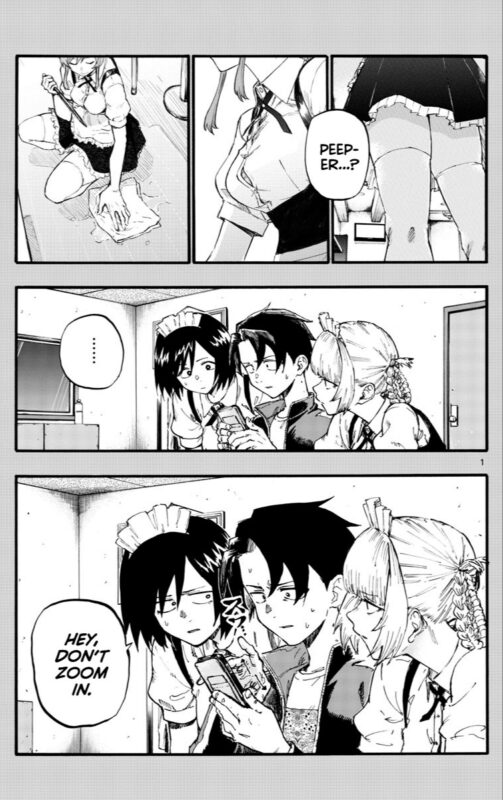
The Dead Internet and Dead Manga
The Dead Internet Theory is the idea that the majority of internet traffic, posts, and users are bots and ai-generated content. People no longer shape the Internet. The idea first floated around 4Chan in the 2010s, with forum members claiming the internet died between 2016 and 2017, long before ai-generated content began to take hold (Di Placido, 2024; Tiffany, 2021). The idea spread into governmental conspiracy theory crafting: “The U.S. government is engaging in an artificial intelligence powered gaslighting of the entire world population.” Setting that part of the theory aside, the internet feels more dead and sterile as people increasingly use large-language models (LLMs) to write blog posts, product descriptions, comments, and even chat messages. Humans still make the majority of content and conversation, even if they are are using LLMs, but the bot-created trash floats around the human-made stuff. Part of the problem traces to the centralization and corporatization of the internet. I was online back when the World Wide Web was a thing separate from the Internet. The Internet (with the capital “I”) was the expanded Darpa Net, the collection of libraries, universities, research centers, user nets, and other education and research-focused systems that dominated the early Internet. The World Wide Web was the business and personal sites that sat alongside the older Internet. I spent a lot of time digging around in the Internet, which is better known today as the Dark Web, reading articles and chatting with people on bulletin boards, early social media. The Dark Web can be nefarious, but most of the Dark Web are university pages and databases not easily accessed on the normal web. In many ways, the old days were better than what we have now. Di Placido (2024) agrees: The internet of today is much more sterile than the wild, unpredictable internet of the past, as the diverse ecosystem of small, user-created sites was replaced by a handful of huge platforms built by large corporations who seek to monetize our browsing and sharing, often to the detriment of user experience. The internet of today feels far more restricted and corporate than it ever has. Back in 2018, before LLMs became widespread, Max Read wrote in New York about how as early as 2013 YouTube saw half its traffic from bots posing as people, “a portion so high that employees feared an inflection point after which YouTube’s systems for detecting fraudulent traffic would begin to regard bot traffic as real and human traffic as fake.” Read laments that bots masqueraded as humans and humans masquerading as other humans and as bots. This has only gotten worse with how fast LLMs can produce content and respond somewhat intelligently to content. Timothy Shoup of the Copenhagen Institute for Futures studies considered (Hvitved, 2022): “in the scenario where GPT-3 ‘gets loose’, the internet would be completely unrecognizable”. And in this scenario, he would bet on 99% to 99.9% being AI-generated by 2025 to 2030. The development of automated content creation will change the way the internet looks, and probably make it even harder to navigate in the massive amount of content. This hasn’t yet happened, but we all see the process right now as more LLM-generated content spreads. As the technology gets faster, cheaper, and better at writing, it will become harder to discern a bot from a person. Already, bots can write better than a many (okay, most) people! All of this combines with the boredom and alienation people feel as they use the internet. Mix in the sterile corporate centralization, and the Dead Internet Theory feels true. Could the internet become so full of bot-driven content that it would become unusable? Most of the internet already is that way thanks to all the advertisements and spam. I’m looking at you, bots and mechanical Turk spammers! LLM-created content doesn’t really matter considering all the layers of advertisements which make many pages worthless. But yes, a good section of the internet has already become unusable, or at the least of low-informational quality. LLMs will degrade as the data they ingest degrades. I suspect they would be higher quality than what we see now if the technology had appeared back when educational institutions dominated the internet. But I also see the possibility of the Dead Internet Theory extending to books and even to manga. People already play with using LLMs to create books. And manga publishers are getting into the game. Osamu Tezuka’s eldest son headed a project to train a model on his father’s work and to use the model to produce roughs for new stories and to create frames in his father’s style (NHK News, 2023). Shinchosha published Japan’s first fully AI-drawn manga in full-color. The title is Cyberpunk:Peach John and it’s created by a person by the pseudonym Rootport. Even the author of One Piece, Eiichiro Oda, has turned to ChatGPT to help with writer’s block. Professor Satoshi Kurihara of Keio University states that the possibility of manga artist assistants being replaced by Ai “isn’t zero” (The Straits Times, 2024). In a Dead Book Theory or a Dead Manga Theory, most of the work behind the books would be handled by models with humans nudging the process. Rootport, in The Straits Times article, states: “I also don’t think manga completely unaided by AI will remain dominant forever.” And that AI-image generates have “paved the way for people without artistic talent to make inroads into the manga industry as long as they have good stories to tell.” That gets to the crux. Are models tools that enable people and eliminate barriers or are they replacing people? Are the barriers necessarily bad or even that high? Not to ding Tezuka, but his art style is pretty primitive–charming–but simple. He’s proof that artistic merit isn’t everything if you can tell a good story. Granted, he is doing a lot with his simplistic style. Barriers force growth and improvement. If a computer handles all the hard parts, how can an artist grow? The challenge of writing a book is what makes the writing valuable. It forces you to grow and improve. To persevere. But if you can nudge a computer to do all the hard work, there’s no perseverance or growth. The Dead Book and Dead Manga Theory points toward a sterilized, inundated future where books and manga can be generated on-the-fly by readers, possibly eliminating the writer altogether: story consumption without a human writing the stories. Language and art act as connections to the soul that generates them. The connection leads to imperfect understanding, but it’s the closest method we have to telepathy. But when a machine generates this, there’s no soul to connect to. There’s only consumption. Ursula Le Guin writes about this connection in her essay “Where Do you Get Your Ideas From?”: Reading is an active transaction between the text and the reader. The texts is under the control of the reader–she can skip, linger, interpret, misinterpret, return, ponder, go along with the story or refuse to go along with it, make judgments, revise her judgments–she has time and room to genuinely interact with it, a novel is an active, ongoing collaboration between the writer and the reader. If there’s no writer, there’s only a dead text and dead illustrations, no collaboration–but the reader’s power over the text remains, allowing the reader to make of it as she would. So, perhaps, in such a case the story isn’t really dead, only awaiting the reader to breathe life into it. As you can tell, I’m of two minds. I lament the absence of a soul in this scenario. The great joy of reading is connecting, however imperfectly and momentarily, with a soul, sometimes long since passed to our shared destination. Reading the Diary of Murasaki is such an experience, connecting you to the day-to-day concerns of a woman where you feel her extreme ennui. Yet, the reader, as Le Guin points out, has control of the text. Who am I to say the reader is wrong to take meaning or enjoyment from a machine-written text? What of the increasing use of machine translations in manga and literature? Does that dilute the text and creates a disconnection? Translators, especially when converting a high-context language like Japanese to a low-context language like English, aim at clarifying meaning, but LLMs, as of now, don’t understand meaning or truth or fact. They are statistical probability pattern generators. How accurately they can do a literal translation varies, and this touches on the debate between a literal translation of words and translating meaning which involves different words, adding more complication for manga publishers. I’m no Luddite. I’m a technologist, but I’ve begun to think we need to reconsider the rapid release of technology. This rapid technological change, unfettered and unconsidered, leads to this feeling of dead internet and the question of generated manga and books. Rather than rapidly releasing technology, we ought to release it slowly with consideration of its influence while developing it quickly. But the profit motive would never allow for such a system. Fortunately for manga fans, Japan moves slowly and tends to resist change. AI-generated manga won’t dominate any time soon. It may begin to become a common tool, especially for mangaka who might be able to train models on their own work. As a tool, it might help mangaka with their insane work schedules. As the sentiment floating around the internet goes–and definitely made by a human–“I want AI to free me from work so I can write and do art, not for AI to write and do art so I have to work harder.” The problem, if you choose to to consider as a problem as I do, comes from our “good enough” consumption of art. That good enough is one reason why lower-quality stories proliferate; they act as junk food for the mind. LLMs are great tools, but they are only good enough. Should that be the standard for the narratives we consume, narratives which form our perspective of the world? Whenever I bring up the problem of the Dead Book Theory with people who favor AI, they believe I’m saddling stories with too much meaning and purpose. They are entertainment, and if LLMs can reduce the cost of entertainment (as if writing and art aren’t already undervalued) and increase the ability of people to tell stories, what’s the problem? As Rootport states, such tools remove barriers. And this argument isn’t that different from what self-publishing technologies allow. But with self-publishing technologies, a human still creates the story. The means of distributing that content was opened. Whereas LLMs are creating the stories which removes the development of human skill as I’ve already mentioned. They aren’t removing barriers to human expression as much as replacing that human expression by producing the majority of the text and art. It’s hypothetically possible for humans to be eliminated from the creation loop. Two LLMs could work together to produce a story. One feeds the second model the criteria for a story. The second produces the story and gives it back to the first to review, which could be programmed to correct the draft and send it back to the generating model for one more edit pass. A third and fourth model could discuss topics, research reader demands and subjects, and feed the editing and generating models to create an autonomous loop. Once programmers set the criteria, they just have to wait for stories to be produced by the models, without any prompting from humans. Now, I don’t believe publishing companies will resort to such a scenario. As driven by profit as they are, they are still filled with people who care about books and manga. They value the art and want to enable the best stories. But the internet itself doesn’t have the same passionate people to curb the profit drive. An internet which is “dead” and dominated by software-generated traffic and content is a real risk, especially in the centralized sections. Shrines, forums, blogs, and other personal sites will remain islands surrounded by plastic content. Dead books and dead manga will increase as the tools get better, but I don’t foresee them replacing human-hand created books entirely. I just hope we reconsider all the slop we are creating as a species: advertising, art, and text. Not to mention all the physical product slop that destroys our environment! But I’m not optimistic about that; the profit incentive pushes toward slop and minimum viable products until we, as consumers, stop funding such trash. References Di Placido, Dani. (2024) The Dead Internet Theory, Explained. Forbes. https://www.forbes.com/sites/danidiplacido/2024/01/16/the-dead-internet-theory-explained/ Hvitved, Sofie (2022) What if 99% of the Metaverse is Made by AI? Copenhagen Institute for Futures Studies. https://cifs.dk/news/what-if-99-of-the-metaverse-is-made-by-ai NHK News. (2023) AI manga project aims to continue Astro Boy Creator’s Work. https://www3.nhk.or.jp/nhkworld/en/news/backstories/2521/ Read, Max (2018) How Much of the Internet is Fake? Turns Out, a Lot of It, Actually. New York Magazine.https://nymag.com/intelligencer/2018/12/how-much-of-the-internet-is-fake.html The Straits Times (2024) Machine magic or art menace? Japan’s first AI manga. https://www.straitstimes.com/asia/east-asia/machine-magic-or-art-menace-japans-first-ai-manga Tiffany, Kaitlyn (2021) Maybe you Missed It, but the Internet ‘Died’ Five Years Ago. The Atlantic. https://www.theatlantic.com/technology/archive/2021/08/dead-internet-theory-wrong-but-feels-true/619937/.
Japan Powered
about 1 month ago
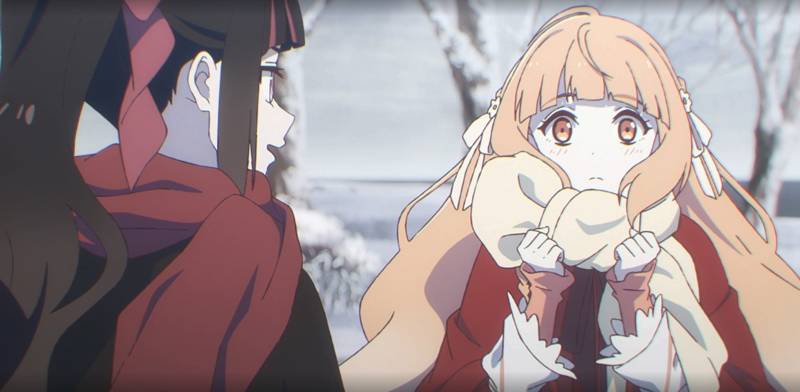
Agents of the Four Seasons: When the Prince and Princess Save Themselves and Each Other
There’s a tension between folktales and the stories that draw on them and modern sensibilities. Most often, the tension stands with how female characters are treated: as damsels in distress that need rescued by the man. This is sidestepped by dropping the prince altogether. Agents of the Four Seasons Dance of Spring, at first look, appeared to be a sidestep of this problem. And I call this story element a problem in two ways. First, the story structure reduces female agency (not all folktales do this, but the ones selected for modern stories often do). Second, sidestepping the problem by eliminating the male role hurts the deep, genetic drives men have: to protect his family and love. That protection drive is the strongest drive a healthy, mature man has, but how some stories handle this instinct infantilizes women. This infantilizing, in turn, diminishes the male protective instinct; diminishing the agency of women makes instinct too simplistic, but for teaching boys’ unconsciousness toward healthy expressions of the instinct, simplicity has a place as long as it acts as an onramp to more developed stories. Spoilers ahead. The world’s seasons–winter, spring, summer, and autumn–are governed by Agents, people given powers over the seasons by the gods. The Agents travel and perform rituals to bring their respective season to the area in the correct time. However, several organizations want to capture the power of the Agents for themselves or assassinate them; when an Agent dies, their power immediately transfers to another descendant of the first Agent. The story follows Hinagiku Kayo and her guard, Sakura Himedaka. Hinaguku, the Agent of Spring, is kidnapped by “Insurgents,” a group that aims to control the seasons. During her decade of capture, spring didn’t appear. The leader of the kidnappers, Misuzu Henderson, abused Hinagiku to the point Hinagiku’s mind snaps. She distances herself from who she used to be, saying the old Hinagiku has died and speaks in the third person. She manages to free herself and goes into isolation. Sakura coaxes her out of her isolation and back to the duty of bringing spring. Where Hinagiku’s clan had given up on her, waiting for her to die so they could replace her, Sakura never did. Hinagiku and Sakura are so close that they border on a romantic relationship. And that’s where I thought the story was sidestepping male protective roles in folktales and was going to be a yuri romance. Cool, but not exactly the folkloric story I was hoping for. I was wrong. Hinagiku loves the Agent of Winter, Rosei Kantsubaki. But her “death” makes her worry about how she will hurt Rosei; she is not the same person after the experience. Rosei acts as the prince who saves Hinagiku, and, at the same time, Hinagiku saves him, spiritually. Hinagiku isn’t a helpless damsel, and when she is, Sakura’s role is to save her. Hinagiku then helps Sakura’s redemption, particularly her relationship with Rosei’s guard, Itecho Kangetsu. Both Rosei and Itecho carry the burden of failing to protect Hinagiku from her kidnappers. They seek redemption by protecting Hinagiku and Sakura from Misuzu’s second attempt to capture Hinagiku. While Rosei and Itecho eventually rescue and protect Hinagiku and Sakura at the end of the story, the girls aren’t weak damsels. They stand as equals to Rosei and Itecho, having already done much of the self-saving at the point of the story. Agents of the Four Seasons, like most anime, shows the importance of mutual support. When Misuzu kidnaps the Agent of Autumn, the other Agents work together to free her with Hinagiku facing her fear of Misuzu by acting as bait to draw her away from the Agent of Autumn. Misuzu is interesting as a villain. She is after Hinagiku because she reminds Misuzu of her deceased daughter. She believes the world is corrupt and the entire Agent system needs changed, which is something the Agents themselves could agree with. But Misuzu is a little cracked. She inherited the Reformist group from her father and attempts to pull the power of Spring into the group by impregnating Hinagiku using one of her clansman. This is where Hinagiku’s mind breaks, and she uses her power to escape. The failure doesn’t stop Misuzu from wanting Hinagiku back and to gain another “daughter” by breaking the Agent of Autumn, Nadeshiko, in the same way. If she had succeeded in her plan, she would’ve potentially pulled the power of two Agents into her own clan lineage. Her right-hand man, Mikami, loves Misuzu even though he disagrees with the group and her methods. He’s a link that keeps Misuzu somewhat sane and controlled; he protects her from herself, at least partially. By giving Hinagiku and Sakura an arc where they confront their inner and outer conflicts–Sakura’s inner conflict hooks into her mixed feelings toward Itecho–the story avoids the “helpless princess” problem. But by allowing Rosei and Itecho to rescue them once the girls hit their limits, the story recognizes the male need to protect those they care about. Agents of the Four Seasons shows both can happen at once. Hinagiku and Sakura are not weak, and this is the type of heroine men prefer to protect. The helpless sop may be flattering for the immature, but mature men prefer a woman who can protect herself until she can’t. This limit allows these mature men to demonstrate their skill and resilience, which a woman at her limit would appreciate. At the same time, she grows in capabilities in the process, making the limit even higher, forcing the men to similarly improve themselves. Hinagiku shows this stretch when Sakura helps her leading up to the final confrontation with Misuzu. At the same time, men need the emotional protection women can provide when they acknowledge a man’s feelings and vulnerabilities. Hinagiku protects Rosei when he confesses his vulnerabilities–his failure to protect her the first time and his feelings for her. Mutual protection is often lost in the feminist and traditionalist discussions of folktales and stories like Agents of the Four Seasons. The differing roles are complementary when healthily expressed: yin-yang in balance. It’s okay to rely on others in moments of weakness or struggle. Agents of the Four Seasons offers an interesting story with folkloric elements that I quite enjoyed. It has two romances and a near romance with Sakura and Hinagiku’s relationship, but all the tensions and emotions feel natural to the story. Sakura, as the main point-of-view character, is sympathetic and has a dedication to Hinagiku that taps into old samurai stories, which adds to the folklore feel. Emotional moments dominate the series, but there’s enough action to punctuate the moments. The story can be teary at times. There are plot problems with the story, such as why the Reformists aren’t actively stomped out by the government-backed Agent Association, considering they are terrorists, and why the protection around the Agents is so light considering their importance to the economy. All said, I recommend watching Agents of the Four Seasons.
Japan Powered
about 1 month ago
Roll Over and Die is a Roll Down a Rocky Hill
Roll Over and Die caught my attention–at least initially–with its 1980s fantasy feel. It’s a straight pulpy dark fantasy dealing with a female protagonist chasing after the tormented scarred damsel in distress instead of the usual male savior doing the deed. I like pulpy fantasy slock. Slock, by the way, means drench or gulp. Slock stories are designed to gulp down and to quench boredom. If you are wondering what I mean by pulpy, the term pulp traces to fiction. Pulp westerns, pulp fantasy, and other pulp refers to short, inexpensive paperbacks made from cheap paper that yellowed or browned not too long after you bought the book. You could find these slocky novels everywhere in the last century for just a few dollars. They were good for a casual afternoon read. They were often filled with action, sex, and simple black-and-white stories that were as compressed as the wood shavings used to make the cheap paper. Sometimes I miss the world before the internet dominated everything. Light novels are cousins of pulp novels in many ways, just not as inexpensive. Roll Over and Die would’ve fit in with the pulp fantasy stories. It even carries the silly names like Flum Apricot, Milkit, and Eterna Rinebow. Milkit immediately made me think of Ian Fleming names like Pussy Galore. Par for pulp and pulp adjacent novels. Anyway, the story has Flum thrown out of the hero’s party because her divine gift of reversal proved useless. She also has terrible stats. This isn’t an isekai, but RPG mechanics seem unavoidable even in straight fantasy at this point. She’s sold into slavery, but is too useless to be a working slave and too feisty and strong willed to be a sex slave. So, the slaver decides to use zombies and a cursed sword to dispose of her, Milkit, and other unsellable slaves. When Flum grabs the cursed sword–which melts whomever touches it–her reversal gift turns the curse into a strength. Her stats increase, and she frees herself and Milkit. Milkit, for her part, was born as a slave and doesn’t understand freedom. She believes Flum is her new master. Milkit wears bandages over her face to hide scarring caused by her previous master. Flum and Milkit eek out a living with Flum doing the usual overpowered adventurer thing, making enemies of the local adventurers’ guild leader in the process. And then the story compression kicks in. The story at this point not only begins to feel rushed. It also starts to feel jumpy, for lack of a better term. Some beats see more development than others, especially the found family and yuri elements. Milkit and Flum fall for each other, and Flum creates a found family with Eterna, a witch and a former member of the hero’s party; Eterna left soon after Flum is forced out of the party. A member of the Church of Origin, Sara, joins the family along with a blind girl named Ink who flees from a church facility. This is a fantasy, so the church is the villain. No surprises there. Anyway, the found family sees a fair bit of development until the main conflict suddenly crashed in on it. It’s not that the main conflict isn’t developed. It’s compressed and shifted aside in favor of the yuri elements before being brought out almost like a jump scare in a horror film. You know it’s coming, but it feels off or even yawn-worthy when it happens. At least, that’s how I feel about jump scares. The end result is a story that feels rushed. It feels “and then and then and then” writing, which fits how pulp stories work. Pulp stories push forward with fast plotting with scenes that hook into each other. Roll Over and Die starts that way and then slows into slice-of-life scenes before remembering its a dark fantasy again. The slice-of-life scenes help increase the threat when the dark fantasy stuff happens, like Milkit being captured by her original owner, but that stuff is too easily resolved by Flum. She feels like she “teleports” to the confrontation without any journey. Some fights with the side characters are even reduced to exposition, stating how they helped Flum by taking out some side threats. I haven’t read the source material, but I suspect there’s a lot of compression and glossing over of events going on, especially compared to the, by-comparison, leisurely pace of the beginning episodes. The story hooks later plot developments in scenes that happen before them, but the hooks aren’t developed. Milkit’s previous owner is eluded to, and there’s a scene where mentioning the owner’s name makes Milkit drop a tray of food, but there’s not much more development than that. We don’t know how Milkit’s owner is related to the Church of Origin, which is trying to revive the evil god Origin for…reasons…and works rather openly, but the owner seems affiliated with them. All the hooks for the events that just happen would work better if the events were led into rather than Flum simply learning something bad happened, like Milkit being kidnapped, and then appears to save the day with little searching or conflict between. Flum sometimes feels like Superman, flying between events and saving the day. That’s the compression at work. Roll Over And Die isn’t bad enough to make you want to roll over and die yourself, but it fails even as a pulp story. It tries to do too much and not enough at the same time. The anime can’t decide if it wants to be a fantasy yuri slice of life with some heroing or if it wants to be a slocky plot-driven hero story with downtime spent on yuri slice of life. It doesn’t lean far enough into either. I’ve pondered why anime studios will produce titles like this one where the adaption of the source material might discourage people from seeking out those manga or novels. While I haven’t read Roll Over and Die‘s novels, novels are denser than anime by their nature, so adaption into anime already requires compression and cuts. I don’t really blame the animation team or directors. Timelines and the need to produce are real pressures. Frankly, it’s amazing how high quality anime is nowadays considering the speed studio churn titles out. Even the lowest-quality anime is still better than the lowest quality of yesteryear. So should you watch Roll Over and Die? No. There are better handled dark fantasy and yuri stories out there. The first few episodes of the anime are fairly interesting, but even if you like pulp fantasy there’s not enough pulpiness here. If you are interested in the story, I suggest reading the source material rather than watching the anime through. Although, I haven’t read it myself, but I’m a librarian (once one always one) and people need to read more books. It’s a pity people have lost the habit of carrying those old pulp paperbacks with them. Those novels weren’t high quality–although, you could find some surprisingly high-quality authors sometimes–but they were better than the brain-rot our phones cause.
Japan Powered
about 2 months ago

A Librarian’s Preservation Tips for Physical Media Collectors
Have you always wondered why public libraries leave so much space behind books? Or why everything is vertically stored instead of horizontally stored? Or maybe why archives are chilly? In a word: preservation. Books and Manga If you have a large physical collection of manga, anime, movies, or video game, I’ve got tips for you from my experience as a librarian! Let’s start with how you display your collection. Most shelves of video games, books, and anime I’ve seen online make me wince. They look nice with rows and stacks of manga, video games, and books with figures, plushies, and other items standing in front of the manga, video games, and books. But libraries front face content for good reason. Most obviously, fronting (having media stand on the front edge of a shelf) allows patrons to more easily read and grab the materials. You’ll notice most libraries try not to stuff shelves to full capacity. This makes it easier to add new items and easier for patron browsing, but this combines with fronting to allow airflow around the materials. When you shove your materials against the back of a book shelf and fill the shelf to capacity, you risk the longevity of those materials. Without good airflow, mold, moisture, and foxing becomes more likely for books. Moisture can damage discs as well. Foxing is an age-related deterioration of paper that creates reddish-brown spots. Foxing is caused by a variety of problems: the makeup of the paper, fungal growth, and high humidity among other factors. Cramming your manga together and shoving them on the back of a bookshelf traps moisture when it’s humid and can encourage fungus and mold growth. If you have open-backed shelves and an air gap between your shelves and the wall, you don’t have as much to worry about, but it’s still not good practice to fill the shelf. Each shelf should be, at most, 75-80% full at most to ensure airflow around the materials. Also, avoid double stacking two rows of materials on top each other; this hurts airflow. Books should never be stored horizontally. Stacking books on top each other leaves spines vulnerable to warping over time. Spine warping weakens the glue, causing the leaves to separate and fall out. Some large books, like atlases, are exceptions to this rule; they need to lay flat. Too much weight on a book, especially in a humid environment, can cause pages to stick together as the inks merge into each other. I encountered this problem when I found some books stacked horizontally in an uncontrolled storage room at the library. The books “copied” each facing page to the other. “Uncontrolled” refers to the temperatures and humidity, by the way. According to the U.S. National Archives, long-term storage of paper requires a room between 50-65° F (10°-18° C) with humidity between 30-50%. When you have higher temperatures, humidity tends to climb, increasing the risks of mold, fungus, and foxing, especially without adequate airflow around a shelf. These are archival standards, but a regular home temperature of around 70° F (21° C) is good enough for all but the rarest materials. Airflow matters the most. Avoid exposing books to direct sunlight. It will fade the covers. Disc-based Media The National Archive recommends the same storage temperature and humidity as paper materials for disc-based media. The rules about airflow and vertical storage remain the same too. Optical discs can suffer from disc rot, also called bit rot, where the data foil oxidizes and deteriorates, making the disc unreadable. The plastic layers the foil sandwiches between can separate in extreme heat or in high humidity. This was a common problem during the summers when I worked at a public library. Humidity contributes to this problem. Disc media needs to be stored vertically just like books, especially when the disc case’s spindle is raised like in the illustration below. If the disc is stored horizontally in a case like this, gravity will constantly pull at the disc’s edges. Over time, this can create microfractures in the data foil and warping, especially in hotter environments. If the case fully supports the disc, horizontal storage isn’t as much a problem, but vertical storage remains recommended. Horizontal storage risks the disc slightly rubbing against the case which and damaging the bottom layer. Bare discs on the bottom of a stack can be stressed by the weight of the discs above. Horizontal storage can hamper airflow because it encourages stacking the media high. Just like with books, discs should be stored one layer vertically and fronted with at least 20-25% of the shelf width empty to allow airflow, particularly if your room is humid and above the recommended temperatures. Avoid exposing the discs to direct sunlight. Sunlight will fade the case covers and damage the data layer on the disc over time. Solid State Media Solid state media like Switch cartridges share the same storage temperatures and humidity, according to the National Archives. They need to be stored in inert enclosures–nothing that could cause static electricity–away from sunlight, moisture, and dust. We now know from Atari and the original Nintendo cartridges that solid-state media is quite resilient, even in poor-storage conditions. It’s understandable if your shelves are crammed, backed, or double layered. Even my shelves are too stuffed! Space can be hard to come by. But if you want to preserve your collection for the long-haul, you’ll want to reconsider your display. At the least, front everything and reduce the amount you have on each shelf to let everything breathe. I’m partial to minimalism; fewer items on each shelf with some front-facing items to display the cover art make a shelf look great. If you front face anything, make sure you have a wire or 3D-printed display to keep the book or video-game case properly supported. A book that stands cover out without a proper support can ruin the spine and bend the pages. Keeping your shelving open helps you add new additions easier too. I organize my books by genre and alphabetize by title; my video games are also alphabetized by title and divided between “yet to play” and “played.” I use fronting with bookends for everything. I have a 3D printer which I’ve used to print most of my bookends. Your book or game library’s titles, organization, and display method shows your personality. Preservation sits in tension with the realities of daily use and storage. But if you want to preserve your collection, do what you can to follow these archive and library storage practices. References Byers, Fred (2003) Care and Handling of CDs and DVDs. Council on Library and Information Resources. National Institute of Standards and Technology. U.S. National Archives (n.d.) Supplement 2- Temperature, Relative Humidity and Air Pollutant Tables. https://www.archives.gov/files/about/policies/nara1571-s2.pdf.
Japan Powered
about 2 months ago
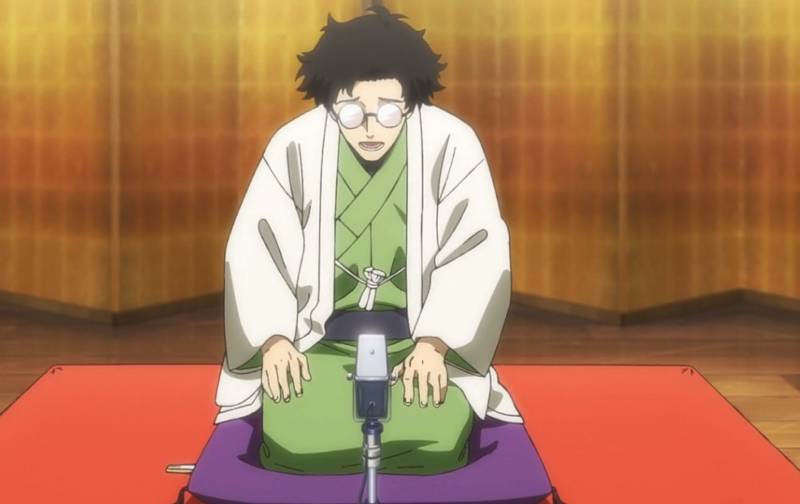
Akane-banashi Brings Cultural Enrichment to Anime Watchers
My first introduction to rakugo was through Katsura Sunshine, a Canadian rakugoka who performs in English. Rakugo is a form of Japanese comedy where a single performer plays all the characters, relying only on a paper fan and a small cloth for props. The storyteller remains seated in the seiza position (legs folded under under the thighs with the butt resting on the heels). Rakugo has a repertoire of stories, inherited mostly from the Edo period, that performers present in differing ways according to the audience’s mood. Some modern rakugoka tell their own stories; Katsura Sunshine had a series years ago where he told stories based on ukiyo-e. Because of the nature and, especially for modern Westerners, the obscurity of the stories, rakugo remains niche. Which is where Akane-banashi comes in. Akane Osaki grew up immersed in rakugo, watching her father study and practice the art form. She sat in the audience the day her father performed in an effort to be promoted to shin’uchi, a master of the art. However, that day proves to be the last time Akane’s father would perform. The top-ranked master, Issho Arakawa, expels her father and the other applicants. Akane’s father gives up the art to become a salaryman. Watching her father give up his dream and his passion, Akane decides to become a rakugoka in her own right because she loves the art and because she wants to confront Arakawa. She becomes an apprentice of her father’s teacher, Shiguma Arakawa (of the same school as Issho). Shiguma is something of a grandfather to Akane–he knew her since she was in elementary school. Akane joins a high-school rakugo contest, even though doing so would be “stooping down” because of her skill level and experience, but the reward is worth it: a conversation with Issho Arakawa. Akane wants to know the reason why her father was expelled. The first season follows Akane and her opponents as they work through the contest. Akane-banashi does a good job introducing rakugo in a natural way. Ms. Iwashimizu, Akane’s homeroom teacher, doesn’t know anything about rakugo, providing a means to explain the art form, the stories, and some of the techniques. Because Akane is still learning, her older apprentices offer her lessons, explaining some of the techniques and demonstrating them for both Akane and the audience. They go into the history of some of the stories and into a discussion about how difficult their master’s requirement is for Akane during the contest: to win the contest by only telling “Jugemu.” Jugemu is one of the most famous rakugo stories, known to even people who don’t follow rakugo. It’s akin to telling the story of Cinderella in the West. How can you entertain an audience with a story they know as well as the teller? Even harder, Akane has to tell the story twice and somehow keep it fresh! Akane’s seniors explain this to Ms. Iwashimizu, who is in the contest audience. Akane also faces difficult competition with contestants Karashi Sanmeitei, who adapts stories for modern audiences and is skillful with audience engagement, and Hikaru Arakawa, who is a voice actress and aims at pulling on the audience’s emotions using warm stories and presentations. Akane-banashi sits with each storyteller’s performances, using animated flourishes in addition to featuring their gestures and facial expressions. Small details, like the movement of sleeves, stand out. At times, the animation slides into the rakugo stories to help ground the viewer in the Edo period and show how many in the audience would’ve envisioned the stories before sliding back to watching the performer. The effect mimics how you feel when you watch a live-action performance: you become a part of the story, losing yourself to the narrative, while sometimes falling back out of the narrative to notice the performer weaving the spell. The foley adds to the experience. Usually, anime doesn’t pay that much attention to foley–the sound of fabric rubbing, the snap of fans, footsteps, and so on. You’ll hear footsteps and fan snaps sometimes, but in Akane-banashi foley plays a role in the performances. You will hear fabric rubbing as characters perform; the body itself becomes a tool for telling the narrative. Akane-banashi is a treat with its small animation details working with the foley. Rakugo stories become battles between the characters. Akane herself is a great character; she’s barbed in her speech and has a strong spine. She has the energy of a battle-shonen protagonist but has the thoughtfulness so many of those fighters lack. She’s not impulsive; she’s calculating and itching to practice and adapt. Akane uses her abilities to diffuse problems in everyday life, such as during an early scene where a mother and her classmate confront her after a fight. Akane has to refine her ability to read the audience, control the story to match the audience, and connect with them emotionally–no matter who the audience is. Akane has to set aside her uncertainties and perform at her best, no matter how she is feeling. She has a presence, a charisma that few anime characters have; she doesn’t have to yell to get attention or to threaten. She knows the value of well-placed silence and the value of cadence. Akane is willing to jump in and try when it comes to rakugo, but it’s not an impulsive leap. She considers, reviews, plans, and adjusts. She can’t Wind Scar through a challenge through non-adapting repetition. Akane-banashi balances between entertainment and educational. It has nicely animated scenes that enhance the battle-like competition scenes. I watched the English dub, and the delivery seemed fine to me; while rakugo leans on the Japanese language’s features as a part of delivery, hearing it in your native language is also a part of rakugo. Katsura Sunshine delivers his rakugo in English, tailoring the delivery to work with English’s sentence structure and leveraging the delayed payoff that sentence structure provides. But I’m sure the Japanese dub deepens the story with its traditional delivery techniques. Akane-banashi is worth a watch, and it’s great to see niche, struggling traditional arts get attention. The arts don’t receive enough attention or funding compared to sports. Anime and manga does well with how they explore the arts: manga drawing, music, theater, and niche arts like rakugo. With luck, Akane-banashi will be popular enough to increase interest in rakugo or, at least, inspire studios to explore more stories centered on the arts.
Japan Powered
2 months ago
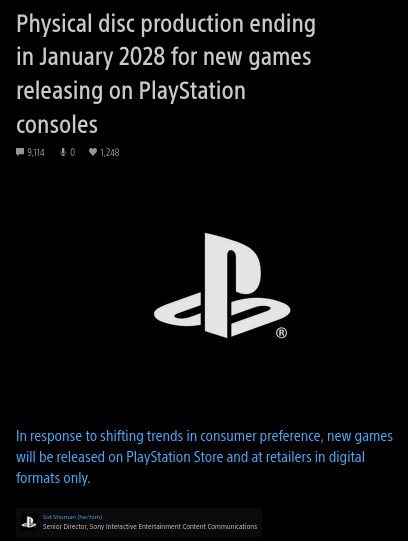
What Does Sony’s Ending of PlayStation Physical Media Mean for Public Libraries?
On July 1, 2026, Sony PlayStation announced they will stop producing physical media for the PlayStation video game console in January 2028. This upset the gaming community; this announcement affects public libraries. Public libraries circulate the newest physical video game releases, offering a way for gamers to try games before they buy them for their own collections or play games that they wouldn’t buy for themselves. Public libraries can’t circulate digital games, nor can they circulate consoles loaded with purchased, installed digital games because of the licenses. And, practically, many of those consoles wouldn’t return to the library. So, 2028 marks the end of new PlayStation releases for public libraries. This has been coming for awhile: many discs hold only part of the game, requiring the gamer to install the rest from a server. XBox has been angling the digital direction too, leaving the Nintendo Switch as the last platform that offers on-media games. Game Key Cards aren’t ideal for libraries because of how they require an internet connection, which a large number of people lack–22% of Americans do not subscribe to a home broadband internet service (Pew Research Center, 2025). A good number of the people public libraries serve fall into this 22% because of poverty or simple lack of access. Many rural areas lack high-speed internet. But Nintendo’s Game Key Cards can still be circulated, at least. DVD and Blu-ray sales have also been falling despite a blip in interest in them, with sales reported to have fallen 3% in the third quarter of 2024 (Peiser, 2025). This is an improvement compared to previous years, even if it is still a fall. Many libraries have been reducing or eliminating their movie collection with interest for the collection have dropped and as the collections become more difficult to maintain (O’Brien, 2025). To move forward, public libraries need to look back. Retro video game consoles offer vast libraries–so vast that a gamer couldn’t live long enough to play through them. Libraries ought to hold onto their DVD and Blu-ray collections despite the decrease in interest. Interest is cyclical, and it will eventually return, if in limited ways. VHS offers a unique option too. And many films are not available on streaming platforms because of licensing snaggles that doesn’t concern physical media. Shameless plug: my book Be Kind; Rewind! (Re)Introducing Fun Retro Media and Vintage Tech offers a starting point for exploring retro media. In the book, I include starting collection title lists for a variety of retro video game consoles. Anyway, once Nintendo goes all-digital, which is likely, public libraries will be locked out of circulating video games unless they tap into the past. At the same time, public libraries need to shift their focus away from circulating media and toward turning themselves into an essential third space. Third spaces are where people spend time when not at home or work. This aspect of life used to be filled with places like rollerskate rinks, churches, clubs, sport groups, and other activities. While some of these remain, public libraries provides a unique, universal space. Churches, synagogues, mosques, clubs, and sports groups are more exclusive with varying requirements to membership, such as subscribing to a particular religious system. Public libraries only ask people follow the library’s conduct policy. They allow people of all creeds and backgrounds to mingle. But to attract people, public libraries need to focus on providing programming and spaces for face-to-face entertainment: card tables, board games, video game spaces (maybe even free arcades). Staying home is more convenient and with a plethora of streaming content and digital video games, public libraries need to offer experiences people can’t find at home in order to overcome the hurdle of leaving the house. Public libraries ought to be open in the evenings to provide options for after work and open on weekends, as terrible as that can be for staff. Many people work long hours, making the typical public library “bank” hours of 9am-6pm a blocker. It would be better to open in the afternoon and close later in the evening on the majority of days, with perhaps 2 early days a week for the retired, morning crowd. Public libraries, too often, cater to the retired crowd because they are one of the heaviest of library users, and morning openings work for the ever-shrinking stay-at-home parents with young children. Encouraging families to play board games, video games, and otherwise hanging out in libraries during the evenings and weekends fulfills the third-space role libraries play. But this is a bit of a gamble because of the traditional hours libraries have played, particularly in rural communities that are starved for third spaces. Urban areas usually have more options. Libraries have a difficult time ahead. At the same time, public libraries shouldn’t jettison their physical collections as they are doing. Interest in physical media will return as people become nostalgic for it. Libraries need to provide access to physical media and the means to engage with them–DVD players, consoles, VCRs, etc–on premises and as a circulation option. Many patrons won’t have the means to use media as time passes. Providing access at the library allows generations who haven’t experienced physical media to have their first encounters–the novelty will be a draw for them. For video games, public libraries ought to set up networks for computer games to allow patrons to play “online” with each other. This may be peer-to-peer or via a virtualized server, depending on the game and what’s available. The technological challenges vary too much for me to offer much advise: Age of Empires allows peer-to-peer hosting; other games require a centralized server with a certain IP range. Librarians will need to research for their particular setup based on patron interest and demand; there are too many computers, setups, and variables for me to cover in the book or in this article. Surveys can help reduce wasted time and effort, but nothing is certain with the public. Sony’s plan and the general shift toward digital video games and films will remove a significant draw to public libraries. To remain relevant, libraries will need to focus on the social needs people have, perhaps offering in-person dating events, always-available hangout spaces for card games, board games, movie-watching (this requires a Swank license), in-library cafes and bakeries (which requires some complex policy and local business navigation), and other connection services. The future of libraries and business may well be in social connections as technology automates more “hard” (that is, logical and reasoning) skills, making “softer” (emotional intelligence and empathy) social skills more valuable. Fiction reading helps teach these soft skills. We sit in the beginning of a shift in society and economics, which makes the future misty. But humans will remain consist deep within: connection through shared interests remains a space public libraries can thrive through experimentation and keeping people’s needs–information and social–the focus. References O’Brien, Shelley (2025) Behind the Scenes at the Library: The Times They are a Changin’. Johnson County Library Foundation. https://www.jocolibraryfoundation.org/2025/01/08/the-times-they-are-a-changin/ Peiser, Jaclyn (2025) DVDs and CDs are becoming cool again, thanks mostly to Gen Z. The Washington Post. https://www.washingtonpost.com/business/2025/12/14/dvd-cd-revival-sales/ Pew Research Center (2025) Internet, Broadband Fact Sheet. https://www.pewresearch.org/internet/fact-sheet/internet-broadband/ PlayStation Blog (2026). Physical disc production ending in January 2028 for new games releasing on PlayStation console. https://blog.playstation.com/2026/07/01/physical-disc-production-ending-in-january-2028-for-new-games-releasing-on-playstation-consoles/
Japan Powered
2 months ago
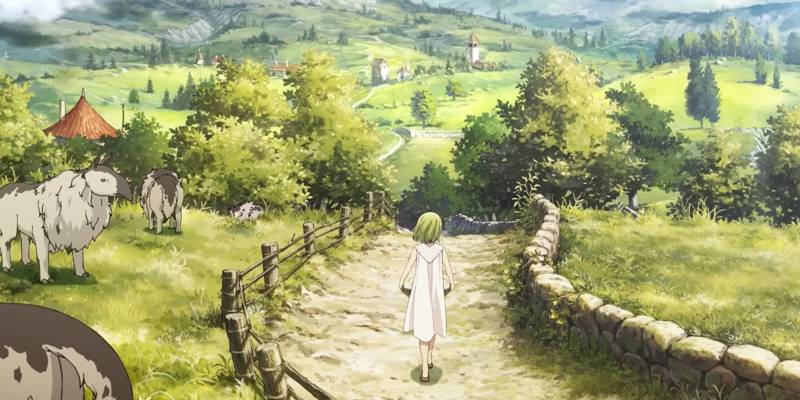
Witch Hat Atelier, A Magical Fantasy that Uses Quiet Menace Well
Witch Hat Atelier‘s first cour grabbed me from the start with its animation and sense of wonder. It has the feel of an old-school fairy tale. Although many wouldn’t consider fairy-tale girls empowered by today’s standards, many female protagonists show high agency for their time period. They chase their goals, even if it is marriage, and develop their skills–often against the standards of their family or era. Witch Hat Atelier follows this grand tradition. In the story’s world, magic is the domain of the few: witches. The Great Hall of Witches manages the use of magic; in the past, everyone understood the drawn runes and ink used to perform magic, and “forbidden magic” was widespread. Forbidden magic was performed on the living, directly on the body, rather than on objects. This led to widespread destruction and war. In the aftermath, the survivors banned that use, except for magic that erases memories which they use to protect the secret of magic. People believe only those born with the innate gift for magic can become a witch. However, a faction of witches believed magic should be available to everyone and pursues the lost knowledge: the Brimmed Caps. Witch Hat Atelier‘s protagonist, Coco, is caught in the rift between these factions. Coco is the daughter of a dressmaker. But Coco dreams of becoming a witch despite not having the innate talent. After she meets a witch (My persnickety brain would say “warlock”) named Qifrey and sees how he casts spells by drawing runes, Coco remembers a book and ink she had bought from a masked witch. She replicates a spell in the book; the spell goes out of control. Qifrey is tracking the Brimmed Caps, driven by a personal vendetta that the first cour doesn’t reveal. Because Coco is an outsider, he should wipe Coco’s memory–she only has a vague memory of the spell she cast anyway–but he decides to take her as an apprentice to further his mission to track down the Brimmed Caps. Witch Hat Atelier moves into a slice of life story that explores the wonders of magic and sets up the interpersonal conflicts and personal dilemmas of each of Qifrey’s students: Tetia, Richeh, and Agott. Coco’s entrance into the atelier acts as a catalyst that sparks each of their character arcs. This is where the cozy wonder of their world appears. The story explores its world and magic system in detail over the course of small and important duties witches perform, from putting out fires to rescuing people from a river. The Great Hall has set up a series of qualifier tests apprentices need to get through before they can become full witches. This sets the plot for Qifrey’s advanced apprentices, especially Agott. The story’s pace slows at this point, but throughout it are hints that not all is right. Qifrey is a happy, gentle man and a father toward the girls, but under his fatherliness sit glimmers of a dangerous and calculating man. If you watch closely, the story has a darkness under the wonder and slice of life. This under-surface darkness appears only through the contrast the story establishes: the helpfulness and wonder of magic has hinted horror on its underside. By the end of the first cour, the hinting stops. It’s masterfully done, and I look forward to how the foreshadowing and dark undercurrents unfold in future releases. This adds to the fairy tale nature of the story. Fairy tales, when you get past their familiarity, are dark. People die: eaten, murdered, abused, and transformed into horrors. Witch Hat Atelier doesn’t quite go as far as fairy tales do, but as a folklore lover, I’m amused by how even sanitized folktales for children retain these elements, yet “children must be sheltered.” That sentiment is relatively new: most children (those that survived childhood) grew up on these dark stories. Witch Hat Atelier is by no means dark. Wonder suffuses the story, and marvelously animated scenes show that wonder. These animation flourishes appear at the end of episodes, showing how beautiful and helpful magic can be–again, hinting at the shadow-side of magic at the same time. These animation flourishes grabbed me along with the attention to detail. The series doesn’t sustain this level of animation; if you watch carefully, you’ll spot many moments of fluid detail even when grand flourishes don’t appear. But this “drop” in animation tees up the grandly animated scenes. Viewers become accustomed and stop noticing without contrast. As I watched, I drew parallels between Witch Hat Atelier and Frieren. Both have a slower, deliberate pace punctuated by action and amazingly animated scenes. Both have a different take on magic; I don’t prefer one system over the other. Frieren’s system is more traditional fantasy with mana channeling, while Witch Hat Atelier’s system taps into the runic tradition. Writing long had connections with magic in history. If anything, Witch Hat Atelier’s magic system is more realistic and traditional than Frieren’s because of this writing connection. Runes are a language. Frieren is more nostalgic and has a sadness laced throughout it. Witch Hat Atelier is fresher: Coco is discovering a new world where Frieren compares the present with her past. I hope we’re entering a new age of fantasy stories and move away from isekai’s dominance. Of course, as copying takes over, fantasy will slide toward the deluge of lower-quality, junk-food stories isekai suffers from. Fantasy has seen this before. Witch Hat Atelier may well be in the vanguard of fantasy’s return. Witch Hat Atelier is worth a watch if you enjoy fantasy stories. Don’t expect constant action or a fast pace. The story invites you to slow down and savor, just as Frieren does. Witch Hat Atelier has many different layers and well-rounded characters, each with their own pasts and goals. The first cour lays the foundation to develop these characters further and explore a coming-of-age story. I suggest you give this a try even if you’re a go-go-action person (nothing wrong with that!). The story taps into the same themes found in fairy tales and stories that have lived in our collective unconsciousness for several thousand years. Witch Hat Atelier could well become a modern classic, but we won’t know until the anime finishes. The first set of episodes certainly gives the story a magical start!
Japan Powered
3 months ago
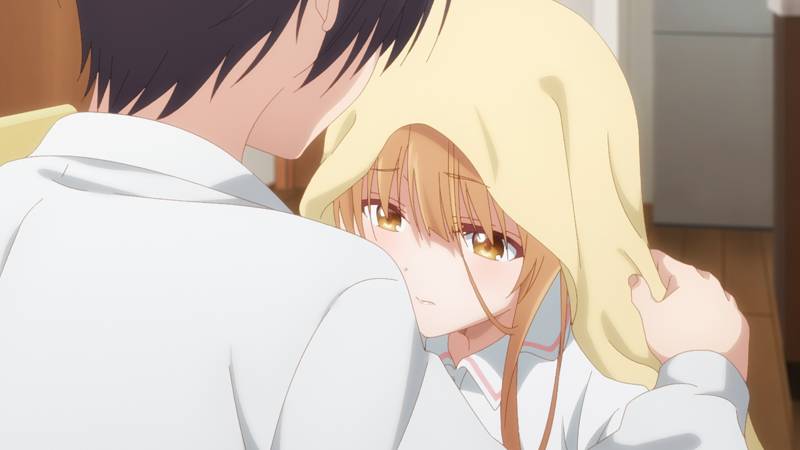
Recent Anime I’ve Dropped, Finished and Forgotten, or Felt Meh About
Each season anime releases in a deluge that all of us have to triage; there’s only so much time! I’ve dropped, forgotten, or felt meh about many anime–more than I write about here. These past few seasons have been particularly full of anime that fall into these categories. Some titles have even surprised me with how I couldn’t engage with them. I’ve learned timing plays a role. I’ve returned to a “I vaguely remember this” or “I dropped this one” months or years later to discover the story isn’t half bad and otherwise got lost in the endless stream of titles. Some of these stories might fit into this box. Scum of the Brave I enjoy found-family and mentor stories. Scum of the Brave has flavors of both. The world is interesting with the “juicing” aspect and the various personalities of the girls are fun. But I can’t remember the characters’ names, motivations, or the plot. Nothing about the story grabbed my attention. You and I are Polar Opposites I watched this one to the end and remember how it’s a cute romance and nice how it isn’t a will-they-won’t-they story; that trope is beyond exhausted. The main couple’s relationship is based on how opposites attract, but they find enough similarities that they stay attracted. I remember thinking the story is charming, but nothing else sticks in my mind. Perhaps the second cour will change that. Daemons of the Shadow Realm A story from the team and author behind Fullmetal Alchemist? Sweet! Or so I thought. The story is interesting in its own way, but I feel meh about it. The characters feel flat to me, and I don’t anticipate the next episode. But then, I didn’t like FMA:Brotherhood as much as the original anime. Daemons feels similar to Brotherhood. That might be why I feel meh. The wonder the main protagonist feels toward the modern world and its tech and conveniences is fun. The brother and sister dynamic feels off. Sis is a bit too into bro. The Angel Next Door Spoils Me Rotten I knew from the title that this isn’t for me, but I gave it a try anyway. It’s apparently popular, and if you write about media, even if just as a hobby, you ought to expose yourself to stories not to your tastes. And yeah, I dropped it like it was spoiled rotten. Perhaps all the isekai I’ve slogged through has weakened my tolerance, but wish fulfillment stories like this one do not appeal to me. I get many single, lonely young men will enjoy a story like this, and in small doses that’s fine, but stories shape our thinking. Too much consumption of messages like this one can skew real-life expectations. Liar Game Liar Game heralds from the Death Note era. It has a painfully naive girl paired with a con artist as they work through a series of, well, lying games with escalating financial consequences. The first several games were obvious; I guessed the “surprise” twists with each. I was told the games gets more complicated as the story progresses, but I lost interest. The main girl’s naivete felt too artificial. No one burned as she was would remain that trusting and clueless. Kusunoki’s Garden of Gods This healing story is super chill. A bachelor with spiritual purification powers, which manifests through his handwriting, even grocery lists!–chills with various Japanese deities. There’s a few scenes of light action as exorcists take on trouble-causing spirits, but chill defines this series. It’s…fine. The animation is stiff, but few healing anime are known for their animation. The story would appeal to stressed people, and I’ve enjoyed a fair number of iyashikei too. But it’s forgettable; I dropped it. Mistress Kanan is Devilishly Easy Similar to The Angel Next Door Spoils Me Rotten, Mistress Kanan didn’t appeal to me, but I’ve been surprised before. Yeah, not so much. I’m tired of the big-boobed foolish characters. I gave it a few episodes, but the title grated on my nerves too much. The antics and the characters didn’t jive. Jack-of-All-Trades Party of None Another overpowered protagonist story. Haven’t we had enough of these? This story takes a different spin. The OP protag becomes a teacher and uses his abilities to teach. Cool! Only he also uses those abilities to save his students. Not so cool. It would be better if the students can muddle their own way out of terrible situations. But the protag also isn’t entirely godlike; others share his power arc. It’s meh for me. Li’l Miss Vampire Can’t Suck Right A story about a vampire who can’t suck blood? Alright, I’ll give it a…and nope, not for me. The story has an interesting theme about acceptance, but everything lacks development. It reduces to “cute vampire girl who does cute things.” Pass. A Misanthrope Teaches a Class for Demi-humans A human teaching demi-humans about being human. Seen this before, but okay, I’ll give this a try. Oh, so the teacher as definite professional boundary problems with this female students who all flirt with him. We have a demi-human harem vibe. No. He needs his teaching license revoked and a certain type of monitoring; the girls come off as high schoolers, although to be fair the academy doesn’t specify ages that I remember, and he’s a 30-year-old adult. Dropped. Solo Leveling This story was hugely popular. I watched it and…remember nothing. It’s another overpowered protagonist story. I remember the action animation was great, but that’s it. And I’m trying hard to recall anything about it as I write. Blank. That’s the trouble with all of these OP-kun stories with video-game-like systems: they all smear together and are largely forgettable. If you like these stories, that’s great! To get philosophical a moment: our lives are limited and each moment that passes can’t be recovered, so we need to choose how we spend those moments wisely. If a piece of entertainment doesn’t jive with you, you’re better off spending that limited moment elsewhere. Now, some would say all entertainment is a waste of life, but if you’re a long-time reader of my writing here, you know I don’t believe that. All stories shape us even if we aren’t aware of it. All entertainment has some sort of story baked into it that becomes a piece of our thinking. A story that your subconscious doesn’t enjoy at the moment doesn’t mean the story is objectively bad. Perhaps, like me. you’ve consumed too many of that particular type, and your mind can’t take anymore! Revisiting a story you’ve dropped later may work better in such a case. Some stories engage more when you don’t have to wait a week between episodes, particularly if the story is complex or fast-paced. Light stories can be engaging when they can maintain the momentum in a binge. When I peruse the anime community’s discussions, which I admit isn’t often, I sometimes see discussions that devolve into ad hominem. It’s good to have differing opinions and perspectives about stories and characters. It brings richness to the story if the opinion is reasoned well. Subjective reasons as I present (and objectivity isn’t as, well, objective as people like to think) are valid reasons, as are the reasons you may enjoy the story. I’ve changed my mind about titles after reading what others see in it: themes or meanings I was blind to. Differing opinions is good! Well, anyway, I’m not certain if I’ll revisit any of these titles. There are so many new titles each season and many other tasks, books, and video games vying for my limited time. What titles have you dropped, forgotten, or felt meh about?
Japan Powered
3 months ago
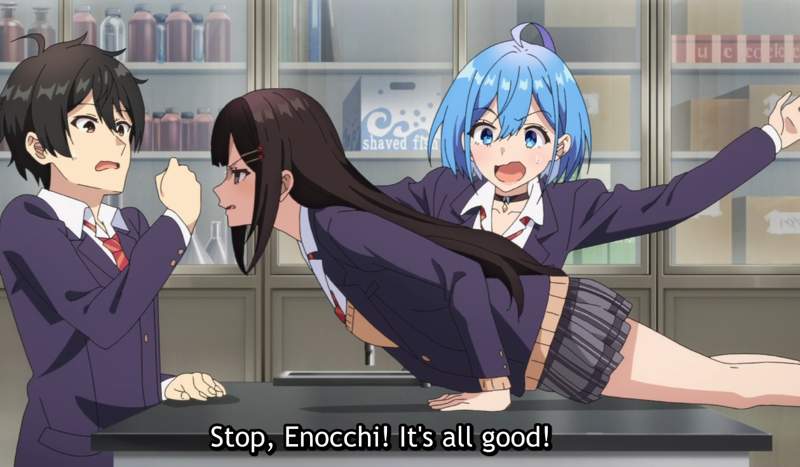
Commodification and the End of Anime
In an interview at Anime Anime, anime critic Ryota Fujitsu discusses his concerns about commoditization and the end of anime. Ryota sees the popularity of anime leading to its end as an important artistic work and losing its identity to become just another interchangeable form of entertainment: “no one will pay attention to its existence.” As anime becomes popular, it becomes a daily commodity, a product that is mass produced and similar to each other rather than expressive, unique, and authentic works. Ryota connects this end-game of anime with how detergents are mass produced, except while laundry soaps are daily necessities, anime as a form of entertainment isn’t a necessity and can be interchanged with short-form video or other forms of entertainment. It’s not that anime will end–stop being produced; rather, anime will lose its identity and become just another entertainment product without a distinct difference: “‘its the same if you kill time anyway.'” Ryota discusses how commoditization breaks the spectrum between an artistic work and a product: a a spectrum that allows a story to exist as both an artistic work and as a product, having message and merit rather than acting as a sole vehicle to sell other products. As I read this view, I thought of the 1980s Hasbro cartoons in the US; they were designed to sell toys first with story being secondary for the company (but not the writers!). Ryota discusses how generative AI tools will push anime toward mass production. Others in the anime community have expressed the same concern with their misreading of the Japanese government’s recent funding initiative. The government announced plans to expand support for domestic content exports for both anime and films with the aim to triple overseas revenue. To do this, the government will expand subsidies to 15 eligible companies like Shueisha and Crunchyroll. The government wants to boost the number of subscribers across all the companies “to 300 million from the current 100 million.” Amid fiercer competition among streaming service providers, the subsidy program aims to help expand Japan’s content industry by encouraging domestic operators to take the lead in streaming anime and manga works, in which Japan holds a competitive advantage. The Japanese government encourages the funding recipients to translate works into other languages faster by using generative AI in an effort to curb the damage the government claims piracy causes. This sentence has many anime news outlets getting their swords out. But if you read the government’s announcement without looking for clickbait writing, you’ll see the government is concerned about piracy hurting domestic content creators. They believe faster translation and distribution will reduce this. In other words, the speed of translation is the government’s focus and not the means. AI is just a tool the government encourages to get ahead of illegal translations. They aren’t forcing the companies to do this in order to receive the subsidy; most companies already are using AI tools, anyway. In other words, news outlets are making a fuss over nothing to get views, but this all ties into Ryota’s concerns about the commoditization of anime and turning it into a mass-produced product. I see where Ryota is coming from, and I understand the the news outlets’ hand-wringing about the use of generative AI for translation. Gotta get those clicks, after all. AI translation can be a tool to help translators increase their productivity: collaboration and not replacement. Companies are learning that AI works best as a tool for human workers, and that using AI on its own isn’t cost effective because the low quality output it produces need double the work to get ready for consumers. Companies want to keep their rapport with their customers because rapport and quality are profitable. Ryota’s concern about commoditization has long been a discussion in the book world too. Artistic works often don’t sell, while “mass produced” products like mysteries and romances do. However, those high-selling products allow publishers to fund artistic works that win awards but fail to turn a profit. Publishers must make profit to continue producing books, and the people in these companies are passionate about good stories. Commoditization doesn’t have mean the end of artistic merit. Andy Warhol’s paintings of everyday products like Campbell’s soup cans shows how mass-produced products have their own artistry. Ryota’s concern about anime becoming interchangeable with other entertainment has long been true for casual watchers, just like any form of entertainment. In the interview, he discussed how people choose what not to watch rather than what to watch because of the quantity of titles. I don’t see this as bad. It can lead to siloing, but that’s an intellectual trend affecting all forms of information. If anything, the large number of titles produced offers more diversity. The popular titles can subsidize the literary, less popular works just as what used to happen (and still happens to some extent) in the book publishing industry. Commodification and artistry can be symbiotic instead of antagonistic. I share Ryota’s concern about the sameness of anime, but I’ve had that concern for some 15 years. Anime is, for lack of a better word, incestuous. The prevalence of tropes and riffs on previous titles that actually did something new makes titles feel similar. Isekai and romance, in particular, like to stamp out stories with only a little variation. To be fair, in book publishing, romance and mystery do this too. Ryota’s concern isn’t a new problem. Literary writers opine about the lack of literary taste in the general public. Commodification is baked into artistic works. Writers, artisans, and artists have always been required to produce works that sell in order to support themselves unless they were the rare, independently wealthy variety. Anime studios are businesses, not independently wealthy landholders, so they must make products to support their sometime literary works. Ryota’s worry about anime losing its identity is curious, considering Japanese anime studios have been producing American cartoons since at least the 1980s. Anime’s style has become the dominate animation style in the world. If anything, local styles like America’s traditional animation have succumbed to anime. Anime’s identity will remain strong, unless Ryota means anime’s Japanese identity. With that, I agree. Anime has become international with American, Chinese, and Korean studios producing anime-styled productions. But I enjoy this story diversity. The competition will make anime better and, I hope, less incestuous. This is a long-winded way to say Ryota has valid concerns in the interview as do the news outlets clickbaiting about AI translations, but the hand wringing is overblown at the same time. Anime has always been a commodity and used to sell other products: Tezuka had such deals! Commoditization can fund artistry. We can’t expect a general audience to appreciate works beyond a surface level enjoyment, and there’s nothing wrong with that. Deep artistic enjoyment of, well, any work has always been the domain of those who study the art or produce it. I don’t do carpentry, so I can’t recognize when a joint is wonderfully made or when grain detailing is well-handled; I can see that the chair is beautiful. And sometimes that surface level enjoyment is enough. References Anime Anime (2026) Thinking about the “end of anime” – “Commoditization” of anime by supply volume × viewer behavior. https://animeanime.jp/article/2026/06/15/100063.html Yomiuri Shimbun (2026) Anime, Manga Providers May Get Govt Subsidies for Overseas Promotion. The Japan News. https://japannews.yomiuri.co.jp/culture/manga-anime/20260625-334792/
Japan Powered
3 months ago
My Gift LVL 9999 Unlimited Gacha: Backstabbed in a Backwater Dungeon, I’m Out for Revenge! Junk Food with References
Catharsis forms the centerpiece of some stories. When a story aims in this direction, characters and events are portrayed in binary ways, even when they’re both on the “evil” end of the ethical and moral spectrum. While the story tries to make the audience sympathize with the protagonist, the protagonist isn’t good, considering how revenge against their enemies drives them, with that revenge falling into masochism. These types of stories tap into the frustrated zeitgeist: the widening economic disparity, authoritarianism, elitism, and so on. Cathartic stories don’t usually do this in a sophisticated way. Nuance works against the purpose of entertaining the audience and providing a bit of a release for pent up feelings of frustration and injustice. The mouthfully titled My Gift LVL 9999 Unlimited Gacha: Backstabbed in a Backwater Dungeon, I’m Out for Revenge! fits into this cathartic-focused story type. I’ll call the story 9999, but it is sometimes referred to as Backstabbed in a Backwater Dungeon. Spoilers ahead. Although, if you are familiar with these types of stories, the how is the only spoiler. The story wastes little time setting up its black-white premise. Nine races populate the world, with humans as the weakest and most exploited race. Light (a likely nod to Light Yagami from Death Note) is a human welcomed into a party composed of the nine races. The party’s expressed goal is to delve into The Abyss, the world’s worst dungeon. But their true goal is to investigate Light, who they suspect is a maestro–rare humans with boundless powers who are historically responsible for the state of the world. The party takes Light into the dungeon where they betray him and try to kill him, but a teleportation trap transfers to the lowest level of the dungeon. Facing certain death at the lowest floor, Light’s hidden ability, Infinite Gacha manifests. The power is as it sounds. He has the ability to pull random cards. The cards summon beings, weapons, and other abilities according to the surrounding mana. Because the Abyss has such a high concentration of mana, he summons Mei, a level 9999 companion who saves him. Deciding to overturn the state of the world and get revenge on those who tried to kill him, Light spends the next three years using his Infinite Gacha to build an army and an entire civilization on the lowest floor. He levels to, as the title states, 9999 and becomes overpowered in just about everything. This sort of absolute power is common for these revenge stories. Light also pulls the Bracelet of Youth that holds his appearance at 12 years old, the same age he was betrayed. Light decides to scout the surface to test the strength of the kingdoms before he implements his invasion and revenge plan. So, he takes on the alias of “Dark” (creative, I know) and wears a mask, posing as an adventurer with a couple of his summoned companions. He learns of the way humans are treated, killed for fun, used as experimental subjects, and exploited as slaves. Posing as an adventurer allows him to pinpoint his first target: Sasha. Sasha had acted as if she had feelings for Light to lure him into the party. She and Light’s other targets are strong for their race but weak compared to Light and his companions. Light and crew summon a tower to act as a lure for Sasha and the military of the elven kingdom. The tower has a spell that prevents Light’s targets from dying, allowing Light and crew to test themselves against the warriors–a euphemism for torturing them. The story goes out of its way to paint the elves and other races as horrible in an effort to lend justice to Light’s desire for revenge and even how he considers genocide for the other races. Light discovers his hometown had been destroyed and the population massacred. He also decides to search for his siblings and free humanity from the other races, one way or the other. All of this aims at trying to justify his vindictiveness, his method of using violence to solve violence. It’s cathartic, tapping into the “edgelord” and 1980s dark fantasy stories I used to read. But the story trying to paint the other races as worse than Light doesn’t work. The story doesn’t really question the morality of Light’s actions, at least in the first season. It doesn’t play with the problem of how violence creates a further cycle of violence, unless you include Light toying with the idea of committing genocide on all the other races. It would solve how they treat humans should he succeed, but it would also set the precedent for the rest of the world’s history. Of course, I’m thinking too deeply on a story that doesn’t support such an in-depth examination of the problem of violence. Role-playing game leveling systems have been folded so deep into fantasy anime that you find them even in non-isekai stories like 9999. But then, even Dragon Ball Z played around with numeric power measurements for comedic and to point out how power can’t really be measured. Most of the audience will be familiar with these type of leveling systems, but it still feels off when characters speak of their numeric levels as a point of pride or as an impossibility such as with Light’s level. While it is shorthand for how dominate a character is, it strikes me as lazy writing. Although, at this point, level systems have become almost a required trope for fantasy like the beach episode has become a required trope for, well, all anime and manga stories. Thankfully, many fantasy stories resist this half-baked trope, like Frieren and Witch Hat Atelier. While authors can play with this trope a bit, subverting it like DBZ once did, it lends to the staleness that appears in world building. Of course, this staleness extends to most of fantasy ever since Tolkien with how dwarves, elves, and the various other fantasy races appear. Folklore has more variations for these races that remain relatively underused, like how elves were often as malicious as helpful, possessing people to help or hinder them, spreading sickness, and so on. They would appear in the Tolkien beauty or as ugly demons or as changelings. But going against the established expectations of the audience can sometimes hurt a story; it drives away an audience who want the-same-but-different, which is the most common audience. Light’s gacha ability has potential for comedy and other interesting stories. Beyond summoning all his companions, it doesn’t see much use in the first cour. It’s a bit of a shame because the gambling aspect could make for an interesting story, but it wouldn’t really fit into the cathartic power fantasy this story focuses on if taken a different direction. Overall, 9999 is a junk-food watch. There’s no real depth to the world. Rather, I ended up watching to see just where Light’s revenge would take him. Even that lacked imagination, focusing on humbling the targets and inflicting as much violence as possible for the audience to indulge in, Catharsis stories aren’t really for me, because I end up rooting for someone to break the overpowered protagonist–something I used to do even with Superman–which isn’t what these types of stories do. Unless these sort of revenge stories are your type of junk food, skip this one.
Japan Powered
3 months ago
Quoting from Confucius’s The Analects
Confucius influenced the development of Japan in many ways, namely in the structure of Japan’s early political system and in the idea of ie, or house. Ie became the foundation of Tokugawa Japan’s social organization. In Tokugawa Japan, the house, another name for family, formed the smallest economic, political, and spiritual unit. To keep the organization simple: samurai families stood at the top, followed by farming families, artisan families, and then merchant families and outcast families. Family members were expected to show filial piety to parents and grandparents, and families had to show loyalty to their local lord, who was framed as a parental figure for all families in the area. The local lord, then, held loyalty to the Tokugawa family in a similar way. And everyone in Japan held loyalty to the emperor and his family. Confucian principles tied this system together, especially with its emphasis on filial piety, social position, and social order. Confucius’s later disciple, Mencius, underpinned what we would later call Bushido. I’ll briefly focus on quotes from Confucius (and not the usual old meme quotes). Dozens of Olympic swimming pools of ink have been expended over the centuries to explain and expand Confucius’s ideas. Many books have been written about how his ideas influenced Japan. Because of this, I decided to read The Analects a few times. This book collects conversations among Confucius and 22 of his disciples. The collection was compiled during the Warring States Period of China and includes what appears to be genuine off-the-cuff comments. Sadly, I’m not well-versed in Chinese history outside the broad strokes I’ve read in various books, so The Analects proved difficult at times. I lacked the context to piece together the significance of events referenced or of the people Confucius often lampooned. Confucius concerned himself with harmony and compassion toward others, and his sense of humor comes through the text. Confucius seemed to be a little obsessive compulsive. One of his students observed: “If his mat was not straight, he did not sit on it.” The Analects spends much of its time discussing a mix of topics from military to how a virtuous person should live. Sometimes Confucius responds to questions with a snarkiness that made me think of responses I’ve read in Zen philosophy: “How the flowers of the aspen-plum flutter and turn! Do I not think of you? But your house is distant.” The Master said, “It is the want of thought about it. How is it distant?” Instead of discussing The Analects, I will have Confucius speak for himself. Here’s a collection of quotes that jumped out at me as I read. I tried to pull quotes that remain clear without their surrounding context, but all quotes are suspect when pulled from their frame. Confucius spoke often of the superior man and how his (and her in a modern context) behavior and thinking should be. Confucius focused on social rank and the idea of everyone having a role and a place that they needed to stick to. Society was organized from the top down based on abilities and this social rank, and everyone had a duty to keep to their place. This background will provide some context to some of his quotes. Because of the nature of Chinese, translations and meanings of the sections can be disputed; centuries of commentary surrounds what Confucius wrote. English translations lose the nuance of Chinese and flattens meanings. Likewise, areas can be translated both ways: “Don’t do to others” and “Do to others.” While similar, these different phrases require differing approaches: passivity versus action. Chinese characters compress meanings and layers, which makes translating and reading difficult. For those of us who can’t read Chinese, we can only rely on differing translations and commentaries. So, these statements need to be read with all of this in mind. Fine words and an insinuating appearance are seldom associated with true virtue. I will not be afflicted at men’s not knowing me; I will be afflicted that I do not know men. If the people be led by laws and, uniformity sought to be given them by punishments, they will try to avoid the punishment, but have no sense of shame. If they be led by virtue, and uniformity sought to be given them by the rules of propriety, they will have the sense of shame, and moreover will become good. If a man keeps cherishing is old knowledge, so as continually to be acquiring new, he may be a teacher of others. The accomplished scholar is not a utensil. Learning without thought is labor lost; thought without learning is perilous. The cautious seldom err. The superior man wishes to be slow in his speech and earnest in his conduct. Virtue is not left to stand alone. He who practices it will have neighbors. The superior man thinks of virtue; the small man thinks of comfort. The superior man thinks of the sanctions of law; the small man thinks of favors which he may receive. The superior man is satisfied and composed; the mean man is always full of distress. The wise are free from perplexities; the virtuous from anxiety; and the bold from fear. The superior man seeks to perfect the admirable qualities of men, and does not seek to perfect their bad qualities. The mean man does the opposite of this. When a prince’s personal conduct is correct, his government is effective without the issuing of orders. If his personal conduct is not correct, he may issue orders, but they will not be followed. To lead an uninstructed people to war is to throw them away. To be poor without murmuring is difficult. To be rich without being proud is easy. I will not be concerned at men’s not knowing me; I will be concerned at my own want of ability. If a man take no thought about what is distant, he will find sorrow near at hand. What the superior man seeks, is in himself. What the mean man seeks, is in others. Should you read The Analects? Yes, if you want to understand one of the most important influences on China, Korea, and Japan through history. Confucius wouldn’t become influential until after his own lifetime. You’ll see many of his principles tucked into anime, much like you’ll see Biblical references in Western media. The Analects is a part of the cultural background. References Legge, James trans. (1861) The Chinese Classics: Volume 1. Confucian Analects.
Japan Powered
4 months ago
Japanese Girl Bands and Men’s Protect and Provide Instinct
The Internet like to box things into binaries. You’ll often come across the idea that men have an instinct to protect and provide, particularly toward women. Part of the claim rests on the observations of body dimorphism. Men, on average, are larger and stronger than women. Women, on average, tend to be more nurturing. The claim says this is because men went hunting and to war while women stayed home to gather and tend the children. And the claim isn’t wrong. The problem comes from how the claim is used to justify a variety of behaviors. Instinct guides some behavior; nurture guides the expression of instinctual behavior. The expression of this behavior varies by culture and time period. In the past 50 years or so, there’s been a push to create identical value systems for men and women, and this online claim of evolutionary differences traces all the way back to the early decades of the feminist movement. Many writers argue the effort to make identical values has led to masculinizing the feminine. The inherent instinctual differences between men and women “render identical value systems unnecessary and even damaging to the goals of self-preservation and procreation” (Wilder, 1977). Wilder and other writers believe the genders ought to be different but equal or it will hurt procreation and relationships. And his assertion seems to be verified by the general world-wide decline in male-female relationships and children we now see. The claim we encounter online is a backlash against the traditionally Western masculine values changing and adopting feminine traits. Where feminism took on masculine traits, which made women who valued traditional feminine traits feel threatened, masculinity now takes on feminine traits which makes men who value traditional male traits feel threatened (Valsecchi, 2023): Indeed, evidence from Western countries suggests that men’s role in society is evolving and that men are now taking on and expected to exhibit more caring and nurturing roles, once reserved uniquely for women. For example, men are getting more and more involved in unpaid work, especially in domestic activities such as the care of children. Similarly, they are increasingly perceived as possessing traditionally feminine traits (e.g., and engaging in traditionally feminine activities. Moreover, stereotypically feminine traits, such as empathy, communication and collaboration, are gaining value in typically masculine professional positions, such as leadership and management. These changes suggest that men are increasingly adopting roles that were traditionally reserved for- and/or perceived to be for women and seem to generate the overall perception that a new, more feminized norm of masculinity is emerging. The traditional male identity shows men as dominant, heterosexual, physically strong, and avoid feminine behaviors and attitudes. If you study Asian and even Western history, you will see that the traditional view of men isn’t actually traditional. Samurai were known to “cry into their sleeves,” arrange flowers, compose poems, and dote on their children while remaining warriors and protectors. If anything, masculinity is adopting more traditional historical masculine traits. These empathy, communication, and collaboration changes aren’t feminine. In studies of tribal cultures I’ve read, and indeed Edo period diaries, these so-called feminine traits appear within men’s groups. Empathy is common to both men and women, but Western contexts have boxed the traits into a false feminine category. And men had historically been involved in raising boys, in particular. Many Roman writers discuss their relationships with their children and their fondness for their daughters, for instance. These values align with the claim men have the instinct to provide and protect, for both his family and his compatriots. This expresses itself based on cultural expectations. In recent centuries, women protected children and men’s emotional realms with men protecting the physical realm. But this is a cultural expression and not one rooted in biology. Men are physically stronger and larger, on average, than women. And this makes them better suited for physically protecting people against other men. But this doesn’t relegate men to the role of sole physical protector. In the ancient world, women would often protected the homefront while the men fought on the front lines. Onibushi were Japan’s example of this. Spartan women were well known for their martial ability. This was common among Celt and Germanic tribes during the Roman period. Practical considerations dominated over the more binary idea we’ve developed in the modern world. Despite this historical reality, the binary view is considered writ in stone. Many men struggle with the current transition as they lose their traditional role to protect and provide. They suffer from a lack of purpose. This leads to high rates of male suicide, depression, and body image problems. Depression and suicidality in men link closely to their socio-economic status– “failures to achieve expected goals relating to employment, financial and legal issues were found the post the greatest risk” for depression (Carragher, 2017): On balance therefore, it seems that for some men having an occupation gives a sense of meaning and purpose, and the feeling of being useful. Men’s body image problems tie into this. Male body image problems are more challenging to study than women’s body image. Men have a complex body image, reporting dissatisfaction in more ways: too thin, too fat, too weak, not muscular enough, too short, and so on (McGregor, 2020). Being overweight or obese associates with body dissatisfaction and depression in young men. Strong family and social ties decrease depression and other negative symptoms among men with body dissatisfaction in the study. But what does all of this have to do with Japanese girl bands? In a word: context. All of this sits in the cultural background and unconsciousness of the men consume Japanese girl band content. I use the phrase Japanese girl bands to encompass both idol groups and other all-female bands. Idol groups have the most visible fandoms. Many men navigate the transition manhood currently undergoes by turning toward their fandoms. And this method can be helpful for the body image issues, depression, and other problems men wrestle with (McGregor, 2020): Men who feel socially accepted by others, however, experience fewer depressive symptoms than men who lack such acceptance and feel attainment of a physical ideal is required for social approval. Despite negative images toward overweight people in the media, men who feel positively about their social relationships, even if they have low Personal Self Concept, experience fewer depressive symptoms overall. Male fans of Japanese girl bands may find themselves in an environment where they feel socially accepted. They find other men with the same interests. The nature of idol and band interaction lends a feeling, however contrived, of being accepted by the girls. Together, this blunts the effects of depression associated with poor body image, lack of upward movement in society, lack of romantic relationships–not to say all male fans are single–and lack of male friendships outside the fandom. The fandom ties into men embracing traditionally female-coded ideas such as cuteness. Men have long appreciated feminine cuteness. Fandom takes this to a different level where fans will surround themselves with items and photos, creating spaces that resemble female-coded spaces with their colors and memorabilia. Valsecchi (2023) suggests: The feminization of men’s gender norms translates into men adopting feminine roles and behaviors and implies that the norms defining masculinity now suggest that men can and should assume roles and behaviors once considered to be feminine. This directly challenges the antifeminine mandate of traditional masculinity, which is essential to justify and maintain the gender status quo. That said, a lower motivation to protect traditional masculinity implies a lower motivation to defend the antifemininity mandate when it is challenged. Consequently, when confronted with the feminization of their gender group, men who are less motivated to protect traditional masculinity should be more likely to conform to new, more feminized norms of male gender identity. This ties into why otaku men and many men in general embrace cuteness. Japanese girl bands are moe–generating the desire to protect and support them. Japanese girl bands sit within the boundaries of traditional male traits: attraction toward the feminine. The traits remain masculine, but the expression of those traits have become boxed as feminine. The Japanese girl band fandom, in some ways, acts as a soft rebellion against the “traditional” masculine. These men place their energy on their enjoyment rather than socially accepted focuses. They surround themselves with commercialized femininity as an escape from the patriarchy’s demands on men. Japanese men are still expected to dedicate themselves to their company and act as heads of their households. Although, this is slowly changing. Not all men want to be protectors or caretakers of women. Not that women want or need protectors or caretakers! These men don’t want to be the traditional head of the household for a variety of reasons–some of which trace to genetics and brain structures and others to how they were raised. The discussion shouldn’t overlook the role of nature and nurture. Other times, these men work as managers and don’t want to call the shots when they’re home. They are exhausted. The traditional societal definition of masculinity can be damaging to men; people ostracize those who don’t fit. And this definition of masculinity throughout history has led to men dying in war. A man’s fandom in a Japanese girl band provides an escape from these expectations and pressures (McAlpine, 2017): So it seems that idol performers remind the otaku of a time in their lives when fun and optimism were palpable things, and rather than face a dreary or potentially upsetting reality, they choose to escape into the fantastic realm of fandom, where they know exactly what to expect. People stereotype Japanese-girl-band fans as unhappy, single losers. What I’ve discussed so far hasn’t helped that image much. But this isn’t the case. Most fans are content with themselves. Fandom provides that contentment; small amounts of escapism improves mental health. A German study (Kislev, 2024) suggests that a reduced desire for a relationship can be explained by a existing high level of life satisfaction. People who are lower in life satisfaction tend to be dissatisfied across many categories–money, body image, and others–regardless of their relationship status: Indeed, recent studies that also analyzed the Pairfam data found that singles with low relationship desire also have higher levels of sexual satisfaction while displaying lower levels of sex frequency, desired sex frequency, and consumption of pornography. Pairfam is a database funded by the German government that collates a large variety of survey data since 2008. It includes all German-speaking individuals living in private households in Germany. Contentment tends to encourage singlehood and more sexual satisfaction when such people have relationships. This is a long-winded way to say: not all fans of Japanese girl bands are discontent single misanthropes seeking parasocial relationships to escape reality. Many have relationships. Some will be content with themselves and enjoy the benefits and comradery their fandom provides. The fandom can be seen as a part of the transition toward a more balanced view of masculinity. Many men face difficulties, and if a fandom can help ease depression and purposelessness as a part of a well-rounded life, great! There’s many similarities between male fans of Japanese girl bands and female fans of K-pop groups. In the end, these hobbies get an unfair reputation. They represent a modern return to historical expressions of masculinity. They can be taken to harmful levels–with obsession, stalking, over-consumption, and other problems–but these fandoms aren’t inherently harmful. References Carragher, L. (2017). Opportunities for Generativity in Later Life for Older Men. Australian Journal of Adult Learning, 57(3), 351–365. Kislev, E. (2024). Relationship desire and life satisfaction among never-married and divorced men and women. Sexual & Relationship Therapy, 39(4), 1158–1172. https://doi-org.oh0164.oplin.org/10.1080/14681994.2022.2099538 McAlpine, Fraser (2017) The Japanese obsession with girl bands – explained. BBC. https://www.bbc.co.uk/music/articles/84fd62c3-f5a4-49e6-9e3e-6f5217c1448c McGregor, C. C., Kaminski, P. L., & McFarland, M. B. (2020). Feeling Fat and Depressed? Dimensions of Self-Concept That Affect Men. Journal of College Counseling, 23(2), 142–153. https://doi-org.oh0164.oplin.org/10.1002/jocc.12155 Valsecchi, G., Iacoviello, V., Berent, J., Borinca, I., & Falomir-Pichastor, J. M. (2023). Men’s Gender Norms and Gender-Hierarchy-Legitimizing Ideologies: The Effect of Priming Traditional Masculinity Versus a Feminization of Men’s Norms. Gender Issues, 40(2–4), 145–167. https://doi-org.oh0164.oplin.org/10.1007/s12147-022-09308-8 Wilder, J. (1977). Male and Female: The Significance of Values. American Journal of Psychotherapy (Association for the Advancement of Psychotherapy), 31(1), 11. https://doi-org.oh0164.oplin.org/10.1176/appi.psychotherapy.1977.31.1.11
Japan Powered
4 months ago
Getting Started with Gunpla: Lessons from My First Model Kit Build
Back when I did public-facing librarian work, I organized workshops for teens and adults. I organized computer building workshops, handheld game console building workshops, and other building-things events. We usually ran these on a 50/50 basis: you’d pay for half and the library would pay half; you’d then attend the workshop and take the thingie home. Despite the variety of workshops I hosted, I had never hosted a Gunpla workshop. A few months ago, I decided I needed to remedy my lack of Gunpla knowledge, considering how big a hobby it is for many anime and manga fans. So, I bought a small beginner’s kit. If you aren’t familiar with Gunpla, Gundam Plastic Models, are model kits based on the mecha in the Mobile Suit Gundam franchise. These models appeared in the 1980s. The kits categorize by scale and grades. Scale refers to the size of the model relative to the size of the mecha, if the mecha was real. Scales have changed a bit over the decades, with today’s models ranging from 1:144 (which stand about 4 inches or 10 centimeters) to 1:48 (12 inches or 30.5 centimeters). The actual height varies according to the height of the mecha. Grades determine the level of detail, and so the difficulty, of the model. Grades include: High Grade, Real Grade, Master Grade, and so on. Scales and grades work together; certain scales pair with certain grades. Kit builders like to weather their models with paint and ink to increase the detail and realism. I’ve never been much of a model builder, so I opted for an inexpensive 1:144 High Grade model of Aerial from Mobile Suit Gundam: The Witch from Mercury. I liked the mecha’s design, and the anime was decent enough. The directions came in a combination of Japanese and English, but the step-by-step illustrations were clear; I reversed the shins of the legs, which I needed to tear apart and fix. But otherwise, I didn’t have any problems following the directions. Each sprue has a letter and a number, and each part is numbered. The instructions use these letters and numbers to tell you which sprue and which part numbers build the segment. Aerial had multiple colors of plastic, including neat-looking translucent plastics for her glassy components. I confused the directions of the shins because I clipped both legs pieces at the same time. Don’t do that! If you’re a newbie like me, cut one piece at a time and assemble everything one piece at a time. Otherwise, you’ll confuse pieces and put something together the wrong way. The pieces cut from the sprue easily. Most of the time, I didn’t need scissors. I was able to use my fingers and nails to separate most parts. You’ll definitely want nails to help you with some of the smaller parts. I’ve always wondered how people who nub their nails can pick up or handle tiny things. Fingernails act as tweezers when you don’t have any handy. Speaking of tweezers, you’ll want a pair to use seat the decals. These tiny stickers are fiddly to place on the models. Although my 1:144 High Grade model wasn’t difficult to put together, it required attention to detail and time. I spent somewhere between 3 to 4 hours building it. But the building is the point, so I didn’t rush the process. Pieces snapped together with satisfying clicks. These kits don’t need glue to hold anything together. Gunpla are a marvel of engineering with how they snap together. I clipped pieces and snapped them together without knowing exactly what this odd red piece was doing until the section was completed. I felt surprise throughout the build with how this weirdly detailed piece was shoved between two obscuring pieces, only to see how it added depth or movement after I finished the section. I hadn’t expected to feel surprise building a model. I often stopped and wondered how engineers thought of making this joint as they did. Joints gave the model a surprisingly wide range of motion. As many as 6 different pieces would click together to create an intricate ball joint with pieces that slide over each other just as they did in the animation. The model included even articulations like rotating shoulder plates and changeable weapons. Aerial had a shield that transformed in the animation. The model allowed for this by taking the shield apart and piecing the elements together to match what happened in the anime. I suspect mecha designers work closely with kit designers. Anime producers have long had a close relationship with merchandise makers. Royalties from product sales like Gunpla and DVDs keep studios afloat. Not all Gunpla are articulated as my little model is. But Gunpla models aren’t designed for kid’s to play with. These are display pieces first. You can buy stands for them, but I didn’t opt for one. Aerial stands just fine next to my Lego Sakura Tree set on top my 100-year-old carved writing desk. The contrast in modern mass-produced engineering against artisan engineering compliments each other well. So, a few lessons I learned: Fingernails come in handy for knocking off plastic notches left from the sprue. Sharp scissors and small tweezers are handy. Clip one piece at a time and assemble them. Don’t clip multiple pieces at once. Check the position of your section against the instruction position to avoid attaching the wrong pieces: like the left thigh with the right shin. Pieces will snap together easily without forcing them. Give yourself space to work at a table or desk. Give your cat the box to keep them from playing with the parts. Take your time and enjoy the process. Gunpla offers an interesting hobby or one-time library workshop, but it can get expensive quickly! The hobby includes displaying and lighting the finished models. Displays are part collecting’s fun, after all. I enjoy a nicely organized bookshelf or game shelf. Hobbyists customize their kits to show battle damage or combine differing kits to create their own unique mecha. As with any hobby, you can take it as far as you want. While I enjoyed building the kit and marveled at the posablity of the finished model, Gunpla isn’t a hobby for me. I already have too many hobbies! If you enjoy Gunpla, that’s great! If you’ve been interested and never tried it, pick up a beginner’s kit (1:144, High Grade) and give it a whirl. You may find you enjoy building models. If you are a Gunpla person, try expanding to other kits: cars, ships, planes, spacecraft, and so on. Either way, model building is a great way to get away from screens and work with your hands.
Japan Powered
4 months ago
“Mashle Magic and Muscles” Smashes Harry Potter and Superman Together
What do you get when you mash old-school strongman Superman, Harry Potter, and a shonen tournament battle anime? Mashle Magic and Muscle! The title captures the mashup well. You might not be aware but Superman didn’t always have his flight ability, heat-ray sight, and other powers. When Jerry Siegel and Joe Shuster first created Superman in 1938, he had extreme strength and unpenetrable skin. The rest of the story remains the same: he’s an alien adopted by Jonathan and Martha Kent. Take this old version of Superman and drop him into a world similar to the world of Harry Potter, where only magic dominates, and people without magic are “vanished.” Everyone has marks on their faces, similar to Harry’s scar, which represent their level of magical power. The more marks, the more magic power they have. Rename this Superman to Mash Burnedead, remove the tough skin, drop him into a high school that’s a shonen battle school, and you get Mashle! Like Superman, Mash has a mysterious origin. Regro Burnedead finds the infant Mash and decides to raise him. However, Mash doesn’t have a magic mark so Regro takes Mash into the forest. Those without marks haven’t received God’s gift and are deemed a threat to society and are killed. To help Mash take care of himself, Regro has Mash weight train until Mash develops muscles strong enough to allow him to deflect even magic. However, Mash’s secret is found out by the police. But after Mash defeats the policeman Brad, Brad offers Mash and Regro a deal: enter the magic academy and earn the title Divine Visionary. This would show God accepts Mash as an unmagicked person, or Brad will report Mash to the government, which will hunt Mash and Regro for the rest of their lives. Without any alternative, Brad and Regro fake a mark on Mash and make him enter the academy. In short order, Mash uses his strength to sidestep the magical challenges posed to entrants. In the process, Mash rescues Lemon Irvine, who is forced by the test proctor to sabotage Mash. Lemon mistakes Mash’s kindness as a marriage proposal, which she accepts, and becomes Mash’s first friend. Mashle is a shonen comedy battle anime, so Mash gathers a circle for friends around him in the usual style. Finn Ames is Mash’s roommate and the straightman for the jokes. He’s weak and fearful. He begins as another saboteur, but like Lemon, he becomes Mash’s friend after he confesses and apologizes. Every shonen protagonist needs a frienemy, foil, and Lance Crown acts as Mash’s. Mash isn’t book smart–he’s athletically intelligent–where Lance is social and intelligent. But Lance has a loli sister complex. Because, you know, this is anime. Dot Barrett rounds out the friend group as Mash’s self-proclaimed rival. Dot is a hot-head to Mash’s calmness. In typical shonen battle fashion, Mash encounters students who challenge him to duels. The school divides the students into three houses, a la Harry Potter, which vie with each other to collect gold coins. The coins act as performance tokens which help a student rise toward becoming a Divine Visionary. The school holds practical exams and sports events like a Dollar Store version of Quidditch which dole out coins to those who pass. The headmaster of the academy, Wahlberg Baigan, learns Mash’s secret (which doesn’t remain a secret for too long) but sees him as a means to upend the societal system which he has quietly worked to change. Wahlberg covers for Mash, but Wahlberg’s history intersects with Mash’s mysterious origins. Wahlberg was a student of the mage who built the society along with the true villain of the series, Innocent Zero. Mash calls his wrestling moves “Muscle Magic.” He will call out, in a calm, deadpan voice, moves like “Back Magic” or various muscles as he performs a German Suplex, Piledriver, or some other professional wrestling move. Mashle is over-the-top with its gags and battles. But some of Mash’s solutions to the magic fights are surprising and amusing. Mashle doesn’t have great animation, with many action-line sequences, lack of continuity, and action still frames. It has moments of decent animation, but this isn’t Dan Da Dan‘s visual gags and frenetic action. The animation gets the point across and sometimes works in favor of the gags. Most of the gags revolve around Mash’s dumbness. Mash isn’t truly stupid. He’s a jock who instinctually understands physics, but he can’t express that understanding. He doesn’t understand magic because he can’t use it, so magical theory means nothing to him. Some comedic beats rely on his love for cream puffs–a running gag that did wear thin–but there is some unexpected visual gags involving his favorite (only?) food. As action comedy goes, Mashle isn’t terrible. It shares similarities with Dragon Ball, but many shonen battle anime sit inside that shadow shadow. Mashle doesn’t have a lot of depth to it. You have the usual messages about the power of friendship, the responsibility of power, and the value of perseverance. Unlike most shonen battle anime, Mash, like Superman, doesn’t really need to get stronger. When characters claim Mash isn’t strong enough to face down his next opponent, they underestimate the power of Mash’s “Muscle Magic,” his physical creativity. and overestimating the ability of magic. Mash doesn’t train to get stronger as Goku and Vegeta perpetually train. Mash is the story’s definition of strength (at least as of Season 2 of the anime) like Saitama is in One Punch Man. It’s the isekai protagonist power peak applied to comedy battle anime. Mashle offers a fun mashup of ideas in an amusing package. It’s junk-food anime, but that’s not a bad thing. I enjoyed binging the season after work left me too braindead to write. Not ever story needs to have a lot of depth or messages. Sometimes a bit of heart, goofy situations, and spoofing can be enough to keep a story going. Mashle has all of these. Mashle handles discrimination in a sledgehammer way, but it doesn’t show the people who discriminate against people without magic as bad people. Rather, the people come off as ignorant and afraid. Mash, for his part, isn’t troubled by it until the discrimination extends to his friends. It’s not a subtle handling, but lends some depth and context to the story. So would I recommend Mashle? Sure, if you want an amusing junk-food battle anime to watch.
Japan Powered
4 months ago
Looking Beyond the Walls of Attack on Titan
Attack on Titan (AoT) offers a complex, layered story full of foreshadowing and dialogue links which only become apparent during a revisit. AoT offers a variety of deep themes and commentary about the human condition. The story delves into concepts of the Jungian collective unconscious which doesn’t become apparent until the final season, but hints and hooks can be found from the first season onward. I’ll focus on six important themes. Discussing these themes will spoil aspects of the story, and I’ll assume you know that story and characters. I expect AoT to stand as a classic on the level of Neon Genesis Evangelion because of the depth it has beneath the surface of its “flesh mecha” fights. AoT is a mecha at its core (many disagree with me on this), taking its own stab at the same themes of warfare as mecha like Gundam have before it. AoT has more themes beyond these six: The error of demanding answers instead of seeking them. Things that matter require sacrifice. The need to belong creates violence. The conceit of specialness. Everyone is a slave to something. Everyone is a devil and a hero. Demanding Answers Instead of Seeking Them for Yourself Throughout the early seasons, Eren demands answers from the people around him. Like Mikasa, Armin, and the other characters, he’s in the dark about the mechanisms and reality they face. And so he lashes out and demands to be told what he doesn’t know. It’s understandable. Who hasn’t been left in the dark and frustrated by the experience? Before his father leaves Eren for the last time, he gives Eren a key to a lock in their home’s basement. Inside that basement waits the answers Eren seeks. The key and the location represents how Eren holds all the answers already from the very beginning. But instead of looking inside himself, he looks without and demands to be fed the answers. This contrasts against how titans work and even Eren’s own character. Titans chase after their food rather than waiting and demanding to be fed. Likewise, Eren strides forward in everything except the most critical answers. He doesn’t stop to think the answers through himself. In fact, his inability to stop and rub his two brain cells together, comes to the fore at the ends of his life when he admits he is nothing more than “a garden variety idiot,” referring to how he failed to appreciate the people around him, see their feelings, and think through the answers he already held. After the Survey Corps take back Shiganshima in a battle with Zeke Yeager, Reiner Braun, and Bertholdt Hoover, the survivors are rewarded with medals of honor. During the event, Eren touches Historia’s hand. As a member of the Eldia royal lineage, and a purer-blooded descendant of the Founder Titan Ymir, Historia triggers the Attack Titan’s ability within Eren. The Attack Titan has the ability to see “Memories of the Future” and has the ability to communicate with past holders of the Attack Titan. Eren is able to communicate with his past self, emphasizing how he had always held the answers he demanded if he would’ve stopped and thought about them. The contact with Historia changes Eren’s personality as he sees all his possible actions, their outcomes, and how, no matter what he chooses, he cannot spare humanity from its destiny. All he can do is safeguard long-lives for those who mean the most to him at the cost of 80% of the world’s population. He held the answers he had demanded. None of the answers were tolerable, yet he had no choice but to face them. He saw deep within his own memories of the future that only one outcome was best for those who he loved–and that all outcomes would cost his life. But even that outcome would still end with the remainder of humanity fighting each other for dominance. Demanding answers from others gives you their understanding instead of allowing you to decide for yourself. As in the case with Eren, the people you demand answers from don’t hold the answers. Some questions can only be answered by diving into yourself. You carry the key and stand onto the safe as Eren does. However, as Eren discovers, working out your own answers extracts a price for that knowledge. Things that matter require sacrifice. Speaking of price, the answers Eren finds demands he sacrifice his dwindling time with his loved ones, especially Mikasa, so that they will be able to kill him. The theme of sacrifice appears from the first episode of AoT to the final episode. The Survey Corps, also called the Scouts, sacrifice themselves to defend their families and the other citizens within the walls, for the knowledge to fight the titans, and, finally, for Eren. They viewed these as worthwhile goals, but Erwin, Hange, and Levi all hold doubts if these goals were truly worth the deaths of their friends and comrades. Erwin and Hange ultimate sacrifice their lives for what matters to them. Eren sacrifices his heart, even hurting Mikasa and Armin in a scene, in order to set up the only path toward allowing them a chance to live long, happy lives. This theme tangles with the problem of genocidal war. In the story, Eren must choose to commit genocide to prevent the genocide of the people of Paradis and his friends. Is committing genocide worth what matters the most to him? Eren answers yes. It’s meant to be a chilling answer, and, as he reveals in his final conversation with Armin within the collective consciousness of Ymir, he implies it was the only option where his friends are able to live. And that they were worth sacrificing the world and his heart. During the scene, he admits that he loves Mikasa, always had, and couldn’t tell her. Other characters make their own sacrifices for what matters to them. Annie sacrifices her heart and life to benefit her father. Reiner sacrifices his self-worth and sanity for his country and mother. Ymir sacrifices all her descendants and herself because of her love for King Fritz. In many other instances, you see unnamed characters die for money, for food, for family, and for friends across the wars and the titan attacks. Anything you value takes some sort of sacrifice. Most often, this sacrifice will be invisible–it will be in how you spend your time. Whenever you spend your time, your limited life, on something it takes that time away from something else. If you squander your time futzing on social media, you sacrifice time spent on writing or something else that matters to you. If you do something that matters to you, you will make enemies, create misunderstandings, or come at other social costs. But reaching toward something that matters demands sacrificing other things that matters in addition to trifles. If you value stability, you sacrifice the gains risk taking may give you. If you value freedom, you sacrifice the chains of connection. Nothing exists without a price. The need to belong creates violence. Humans have a drive to belong to the group, and this desire to belong creates a division between “my” group and “your” group by its nature. In AoT, this theme appears between the Survey Corps and the other military branches, the military and the civilians, the nobility and everyone else, and, most prominently, between the Eldians and the Marleyans. The Marleyans hold the Eldians down because the Marleyans fear the titan powers of the Eldians. They use the past titan wars to justify this oppression. Eldians can achieve honorary Marleyan status, but that status as a part of the group doesn’t extend far. And yet, the desire to belong to the Marleyan group drives Annie and the other titan soldiers. This need to belong leads to violence as each group attempts to preserve itself. The Marleyans and the rest of the world walk toward a Final Solution for the Eldians. While this isn’t directly stated, except by Eren who sees pieces of this future based on his choices, there’s more than enough parallels between the Eldians and the Jews and the Marleyans and Nazis for the audience to see this trajectory. Even after Eren and the Rumbling crushes 80% of humanity and titan powers cease, the need to belong to a group plunges the world immediately into war. The need to belong doesn’t have to create violence, but the quirks of human psychology ultimately leads to this outcome. Even religions which have peace at the core of their doctrines like Buddhism and Christian have created violence because of how human groups define themselves in separation. Groups, after all, cannot exist without some sort of separation and that very separation breeds violence as resentment, belonging, and other elements of identity play their part. AoT shows this as forms of nationalism, devotion to friend groups, and dedication to a cause. Armin, in particular, struggles against group-magnetics as he tries to negotiate and make bridges using reason. He fails most of the time, and his few successes do not last long. AoT doesn’t provide any solutions for this problem, just as it doesn’t provide solutions for any of its themes. Rather, it points this fact out and shows how, even with the passage of untold centuries, humanity can’t get beyond the need to belong to smaller groups. The conceit of specialness. Eren begins with the typical shonen conceit of being a chosen one, of being special. He’s the template impulsive, idealistic hero. At least, at first. Eren isn’t the only character to think this way. Jean, Reiner, and several others show the same conceit of heroism. At the end of his life, Eren uses his connection to Armin through Ymir to have a final conversation where he admits that he’s a “garden variety idiot,” that he isn’t special or as capable as he had claimed to be, as he tried to be, throughout the story. Eren subverts the usual hero story because he never truly grows into the hero the audience thinks he would be. Instead, because he isn’t smart enough or capable enough to do anything else, he goes along with his brother Zeke’s plan with the aim to double cross him and become the villain his friends, the truly heroic and special ones, must kill. This sells Eren a bit short. The power of the Attack Titan does make him special, but this isn’t of his own doing. Anyone else could’ve served his role and, perhaps, even come up with a better path as he admits just before Mikasa takes his head. Mikasa, because of her love for Eren, is actually the special hero; though she never claims this. As an Ackerman, she has the typical special powers a hero would have. Through her love for Eren, she’s also connected to Ymir, the Founder, who carried on and created the lies which became history because of her love for King Fritz. Deep down everyone has some of this conceit within them, trapped within our own minds as we are. We are protagonists of our own stories, and so view ourselves special, even in our lack of specialness. Rarely do we consider ourselves truly average and garden-variety. Eren’s admission to being a regular idiot is a sign of his wisdom. Wisdom he realizes too late. His realization is quite realistic with how late he attains it. Conceit leads us toward many difficulties and toward similar impulsive behavior Eren and other shonen heroes do. Feeling special makes you trust your own judgment too much, leading toward snap-decisions and actions. It’s better to be and know yourself as ordinary. Zeke, Eren, and other characters make their errors out of the conceit of specialness, driving the plot forward across many fronts and allowing for many of the plot twists as their plans clash and fall apart. Everyone is a slave to something. The titans’ hunger to return to their humanity enslaves them and drives them to eat any human in sight in the hopes of finding one of the 9 Titans. The citizens of Paradis are slaves to the walls and to the will of the King of the Walls’ pacifism. Eren, as he states, is a slave to freedom. His abilities as the Attack Titan reveals that he is fated from birth to be a slave to freedom because of the family he was born to and his own temperament. Being a slave to freedom appears to be a contradiction, but his dedication to freedom at call costs requires him to exterminate most of the world because he couldn’t take their freedom away. It sounds odd to say that death is freeing, but based on Eren’s character arc, it is a consequence of the freedom the world enjoyed in choosing to oppress Paradis and the other Eldians. Likewise, the deaths of the Eldians results from the freedom they held to bow to the oppression instead of fighting against it. This binds Eren to his plan to exterminate most of the world and to die at the hands of his friends. He also refuses to violate their freedom to stop him. This theme, which is stated in various ways throughout the series, ties into the Christian concept that you are either a slave for Christ or a slave to the world. There’s no other option in this way of thinking. It also points toward how you can be a slave to an idea without realizing it. In fact, you are fated to be enslaved to that idea as Eren was enslaved to freedom. You can be fated to be enslaved to denying fate exists and that free will is absolute. In this way, you are fated to be a slave to free will because of the circumstances of your birth and other factors. It’s the same idea as Eren’s slavery to freedom. Slavery to a cause or passion doesn’t have to be negative. This idea doesn’t exclude your agency. You can, based on your innate nature, choose what to enslave yourself to. Even choosing not to choose is a form of enslavement! You enslave yourself to indecision and to being dragged along by your culture. If you don’t use your agency, however limited it may be, society will choose for you. In the world of AoT, this dynamic shows in the citizenry. I know this is a bit abstract, but the theme pervades AoT. Everyone is a devil and a hero. Like the Gundam series, AoT dwells on the nature of war: who is a devil and who is a hero is a matter of perspective. The Eldians of Paradis fight to survive against titan and, later, human driven genocide. The rest of the world fights to prevent the history they remember from repeating under the terror or titan-rule. This leads each side to other the other, to call the other devils and dehumanize them. Gabi, in particular, shows how this way of thinking creates mental dissonance when faced with the fact of the other’s humanity. The cycle of killing spins out of control as each side seek reprisals. In AoT, several voices try to stop this, like Armin, but the killing continues to spiral. Only by choosing to not seek to avenge Sasha’s death at the hands of Gabi, does the cycle begin to break in a small way. AoT spends a lot of time on the pain killing and experiencing death causes. Reiner, split between his dedication to his family and country and the genuine friendships he develops with the Scouts, manifests his mental dissonance in a split personality and severe depression. He’s haunted by his memories of those he has killed. Everyone in the story has blood staining their hearts and are forced to face the humanity of the “other” they kill. Even when they kill titans, the characters realize they are killing other people and former friends. In war, everyone involved is a hero and a devil at the same time. A hero in how they defend their families and neighbors, and devils in how they kill people with their own families. AoT likes to compare Eren’s friend group against Reiner’s group and against Falco in various flashbacks and other scenes. Only the circumstances of their births, and the educational differences that involves, set them apart. They act as foils for each other while still showing how they are more alike than different. Eren even tells Reiner in a scene that they are the same. This theme plays through the dynamics among the different military organizations and between the military and civilians. Attack on Titan offers a unique twist on the traditional mecha genre while exploring themes surrounding the problem of war. The series delves into the complications of friendship, protection, and many other themes beyond what I discuss here. AoT contains many narrative and thematic hooks which it cycles through until the finale. These cycles are only apparent in revisits. For example, a tree Eren and friends hang out under as children acts as a bookend. It stands in for the tree Ymir ties into, which in turn, references the folklore of Yggdrasil. The stories references not just World Wars I and II but various Nordic and Germanic and Greek mythology. Titans, after all, tie all the way back to Zeus and the Greek gods. It’s too soon to say if Attack on Titan will still be discussed in 30 years as Evangelion still is. The story, however, offers enough thematic and narrative depth to do so. Despite how the “memories of the future” casts a bit of confusion and tangle to the end of the story, it creates a tightly chained narrative once you trace back to the hooks left in previous episodes. Characters are designed as mirrors to each other, such as Eren and Reiner. It forms a design chiastic structure for many sections. You wouldn’t think a fleshy mecha or a human-kaiju battle story could hide so many...
Japan Powered
4 months ago
On Literacy: In a Higher Register
Please indulge my vain sophistry’s elevated register. Most often–most especially literature beyond the 1800s and 1900s–when writers use such erudition, they conceal their ignorance behind empty linguistic flourishes, and the seemingly adroit lyricism betrays the writer’s pusillanimity. Indeed, such writers quite prefer and fail to admit the fetid fragrance of their night feculence. I remain dismayed at the horrid state of American adult literacy. The Department of Education’s study (2024) shows improvement compared to previous years, but should the desultoriness of the present epoch stupify when 56% of adults reveal themselves functionally illiterate? Noble Nihon, in comparison, has 35% adults score below standard literary proficiency (OECD, 2024). Perhaps considering Level 3 standard literary proficiency presupposes too superlative an expectation when a more rudimentary literacy suffices. And yet, such rudimentation–to refer to such people as a laggard vestigial organ is unkind of me–bars them from the comity of literature past and from the fine translations of Japanese monographs and tales interwoven with Latin that bridges the sophistry of the Greeks and Romans with the Bushido of the samurai and the Shinto of the Japanese gods. Of course, writers such as I attempt to reach through the detritus of failed pedagogy, or perhaps more accurately, failed philologia, at great risk losing our humility, to present accessible versions. The poor literacy level hampers multimodal capabilities excellently complex mediums like manga require. If bare, rude words present too herculean an effort for the majority of American adults, those who devour manga enjoy an intellectual advantage that, though honed well, may not fain transfer to the literacy differing–though in no way superior–texts require, texts as complex, if not as vapid, as this purposefully entangled, overly formal register you’ve indulged thus far. Yet, this doesn’t diminish the advantageous capabilities manga supports with its melange of illustrations, Japanese onomatopoeia, and English palaver. No, upon reflection, manga’s excellence confesses how important a role it ought to play in pedagogy. Take solace, if you, dear reader, enjoy the multimodal intricacies manga present, for you enjoy a more excellent literacy level than many American adults, and if by virtue you well-understand my feeble rhetorical elevation in this epistle, you stand equally elevated in literacy level. But enough of contemplating the ignoble problem. To what panacea must society turn to speed the American literacy level such that the populace can join Nihon’s achievement? Forthrightly, I must confess, though the Department of Education report shows improvement with a doubling of lowest literacy, increasing from 19% to 28%. I’m convinced of backsliding, of ability declining to double the lowest literacy, driving by the intellectually contemptible nature of the epoch’s media environment. Ah, but I had said we would move to possible panaceas. Well, of that, I proffer encouraging the masculine sex to return to the virtues of reading. Reading, quite wrongly, has developed a sordid reputation as being feminine, as if femininity is sordid! Such bêtise! In yesteryears, reading books was quite a manly endeavour, a mark of a learned gentleman and of inkling writers, and a means by which a gentleman and his fellows discoursed, often over fine drafts, teas, and cigars, when the day’s labours had ended. What finer thing for a man than to discuss with his fellows-in-arms the letters of Seneca or the latest novel? But today men isolate themselves, meeting not with other men to discuss intellectual pleasures. Indeed, men read but rarely. Do they not realize literature was, for most of history, the fine purview of noble men? Forgive me, gentle female reader and gentle readers of other noble identities. I mean not to dismiss your own historical travails. I mean only to speak to the misanthropic misconceptions that so infects masculinity. Availing ourselves of easily accessible fruit by making reading gentlemanly and a celebration of the masculine mind–without diminishing the feminine mind–would encourage improved literacy. Basics need be honed, and if never taken to whetstone, the nonreading mind dulls. Reading more will improve reading, and making reading masculine again would, as inane as that may ring, foster literacy among that portion of the population. Care must be taken to prevent women from becoming literary fellahin again; making literature masculine need not encottar others. Convincing more men to read return to their masculine roots and read would do much to remedy the despicable and shamefully poor literacy level.’Tis a melancholic development that masculine role models have disparage literacy, betraying their own rude cultivation. After all, exemplar minds throughout the ancient and recent record pontificate on the excellence of reading. Thomas Aquinas, that most bold and open thinker of the medieval age, wrote, “Beware of the person of one book.” And Yamaga Soko: “How could we who are alive in the present day know about events hundreds of years ago, or consider the ways of remote foreign lands, if not for books? Therefore broad study of literature should be used to empower the intelligence.” In short: to be an excellent person, one must read excellently. To be ignorant, read nothing at all. Distractions form a most repugnant modern malaise with the intellectual deliquesce of short-form video and otherwise passive consumption. Disillusioningly, the most negative influences such media has on cognitive capabilities has entered a type of transubstantiation not unlike simple wine elevating to the Savior’s holy blood, but this moves opposite, toward a base, victimized identity that’s curious for all the sorrows it brings. I suppose this feign divinity removes the necessity to elevate oneself out of ignorance and provides a most convenient reason not to read and practice virtue. Well, all of that kerfluffle aside, the state of the masculine population results from a deficit of literacy and of right thoughtfulness. While the individual has their bloody thumbprint signatory, or hanko stamp if you prefer the Japanese visual, on the unholy contract, society writes said contract in the foolish pursuit of stratospheric profit. Thanks for indulging me with this unwieldy article! Literacy is measured on a six-level scale with Level 3 marking standard literacy, and the levels below Level 3 marking functional illiteracy. Functional illiteracy is a level of literacy that hurts an adult’s ability to function in society. This article acts as an illustration for a Level 5 or 6 text out of the 1800s. Modern Level 5 or 6 would use technical terminology and references. These higher reading levels assume understanding varied and layered references to concepts, people, or events. The poor numbers in the literacy report trouble me. Compared to Japan and Europe, even considering how European nations measure literacy differently, the US has a long way to go. Much of the problem traces to how American culture doesn’t value learning; it values “correct” and profitable answers over a messy learning process. Changing how schools handle teaching would go far toward fixing the literacy problem in the future: rewarding correct learning and questions rather than correct answers. Men need to better role models and influencers: those who encourage reading. Adults are harder to shift than kids, but it is possible with enough peer pressure. However, American society has an either-or fallacy. Targeting literacy and books toward men would likely push women and other gender identities down in literacy. It doesn’t have to be so, but the binary nature of the Internet’s messaging would encourage this. There’s plenty of room in the book market for everyone. Manga readers have a distinct edge over prose readers because of the mulitcultural and mulitmodal nature of manga. Not only do manga readers see Japanese onomatopoeia, they see specific Japanese culture references. The inability to parse implied references to practices, literature, or ideas characterizes lower reading ability. As a manga reader, and an anime watcher, you learn how to recognize and parse this cultural layering. giving you an edge over 56% of American adults. References OECD (2024) Survey of Adults Skills 2023: Japan. https://www.oecd.org/en/publications/survey-of-adults-skills-2023-country-notes_ab4f6b8c-en/japan_91adbde1-en.html U.S. Department of Education, National Center for Education Statistics. (2024). Highlights of the 2023 U.S. PIAAC Results Web Report (NCES 2024-202). Washington, DC. Retrieved from https://nces.ed.gov/surveys/piaac/2023/national_results.asp.
Japan Powered
5 months ago
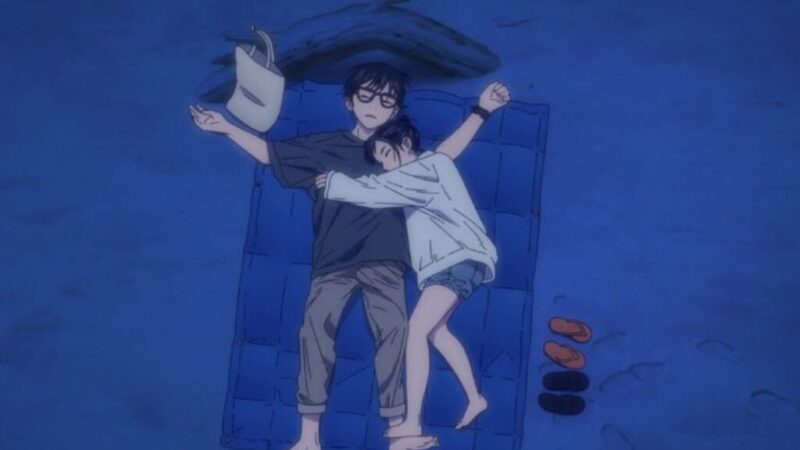
When What you Enjoy Becomes Your Work
I’ve ruined anime for myself. I’m unable to watch any anime without trying to work out if I can write something about it or not. I analyze animation techniques and how the narrative fits into to greater “literature.” I compare whatever narrative I watch against touchstone narratives across different decades. I can’t watch a mecha, for example, without comparing it to Macross, Neon Genesis Evangelion. Eureka Seven, Gurran Lagann, and Darling in the Franxx and wondering where the narrative fits among those samples. In short, watching anime for pure enjoyment proves difficult. When I’ve watched the best of a medium, decent, good, and even okay stories become harder to enjoy on their own merits because I automatically “study” as I watch. I have to tell myself “Stop, just watch it. You aren’t going to write anything about this one.” Despite that, a voice still nags me: “how can you write about this?” That voice drives me to watch stories that make me roll my eyes, usually some sort of harem, for an article idea. I grew up watching Mystery Science Theater 3000, so I have a high tolerance for bad narratives. Few anime narratives approach that level of bad! I define bad narratives as stories that don’t go anywhere, that are disjointed and illogical, and that have poor characterization. Huh, I just described most harem and romance anime! But because I have a high tolerance (okay, it’s a fondness) for bad narratives, I will give bits of my life, which is what you do whenever you watch an anime, to stories I don’t enjoy so that I have a better frame of reference for writing. You can’t understand why good stories are good without understanding why bad stories are bad. Nor can you see why stories you don’t enjoy are popular among the anime community without watching them. I dedicated a year and a half to watching One Piece to try to understand why people like the series. I can see why the drama and characters appeal to people along with the adventure, but I also concluded One Piece isn’t for me. Each moment I spend watching a narrative I dislike takes a moment away from a narrative I could watch and enjoy. I gain knowledge that proves useful, often unconsciously, for my writing both here and in my book projects, yet I still could’ve used that time relaxing to something else. Relaxing is a problem when what you enjoy becomes your work–unpaid or paid work. If you don’t write about anime or create videos, you can sit back and get lost in the story. I can only do this with stories I’ve watched multiple times and have already squeezed for all the articles I want to write about them. While JP is a hobby–I don’t support myself through my writing–writing about anime has taught me the dangers of making what you love your work. You’ve no doubt heard people say “if you love what you do, you won’t work a day in your life.” The reverse is true: “you won’t ever stop working if you love what you do.” Making your calling or your hobby into your work makes it your work. You won’t be able to separate your work from your hobby any more. You won’t be able to watch anime without thinking about how you could write an article about the anime. The monetary aspect can further pressure and corrode your love for your hobby. This is one reason why I avoid trying to monetize JP. Yes, I peddle my books here, and I aim at making writing my livelihood. But I am under no illusions; few writers can make a livelihood from their books. The ones that do are unicorns against the masses of writers that cannot. If you approach your love-work with this realistic view, the view helps guard you from burn out and disappointment. Strive to make your passion into your livelihood if that’s your desire, but keep your day job and patience. I’ve been hammering at book writing for around 12 years. Longer, if you consider all the other novels and projects I wrote before I decided to become serious in my writing studies and production. Turning what you enjoy into your work, assuming you define work as livelihood, takes persistence over the long term. It can take decades or never happen at all. But if you feel truly called to do your work, you will do your work no matter the extrinsic outcomes. You will pay the price in rejections and failures. If you want to write professionally about anime, you will lose your ability to see anime as anything beyond work unless you learn to compartmentalize. I haven’t succeeded at that. On the other hand, I’ve gained a deeper appreciation for anime and animation in general after studying them for over 25 years. Even bad anime contains flourishes of greatness where the animators were having a good day or skilled up. These can be small things, like a particularly well-animated hair movement. You can also tell when the animators are enjoying themselves with a scene or, conversely, when the animators aren’t feeling the story. When you deep dive into your passion, you gain more frames of references and a greater understanding of techniques. You realize that you don’t understand as much as you think! No matter what the topic, mastery becomes a never-ending realization that there’s much more for you to learn. When you make what you enjoy your work, you unlock the option for mastery. It seems silly to say watching and writing about cartoons involves mastery, but literary experts do just that with books. There’s always more to learn about narrative techniques, meanings, animation techniques, color theory, and other parts. Mastery isn’t an endpoint; it’s a beginning. Not that I’ve achieved any level of mastery! So, what’s your take away from my rambling? Beware making your hobbies into your work without considering how this may impact you. It seems cool at first. Who wouldn’t want to be paid to watch and blog or vlog about anime? But there’s the possibility you will come to dislike what you love. If you love video games and make it your profession, will you want to play video games for fun? It will feel like you are going back to work instead of resting! Don’t let me deter you. If you feel called to make your passion into your work, be it a side hustle or pseudo-hobby like mine, go for it! Just do your homework before you start. Prepare to chip at it for years or even decades.
Japan Powered
5 months ago
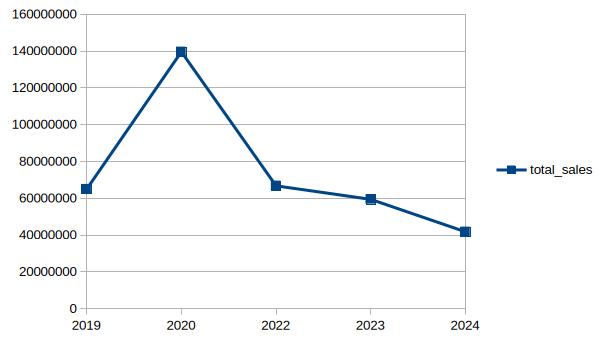
Manga and Book Reading’s Decline in the US
Books compete with social media, video games, and streaming for attention. We have only 24 hours to divide among sleep, work, chores, socializing, and entertainment. Books have to fight for a slice of this attention. And books are increasingly failing to do so. In Gallup’s most recent (that I can find–from 2022) report on American book reading habits…well, let’s say the results don’t look great. People read fewer books on average, from 15.6 in 2016 to 12.6. While reading three fewer books a year doesn’t seem like a big deal, extrapolate that across the entire reading population. The number of people who read books holds steady: 17% of American adults say they don’t read books compared to 18% in previous surveys. If we do some rough math, about 47 million American adults are readers, which means they read about 141 million fewer books each year. That’s a large slice removed from the publishing industry and public libraries! According to NPR (2025), 21% of American adults are illiterate or functionally illiterate. NPR also discusses a Duke study that found using AI to help with a reading task decreases reading comprehension by 12%. Literacy skills fall on a spectrum measured between levels 1 and 3. In a 2023 US government study of literacy, 28% of adults were at Level 1, 28% were at Level 2, and 44% were at Level 3 or higher (U.S. Department of Education, 2024). Level 1 is the ability to understand basic vocabulary and read short texts with simple instructions. Level 2 includes the ability to relate multiple pieces of information within or across a few texts. People at this reading level are expected to compare and contrast simple information and draw simple inferences. At this reading level, people can’t understand moderately complex texts. Readers at Level 3 and above are proficient readers with the ability to understand, interpret, and synthesize information across multiple complex texts. They also have the ability to evaluate the reliability of a text. For reference, I write for readers above Level 3. Levels 1 and 2 are people who read below reasonable standards. In other words, the majority of American adults are functionally illiterate. When I was a librarian, I encountered this illiteracy and reading comprehension problem daily. I even see it here with some of the comments left by drive-by readers. They usually rage about something I address within the article, but that’s understandable when we skim rather than read. Research suggests we’ve trained ourselves to skim text on a screen. Screen reading is also shallower than reading from a page. This training then carries over to all forms of reading, making it harder for people to read long texts. All of this combines to reduce the number of books people read. Books require more effort than other forms of entertainment. Television is passive, and video games can be more gratifying and exciting than books. So, all these data led me to wonder how this reading decline impacted manga in the US. I found estimated breakdowns of the top 10 manga sold from 2019 through 2024. The popularity of Demon Slayer during COVID made manga sales spike. Demon Slayer sold an estimated 82 million copies in 2020 (Japan Anime News, 2020). Following this blip, manga sales for the top 10 continued on a slow decline as this chart shows: I compiled the estimated sales over the years into a single chart to show the estimated sales of each title over time. The most popular three titles tend to outsell the rest by a large margin. It’s interesting to see how titles drop off. Demon Slayer disappears from the top 10 lists soon after its popularity jump. One Piece remains consistently popular, which should come as no surprise. One Piece stands as one of the best-selling titles since it debuted in 1997. But even the mighty One Piece suffers from the general trend of people reading fewer books. Top 10 lists hide long-tail sales. It’s natural for books to have a limited mass popularity but continue to sell units over the long term. Although Demon Slayer fell off the top 10, it continued to sell copies. The decrease in book reading also erodes manga reading when you filter out the Demon Slayer blip. I suspect book reading will continue to decline as easier, more engaging modes of entertainment eat into our free time. Artificial Intelligence can offer on-the-fly, custom stories and even “Choose Your Own Adventure” style stories. These are low quality, but when we consider the low literacy level of the majority of Americans, AI-generated texts hit the literacy capability of that majority. The poor literacy level explains the popularity of dross in entertainment. I consider AI interaction as a new mode of entertainment. AI can take on personas which create a simulacrum of socialization. AI will eventually create manga to suit user tastes and request. You can even play text-based RPGS with AI. And this consumes time better spent on reading books. Economics also plays a role. People might be working several jobs or working longer hours to survive. Books are also expensive. Collecting a complete manga series can be more expensive still. But this argument also doesn’t hold much water; I buy most of my books second hand. While this doesn’t support publishers, buying second hand allowed me to build an extensive library for a fraction of the cost. Plus, you can find out-of-print books, and you never know what you will find. The thrill of discovery is part of the fun! It’s a rush to find an obscure Japanese book on your list hidden in a Mennonite thrift store, of all places, for only a dollar! Public libraries and legal online services further blunt the expense of book reading. I’ve written about the book reading problem before, but after running the estimated manga sales and seeing them drop off, even adjusting for the Demon Slayer sensation, my concern grew. While I still read more than 10 books a year, my reading time has been taken up with other concerns. I’ve been playing more video games to relax and working on writing projects a bit more. But then, my reading happens in phases. When I’m researching for a novel or a nonfiction project, I spend months reading and taking notes. When I write, I read less. But I read differently when I’m writing a book–like a biography about Kafka or something about the Roman period. If you want to read more, you have to make the effort to read more. Other forms of entertainment are easy–especially phone-based time wasters. Although phones offer another way to read, the temptation to check the Internet and social media is a bit too strong. That’s why I prefer physical books and dedicated ebook readers which can only display ebooks. Less temptation to check something and fall down a groundhog hole for the duration of my reading time. It’s encouraging that Gallup didn’t find fewer people reading. While I wish more people read books, this stable readership points to other pressures on book reading. Time and attention are limited. And there’s a lot fighting for our attention nowadays. Attention is money. And books are an ancient technology that can’t snag our attention as well as the glitz of AI, video games, and video. Books challenge our minds more than these mediums. Reading books makes you a more careful thinker–if you read books you agree with and disagree with. Reading books also makes you more empathetic. Research shows manga can help people learn to read social cues and facial expressions better. And books are fun if you give them a chance! References All Things Considered (2025) Americans are reading fewer books for less time. People want to know why. NPR https://www.npr.org/2025/02/20/nx-s1-5298185/americans-are-reading-fewer-books-for-less-time-people-want-to-know-why. De la Piedra, Matias (2024) SALES BREAKDOWN: Top 10 best-selling manga of 2024. Comics Beat. https://www.comicsbeat.com/top-10-best-selling-manga-of-2024/ Japan Anime News (2019) 2019 Annual Manga Sales Ranking Announced by Oricon. https://us.oricon-group.com/news/666/ Japan Anime News (2020) 2020 Annual Manga Sales Ranking Announced by Oricon. https://us.oricon-group.com/news/665/ Japan Anime News (2021) 2021 Annual Manga Sales Ranking Announced by Oricon. https://us.oricon-group.com/news/662/ Japan Anime News (2022) 2022 Annual Manga Sales Ranking Announced by Oricon. https://us.oricon-group.com/news/661/ Japan Anime News (2023) 2023 Annual Manga Sales Ranking Announced by Oricon. https://us.oricon-group.com/news/617/ Jones, Jeffrey (2022) Americans Reading Fewer Books Than in Past. Gallup https://news.gallup.com/poll/388541/americans-reading-fewer-books-past.aspx U.S. Department of Education, National Center for Education Statistics. (2024). Highlights of the 2023 U.S. PIAAC Results Web Report (NCES 2024-202). Washington, DC. Retrieved [date] from https://nces.ed.gov/surveys/piaac/2023/national_results.asp. Statistia Research Department (2025) Manga industry in Japan – statistics and facts.https://www.statista.com/topics/7559/manga-industry-in-japan/#topicOverview
Japan Powered
5 months ago
My 35 Most Enjoyed Anime
Early in my anime writing, I tried to rank 100 good, bad, and influential anime. Now, over a decade later, I would make an entirely different list, adding obscure historical animations like Namakura Gatana or Hanawa Hekonai meito no maki because of their importance, and I would drop most of the anime that acted as filler on my original list. Live and learn! This new list doesn’t try to capture any important anime. This is my personal list, in no particular order, with some acknowledged recency bias baked into it. The titles on this list probably won’t surprise you if you are a long-time reader. I’m not avante garde in my story tastes, but I also don’t always like the stories the mainstream enjoys. If an anime is hyped, I tend to avoid it until the hype dies down so my expectations aren’t set by the more obsessive fans of the story. But why 35? It’s such an odd number! Well, I settled on that number after looking through all the different stories I’ve consumed after the years and after thinking about the stories I’ve either revisited, remembered with fondness, or continued to think about long after I finished the series. Some of the stories on this list are ongoing at the time I write this article. Depending on how the series goes, my thoughts may change. The title may even drop from this list! It’s my hope that this list will encourage you to check out a title you haven’t seen before, revisit a title, or consider how the story influenced your thinking. I also tried to include stories from a variety of genres. I’ve learned not to pigeon-hole myself to certain genres. This has allowed me to find a variety of stories that I wouldn’t have discovered if I remained within, say, the fantasy genre or within shonen. When I worked as a librarian, I often saw people avoid a story because it was “for kids” or had a “young adult” sticker on it. People worry too much about the labels and the opinions of others. Like what you like, and pay others no mind. Behind the scenes at the library, we used to pass around new picture books to read. The target audience doesn’t matter if the story is good. Samurai Champloo I enjoy Samurai Champloo a bit more than Cowboy Bebop. Both have the “found family” theme that I enjoy, and both are road stories. Champloo extends the same story beats as Bebop while remixing them in a way the still feels fresh and innovative. Next to Eureka Seven this is my most-revisited series. Visiting with Mugen, Jin, and Fuu feels like visiting with old friends. It helps that this series, along with Eureka Seven, provided me with sanctuary during a stressful, overly busy, and difficult section of my life. I would stay up late on Saturdays, sometimes until 6 am, to watch both of them on Adult Swim’s Toonami. Eureka Seven The second half of my supportive duo, the romance of Eureka Seven helped me through my own heartbreaks and through a time of death–a period where I was attending calling hours and funerals every few weeks it seemed. The love story between Renton and Eureka remains one of my favorites, aided by Bones’s animation that remains excellent even today. Everyone needs a story that provides sanctuary in times of trouble and heartache. Revisiting Eureka Seven still feels like tea and a warm blanket on a cold, blustery winter day. Inuyasha Inuyasha also stands with Samurai Champloo and Eureka Seven as comfort food, if not quite as homey as they are. Because Inuyasha was a staple on Toonami for so long, it’s not as bookended as those two stories are. Instead, Inuyasha was like an always-available comfort food, not special, but always enjoyed and welcomed. The story got me interested in yokai and Japanese folklore, eventually leading me to write Come and Sleep: The Folklore of the Japanese Fox and Tales from Old Japan: Folktales and Legends of the Land of the Rising Sun, which took as many years to research and write as the years I watched Inuyasha, interestingly enough. Neon Genesis Evangelion Anime has several pivotal titles that changed the medium: Astro Boy, Akira, and Pokemon among others. Neon Genesis Evangelion stands among them, influencing anime even today. Anime before Evangelion was different from anime after, with many tropes, motifs, and story beats referencing how Evangelion gathered the pieces together and changed them. Rei, for example, brought together various character elements already present in anime. She isn’t original as a character, but she became the template for the quiet, mysterious type going forward. Likewise Asuka became the template for the tsundere character type. Of course, I didn’t know any of this when I first watched the series. I enjoyed the psychological tangle in the story, while I loathed the whiny, passive Shinji. I understand Shinji’s character now, but I watched in the hopes that he would grow a spine and mature into a hero character. The subversion of that expectation remains unique. Cowboy Bebop Anime needs more space opera westerns outside of Gundam. Yeah, some entries in that series feel like a Western story, but nothing like Bebop‘s mashup of genres. The story remains thought provoking with how it handles the characters and their stories. The series remains comforting and uncomfortable at the same time. Many people consider the series overhyped. Like Evangelion, anime changed before and after Cowboy Bebop, and for many fans at the time, the story showed how anime wasn’t only for kids and teens. Unfortunately, adult-oriented stories remain relatively rare, but Cowboy Bebop and Samurai Champloo prove anime has something for all ages. I enjoy spending time with Ed, Ein, and the rest of the crew. Fullmetal Alchemist I don’t mean Brotherhood when I list Fullmetal Alchemist. While Brotherhood follows the manga more closely than the original series, I prefer the original anime series. Brotherhood reduces Ed and Al into the typical shonen meatheads. Well, they aren’t as meatheaded as many protagonists are, but compared to their thoughtful, problem-solving versions of the original anime, their bulldozing persistent versions never felt quite right to me. But then, I prefer intellectual protagonists. That said, Winry is much a better character in Brotherhood and the ending is more satisfying, if less thought-provoking than the original series. Brotherhood isn’t bad, and I’ve been meaning to revisit it. But, as with so many of Toonami’s anime, I have fond memories of relaxing to the original series after working until midnight or later. Pokemon XY-XYZ I remember the initial craze surrounding Pokemon back in the 1990s. The anime series went a long way toward normalizing anime in the United States, if still continuing the association that animation is for children. The original series’s animation quality hasn’t aged well, even though it remains charming. XY-XYZ, however, elevated the animation quality of the series, combining 3D and 2D animation together to create a cinematic feel. Ash also sees surprising character progress for a children’s story, only to revert back to his target audience’s age and relationship experiences in the next series. Frieren: Beyond Journey’s End This story hasn’t finished, so adding it to my list may be a bit premature; however, Frieren offers an excellent exploration of death, memory, nostalgia, and time. The story explores how emotions don’t have to be overt to be deep and meaningful. It has a quietude that I appreciate while raising the questions of life and death, of how we don’t appreciate what we have until it is gone. Frieren also teems with likeable characters and explores what happens after the hero wins–something that needs more exploration than it receives. Ghost in the Shell: Stand Alone Complex Anime suffers from a dearth of adult characters and stories, at least among Western releases. Ghost in the Shell along with Bebop and Champloo stands out because of the adult characters and themes. Not many anime can get away with philosophical discussions among characters as Ghost in the Shell does. This is a crime drama with that raises still-relevant questions about our relationship with technology. Dan Da Dan There’s some recency bias with how I’m adding Dan Da Dan to this list, much like Frieren. But this story is a wild ride with fun, frenetic animation and zany events that I’ve enjoyed. It’s surrealist at times, making me think of artists like Giorgio de Chirico. The characters are likeable and funny without falling into the annoying as so many anime comedies do. The creativity of it all keeps you guessing about what will happen next. Bleach Bleach has many problems with its pacing, story, and massive cast. Not to mention the comedy of later seasons falls into grating annoyance. There’s a lot of padding episodes that I skipped during my most recent revisit, making the story became tighter and more enjoyable. Despite these problems, Bleach remains enjoyable with a cool, urban chic and exciting battles. Bleach was among the titles I looked forward to watching on Toonami after a long week. Puella Magi Madoka Magica Madoka Magica offers a darker take on the magical girl genre, contrasting the heavy story with the cute character designs. It offers an interesting surrealist collage design when the girls fight against witches. Even if you aren’t into magical girl stories, this one offers an exploration of ethics, sacrifice, and friendship that’s worth watching. Horimiya Many romance stories provide examples of unhealthy relationships: codependency, insecure attachment, and various other unhealthy representations. These make for emotional conflict within stories and even for comedy, but they aren’t good models. Horimiya depicts a healthier relationship story, centered on acceptance and secure attachment. It’s not without conflicts or difficulties. A story needs some type of conflict or challenge for the characters to progress through. The characters feel realistic and less as tropes, even though you can find the usual shojo/josei story beats. Kill la Kill With a unique art style and frenetic animation, Kill la Kill stands apart from most other anime. It’s an example of how fan service can be used as vital part of the story while also satirizing and providing social commentary. Kill la Kill‘s animation reminds me of American Saturday morning cartoons rather than traditional anime design. It helps show how anime is a diverse medium. Dan Da Dan‘s animation style shares many similarities with Kill la Kill‘s, such as simplified character designs that lend themselves to dynamic action and speed deformations. Dragon Ball Z Kai I find the original Dragon Ball Z difficult to watch because of the padded fights and asides. Kai compresses everything into a more succinct (for Dragon Ball anyway) package. The quirky macho feel of the story keeps the story fun, even if the animation is dated by today’s quality standards. Dragon Ball‘s not a serious story, focusing instead on action, overcoming challenges, and teamwork. Perfect Blue Another mature story, Perfect Blue‘s animation and story has stuck with me, exploring psychological breakdown and stalking that feels similar to Alfred Hitchcock’s explorations of the psyche. The story plays with how perception determines reality, suggesting how everyone may live in a type of delusion until they learn to face themselves. Hellsing Ultimate There’s a madness to Alucard that breaths a freshness to the usually controlled portrays of Dracula. Hellsing Ultimate looks deep into the psychotic void that merges with violence to the point where villain and hero are just as evil. The story merges Dracula with Nazi conspiracy theories and stirs in legends of the Catholic Church’s exorcists while adding a technological twist. The result of an exploration of how the legacy of eugenics and technology dehumanize. Castlevania I first played Castlevania games on the original Nintendo console and enjoyed the series ever since. So when I first heard Netflix was producing an anime, I felt excited. And yes, despite how it was produced in the United States, I consider this series an anime. Besides, Castlevania is a Japanese video game series. Anime isn’t limited to Japanese studios, considering how tweens and production for anime are often outsourced to studios outside Japan. Castlevania features many elements combining 1990s style animation with modern styling. The character banter, the depth added to Dracula himself in the first season, the “gray” character motivation, and moral developments stand out. Code Geass: Lelouch of the Rebellion Mecha stories like to sit in moral ambiguity and tangled plots of war. Code Geass continues this tradition with Clamp’s focus on character development and interpersonal conflicts as the driving force behind the conflicts. Politics and war spin out of these rivalries, friendships, and loves. The moral ambiguity of the story can leave you feeling uncomfortable at times, particularly if you attach to certain characters. The action punctuates these questions while also having realistic stratagems, which many series fumble. I’m no military strategist, but I facepalm whenever I see characters abandon superior defensive positions to charge headlong into their enemies and into certain defeat. I’m staring at you, Marvel Studios. Attack on Titan Attack on Titan is a thrilling first watch, full of twists and unpredictable events. One a second watch, you get to see the foreshadowing and threads that tie everything together. The story is well structured and well paced, with room for character development. Eren has an interesting character trajectory, starting as a typical stubborn shonen protagonist and changing to–well, you will have to watch if you haven’t already! Princess Mononoke This story provides a good example of Studio Ghibli’s traditional cel animation and the themes they often visit: the conflict and coexistence of humans and nature, love, and redemption. Ghibli has made many, many films, but this is the one I keep returning to. Pokemon Concierge I normally don’t like stop motion animation. Many stop motion uses clay as a part of its character or environmental design, which triggers an odd quirk I have. The sight of clay or Play-doh makes me nauseous. I have no idea why. Squishing and holding it makes my stomach turn over. But Pokemon Concierge uses felting and dolls rather than clay-sculpted figures. The felting adds to the cozy, soft story, while giving all the Pokemon personality and liveliness. You’ll want to pet them. And yes, Pokemon Concierge is anime. Anime is far more diverse in style than many fans know. Ouran High School Host Club Ouran offers a classic reverse harem story following a Tom girl who gets in touch with her feminine side and comes to understand the boys by acting like a guy. This story is among the first shojo stories I watched. It set the frame for how I would later understand shojo art and story beats. The story offers a fun satire of these beats and character tropes. Spice and Wolf: Merchant Meets Wise Wolf I enjoyed the original Spice and Wolf series even though it cut off abruptly. I often returned to the original series to escape for a time. So, when I heard it was going to get a new treatment with the original English voice actors, I was thrilled! The story centers on economics for its plot, which is unique, but the banter sells this one. Holo and Lawrence grow into a mature, adult relationship with teasing, misunderstandings, and arguments throughout. The story has a melancholy laced through the laughter. Holo and Lawrence’s loneliness offers something many today can identify with. Spice and Wolf is a great road story that I will revisit again and again. Violet Evergarden Violet Evergarden offers an tearful exploration of love, separation, and friendship with letters joining people together. The story centers on change. Violet changes throughout the story. The world also changes around her, moving toward a modernity that leaves letters behind. The story explores a different facet of love in a mature, thoughtful way. This is a coming-of-age story, but Violet has already been involved in war and killing, moving her beyond the usual teen coming-of-age concerns usually seen. Instead, she has to work to recover her lost humanity. Takopi’s Original Sin Including this story on this list is another case of recency bias. Takopi’s Original Sin is a dark exploration of toxic positivity and how innocence can be sinful. The story follows several fourth graders as they deal with abuse, loneliness, suicide, and other difficulties, amplified by the positivity of the alien Takopi. This is not a story for everyone. Insomniacs After School This teen romance and coming-of-age story looks at the difficulty of being out of sync with the rest of the world. Particularly, when your chronotype doesn’t align. Insomnia and astronomy provides the means to relationship and self acceptance. Ganta and Isaki’s relationship feels natural with how it develops. It’s a relaxing, cozy story for sleepless nights. Oshi no Ko I’m uncertain if this series will remain on my list once it finishes, but the first episode is gripping. Aka Akasaka’s characters are interesting, and the dialogue is enjoyable, if more serious than Akasaka’s other work Kaguya-sama. The story looks deep at the darker side of the entertainment business. This is a revenge-mystery story. The anime adopts Mengo Yokoyari’s illustrative style well. Kaguya-sama: Love is War It’s rare for me to find a romantic comedy humorous, but Kaguya-sama made me laugh throughout both the anime and the manga. Aka Akasaka’s dialogue and jokes are on point, but there’s also heart to the character interactions. The ridiculous intellectual battles between Kaguya and Miyuki are great, especially with how the well-developed supporting cast. The narrator’s observations punctuate the jokes well. Honestly, the narrator might well be the best character. Shikimori’s Not Just a Cutie I liked this story more than I thought I would. The premise of a bad-luck boy being protected by a capable girl who is, in turn, emotionally protected by him offers a fun romantic comedy. There’s no will-they-won’t-they here. Rather, it focuses on Izumi’s male insecurities surrounding the part-biological and part-social male need to protect women and what happens when...
Japan Powered
5 months ago
Shiboyugi: Playing Death Games to Put Food on the Table Offers a Media Literacy Challenge to its Watchers
Playing Death Games to Put Food on the Table, also known as Shiboyugi, is a bit of an experimental anime that requires some media literacy from its audience. I haven’t read the source material, but there are many literary hooks the first anime seasons establishes that future seasons could latch onto. Spoilers ahead. The story follows Yuki, a girl who plays death games as a career. Unnamed elites plan these death games for their own entertainment. They aim for around a third of the participants to die. The players have their blood modified with a drug that coagulates when their blood is exposed to air, turning their blood into a cotton-like substance. This helps reduce the risk of the players bleeding out too quickly and makes the death games more palatable for the audience. After all, these are just dolls killing each other, right? This unstated, but heavily suggested idea, is supported by how survivors receive medical attention and how any missing limbs or other body parts are replaced with cybernetics. Yuki decides to set the death game’s survival record by surviving 99 games, the goal Yuki’s mentor Hakushi originally had. During the Candle Woods game, Hakushi suffers such a terrible wound that Yuki believes her dead. In reality, Hakushi survives and retires from the games. But the anime only suggests this. Shiboyugi does a lot of suggesting. The story begins with Yuki’s twenty-eighth game, shifts to her tenth game in the second episode, and hops to the time after her twenty-ninth game in the fifth episode. The first season ends with telling Yuki and Hakushi’s story during Yuki’s ninth game. Yuki herself is a mixed character. She doesn’t go out of her way to kill anyone, but she also doesn’t hesitate, at least after her ninth game, to kill when she must to win. During the tenth game Yuki saves the player Kotoha, who loses her legs to a trap. Yuki carries Kotoha on her back and protects her. Kotoha guesses that Yuki is a survivor of the worst death game, Candle Woods, Yuki’s ninth game. Yuki ends up saving Kotoha, but in another game Yuki kills a girl she feels rapport toward in order to win the game. This later fills Yuki with guilt, telling herself that she’s fine. Yuki sits in a morally ambiguous area. She doesn’t kill unless she must; she has a personal ritual at the end of each game where she remembers the dead, and she tries to save other players when it is possible. The story often sets small narrative hooks like Kotoha’s Candle Woods reference that appear to be offhand remarks or details that the nonlinear story structure goes back and grabs onto. But there are many hooks, such as the roles of the player’s agents, who appear to be possible family members, that the season leaves unresolved. Shiboyugi‘s nonlinear story can be confusing because it doesn’t offer explicit anchors between the time jumps. There are hints throughout the arcs to help ground you in the time period, such as Kotoha’s reference to the future-past Candle Woods game. This grounding, and Yuki’s behavior ties forward to when you are in the ninth game, making the backward time jump apparent if you are paying attention. The shift from the first episode, with the twenty-eighth game, back to the tenth relies on Yuki’s behavior. She behaves in a less experienced way in the second episode compared to the first. She acts in a less hardened and experienced way. The contrast of her saving Kotoha after killing Kinko in the first episode, keeps the audience guessing about Yuki’s morality, but it also helps ground how she becomes increasingly hardened as she plays the games. None of this is overt. The time gap between Yuki’s ninth game and her thirtieth game is linked by the similarities in the situation and the difference in Yuki’s behavior. Her confidence wanes during the thirtieth game. She’s unnerved by the thirtieth game wall, where players tend to make mistakes and lose their edge, dying in the process. Her waning confidence ties back to the ninth game where she is building confidence. They mirror each other thematically. If you watch closely, you can see enough timeline points to anchor you as you watch, but these aren’t immediate. It takes time for you to see enough to ground yourself in the time frame. I’ve read many books that do this, and while it’s not my favorite storytelling method, it is interesting. But many watchers won’t like the uncertainty you feel as you orient yourself. It requires you to engage with the story deeper rather than being a passive watcher. The discomfort, confusion, and uncertainty mirrors the feelings you see the characters contend with. It’s a clever way to make the audience feel the same as the characters. The avant-garde style animation style also requires the audience to use their media literacy skills. The anime shifts between simplified pastel, flat-color scenes and ultra-detailed scenes. That eye detail! The shift can feel disjointed at first. The flat-color scenes usually use a letterbox, the black bars you see framing some films. This is a death game that is being watched by an audience. The letterboxed, flat-color scenes denote the hidden cameras and the audience gaze. The ultra-detail scenes represent the experience Yuki and the other players are having. It’s their perspective or reality contrasted against the sanitized, dehumanizing gaze of an audience that doesn’t care about the humanity of the players. The gaze links to the polyfill blood and guts. The players are not human to the audience. The letterbox is used for various emotional effects too. Narrowing the field of view emphasizes the horror and aloneness Yuki and the players feel as the deaths begin. During the season finale, the letterbox combines with credits that Yuki herself watches as she considers her limited death game experience at the time and the looming end of her life. The effect is reminiscent of the final episodes Neon Genesis Evangelion‘s dive into Shinji’s psychology except it’s more orderly. While many may find these shifts in style confusing, they serve the story and aim at unsettling the audience with the shifts. There’s unspoken meta commentary going on. We join the death game audience at times. Although we don’t see the audience, knowing the flat-color scenes is what the audience sees, with the differing perspectives and camera angles, serves to characterize that audience. There’s a voyeuristic element to the audience and a disquiet to them. They don’t feel comfortable with the death game’s gore, but they relish the lack of predictability. As the audience of the audience, we can see all this suggestion. When the details scenes cut in, we know that we are seeing what the audience of the death game doesn’t–the humanity of the characters as they act inhumanly toward each other. Shiboyugi doesn’t make any of this overt. It relies on your media literacy to piece everything together, and, well, people’s media literacy isn’t the strongest anymore. If it was, short-form video wouldn’t have exploded in popularity because people would understand how such content influences and trains our thinking. But I’m digressing and soapboxing. Shiboyugi is interesting because of how the studio decided to rely on the audience’s media literacy to piece together the nonlinear story and how the two styles of animation work. I found Shiboyugi engaging with its morally challenging story and all the subtle audience engagement it uses. It’s a clever anime that will confuse some watchers. It’s unfinished with many aspects of Yuki’s story left untold, including how the rest of her life goes. There may yet be another season to tell the rest of Yuki’s story.
Japan Powered
6 months ago
How Short-Form Content is Changing Anime
Short-form content has been shifting how people consume content, including anime and books. Short-form dramas take a story and cut it into tiny episodes while Tiktok video focus on spectacle. For many, short-form video offer ways to discover new anime. But this type of content focuses on visual spectacle above all else to get people’s attention. Having just a few seconds to grab attention favors certain types of anime over others. Stories that lend themselves to action and gripping visuals benefit from this type of discovery, but more verbal focused or thematic anime, such as Spice and Wolf, don’t perform as well. This growing discovery method encourages draws attention to just a few stories, encouraging studios to play it safer and produce copycats and genre saturation. I’m looking at you isekai. But relying on short-form content for discovery and promotion may not be good in the long wrong. Yep, it’s time for me to get into the research, and, as you may have guessed, short-form video is bad for your brain and perhaps for anime itself. This is Your Brain on Short-Form Video Short-form video uses algorithms to curate streams of brief videos designed to encourage continuous scrolling and regular, impulsive engagement. Most people call this doom scrolling, but researcher prefer the phrase “scroll immersion.” This is the habit of losing track of time and staying on a platform for longer than intended.Teens, university students, and young adults are the most intense users of short-form videos but this use of content extends to encompass entire countries (Reshaa, 2025): In Saudi Arabia, these global patterns are evident but take on particular social and cultural significance. Nearly four-fifths of the population are reported to use social media actively, with TikTok, Snapchat, and YouTube Shorts among the leading platforms. And a study in 2019 found that the average daily use of short-form video in China estimates at 600 million hours (Chen, 2023). It is likely higher now. Research on short-form video is damning. Daily short-form use increases depression risk, lowers attention, reduces mental clarity, and hurts the ability to focus for prolonged periods of time. Both adults and teens show problems with working memory when “repeated cognitive switching” like short-form video involves, which contributes to learning difficulties and comprehensive tasks. Social media use also links to increased impulsivity and increases weakness to distraction, adding to the working memory problem. Short-form video doesn’t require much thought, or as academics like to phrase it, “requires minimum cognitive processing.” The algorithms encourage passive, thoughtless consumption that leads to dopamine release and what’s called fragmentation. Fragmentation refers to how your focus is broken by the constant flow of novelty and different videos. As Chen (2023) states: However, the fragmentation pattern could stimulate the pleasure centre of the brain intensively in a short time and result in a massive release of dopamine. Sustained exposure to intensive pleasure and massive dopamine would induce deeper indulgences and larger desires of users and decrease the activity of dopamine enzyme and the availability of dopamine transporters, which are the typical symptoms of addiction. Therefore, such a fragmentation pattern might lead to addiction. In other words, short-form video works like a slot machine where you never know how rewarding the next spin will be, encouraging your brain to release dopamine in large amounts. This reinforces the habit of doom scrolling and damages your self-control (Reshaa, 2025). Watching short-form video basically trains your brain to be unfocused and to enjoy that lack of focus (Zhu, 2025): For frequent short-form video viewers, impaired self-control makes them more susceptible to the influence of short-form videos, increasing the likelihood of frequent viewing. As a result, the association between ‘short-form video stimuli and watching short-form videos’ gradually strengthens, reflecting an enhancement of automaticity. After the enhancement of automaticity, individuals begin to assign greater value to stimuli related to short-form videos, causing value-driven attention to these stimuli to dominate the attention priority map, thereby making individuals more inclined to focus on them. Consequently, this further impairs self-control and ultimately contributes to problematic short-form video usage. Your brain begins to crave short-form video and the dopamine it brings as a means to escape and as a habit. It creates a feedback loop that becomes hard to break short of locking yourself out of all short-form content. You train yourself to have no self control or focus by consuming such content which can spill into your other behaviors. Steve Chen, a co-founder of YouTube, spoke out about the trend toward short-form video, expressing concern about how the content affects children’s attention spans. He stated he wouldn’t want his own children to consume that sort of content (Quiroz-Gutierrez, 2025). The Results of Brain Melting All this brain melting has damaged many people’s ability to focus long enough to read. I’m hopeful that with work this damage can be untrained, considering how all of this is brain training at the base of it. But it requires discomfort and effort to undo this. Social media companies certainly don’t want us to do this! But all of this also affects books and anime. Anyone who reads with any depth has noticed how simple and unchallenging best-selling books are nowadays. I suspect isekai’s saturation works like all the templated books: they are safe, capture shrinking attention immediately, and are easy to consume. Many anime fans, and readers for that matter, don’t want a conceptual challenge or a unique story. They look for easily consumed and shared content. Many fans fish for likes and views. This also ties into the remakes and sequels that anime has seen lately. Many studios are reviving anime from the 1990s and 2000s, in part, because they have a ready market that makes them safer bets. If you look at many of the recent remakes, like Ranma 1/2, they offer shareable visuals. This is a mixed bag. Remaking older, often excellent, stories can help those stories find new audiences that wouldn’t watch the anime otherwise. However, this also takes resources from new and equally great stories. The habit of short-form video may be creating market pressure on studios to produce the type of content that people share and discover on these content platforms. Isekai offers a safe, relatively low-cost bet for studios to make. Producing a book or an anime is a risk for a company, and companies need to make profit to keep producing. If the market doesn’t demand conceptually challenging stories, companies won’t produce as many of those stories. They still will make a few, funded by the mass market content. As long as people quite literally rot their cognitive abilities, as the research suggests, on short-form content, books, anime, and other content will likely continue to degrade in cognitive challenge level because of the market demands. Books will become shorter and lose their nuance. Anime will fall back even further into over-trod story templates and flash instead of trying to extend into new territory. Not all content will be conceptually simple, but not as much complex content will be made in such an environment. I’m optimistic. We’ve seen a lot of good, unique anime rise above the mediocre, like Dan Da Dan, and mature explorations of human problems appear like Journal with Witch. The template stories still remain the most common, but they are waning compared to previous seasons, mostly driven out by seasonal returns of well-developed series. However, every isekai copy-paste story that gets produces drives out a unique story from the production pipeline. The best action fans can make is to ignore these copy-paste stories and watch the unique, more conceptually challenging stories (relative to the usual fare). This would be a vote for studios to move away from conceptually simple stories. Watching short-form content also takes time away from reading and watching anime, time that cannot be recovered. I remember the days before the internet and smartphones when it was common to see people carry a mass paperback to read in waiting rooms and in queues. While we won’t return to that as a society, it would be better for our brains and for publishing if we did. It would benefit manga and, in turn, anime that pulls from that source material. So, instead of watching brain-rot, perhaps you should consider picking up a ebook subscription or manga subscription. Not scanlation sites! The costs of subscriptions are so low nowadays that you don’t have an excuse for pirating and doing so hurts the industry now that official translations–even if they are machine translations–are widely available. Public libraries also provide a free option for putting ebooks on your phone. And books support short-form consumption. You can read a few paragraphs or a few panels at a time, which would eventually train your brain to focus for longer, unlike short-form videos. It will take time to retrain your brain because books won’t give you the same pleasure-chemical hit short-form video does. But it is well worth the effort. Perhaps as the evidence of how short-form content and social media use in general becomes more known, people will move away from it as they did tobacco use. It will take time, just as moving away from cigarettes took time. But such a move would be better for anime diversity, books, and our brains. References Chen, Y., Li, M., Guo, F., & Wang, X. (2023). The effect of short-form video addiction on users’ attention. Behaviour & Information Technology, 42(16),2893–2910. https://doi-org.oh0164.oplin.org/10.1080/0144929X.2022.2151512. Quiroz-Gutierrez, M. (2025). YouTube’s cofounder and former tech boss doesn’twant his kids to watch short videos, warning short-form content “equates to shorter attention spans.” Fortune.Com, N.PAG. Reshaa F. Alruwaili, (2025) Scroll immersion and short-form video use: Predictors of attention, memory, and fatigue among Saudi social media users, Acta Psychologica, Volume 260 https://doi.org/10.1016/j.actpsy.2025.105674. Zhu, J., & Fong, L. H. N. (2025). Self-control and problematic short-form video usage: the mediating roles of automaticity and value-driven attention. Behaviour & Information Technology, 44(14), 3609–3619. https://doi-org.oh0164.oplin.org/10.1080/0144929X.2025.2452367.
Japan Powered
6 months ago
What Journal with Witch Teaches Us About Sorrow and Personality
Journal with Witch offers a delicate exploration of sorrow and the difficulties that sometimes appear between personalities. The difficulties aren’t enough to cause any rifts, but they cause misunderstanding and require careful navigation like a blacksmith’s puzzle. I enjoyed the literary feel of Journal with Witch, but many will find the series dull with how deep in slice of life it sits. I’ll be getting into spoilers, but this story focuses more on how the characters interact than any mystery within the story. When Makio’s niece, Asa, is orphaned because of a car accident, she can’t tolerate how their extended family treats Asa as a burden. And so Makio takes her in despite her various difficulties with the arrangement. Makio’s problem isn’t with Asa, but with her deceased sister and socialness in general. Makio’s relationship with Asa’s mother, Minori, is strained to the point where Makio feels alienated. Makio is a novelist and felt like Minori held her passion for writing in contempt. Makio has a standoffish, reflective, introverted personality that I identify with. She prefers to let people work through their own problems and emotions.She appears to be frigid despite feeling deeply and working through her own emotional labyrinth alone. That aloneness–not to be confused with loneliness–adds to the rift between Makio and Minori. Minori tries to be well-liked and social, but as the series later shows, Minori quietly comes to admire Makio. Makio defies the usual simplistic portrayal of introverts as anime often shows: someone who is a misanthrope or is uncomfortable with their solitude and trying to break out of it. Makio is in her 30s and well beyond the teen identity building phase anime usually explores. Journal with Witch saves that exploration for the 15-year-old Asa. Makio is comfortable in her skin, a lover of solitude without feeling lonely. This part of her character resonated with me as someone who believes society is far too extroverted and needs more healthy solitude. Makio has a social life with a small circle of friends and a former boyfriend named Shingo. She has a complicated relationship with Shingo, feeling regret for pushing him away because of her desire for solitude and her unsettled fear of commitment. Shingo is secure in himself and loves Makio for who she is, so he doesn’t push her. He accepts her. He’s someone who is fairly quiet himself but still more of an ambivert compared to Makio. For anyone who wants to enter a relationship with a “thinks too much” sensitive introvert, Shingo provides a good model. Makio has been often told that she “thinks too much,” a habit that Asa also observes and doesn’t fully understand. Asa has the opposite personality of Makio. Asa wants to stand out and be noticed, have many friends, and is overall much more extroverted. Throughout the story, she struggles to come to terms with the death of her parents, lacking the emotional vocabulary and reflective skills needed to do so. She is only 15, after all. But the story points to how some of that lack of skill is also linked to her personality type. This observation doesn’t hold true with all extroverts, nor are all introverts masters of reflection. I’ve met many extroverts who have a rich inner life and many introverts with an inner life that could barely fill a thimble. But generally extroverts seek to work through problems externally by asking the views of others, sharing their problems, and outsourcing their answers. Asa feels lonely and lost, represented by desert imagery throughout the series. She can’t understand how Makio can be alone without being lonely because for her they are one and the same. She seeks answers from Makio, but Makio prefers to let Asa find the answers or come to terms that there no answers for what Asa is dealing with. She gives Asa freedom, but Asa doesn’t know what to do with it at first. Over time, Asa faces her sorrow about her parents’ deaths in a realistic way that takes the better part of a year in the story. She begins in a state of unfeeling shock. It’s not quite denial, but she feels a numbness surrounding the event. This freeze thaws until she begins to cry at night. Makio doesn’t really know how to handle the situation beyond being present and giving Asa space. The space, while natural for Makio who is coming to terms with her own lack of feeling surrounding Minori’s death, makes the struggle worse for Asa. Minori had left a journal for Asa that Makio discovers when they clean Asa’s family apartment. Makio is uncertain when she should give Asa the journal–it was meant for when Asa becomes an adult. Asa eventually finds it, which leads to more uncertainty within her grief. She’s uncertain if her mother had meant what she wrote as her memories of her family life and her sorrow interconnect in her confusion. But by the end of the series, Asa has worked through some of her sorrow through this hard-for-her method, making her a bit stronger in the process. The twelfth episode ends with Asa moving on in her school life, singing in her school club and learning how to write song lyrics. There’s many other smaller tensions in the story, such as Asa’s best friend Emiri. Emiri wants to support Asa, but finds Asa exhausting, especially Asa’s interest in romance. Emiri is discovering that she’s a lesbian and finds Asa’s prying about boys troubling. She also finds being around Asa awkward after the car accident. Makio and Shingo have their own light tensions with the ambiguity of their relationship. Shingo wants to draw closer to Makio, and Makio wants the same. But she remains troubled by how mixed she feels about the loss of solitude. She feels mixed about Asa too and her invasion on her solitude. Makio slowly grows more comfortable with Asa’s presence, showing that perhaps Shingo might have a place too. Journal with Witch refers to Minori’s journal, Makio’s writing, and the journal Makio suggests Asa keep. Witch can have negative connotations, and there’s some of that layer in the story too with Makio and Minori fulfilling the role of having connections with evil and black magic. But witch also references healing. Witches have links to medicine and herbology. The journals Asa encounters do both. They have hurtful “black magic” connotations along with helping her sorrow heal. The story has realistic dialogue with characters talking around uncomfortable issues and uncertainties. There’s warmth and understated humor among the adults, which contrasts with Asa’s more direct and innocent dialogue. The characters feel their ages. While there’s nothing wrong with seeking help externally, sometimes you have to walk your inner desert alone and find your answers in your solitude. Other times, reaching out to others, as Makio does concerning how she can help Asa, offers the best course. Knowing when to do each is a matter of wisdom. That’s the most difficult part. I enjoyed Journal with Witch. It’s a realistic feeling slice of life exploration of sorrow and the natural tension differing personalities can have. Often the anime released to the west remains locked to the old high school focus. It’s refreshing to see more adult-oriented stories. This one may be a bit too slow paced for many, but if you enjoy more character-centered stories, give this anime a watch. The spoilers I’ve discussed here won’t diminish the enjoyment of watching how events and interactions unfold.
Japan Powered
6 months ago
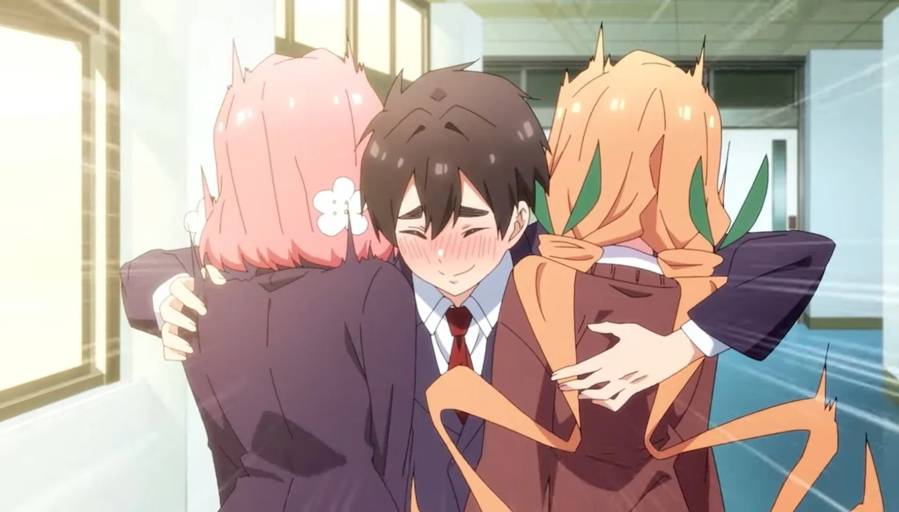
The 100 Girlfriends Who Really, Really, Really, Really, Really Love You (Really Better Than You’d Think)
I had been putting off watching The 100 Girlfriends Who Really, Really, Really, Really, Really Love You despite the apparent popularity. It’s a harem romantic comedy, and that type of humor doesn’t usually match my taste. For the most part, my initial assessment of the humor was right. The series is a love letter to harem fans. But the anime has a lot of heart to it and surprisingly decent character development. The girls within the series fit within the character tropes but also see more character development than harem stories with a smaller cast will give their members. Rentaro Aijo, the male protagonist, also avoids the flat projection character convention. Spoilers ahead! The story opens with Rentaro, a lover boy who had confessed to 100 girls and been rejected by all of them. On his final day of middle school, he goes a shrine and prays that he will find a girlfriend during high school. The God of Love appears and accidentally destines Rentaro to have 100 soulmates. And if he fails to reciprocate her feelings, the girl will die. The love connection begins whenever Rentaro and the girl make eye contact. The first two harem members, Hakari and Karane, see the most development, which makes sense considering they have the most time. Each girl represents a different -dere character type. 100 Girlfriends pokes fun at these character tropes, which I enjoyed–I’m a sucker for satire–but the jokes wore thin by the end of the series for a few of the characters, like with Hakari’s mother Hahari. Hahari has a mothering instinct toward everyone and a fetish for cuteness, which Rentaro shares. Each of the characters, however, have more to them then the character type they represent and parody. Hahari, for example, deals with the death of her first love–Hakari’s father through IVF. Hahari undergoes IVF at the age of 13 to have a piece of her first love live on. There’s many, many questions raised by this, such as Hakari’s father donating to a sperm bank as a young teen and Hahari’s age for an IVF regiment, but this is anime. Logic and legality don’t usually apply. This experience shapes her personality: she hadn’t experienced a normal teen romantic life and so tries to develop something of one with Rentaro. Each of the girls have some similar past event that adds a bit of depth to their personality and their relationship with Rentaro. Rentaro, for his part, accepts and loves each of the girls for their uniqueness and traits. He loves who they are and their physical traits (because of its a part of who they are). He loves both Hahari’s I cup and Karane’s A, barely B cup, which, as you know if you know anime, is a body image problem for them both. Rentaro genuinely wishes the best for all of them and respects their choices. He, like most harem protagonists, doesn’t choose one girl. He’s gotta catch ’em all: Pokémon! However, Rentaro doesn’t choose one girl because he’s indecisive like most harem protagonists I’ve seen. He simply can’t break his God of Love-enforced destiny and risk the girls dying. Although he isn’t a blank character, he is an embodiment of love that parodies the embarrassing cringe openly expressing affection can bring. This is part of the humor. Of the girls, Karane, in particular, sees the most development as the tsundere. Karane’s character arc has pins in a variety of episodes, leading up to when she loses her “tsunde-rays” at the end of season 2, leaving her inner deredere (cute, loving) core exposed but also leaving her without the aspects that make her who she is. The humor of 100 Girlfriends relies on your knowledge of anime tropes and title references, like with Karane’s “tsunde-rays.” Some of the best jokes break the fourth wall. If you aren’t familiar with this idea, the fourth wall is the boundary between the audience and a work or the work and its creators. The wall helps the audience suspend disbelief and immerse themselves into the story. Breaking the fourth wall happens when a work directly speaks to the audience, to the creators, or otherwise references itself as a fictional work. 100 Girlfriends does this in several episodes. The characters even reference their English dubbing and the show’s existence on Crunchyroll! There’s also a scene where the characters acknowledge the anime’s director and writers deciding to introduce some characters in a different order from the manga’s order. When the anime breaks the fourth wall, the characters temporarily appear as actresses rather than the fictional character they are. These scenes are great! Some of the parody jokes got a little old, falling into repetition with a little variety added to the formula, but that is more a matter of taste than anything else. 100 Girlfriends‘ comedy parodies anime tropes like breast groping among the girls, concern about bust size with most of the female cast having back-pain inducing busts, and the various other staples of harem plots. The humor is at its best when it parodies, but I found the humor flat when it goes into other jokes and antics. As I touched on a bit ago, it assumes a working knowledge of anime culture, tropes, and pacing for most of its best japes. I’m not a huge harem watcher, although I’m making an effort to fill my knowledge gap in that area, so I didn’t get some of the parodies or references. I could see they were referencing something harem-related at least. The English dub is funny with its delivery and choice of translation. Under all the comedy, declarations of love, and chu-chu-ing (kissing), stands a warm heart. Rentaro and family all support each other and want the best for each. The acceptance of faults also plays an important role in the story. There’s some light bickering among the girls, but this works more like sisterly arguments than true conflict. Many of the girls have relationships or pasts with each other, with a few of them developing bisexual relationships with each other, most notably Karane and Hakari. These intersections add another layer to the found family dynamic of the story. Each character plays a different role in the family with Hahari acting as the mother of the group. Considering she’s 30 years old and a mother, this makes sense. Together, they overcome the silly conflicts they encounter, often self-induced problems! With any harem, online fans seem to enjoy discussing the best girl. I find it more interesting to consider who the writer or anime team consider “best girl.” Usually, this happens through unequal development of the characters. Karane sees the most development across the first two seasons. I found her the more interesting character with her inner conflict. It is a typical tsundere trait, but the story explores it in unique ways. She also has body confidence and acceptance problems which are explored. Hakari is also a contender for “best girl” with her plot. Unlike Karane, however, she doesn’t undergo a major character change. Rather, her relationship with her mother changes. This is important, but she doesn’t really change internally as much as Karane. Nor is her development arc scattered across as many episodes. I get the impression that the writers behind the anime consider Karane “best girl,” at least for now. The 100 Girlfriends Who Really, Really, Really, Really, Really Love You knows its audience and pokes fun at everything about the harem genre. I enjoyed the satire. The story is well aware that its silly and ridiculous. It revels in it, and this self awareness makes the fourth wall breaking funnier. The “actresses” understand they are playing ridiculous roles in the farce. 100 Girlfriends had better humor and more heart than I had expected. It embraces the cringiness of its earnest declarations of love. Harem fans would likely enjoy this one and get most of what the story parodies and references. The fourth wall breaking jokes are the best of the gags. I can’t recommend The 100 Girlfriends Who Really, Really, Really, Really, Really Love You for general anime watchers, but if you think you’d enjoy satirical jabs at character tropes and don’t mind the other aspects of the harem genre, this one might be worth trying.
Japan Powered
6 months ago
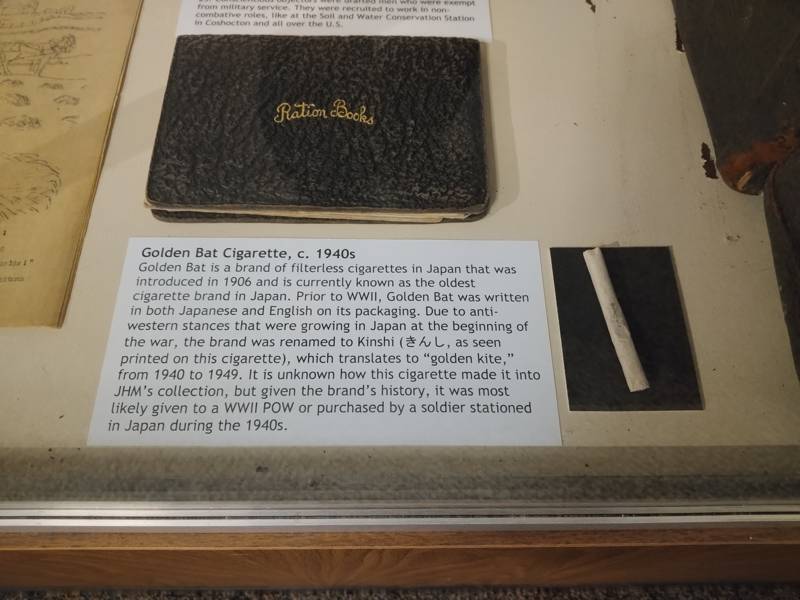
Small, Overlooked History: Golden Bat Cigarettes and the Role of Cigarettes in World War II
When I visit museums, I’m fascinated by the small artifacts of everyday life. After viewing two suits of samurai armor at a small museum, I spotted a single Golden Bat cigarette. The humble paper cylinder of tobacco contrasted against black paper with the informational placard dwarfing it. Artifacts like this single cigarette are the forgotten pieces of everyday life, consumed and thrown away without much thought of the roles they’ve played. Today, we all know the health hazards of cigarettes and how they are largely socially unacceptable in some countries. Japan, which had long been seen as friendly for smokers, also considers smoking largely socially unacceptable. But before this shift, cigarettes were considered a necessity and played a vital role in life and in the World Wars. During the World Wars, cigarettes provided temporary relief from the mental and physical stress of war whike also acting as a currency. Nicotine is a stimulant and “During WWI, the he U.S. military believed the effect of cigarettes on the troops was positive and thus provided tobacco as part of the soldiers’ rations.” Non-smokers would trade cigarettes for clothes, food, alcohol, and even sex, with U.S.-made cigarettes particularly valued. They played a surprising role for the sick and wounded (Blondia, n.d.): Since battlefield medical assistance was limited and often could not provide much-needed pain relief when supplies of morphine were low, soldiers relied on cigarettes to help them with pain management. Cigarettes also played an important role in de-escalating the brutal combat between the Japanese and American forces during World War II. The Pacific theatre was considered as more brutal and saw higher animosity between the factions than within Europe: “However, in both areas, cigarettes were used as an essential tool to de-vilify the enemy and bring a human perspective to prisoners.” Sharing cigarettes, in other words, appears to have reduced the dehumanizing elements of war. Cigarettes connected people with civilization and home. But they also played a more nefarious role. Japan once controlled a section of China, calling it Manchukuo or Manchuria. Opium was an important source of revenue for the government, following the British practice elsewhere in China a century before. Opium also allowed the military to control the population easier by lowering public resistance. The Japanese military pursued this aim by distributing opium-based medicines and cigarettes. The cigarettes were branded with the Japanese trademark “Golden Bat,” the same brand of cigarette I encountered in the museum. Only these cigarettes had their mouthpieces laced with heroin (Roberts, 1973). Golden Bat was one of the most popular brands of Japanese cigarettes at the time. But how did tobacco, a plant originating in the Americas, reach Japan in the first place? It’s unknown exactly when tobacco reached Japan. Tobacco trade appears in records from the late 1500s with links to early Spanish and Portuguese trading ships visiting Japan. Despite the restrictions on the West, tobacco grew in popularity with Japanese farmers starting to grow tobacco themselves by the 1600s. It became one of the most popular luxury items (Jenzen-Jones, 2023). Japan’s tobacco industry was one of the first to use machines to help with production, with machine shredding and other steps appearing as soon as Japanese farmers began to cultivate the crop. This production supported wider consumption along with all the artisan pipes, pipe cases, ashtrays, tobacco boxes, and other items. You can spot many of these items in ukiyo-e. Pipe smoking would eventually cross all of Japan’s social levels: merchants, farmers, samurai, and even the Shogun. Eventually, cigarettes would become the main way all social classes would consume tobacco. The importance of cigarettes even lead to an interesting letter sent to the Allied Powers during Japan’s occupation following World War II. Golden Bat cigarettes would be rebranded as Kinshi Cigarettes and “Peace Cigarettes” following Japan’s surrender, until around 1949 when they returned to their original branding. The Kinshi rebranding was aimed at sidestepping the anti-western views of the time. Golden Bat was the oldest cigarette brand in Japan with both the Japanese and English printed on the package before the war. Concerns about Kinshi Cigarettes appears in a letter written by Ichiro Yokoyama and backed by 22 members of a neighborhood association dating to 1945. The letter brings the issue to the Supreme Commander of the Allied Powers, expressing the injustice of the expense of cigarettes and the “treasury lottery certificates” for the cigarettes. The letter argues that the common worker isn’t able to smoke without resorting to the black market to earn enough money to afford their habit: “The sale of these ‘Peace’ Cigarettes forces honest people to do unlawful business.” The letter goes on: How on earth do you account for such price? Instead of reducing the price to the prewar basis of eight sen per cigarette, the Monopoly Bureau is still selling cigarettes at the wartime price of 35 sen. Why doesn’t the Bureau take into account the condition of the smokers? Cigarettes are the only enjoyment for the masses and, we may say, a requisite for workers. The exchange of Kinshi Cigarettes for four treasury lottery certificates is very convenient. But this will perhaps not appeal to the common people. Only the wealthy people will find it convenient. Cigarettes should be made for us, the masses, who have patiently had to smoke leaves of trees during the war. We do not necessarily desire a return to prewar prices, but a suitable price must be found and a distribution of at least seven to ten cigarettes per day must be made. If this is done, then cigarettes may be sold at prices pleasing to the Bureau, be it 100 yen or more. We demand, therefore, a policy consistent with the people’s needs. The letter is interesting. The neighborhood association considered access to cigarettes such an issue that they would write to the Supreme Commander of the Allied Forces directly with a request to reconsider the coupon program and pricing policies. They outline how the cost could drive otherwise honest people to become involved in the black market and hints at the potential for social unrest because of the disparity of access between the worker and the rich, at least if you read between the polite lines. The fact the association reached out to the Supreme Commander concerning the issue, and how this document is still preserved, is unique. The association thought it was safe enough to politely protest an issue with an occupying military command and put their names to the letter. Among those names was Ichiro Yokoyama. I was unable to verify if this Ichiro Yokoyama is the same man who was a Navy Major General and who was present during Japan’s surrender. Yokoyama had participated in other negotiations with the Allied Powers before stepping back to work for an oil company. It’s possible he was involved in this letter, considering his name would’ve been known to the command, but I couldn’t find solid information supporting this. It’s just as likely this was a different Yokoyama who simply acted as the head of the neighborhood association. Either way, this letter points to the importance of cigarettes at the time, which is something many of us from societies were cigarettes are considered low class or disgusting now struggle to fathom. But throughout the World Wars, cigarettes were a common part of military rations, showing how they were viewed as important as food. Smoking in Japan Today Smoking has become largely socially unacceptable in the West, but even Japan has lost its tolerance. Historically, the Japanese government relied on non-binding “soft law” to regulate smoking–social norms, cooperation, and guidance. The government has been introducing more regulations on smoking in public places as public acceptance for smoking wanes. More than three-quarters of Japanese report “displeasure/discomfort” with “the smoke of others” with more women feeling discomfort than men, 86.4% against 69.5%. In the early 2000s, nearly half of Japanese men smoked and about 10% of women, but over time, smoking has become less socially acceptable, adding to the decline in cigarette consumption. The number of Japanese male smokers stands at around 27% now. Cigarettes sales have fallen from a height of around 350 billion to around 100 billion (Arrington, 2024). Japan’s legal restrictions reinforce the changing social norms surrounding smoking rather than trying to change the social norms. Restaurants and other public spaces have imposed their own policies against smoking on their premises before the government issued some regulations, for instance. Social rules like these started as far back as 1999 before local governments introduced fines for various violations, such as smoking on sidewalks. Although vaping has begun to become more common, vaping lacks the same historical connections that cigarettes have. While smoking (and vaping for that matter) is terrible for your health and shortens your life expectancy, The role cigarettes have played in history remains interesting and largely ignored in history books. When I encountered the single Golden Bat cigarette in the museum, I didn’t suspect I’d uncover these bits of history. While I researched, solid information was difficult to find, with ouroboros wiki articles referencing each other. This shows how everyday artifacts like a cigarette in the bottom of a display case are easily ignored and lost. With that loss, a piece of history that could teach us something about ourselves also disappears. References Arrington, Celeste (2024) Regulating smoking in Japan: from manners to rules. International Journal of Asian Studies, 1–22 doi:10.1017/S1479591424000020 Blondia, Amarilla (n.d.) Cigarettes and Their Impact in World War II. Perspectives. Jenzen-Jones, N.R. Phillips, Patrick, Randall Charles. (2023) A Brief History of Tobacco in Japan. Roberts, John (1973) Mitsui empire ; three centuries of Japanese business. New York, Weatherhill.
Japan Powered
7 months ago
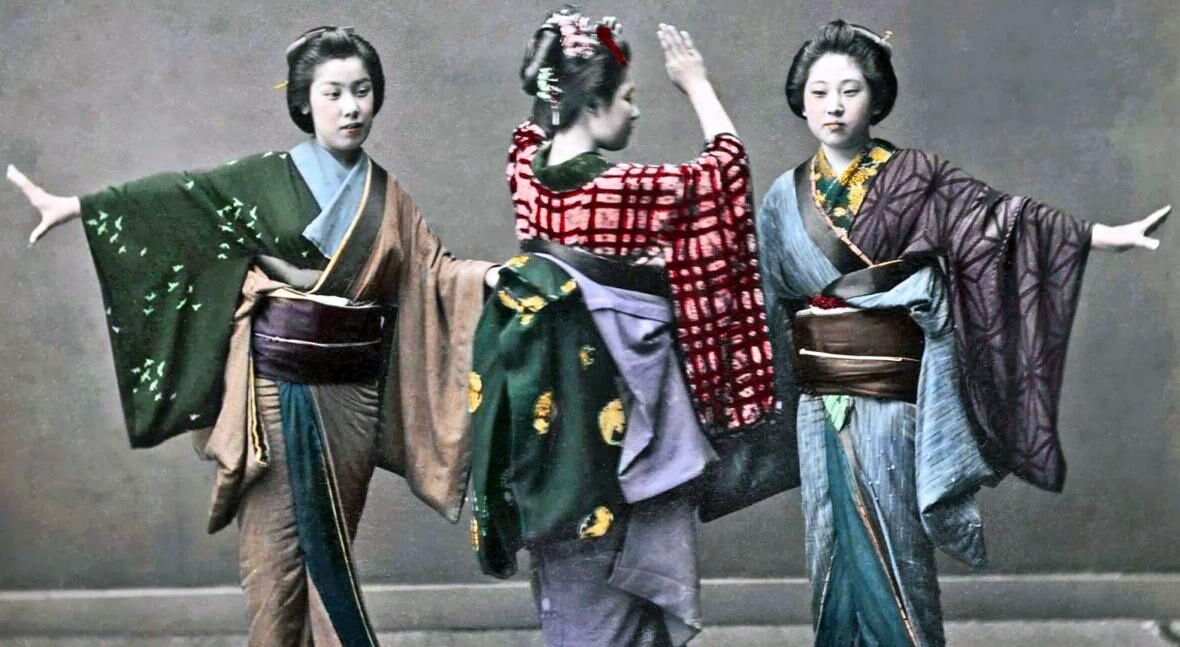
The Beautiful Dancer of Edo – A Fairy Tale From Japan
Sakura-ko was a samurai’s daughter who had become a geisha to feed her mother after her father died. She lived on a narrow street. Sounds of geisha practicing their shamisen filled the air at all hours. Sakura-ko proved gifted with the shamisen. She also played the koto and the biwa. Sakura-ko’s liquid eyes and ivory skin attracted many teahouse appointments. Her conversation skills and charm could melt the hardest man. She spent her days looking down on the street from the gallery of her geisha home. People would point and exclaim, “There’s Sakura-ko, the Flower of the Cherry. The most beautiful dancer of Edo.” But as she looked down at them, she often said to herself, “The narrow street is paved with bitterness and broken hearts. The houses are full of vain hopes and regrets. The flowers in the gardens are watered with tears, yet these people don’t realize this.” If you watched her dance, you’d never guess she had such a sorrowful heart. Gentlemen compared her to the rainbow-winged dragonfly and to the morning mist dancing in the new sunlight. She danced like the shadow of a willow tree on the river. They would never guess the resentment she carried from her three lovers. The first was a middle-aged, rich and great man. When he first tried to win her, he sent a servant with a lot of money. “You’re obviously lost,” she told the servant. “You should have gone to the merchant street and bought your master a doll. Let him know he won’t find a doll here.” She shut the door in the servant’s face. After the servant accounted this, the master visited her. “Come to me, Flower of the Cherry,” he said. “I must have you.” “Must?” She raised her eyebrow. “Must is the only word for how I feel.” “And what will you give me?” He didn’t hesitate. “You will have the finest kimono. I will give you a house with servants. Gold hairpins—whatever you want.” “And what do I give you in return?” She narrowed her eyes. “Just yourself, Flower of the Cherry.” “Body and soul?” “Body and soul.” He licked his lips. “Goodbye. I plan on remaining a geisha. It’s a fun life.” She laughed and shut the door in his face. The second lover was old. He hired Sakura-ko to dance at a feast he had scheduled, but he remained attached to her throughout it instead of being a proper host. “Sakura-ko, I am madly in love with you!” “I can easily believe it,” she said. “I’m not as old as you may think.” “If the gods are compassionate, you might have some time to prepare for your end. You’d best go home and study your scriptures.” Sakura-ko adjusted a hairpin. “It is time for me to dance.” After her dance, he made her sit beside him and called for wine. Her geisha sister, Silver Wave, served them. After making her drink with him he pulled her close. “Come, my love. My bride! There was poison in that cup, but you don’t have to be afraid. We will die together as lovers.” “Please. My sister and I aren’t children. Nor are we foolish. I didn’t drink the saké. Silver Wave poured me fresh tea. But I feel sorry for you. I will stay with you until you die.” He died in her arms. The third lover was a young, courageous man. He happened to see Sakura-ko one day during a festival and went out of his way to find her. He finally found her watching the street from the railing of her gallery. He stopped in the shadows to listen to her softly sing: My mother made me spin fine thread Out of the yellow sea sand. A hard task. A hard task. May the dear gods speed me! My father gave me a basket of reeds. He said, ‘Draw water from the spring and carry it a mile.’ A hard task. A hard task. May the dear gods speed me! My heart would remember. My heart must forget. A hard task. A hard task. May the dear gods speed me! When she looked down, her gaze met his. He wiped a tear from his eyes and called out, “Do you remember me, Flower of the Cherry? I saw you last night.” “I remember you well.” “I am not as young as I look. And I love you. Please be my wife.” Sakura-ko blushed. “My dear,” the young man said. “Now you are a flower of the cherry indeed.” She shook her head. “Child, go home and don’t think of me. I’m too old for you.” “Old? There’s barely a year between us!” At this point, people stopped and watched the two, tittering behind their hands. “No, not a year, but an eternity. Don’t think anymore of me.” Sakura-ko went inside. Of course, the young man could think of nothing else. He couldn’t drink or eat or sleep. After several days, he finally went out to the geisha street, fainting with weakness. Sakura-ko came home at dawn and found him slumping near her home. Without saying a word, she helped him to his house outside Edo and stayed with him until his health returned. Three months passed. One evening, they sat together admiring the stars. Sakura-ko smiled at them. Happiness filled her heart. “My dear,” the young man said. “fetch your shamisen and let me hear you sing.” The spell broken, she did as he asked. “I will sing a song you already know.” My mother made me spin fine threat Out of the yellow sea sand. A hard task. A hard task. May the dear gods speed me! My father gave me a basket of reeds. He said, ‘Draw water from the spring and carry it a mile.’ A hard task. A hard task. May the dear gods speed me! My heart would remember. My heart must forget. A hard task. A hard task. May the dear gods speed me! “What does the song mean? Why do you sing it? It is so sad.” He frowned. “It means it’s time for me to leave you. I must forget you. You must forget me.” He grabbed her hand. “I will never forget you. Stay.” She smiled. “I will pray for you to find a sweet wife and have many children.” “I don’t want any wife except you. I want your children, Flower of the Cherry!” She pulled her hand away. “That can’t happen.” The next day she was gone. The young lover looked all over for her, but she had disappeared. Eventually, his family found him a wife, and they had a son together. When the boy was five years old, he sat at the gate of his father’s house. A wandering nun came by, begging for alms. The servants brought her rice. “Let me give it to her,” the boy said. As he filled the begging bowl and patted the rice down with the wooden spoon, the nun caught his sleeve and gazed into his eyes. “Why do you look at me like that?” he asked. “I once had a boy like you, and I had to leave him.” “The poor boy! Why?” “It was better for him. Far better.” She turned away and continued down the road. This story can be found in my collection of over 170 modernized Japanese folktales, Tales from Old Japan.
Japan Powered
7 months ago
Mono no Aware and the Limits of Words
Consider this, we generally see a man’s life as rather fleeting, like the dew in the evening or the frost of the morning. –Daidoji Yuzan No doubt, as a fan of Japanese culture, you’ve encountered the idea that some Japanese phrases are “untranslatable.” This idea tends to tie with the idea that Japanese culture is too different, too special to be put into English. Chinese culture and the cultures of the old Orient (Egypt, India, Iran, and the rest of the Middle East) fall into the same mystery and inexplicable “otherness.” While this idea has become less prominent as we become more interconnected, and indeed as these cultures adopt (or are forced to adopt) Western cultural norms, it remains in different disguises. “Untranslatable” words remain one of the most common disguises. Words have limitations, of course. They are symbols for ideas, objects, and sensations. What makes words useful also makes them limited. Languages sit within a range of high-context to low-context. High-context languages assume understanding based on the situation. Low-context languages do not assume context, at least as far as any language can avoid assuming context. The differences between high-context languages, such as Japanese, and low-context languages, such as English, leads to the idea of words being “untranslatable.” In some regards, this is true. The Japanese word for understand or know, wakarimasu, assumes a subject within a given context. English doesn’t make sense if you would simply say “understand.” A subject must be defined, and an object should be defined for maximum clarity. English and other low-context languages need the context defined. This leads to low-context languages having more precision but also more words to convey the same idea. “Untranslatable” words which convey complex sentiments within a high-context culture therefore need more words to convey the same sentiment. A one-word for one-word translation isn’t always possible. Likewise, “untranslatable” ideas also work the other direction. It’s difficult to translate precise, little-context-assumed ideas into a highly contextual word or simple phrase. Dutch studies, as Edo period Japanese scholars called Western science and literature, often transliterated words and phrases instead of “translating” concepts one for one. It’s no different from how we in the West transliterate manga instead of using our word comic. Comic doesn’t quite capture what manga is. One such “untranslatable” phrase is mono no aware. If you read Western scholarly works about it, you see most scholars transliterate the term or refer to it as aware rather than translate it. This is a perfectly fine approach, and one I will mostly use for this essay. Scholars also write that mono no aware is a distinct Japanese aesthetic, implying few other cultures express it. Japan certainly portrays the aesthetic in a unique way, which continues in Japan’s literature, art, and even in anime. But mono no aware appears in Victorian photos of dead relatives before they are buried. Mono no aware can also be found in Native American stories and writings. Mono no aware is a common human experience; it isn’t truly “untranslatable.” Mono no aware is define in English as “the pathos of things” or “joyful sorrow.” The idea comes from Zen Buddhism’s focus on seeing the impermanence of life. Zen Buddhism observes how people deny the fact that life is passing and that trying to cling to things that are destined to change are how most people live (Lomas, 2016). The Tale of the Heike, one of Japan’s oldest books, captures this idea: The Gion bell-tolls, sounding the knell that all things must pass. Like the colors of the summer camellia, prosperity is ever followed by decline. The proud do not endure; they are like a dream on a spring night. Even the mighty meet with destruction, until they are as dust before the wind. Motoori Norinaga, an 18th century literary scholar, coined the term mono no aware. The phrase combines aware, sensitivity or sadness, and mono, things. Literally, mono no aware can be read as “thing’s sadness” or “things of sadness” (Lomas, 2016). Although the term was coined in the 18th century, the sentiment rooted during the Heian period. The Heian period (from the late 8th century to the 12th century CE) saw the development of Japan’s syllabaries, leading to the development of prose fiction and poetry. Before then, Chinese writing was used. During this period, reverence for cherry blossoms and plum blossoms, which both serve as symbols for mono no aware developed. Cherry blossoms appear for a short time each spring before disappearing; each time they return, they’re different. No single cherry blossom reappears exactly as it had previously existed. This fleeting uniqueness, here now and gone in a blink, generates the feeling of “things of sadness.” Cherry blossoms are beautiful and appreciated in part because they are fleeting. The sadness of their ending enhances their beauty. Heian literature sought to capture “cherry blossoms” with words. This led to the development of waka poems. The Anthology of Ancient and Modern Poems, or Kokinshu, compiles over 1,100 of these poems around 905 CE. Murasaki Shikibu’s Tale of Genji (another work filled with mono no aware) references this anthology 1018 times (Bell, 2015). Most of the poems trace to older periods, pointing to how the concept of mono no aware predates the Hein period (Japanese Literature, 2018, Duthie, 2023). Waka poems follow 5 metrical units of 5/7/5/7/7 syllable patterns. Waka poems exist in conversation with each other. Like cherry blossoms, they cycle without being the same and emphasizing beautiful fleeting moments with a sad, yet joyful or hopeful, undertone. The Kokinshu places these poems in sequence. Here’s a waka conversation to give you an example (Duthie, 2023): Written by the Nijo Empress Consort: Spring has arrived before the snow has gone; perhaps now the warbler’s frozen tears will melt away at last? Followed by this anonymous poem: Though the warbler that has come to the branches of the plum tree cries to summon the spring, snow continues to fall. And this poem written by Soei, a monk: Perhaps he thinks they are blossoms because spring has arrived? White snow covers the branches on which the warbler cries. This anonymous poem finishes the sequence: So profoundly have my thoughts been suffused by my desires, that the lingering snow appears to me like blossoms. This sequence contains many symbols of mono no aware: a lonely warbler, melting snow, and references to plum blossoms. Besides cherry blossoms. the moon also becomes the most common symbol of this aesthetic sensibility, also from Kokinshu: When I see the light of the moon leaking through the trees I know the heart wrenching autumn has arrived. Poems like these inspired ukiyo-e artists, particularly Katsushika Hokusai. Ukiyo-e, or floating-world picture, are woodblock prints common throughout the Edo period. The word ukiyo-e references the Buddhist description of “this fleeting, sorrowful world” (Bell, 2015). Woodblock prints depicted moments from Edo’s red-light districts, which were called floating worlds because of how temporary and fleeting their pleasures and beauty were. Ukiyo-e artists created some of the earliest mass-produced manga, more like single-panel cartoons. Modern manga artists would build on this long tradition. You can see these symbols throughout manga and anime. We see characters walking to school or work with cherry blossoms fluttering around them. Characters gaze at the moon. But we also see modern versions of mono no aware. The most common, and perhaps the hardest for Westerners to identify, appears during summer. Cicadas chirrup against soft (or absent) background music. The camera pans upward. Dusk reddens the scene, and we see electric lines silhouetted against the sky. The scene captures the end of summer, the transition from teenage student to adult, and references the fleeting, beautifully joyous sadness of life. The Victorian practice of photographing deceased family members is a Western expression of mono no aware. It doesn’t translate as well as Japan’s symbolism of cherry blossoms and even electric lines. The practice strikes us moderns as morbid, but this photography was a celebration of technology (photography was a new, exciting development) and aimed to capture the familial connections the deceased had in life. The contrast of the fleeting moment of life stolen by death and captured by “permanence” of photography, generates a similar sentiment as cherry blossoms, at least among Victorians. For some, decaying homes and barns, slowly being engulfed by nature, represents mono no aware. On an individual level, books, video games, anime, and other media can illicit feelings of mono no aware. They can remind you of happy, former times, which ended too soon and can never return no matter how many times you revisit the story. American culture doesn’t have a society-wide symbol for mono no aware. Instead, American culture has an individualized system where cultural segments and individuals have their own symbols. If I had to pin down a more universal symbol for the sentiment for American culture, I would suggest Friday night high school football. For many people, the ritual of attending these games evokes feelings of mono no aware. Football reminds them of their childhood and teen years, of community, and the fleeting nature of those moments. Where they had once played on the field or cheered as a cheerleader or played as a band member, they now watch their own children or grandchildren. Their joy mixes with a sadness at how their own time has passed and how their children’s time is passing. Of course, if you ask anyone attending a Friday night game, I doubt they will articulate this mix of feelings, caught up in excitement of the game. American culture prefers to keep feelings like mono no aware at arms length. If I had to translate mono no aware into a single English word, I would use either nostalgia or bittersweet. Nostalgia is a little different from mono no aware, but nostalgia contains the feelings of mono no aware. And mono no aware contains nostalgia. Perhaps the better word would be bittersweet. Bittersweet invokes happiness laced with sadness linked to the transience of the moment. High school graduation ceremonies invoke this bittersweetness (as anime loves to show). The event is sweet in that you’ve achieved adulthood but bitter because you must now leave your classmates, teachers, and second home (for better or worse that is what schools become) behind. Bittersweet captures the feeling but doesn’t contain the symbol associations that mono no aware does. Remember that mono no aware is an aesthetic, that is, an artistic expression of the sorrowful happiness surrounding the ephemeral nature of life. We use the phrase as a symbol for those emotions. So, while bittersweet lacks the aesthetic elements of mono no aware, the word more accurately represents the emotions the aesthetic points toward. Words act as symbols for ideas and objects. Symbols, by their nature, have limits. People interpret symbols differently because they have different experiences which compose their frames of reference. This sounds obvious, but in practice people assume words are understood in the same way. This may be true on a surface level. Terms like love, however, invoke a different set of experiences and emotions attached to those experiences. These deeper associates lead to words and other symbols being understood in, sometimes, completely different ways. Cherry blossoms may invoke feelings associated with mono no aware but everyone’s experiences of these emotions differs and with that their understanding of the phrase. This doesn’t mean words aren’t useful. Writing is one of the most magical of human inventions, allowing you to hear my thoughts in your mind and the thoughts of long, long dead people. Remembering the limitations of words helps you be more charitable toward people’s use of those words. Instead of allowing your understanding of their words to trigger you, consider how their experiences influence their use of words compared to your own. Depending on your perspective, you can argue that all words are untranslatable, not across cultures and languages but across individuals. But this slides toward an unhelpful deconstruction. Phrases like mono no aware appear to be untranslatable at first, but all supposed untranslatable words remain linked to the human experience. While these experiences vary, everyone experiences them in some way. This means the words which symbolize these experiences can usually be found. Sometimes a transliteration can work better, but in the case of mono no aware, using the word bittersweet may work better than a transliteration even if the word drops the artistic elements associated with mono no aware. This can be stepped around by using bittersweet as an adjective: bittersweet poems, bittersweet art. But then, mono no aware is more fun to say. References Bell, David (2015) Katsushika Hokusai and a Poetics of Nostalgia. Educational Philosophy and Theory. 47 (6) 579–595, http://dx.doi.org/10.1080/00131857.2014.964158. Duthie, Torquil (2023) The “Kokinshū” as a foundational classic. The New Criterion April 2023. Japanese Literature (2018) Funk & Wagnalls New World Encyclopedia. Chicago: World Book Inc. Lomas, Tim (2016) Untranslatable Words: Mono No Aware, and the Aesthetics of Impermanence. Huffpost. https://www.huffpost.com/entry/untranslatable-words-mono_b_9292490.
Japan Powered
about 15 hours ago
Finished a Video Game and Feeling Depressed? Here’s Why and What to Do About It
Sometimes when you finish a video game, especially a story-based video game, you can come away depressed or feeling in a stupor. Anime can also leave you feeling similarly depressed. Many people scoff at this idea. After all, it’s just a video game! It’s just a cartoon! Avid readers, on the other hand, nod in understanding. Fiction can bring people to tears. Even my jaded self has teared up over an anime, a video game, and a book. Why Does This Happen? Story-based video games can leave you feeling depressed because of their resonance. I’m using the term depression/depressed in the non-medical sense, as in feeling deeply sad for a long period of time, because that’s how people misuse the word. Good fiction will resonate with you, appealing to your emotions, your sense of self, your personal values, and your deepest longings. You feel connected to the characters in the story because the characters have endured similar trials as you have, share personality traits with you, or represent an ideal friend or spouse. The length of time you spend with a game also plays into the feeling of sadness. A long, story-based game like Persona 5 creates a sense of getting to know the characters. Even though you know the characters are fictional, the brain light up in the same way it does when it processes people. In a brain study, researchers found neurons fire based on how personally relevant the stimulus is (Abraham, 2009): Firstly, the findings suggest that one of the factors that guide our implicit knowledge of what is real and unreal is the degree of coded personal relevance associated with a particular entity/character representation. Our associations for people we know personally are even broader and richer than that for famous people. In danger of overstepping the study’s findings (and I caution that this is just a single study), it stands to reason that fictional characters that are coded as personally relevant would create a stronger neural reaction. After all, it’s not unusual to spend 40 to 100 hours with the characters. If we consider the fictional characters as important to us as friends, as some character fans do (waifuism is an example of this), the brain would react as if a friend had left. Again, I have to emphasize that I’m speculating on the neuroscience. The sad feeling you have points toward the relevance and loss you feel when the story ends. Video games encourage dopamine release. Dopamine is a chemical that encourages us to pursue pleasure. Video games can encourage dopamine release, and this may leave you craving that dopamine when the game ends. This craving is one factor that drives people to play multiplayer games. Some of your sadness about the end of a game may be related to this decrease in dopamine. Oxytocin also plays a role as the “attachment” molecule. In an article written by a researcher who studies oxytocin, he reported a proportional increase in oxytocin with people’s feelings of empathy as they watched a film (Zak, 2015). Considering the length of long story-based games, this mechanism may also contribute to your feelings of sadness and loss. If it helps you, I also suffer from post-anime and post-video game blues. When I finished my first play through of Persona 5 Royal, the game left me with the blues. The same when I finished Final Fantasy 7 Remake and Rebirth back-to-back. It doesn’t matter your age or gender identity; our ability to to connect is what makes us human. Sadness isn’t a negative emotion. Uncomfortable, certainly, but not negative. It speaks to how much someone or something means to you. If anything, feeling nothing or wanting to kill your sadness stands as an insult to the story, pet, or person. When you lose an important person in your life, that sense of loss should remain with you. Of course, no video game or anime or book should leave never-healing sadness. That’s a signal of something problematic. People, as long as the blues aren’t debilitating, sure, that should last a long time. That feeling of loss will naturally ease but never end. The adage “Time heals all wounds” is false. Sadness that reappears when something reminds you of that person is a natural testimony of how important that person was for you. Most feelings of sadness are normal and natural. We have a strange belief in modern life that we shouldn’t feel uncomfortable feelings. Anything less than happiness is wrong or bad; the gamut of human emotion is otherwise unhealthy because they feel uncomfortable. This way of thinking is wrong. The fact you feel sad over a video game ending is a good thing. Embracing that feeling is an act of rebellion against the malaise of happiness. What Can I Do About It? I’m not a psychologist or therapist. I’ve found the best approach for a difficult feeling is embrace the feeling. That doesn’t mean act on the thoughts that come with those feelings. Instead, embrace the discomfort you feel. Accept it and hold it close as a validation for how much the story or characters meant to you. Sit with the discomfort; allow yourself to feel it. The discomfort will fade with time, and you will become stronger for it. Fiction allows you to exercise your emotions in a safe place, preparing your for the emotions that will assail you when those close to you die. You can take other actions after you’ve sat with your feelings for a time: Read a book. Take time away from screens for awhile. Reading is a skill that fades if you don’t exercise it. If you can’t focus, you need to practice focus, and reading is the one of the best means to do so. Start with manga and work toward novels if novels are too much at first. Play a different game. Revisit an older game you enjoy. Play a different genre. I like to alternate between platformers and RPGs because of the different play styles. Replay the game. Play the New Game+ setting if the game has it. If you are a completionist, work on completing the game’s different paths. Take a walk. Do something active, preferably outside. Take a walk in a park. Get out and into nature. Trees help your mind and mood. Do something creative. Make fan art or fan fiction about the game. Put your feelings into something creative. Make an unrelated, original work. It doesn’t matter how you do it–painting, drawing, sculpture, writing. Create. Meditate. Everyone needs to meditate in some way. Meditation techniques involve more than sitting still and focusing on your breathing. Some techniques are more active, such as walking meditation. Meditation can be folded into nearly any repetitive action, such as washing dishes. Don’t feel silly for feeling sad after finishing a video game. People don’t make fun of sports fans for feeling bad when their team loses. It’s the same idea. Only sports are more culturally acceptable as an emotional outlet. Stories matter. They provide important material for building your way of understanding and navigating the world. Characters help us understand how real people function and how we can relate to those people. Avoid avoidance. Use fiction and your emotions surrounding it to strengthen yourself for when life will challenge you. If you learn how to handle depression and sadness with fiction, you will be better equipped for dealing with death. You can’t expect to be good at a game as soon as you pick it up. It takes practice. So too, you need to practice handling your emotions before you face a true emotional crisis. The techniques you learn when fiction leaves you sad apply to life’s challenges. References Abraham, A., & von Cramon, D. Y. (2009). Reality = Relevance? Insights from Spontaneous Modulations of the Brain’s Default Network when Telling Apart Reality from Fiction. PLoS ONE, 4(3), 1–9. https://doi-org.oh0164.oplin.org/10.1371/journal.pone.0004741. Zak, P.J. (2015) Why inspiring stories make us react: the neuroscience of narrative. Cerebrum. Feb 2;2015:2. PMID: 26034526; PMCID: PMC4445577.
Japan Powered
8 days ago
Chainsmoker Cat: Controversy, Commentary, and Censorship
Chainsmoker Cat revels in being lewd, crude, and rude. The comedy follows Yaniko and other beastfolk who live in a small apartment building. Yaniko lives in squalor, which the series uses to disgust the audience, and is addicted to smoking to the point where she can’t do anything (and I mean anything) without a cigarette in her mouth. The other beastfolk have their own addictions. Yakuko smokes marijuana and has a, never stated but heavily implied, heroin addiction. Hameko is a high-school gamer and livestreamer who is addicted to the online attention. Kaoruko, a fellow smoker, likes making others laugh while lacking any comedic skill. She’s the most put together of the crew. Aruko suffers from alcoholism and spends most of the day drinking and sleeping in her room. Finally, the only humans in the apartment, Saori who works as a hentai manga artist and Oya, the landlord, share a kink for beastfolk. The comedy puts these personalities in awkward situations centered on their various addictions, usually with Yaniko disgusting everyone, and body humor. Poop, fart, and sex jokes abound. The lewdness, crudeness, and drug use has led some platforms to yank the anime. Ani-One Asia and Bahamut Animation Crazy pulled the show because of a scene showing Yakuko injecting a “vaccine” and because all the smoking may be in violation of tobacco-use prevention policies. Japan’s Broadcasting Ethics & Program Improvement Organization reviewed the anime, particularly focused on Yakuko’s self-injection scene. The organization eventually decided the anime was within “acceptable limits in terms of freedom of expression” (Parker, 2026; Pineda,2026). The show can’t be misconstrued as promoting smoking, even though it features real cigarette brands, because of how filthy–finger stains, wall stains, foul breath, revolting odor–Chainsmoker Cat shows smoking to be. It’s curious Mevius or any of the brands would tolerate their association with the anime. If anything, Smoking Behind the Supermarket with You could be seen as promoting smoking thanks how it portrays smoking as a cool way to connect with someone. Chainsmoker Cat is designed to be offensive, unlike Smoking Behind the Supermarket with You, which likely plays into the discomfort some feel. The comedy is supposed to be uncomfortable! Despite the low-brow humor, Chainsmoker Cat offers sometimes subtle commentary about despair and the lives of people on the edges of society. All of the characters live on the margin and numb their despair using their various addictions. Beastfolk aren’t treated well. During a scene when the crew plays a board game together, the game bars them from certain actions and jobs because they are beastfolk, relegating them to low-end jobs. Yaniko works various dangerous, dirty, and temporary jobs. She burns the money on cigarettes despite how she has only a year to live; a doctor diagnoses her with lung cancer, which she shrugs off. Yaniko lives in the moment. In another scene, Yakuko wants to go stag beetle hunting, something young boys do. The others criticize her for such a young-boy hobby and don’t go with her. Only Yaniko joins her as Yakuko leaves. The scene illustrates the despair that sits under all the comedy. Whenever any of the beastfolk try to be normal, they’re met with resistance. The stonewalling creates the despair that drives their various addictions. Yaniko’s younger sister, Imoko, shares this marginalization. Imoko loves her elder sister and seeks her well-being throughout various episodes. Imoko is responsible and respected…to a point. Several scenes show Imoko with her human friends on their way to and from high school. Her friends often comment about her cat-like nature. While they appreciate it, Imoko acts like a cat for their laughs. She performs for the humans while her elder sister refuses to perform and confirm. Imoko becomes accepted because of this, but she isn’t portrayed as a equal, even among her friends. The scenes are subtle but noticeable, especially after the board game episode. Even the humans Oya and Saori have some despair about them. Oya is single, and his comedic scenes anchor into his desire for companionship and intimacy. The various sex jokes involving his beastfolk blowup doll and his erections link to scenes where his loneliness comes to the fore. He never moves on any of the beastgirls. He looks out for them in his own way. Although, he has the habit of never knocking; no doubt because he knows he will get to glimpse them in some sort of compromised state or another. But he’s tolerant of them and doesn’t marginalize the girls as the other sections of society does–even if he sexualizes them. Saori despairs of the crushing grind of working as a mangaka chasing deadlines. Her kink for the beastfolk is about the same as Oya’s. She puts the girls in compromising outfits and positions to act as references for her hentai. She pays them for the modeling and doesn’t marginalize the girls even as she sexualizes them in her manga. Oya and Saori split sexualizing away from marginalizing, but both of them exploit the beastfolk’s situation in their own ways. However, they don’t treat the girls as insignificant or as subhuman. Chainsmoker Cat is not sophisticated by any means, despite this social commentary buried under the crude humor. The anime wants us to feel disgusted toward Yaniko in particular, The show wants the audience to laugh at the misfortune and self-inflicted wounds of the characters: schadenfreude, in other words. It pokes fun at how anime fans like catgirls by showing them in as much squalor as possible. Oya and Saori act as stand-ins for the gaze of the audience. Do I recommend Chainsmoker Cat? No. I can’t recommend this story unless you enjoy lewd, crude humor. I felt sorry for the characters more than I felt amused. Although, I admit the scene where Yaniko farts into a loudspeaker while the girls work for a political messaging service was funny, considering how political talk is essentially verbal farting. The commentary about the links between despair and addiction won’t be enough to keep you watching if you don’t enjoy the humor. References Parker, Lewis (2026) Chainsmoker Cat Anime Investigated By Japan’s Broadcasting Ethics Watchdog For ‘Illegal Drug Use’ Depictions. Kotaku. https://kotaku.com/chainsmoker-cat-anime-investigated-by-japans-broadcasting-ethics-watchdog-for-illegal-drug-use-depictions-2000723427 Pineda, Rafael Antonio (2026) Ani-One Asia Also Removes Chainsmoker Cat Anime From Streaming Lineup. Anime News Network. https://www.animenewsnetwork.com/news/2026-08-20/ani-one-asia-also-removes-chainsmoker-cat-anime-from-streaming-lineup/.240773
Japan Powered
15 days ago
The Dangers in My Heart: Exploring the Dangers of Puberty
Anime and manga focuses on the middle school and high school years because of their natural drama and coming-of-age nature. Anime likes to lean on characters’ lack of social experience, especially with relationships, as drama points. Often, this leads to what I call “meathead” characters, characters which are artificially dense for the sake of the story. Some denseness is natural and comes with the age of the characters. But when a female character pretty-much confesses her affection and the male still says “I don’t think she feels that way,” the denseness becomes artificial. Fortunately, The Dangers in My Heart avoids this problem. The doubts are still there, but the characters are more realistic in their waffling, considering their ages (13 to 14 years old). They reflect and work at changing. Spoilers ahead! Kyotaro Ichikawa begins as your usual outcast loner with a touch of chunibiyo. He fantasizes about murdering his popular classmates, especially the class idol Anna Yamada. But one day he encounters Anna munching on snacks in the school library. The encounter sets them on the junior-high rom-com path. Anna wants to establish a friendship with Kyotaro and maybe more as she comes to know him. Her relationship with Kyotaro follows the reverse of her favorite shojo manga, with Kyotaro playing the role of the shy but kind girl and she the tall and mature boy. Anna and Kyotaro act as balances for each other. Kyotaro is perceptive and reflective, often to a fault. Anna isn’t as perceptive but she’s considerate and caring. Anna works as a teen model and actress while being a glutton for snacks. She tries to act as an adult. She had hit puberty early and developed a woman’s figure, much to the 13-year-old boys’ attention. Most of the other girls in the class have also hit their physical development. But despite her looks, she remains an insecure young girl inside. Kyotaro, on the other hand, doesn’t want to grow up despite being inwardly fairly mature (when his chunibiyo doesn’t afflict him). He hasn’t hit puberty at the start of the story and his chest height on Anna, much to his mixed discomfort and comfort. Kyotaro is a bundle of insecurity and uncertainty, but he’s also kind and strives to do the right thing once he realizes it. And sometimes it takes him some time to realize it. Anna’s friends tend to protect her from the boys and upper classmates who pursue her. In many scenes, they create a physical shield around her and one of them deflects the boy interested in Anna. Once they realize Anna is interested in Kyotaro, they perform various tests to make sure he’s of good character. Moeko Sekine, especially, tests him. Once she finds him a good match for her best friend, she becomes a good friend for Kyotaro too. She often saves them both from embarrassing situations and pushes Kyotaro to step up once she realizes he and Anna share mutual feelings. However, in many scenes her egging makes Anna jealous. In one scene, Anna, Moeko, and the rest of their girl group–including a now-confused Kyotaro–go to Anna’s house to make chocolates for Valentine’s Day. In order to deflect Anna’s mother, Moeko states she and Kyotaro are dating. While Anna understands why, this still fills her with jealousy. The tension of the air drives Kyotaro away. Anna pursues him and convinces him to rejoin them. This doesn’t help his confusion at being treated as “one of the girls” after he and Anna had been slipping into romantic territory. Anna had been growing increasingly flirty and physical with him. She looks for any reason to touch him. Kyotaro eventually apologizes to Anna’s mother about Moeko’s lie and even makes a gamer friend in Anna’s father. Kyotaro’s acceptance by Anna’s friends expands his friend circle, but it also spreads tension between him and his new male friends. Sho Adachi also falls in love with Anna, but unlike Kyotaro, Sho’s affection is based on lust. He knows nothing about Anna. And Sho also has a tendency to blurt out his perverted thoughts. Sho and Kyotaro during the school sports festival confront each other over Anna. While Kyotaro is defeated, Sho comes to understand Kyotaro cares for Anna deeply and remains his friend. Kyotaro’s other friends have their own small plots, such as Kenta and his affection for chubby classmate Hara. They provide the contrast between the developmental levels of the boys, who haven’t yet started puberty, and the girls, who mostly have completed their first developmental stage. The boys stare at the girls’ chests, make perverted comments, and otherwise act immature. Kyotaro, on the other hand, tries to avoid such perverted antics despite his own awaking sexuality. He struggles, like any other 13-to-14-year old, with sudden erections. This makes him feel guilty, especially when it happens in reference to Anna. After being caught in the weather, Anna brings Kyotaro home with her to dry and warm him. She offers him her gym outfit after he takes a hot bath, and then greets him in shorts and a tank top, her normal pajamas. To make matters worse, Anna had also collected his underwear with his clothes to run through the dryer. You can imagine the young teen boy’s reaction to “going commando” while wearing his crush’s clothes. Near the end of the second season, the school trip story beat appears. Kyotaro had skipped previous school trips because he didn’t have any friends. During a video call with him, Anna sees he had kept the handout about the trip he had skipped. He had discussed with her how he was now enjoying school, largely thanks to her. The call convinces her to go with him on the trip, knowing the trip is a milestone for him. But the trip happens during an audition for a film adaptation of Anna’s favorite shojo manga, the manga she and Kyotaro had shared as readers. Anna tries to have fun, but she can’t despite forcing and faking enjoyment. Kyotaro understands that something’s wrong, but he takes several days to piece together just what troubles Anna. She kept the audition a secret from him. Kyotaro confronts her just as she breaks. He confesses that he “likes” her and tells her to go to the audition. Anna is troubled by what she considers her selfishness in wanting to go to the audition, especially because she knows how much the trip means to Kyotaro. Kyotaro eases her guilt and walks her to the train station. In the finale, he returns from the trip and receives a message from her to meet in their usual place. He travels to each of the many locations where they share a memory but is unable to find her. Finally, he finds her waiting at the school library, and there, she tries to enact the final scene of their shared manga. She confesses her love for him, but when they go in for the kiss, they clonk heads. She settles planting a kiss on his cheek. This shows they still have a lot of growing up to do. The Dangers in My Heart explores how puberty confuses with its bodily changes, as Kyotaro struggles with. Kyotaro, by the end of the story, wants to grow up so he can grow to be a better match for Anna. The difference in development among the boys and girls is realistic. Girls often hit puberty earlier, with a second and shorter growth spurt later, than boys. The girls attempt to act more mature while remaining children within. The boys, on the other hand, still act as elementary age in their antics but with a burgeoning awareness of girls. Kyotaro is more mature than the other boys mentally but not physically. Anna is more mature physically but isn’t there mentally. She tries like all the other girls do. The exploration of this dynamic sets up many scenes and misunderstandings, which Kyotaro and Anna eventually navigate through open communication. The communication isn’t easy. It sometimes takes a few episodes, but they eventually talk it out until they understand each other. But, at the same time, they remain the 13 and 14 year-old characters they are. They are trying to emulate mature adult behavior. Both Kyotaro and Anna have good and supportive families, which accept as they are. But meeting each other’s families remains a harrowing experience. The Dangers in My Heart hit all the usual rom-com story beats from the sports festival rivalries to the awkward house-visiting scenes. But through its exploration of puberty and developmental psychology (it shows and doesn’t tell) the story feels fresh. Kyotaro and Anna’s struggles with admitting their feelings for each other feels more realistic than most of the on-and-off rom-coms anime has. The “denseness” doesn’t come off as artificial because both of them make effort to walk toward each other despite their hesitations and misgivings. When characters fail to take even small steps toward their increasing awareness, stories tend to feel artificial and dragged out. Anna’s flirtiness feels natural with how she will bump into Kyotaro or snatch his sleeve. Her attempts at flirting sometimes backfires, leading to her touching her breasts against him in some way. But these events don’t fall into the fan-service situations typical to these stories. Rather, they highlight the characters’ innocence and trying a bit too hard. Kyotaro will snatch Anna’s hand or wrist and tries his best to keep his gaze where it should be. Considering he’s breast level on Anna, that isn’t always easy. He comes to resent the perversity of the other boys as he befriends Anna and her girlfriends. That doesn’t mean he doesn’t enjoy looking, but he doesn’t want to reduce the girls as the other boys do. It helps that Kyotaro has an elder sister. When Anna forgets a bag of items she bought at the convenience store on his bike, Kyotaro sees a package of panty liners. Thinking they are period pads, he rushed through the rain to get them to Anna. This sets up the typical cold-scene beat. Anna is warmed by the gesture while telling him it could’ve waited, that they weren’t period pads. While Kyotaro is a bit embarrassed, he doesn’t fall into the over-the-top reactions typical to many anime. The scene highlights his thoughtful character and his relative maturity against the boys in his class. He drops his chunibyo tendencies over the course of the story. Chunibyo is a term used to reference teens who have delusions of grandeur and ability in a bid to stand out. They believe themselves to have hidden knowledge or secret powers like the ability to see the dead. The delusion provides a way to escape from the realities and pressures of middle school, puberty, and other challenges. At least, it does in anime stories. Love, Chunibyo, and Other Delusions provides the best example of chunibyo. It doesn’t play too far into the story for The Dangers in My Heart. When Kyotaro’s voice begins to change, his anxiety riddled self becomes even more self conscious. But when Anna expresses excitement over his voice changing, he starts to feel better about it. Anna is fascinated by how boys change, as much as the boys are fascinated by how the girls had changed since last year. The Dangers in My Heart doesn’t explore this fascination using fan-service as you’d expect. Sometimes the camera will center on Anna or other girls’ breasts, but this is done to show Kyotaro’s height and point of view. Or it happens as a means of contrast. The girls would be expressing themselves in an immature, elementary-school way which contrasts against their bodies’ development. The contrast serves as a characterization along the story’s themes of growing up. The Dangers in My Heart illustrates the awkwardness of early puberty and the mental conflicts which comes from it. Caught between adulthood and childhood, the traits of both leave the characters feeling “messed up in the head.” Some deal with it by retreating into the delusions of chunibyo. Others deal with it by going into a different sort of chunibyo, an imitation of adulthood. The story has more depth and heart than I had expected. But then, I expect little from rom-coms and comedies in general. Dangers provides a heartful story while showing the struggles everyone goes through in some way.
Japan Powered
22 days ago
The Spirit of Japan: A Lecture in 1916 Foreshadowing World War II
In 1916, Rabindranath Tagore gave a a series of lectures in Japan. Tagore was a British Indian poet, writer, philosopher, and painter. He became the first non-European to win the Nobel Prize in Literature in 1913. He criticized nationalism and advocated for Indian independence. I came across one of his published lectures given to the the students and members of the Indo-Japanese Association at Keio Gijuku University. The lecture proves interesting in many ways. First, Tagore is an Indian living under British colonial rule, so he has a different perspective from most of the English writers I find from this period. His experiences under British rule leads him to warn Japan about the course it was following at the time. A little historical context: Japan had been opening to the world for the past 50 years at the point Tagore speaks and striving to be recognized as a player at the “international game of poker (where everyone cheats)” through a rapid modernization and militarization program. This push concerns Tagore, who begins his lecture praising Japan’s culture and otherwise has elements of Japonisme. What has impressed me most in this country is the conviction that you have realised nature’s secrets, not by methods of analytical knowledge, but by sympathy. You have known her language of lines and music of colours, the symmetry in her irregularities, and the cadence in her freedom of movements; you have seen how she leads her immense crowds of things yet avoids all frictions; how the very conflicts in her creations break out in dance and music; how her exuberance has the aspect of the fullness of self-abandonment, and not a mere dissipation of display. Tagore highlights a common observation of travelers to Japan at that time. Japan was still transitioning to an industrial country, so the country still had its feet in the Tokugawa period’s nature focus. After the Tokugawa Shogunate had witnessed deforestation at the beginning of its reign, it instituted a partnership with the logging villages to sustain and expand forests. Wood, after all, was the primary building material and source for heat. This top-down and bottom-up approach, coupled with the nature-veneration Shinto has built into it, created these observations. Today, with more people leaving Japan’s rural villages for the work cities offer, this observation and idealism no longer holds. Like most developed nations, people have traded nature’s “language of lines and music of colors” for the concrete and glass of modern cities. But Japan’s relationship with nature, which shares many similarities with Native American cultures, remains a cultural memory–it isn’t entire gone. Tagore continues: In other great countries, signs of man’s power loomed large, and I saw vast organisations which showed efficiency in all their features. There, display and extravagance, in dress, in furniture, in costly entertainments, are startling. They seem to push you back into a corner, like a poor intruder at a feast; they are apt to make you envious, or take your breath away with amazement. There, you do not feel man as supreme; you are hurled against the stupendousness of things that alienates. But, in Japan, it is not the display of power, or wealth, that is the predominating element. You see everywhere emblems of love and admiration, and not mostly of ambition and greed. With the perspective hindsight offers, Tagore’s continued praise and observations here have a false ring to them, but he is setting up for his point later in the lecture. When he delivers the lecture, World War I was well underway. With Japan also at war with Germany. Japanese society, as with nearly all human societies, have power and wealth as predominating symbols at the national level. Of course, within society most people want to live and let live rather than actively move against other people. But, at the time Tagore spoke, Japan was rising on the world stage and was newly seated at the poker table with its entry into World War I on the side of the Allied Forces. Japan still retained an air of exoticism and mystery which would remain the main elements for how foreigners viewed the culture until World War II finally stripped it away. Well, Japan’s mystique still remains for many, but it isn’t the same as the feelings of exoticism which dominated the late 1800s and early 1900s. It’s interesting to see Tagore’s discussion point to how the perspective wasn’t limited to the West but also included British India’s perspective of Japan. Indians too seemed to have viewed Japan through the fading lens of Japonisme. Europe seems to have felt emphatically the conflict of things in the universe, which can only be brought under control by conquest. Therefore she is ever ready for fight, and the best portion of her attention is occupied in organising forces. But Japan has felt, in her world, the touch of some presence, which has evoked in her soul a feeling of reverent adoration. This comment makes an interesting jab at European colonialism (which contributed to World War I) before Japan’s began her own colonialism project in earnest. Japan’s conquest of Manchuria actually started in 1894 and blurred into Japan’s war with Russia a few years later. Tagore’s concern about Japan’s industrialization and Europeanization echoes Lafcadio Hearn’s similar laments in his later essays. Tagore, unlike Hearn, is more blunt: True modernism is freedom of mind, not slavery of taste. It is independence of thought and action, not tutelage under European schoolmasters. It is science, but not its wrong application in life,—a mere imitation of our science teachers who reduce it into a superstition absurdly invoking its aid for all impossible purposes. Tagore’s worry about Japan mimicking Europe leads him to make interesting observations which still holds true. Many believe themselves free thinkers, some proclaiming themselves the sheepdogs instead of the sheep, when this is a slavery of taste rather than a freedom of the mind. They consider themselves modern and thinking freely when they think in the way that’s sanctioned by their political tribe. Where Japan of Tagore’s time equated European conventions with modernism (despite the horrors of World War I), today we have people who equate modernism with their own political tribe or community’s conventions. Tagore’s lecture warns against the nationalistic thinking that underpinned World War I and would later again spark World War II. He worries about the damage that the war would have on the souls of the soldiers involved and on the societal souls of the cultures involved: I do not for a moment suggest, that Japan should be unmindful of acquiring modern weapons of self-protection. But this should never be allowed to go beyond her instinct of self-preservation. She must know that the real power is not in the weapons themselves, but in the man who wields those weapons; and when he, in his eagerness for power, multiplies his weapons at the cost of his own soul, then it is he who is in even greater danger than his enemies. He urges Japan to look within to find her own strength and position in the world rather than imitating and entangling with the West. And if Japan fully lost her unique culture and history, Japan would lose what makes her unique. Interestingly, as Japan’s population declines in our own era, and its society faces more pressure to open to immigrants–including, perhaps, another Meiji-like push to simplify the Japanese language–Japan again runs into what Tagore was concerned about. He had, after all, witnessed the Westernizing influence the British had on Indian culture: But now, where the spirit of the Western civilisation prevails, the whole people is being taught from boyhood, to foster hatreds and ambitions by all kinds of means,—by the manufacture of half-truths and untruths in history, by persistent misrepresentation of other races and the culture of unfavourable sentiments towards them, by setting up memorials of events, very often false, which for the sake of humanity should be speedily forgotten, thus continually brewing evil menace towards neighbours and nations other than their own. This is poisoning the very fountain-head of humanity. It is discrediting the ideals, which were born of the lives of men, who were our greatest and best. It is holding up gigantic selfishness as the one universal religion for all nations of the world. When you study history, you see the patterns Tagore worries about here. People are taught that hatred toward other people and taught that chasing ambitions to the harm of others are virtues. Falsehoods–lies and misrepresented history–and persistent flat-painting of people poisons people’s minds. And from these poisoned minds comes a poisoned culture that, eventually, ends in some sort of destruction as history continually shows, such as the combined World Wars. Japan, as we know with hindsight, falls into this trap, and as a student of history, I daresay the United States is currently falling into this trap, this pattern of history which empires fall prey to. And at the core of it is selfishness, both individual and cultural. In the end, the small people–you and me–tend to pay the price just as the small people of Japan’s World War II era paid the price. Throughout the lecture, Tagore spends a fair bit of time discussing the West juxtaposed to Japan: how the West fears the rise of the “Eastern race.” He warns the Japanese students about how the West uses power to the benefits of itself. He speaks from his Indian experience. He illustrates a common perspective among colonies during this long colonial period, a perspective which would eventually lead to the formation of the United States: “To the worship of this devil of politics she [the West] sacrifices other countries as victims.” He points out that the West doesn’t respect Japan for “her harmony of heroism and beauty, her depth of self-control and richness of self-expression” but for Japan’s ability to make war. Tagore’s observations of power, that countries only respect and fear other powerful countries while exploiting the weaker, unfortunately rings true today. Countries work out of self-interest. He expresses understanding toward Japan’s growing militarism, but he paints that militarism as equally evil as the European colonial project unraveled with World War I: “They [the West] admit Japan’s equality with themselves, only when they know that Japan also possesses the key to open the floodgate of hell-fire upon the fair earth, whenever she chooses, and can dance, in their own measure, the devil dance of pillage, murder, and ravishment of innocent women, while the world goes to ruin. ” He ends the lecture with a variety of warnings to Japan and namely for Japan to embrace what makes the culture unique rather than chasing the European definition of civilization and modernism. But he doesn’t only disparage the West. He also states that the soul of the West is struggling against the forces that makes the West brutish in his perspective. That the “divine in her heart is suffering from the injuries inflicted by her hands upon the world.” And that the East can learn from this divine Western heart just as the West can learn from the East. He warns his Japanese audience to turn away from nationalism, but he expects the fires of destruction to burn, clearing away everything but the “eternal light” in the East. Unfortunately, we know now, as we quickly near the 100 year anniversary of World War II, how right his observations and concerns were. And, time and again, societies fall back into similar patterns of thinking once the generations which had lived through the “red light of conflagration” die. Tagore’s lecture warns and celebrates Japan. It tears into Europe’s model of the time while recognizing that Europe has great societal aspects equal to the parts of Japan’s culture he praises. He warns Japan against adopting the militarism and nationalism which underpinned World War I. If only Japan, and Europe for that matter, had listened. If only we today would listen. References Tagore, Rabindranath (1916) The Spirit of Japan: A Lecture. Indo-Japanese Assocation, Tokyo.
Japan Powered
29 days ago
The Dead Internet and Dead Manga
The Dead Internet Theory is the idea that the majority of internet traffic, posts, and users are bots and ai-generated content. People no longer shape the Internet. The idea first floated around 4Chan in the 2010s, with forum members claiming the internet died between 2016 and 2017, long before ai-generated content began to take hold (Di Placido, 2024; Tiffany, 2021). The idea spread into governmental conspiracy theory crafting: “The U.S. government is engaging in an artificial intelligence powered gaslighting of the entire world population.” Setting that part of the theory aside, the internet feels more dead and sterile as people increasingly use large-language models (LLMs) to write blog posts, product descriptions, comments, and even chat messages. Humans still make the majority of content and conversation, even if they are are using LLMs, but the bot-created trash floats around the human-made stuff. Part of the problem traces to the centralization and corporatization of the internet. I was online back when the World Wide Web was a thing separate from the Internet. The Internet (with the capital “I”) was the expanded Darpa Net, the collection of libraries, universities, research centers, user nets, and other education and research-focused systems that dominated the early Internet. The World Wide Web was the business and personal sites that sat alongside the older Internet. I spent a lot of time digging around in the Internet, which is better known today as the Dark Web, reading articles and chatting with people on bulletin boards, early social media. The Dark Web can be nefarious, but most of the Dark Web are university pages and databases not easily accessed on the normal web. In many ways, the old days were better than what we have now. Di Placido (2024) agrees: The internet of today is much more sterile than the wild, unpredictable internet of the past, as the diverse ecosystem of small, user-created sites was replaced by a handful of huge platforms built by large corporations who seek to monetize our browsing and sharing, often to the detriment of user experience. The internet of today feels far more restricted and corporate than it ever has. Back in 2018, before LLMs became widespread, Max Read wrote in New York about how as early as 2013 YouTube saw half its traffic from bots posing as people, “a portion so high that employees feared an inflection point after which YouTube’s systems for detecting fraudulent traffic would begin to regard bot traffic as real and human traffic as fake.” Read laments that bots masqueraded as humans and humans masquerading as other humans and as bots. This has only gotten worse with how fast LLMs can produce content and respond somewhat intelligently to content. Timothy Shoup of the Copenhagen Institute for Futures studies considered (Hvitved, 2022): “in the scenario where GPT-3 ‘gets loose’, the internet would be completely unrecognizable”. And in this scenario, he would bet on 99% to 99.9% being AI-generated by 2025 to 2030. The development of automated content creation will change the way the internet looks, and probably make it even harder to navigate in the massive amount of content. This hasn’t yet happened, but we all see the process right now as more LLM-generated content spreads. As the technology gets faster, cheaper, and better at writing, it will become harder to discern a bot from a person. Already, bots can write better than a many (okay, most) people! All of this combines with the boredom and alienation people feel as they use the internet. Mix in the sterile corporate centralization, and the Dead Internet Theory feels true. Could the internet become so full of bot-driven content that it would become unusable? Most of the internet already is that way thanks to all the advertisements and spam. I’m looking at you, bots and mechanical Turk spammers! LLM-created content doesn’t really matter considering all the layers of advertisements which make many pages worthless. But yes, a good section of the internet has already become unusable, or at the least of low-informational quality. LLMs will degrade as the data they ingest degrades. I suspect they would be higher quality than what we see now if the technology had appeared back when educational institutions dominated the internet. But I also see the possibility of the Dead Internet Theory extending to books and even to manga. People already play with using LLMs to create books. And manga publishers are getting into the game. Osamu Tezuka’s eldest son headed a project to train a model on his father’s work and to use the model to produce roughs for new stories and to create frames in his father’s style (NHK News, 2023). Shinchosha published Japan’s first fully AI-drawn manga in full-color. The title is Cyberpunk:Peach John and it’s created by a person by the pseudonym Rootport. Even the author of One Piece, Eiichiro Oda, has turned to ChatGPT to help with writer’s block. Professor Satoshi Kurihara of Keio University states that the possibility of manga artist assistants being replaced by Ai “isn’t zero” (The Straits Times, 2024). In a Dead Book Theory or a Dead Manga Theory, most of the work behind the books would be handled by models with humans nudging the process. Rootport, in The Straits Times article, states: “I also don’t think manga completely unaided by AI will remain dominant forever.” And that AI-image generates have “paved the way for people without artistic talent to make inroads into the manga industry as long as they have good stories to tell.” That gets to the crux. Are models tools that enable people and eliminate barriers or are they replacing people? Are the barriers necessarily bad or even that high? Not to ding Tezuka, but his art style is pretty primitive–charming–but simple. He’s proof that artistic merit isn’t everything if you can tell a good story. Granted, he is doing a lot with his simplistic style. Barriers force growth and improvement. If a computer handles all the hard parts, how can an artist grow? The challenge of writing a book is what makes the writing valuable. It forces you to grow and improve. To persevere. But if you can nudge a computer to do all the hard work, there’s no perseverance or growth. The Dead Book and Dead Manga Theory points toward a sterilized, inundated future where books and manga can be generated on-the-fly by readers, possibly eliminating the writer altogether: story consumption without a human writing the stories. Language and art act as connections to the soul that generates them. The connection leads to imperfect understanding, but it’s the closest method we have to telepathy. But when a machine generates this, there’s no soul to connect to. There’s only consumption. Ursula Le Guin writes about this connection in her essay “Where Do you Get Your Ideas From?”: Reading is an active transaction between the text and the reader. The texts is under the control of the reader–she can skip, linger, interpret, misinterpret, return, ponder, go along with the story or refuse to go along with it, make judgments, revise her judgments–she has time and room to genuinely interact with it, a novel is an active, ongoing collaboration between the writer and the reader. If there’s no writer, there’s only a dead text and dead illustrations, no collaboration–but the reader’s power over the text remains, allowing the reader to make of it as she would. So, perhaps, in such a case the story isn’t really dead, only awaiting the reader to breathe life into it. As you can tell, I’m of two minds. I lament the absence of a soul in this scenario. The great joy of reading is connecting, however imperfectly and momentarily, with a soul, sometimes long since passed to our shared destination. Reading the Diary of Murasaki is such an experience, connecting you to the day-to-day concerns of a woman where you feel her extreme ennui. Yet, the reader, as Le Guin points out, has control of the text. Who am I to say the reader is wrong to take meaning or enjoyment from a machine-written text? What of the increasing use of machine translations in manga and literature? Does that dilute the text and creates a disconnection? Translators, especially when converting a high-context language like Japanese to a low-context language like English, aim at clarifying meaning, but LLMs, as of now, don’t understand meaning or truth or fact. They are statistical probability pattern generators. How accurately they can do a literal translation varies, and this touches on the debate between a literal translation of words and translating meaning which involves different words, adding more complication for manga publishers. I’m no Luddite. I’m a technologist, but I’ve begun to think we need to reconsider the rapid release of technology. This rapid technological change, unfettered and unconsidered, leads to this feeling of dead internet and the question of generated manga and books. Rather than rapidly releasing technology, we ought to release it slowly with consideration of its influence while developing it quickly. But the profit motive would never allow for such a system. Fortunately for manga fans, Japan moves slowly and tends to resist change. AI-generated manga won’t dominate any time soon. It may begin to become a common tool, especially for mangaka who might be able to train models on their own work. As a tool, it might help mangaka with their insane work schedules. As the sentiment floating around the internet goes–and definitely made by a human–“I want AI to free me from work so I can write and do art, not for AI to write and do art so I have to work harder.” The problem, if you choose to to consider as a problem as I do, comes from our “good enough” consumption of art. That good enough is one reason why lower-quality stories proliferate; they act as junk food for the mind. LLMs are great tools, but they are only good enough. Should that be the standard for the narratives we consume, narratives which form our perspective of the world? Whenever I bring up the problem of the Dead Book Theory with people who favor AI, they believe I’m saddling stories with too much meaning and purpose. They are entertainment, and if LLMs can reduce the cost of entertainment (as if writing and art aren’t already undervalued) and increase the ability of people to tell stories, what’s the problem? As Rootport states, such tools remove barriers. And this argument isn’t that different from what self-publishing technologies allow. But with self-publishing technologies, a human still creates the story. The means of distributing that content was opened. Whereas LLMs are creating the stories which removes the development of human skill as I’ve already mentioned. They aren’t removing barriers to human expression as much as replacing that human expression by producing the majority of the text and art. It’s hypothetically possible for humans to be eliminated from the creation loop. Two LLMs could work together to produce a story. One feeds the second model the criteria for a story. The second produces the story and gives it back to the first to review, which could be programmed to correct the draft and send it back to the generating model for one more edit pass. A third and fourth model could discuss topics, research reader demands and subjects, and feed the editing and generating models to create an autonomous loop. Once programmers set the criteria, they just have to wait for stories to be produced by the models, without any prompting from humans. Now, I don’t believe publishing companies will resort to such a scenario. As driven by profit as they are, they are still filled with people who care about books and manga. They value the art and want to enable the best stories. But the internet itself doesn’t have the same passionate people to curb the profit drive. An internet which is “dead” and dominated by software-generated traffic and content is a real risk, especially in the centralized sections. Shrines, forums, blogs, and other personal sites will remain islands surrounded by plastic content. Dead books and dead manga will increase as the tools get better, but I don’t foresee them replacing human-hand created books entirely. I just hope we reconsider all the slop we are creating as a species: advertising, art, and text. Not to mention all the physical product slop that destroys our environment! But I’m not optimistic about that; the profit incentive pushes toward slop and minimum viable products until we, as consumers, stop funding such trash. References Di Placido, Dani. (2024) The Dead Internet Theory, Explained. Forbes. https://www.forbes.com/sites/danidiplacido/2024/01/16/the-dead-internet-theory-explained/ Hvitved, Sofie (2022) What if 99% of the Metaverse is Made by AI? Copenhagen Institute for Futures Studies. https://cifs.dk/news/what-if-99-of-the-metaverse-is-made-by-ai NHK News. (2023) AI manga project aims to continue Astro Boy Creator’s Work. https://www3.nhk.or.jp/nhkworld/en/news/backstories/2521/ Read, Max (2018) How Much of the Internet is Fake? Turns Out, a Lot of It, Actually. New York Magazine.https://nymag.com/intelligencer/2018/12/how-much-of-the-internet-is-fake.html The Straits Times (2024) Machine magic or art menace? Japan’s first AI manga. https://www.straitstimes.com/asia/east-asia/machine-magic-or-art-menace-japans-first-ai-manga Tiffany, Kaitlyn (2021) Maybe you Missed It, but the Internet ‘Died’ Five Years Ago. The Atlantic. https://www.theatlantic.com/technology/archive/2021/08/dead-internet-theory-wrong-but-feels-true/619937/.
Japan Powered
about 1 month ago
Agents of the Four Seasons: When the Prince and Princess Save Themselves and Each Other
There’s a tension between folktales and the stories that draw on them and modern sensibilities. Most often, the tension stands with how female characters are treated: as damsels in distress that need rescued by the man. This is sidestepped by dropping the prince altogether. Agents of the Four Seasons Dance of Spring, at first look, appeared to be a sidestep of this problem. And I call this story element a problem in two ways. First, the story structure reduces female agency (not all folktales do this, but the ones selected for modern stories often do). Second, sidestepping the problem by eliminating the male role hurts the deep, genetic drives men have: to protect his family and love. That protection drive is the strongest drive a healthy, mature man has, but how some stories handle this instinct infantilizes women. This infantilizing, in turn, diminishes the male protective instinct; diminishing the agency of women makes instinct too simplistic, but for teaching boys’ unconsciousness toward healthy expressions of the instinct, simplicity has a place as long as it acts as an onramp to more developed stories. Spoilers ahead. The world’s seasons–winter, spring, summer, and autumn–are governed by Agents, people given powers over the seasons by the gods. The Agents travel and perform rituals to bring their respective season to the area in the correct time. However, several organizations want to capture the power of the Agents for themselves or assassinate them; when an Agent dies, their power immediately transfers to another descendant of the first Agent. The story follows Hinagiku Kayo and her guard, Sakura Himedaka. Hinaguku, the Agent of Spring, is kidnapped by “Insurgents,” a group that aims to control the seasons. During her decade of capture, spring didn’t appear. The leader of the kidnappers, Misuzu Henderson, abused Hinagiku to the point Hinagiku’s mind snaps. She distances herself from who she used to be, saying the old Hinagiku has died and speaks in the third person. She manages to free herself and goes into isolation. Sakura coaxes her out of her isolation and back to the duty of bringing spring. Where Hinagiku’s clan had given up on her, waiting for her to die so they could replace her, Sakura never did. Hinagiku and Sakura are so close that they border on a romantic relationship. And that’s where I thought the story was sidestepping male protective roles in folktales and was going to be a yuri romance. Cool, but not exactly the folkloric story I was hoping for. I was wrong. Hinagiku loves the Agent of Winter, Rosei Kantsubaki. But her “death” makes her worry about how she will hurt Rosei; she is not the same person after the experience. Rosei acts as the prince who saves Hinagiku, and, at the same time, Hinagiku saves him, spiritually. Hinagiku isn’t a helpless damsel, and when she is, Sakura’s role is to save her. Hinagiku then helps Sakura’s redemption, particularly her relationship with Rosei’s guard, Itecho Kangetsu. Both Rosei and Itecho carry the burden of failing to protect Hinagiku from her kidnappers. They seek redemption by protecting Hinagiku and Sakura from Misuzu’s second attempt to capture Hinagiku. While Rosei and Itecho eventually rescue and protect Hinagiku and Sakura at the end of the story, the girls aren’t weak damsels. They stand as equals to Rosei and Itecho, having already done much of the self-saving at the point of the story. Agents of the Four Seasons, like most anime, shows the importance of mutual support. When Misuzu kidnaps the Agent of Autumn, the other Agents work together to free her with Hinagiku facing her fear of Misuzu by acting as bait to draw her away from the Agent of Autumn. Misuzu is interesting as a villain. She is after Hinagiku because she reminds Misuzu of her deceased daughter. She believes the world is corrupt and the entire Agent system needs changed, which is something the Agents themselves could agree with. But Misuzu is a little cracked. She inherited the Reformist group from her father and attempts to pull the power of Spring into the group by impregnating Hinagiku using one of her clansman. This is where Hinagiku’s mind breaks, and she uses her power to escape. The failure doesn’t stop Misuzu from wanting Hinagiku back and to gain another “daughter” by breaking the Agent of Autumn, Nadeshiko, in the same way. If she had succeeded in her plan, she would’ve potentially pulled the power of two Agents into her own clan lineage. Her right-hand man, Mikami, loves Misuzu even though he disagrees with the group and her methods. He’s a link that keeps Misuzu somewhat sane and controlled; he protects her from herself, at least partially. By giving Hinagiku and Sakura an arc where they confront their inner and outer conflicts–Sakura’s inner conflict hooks into her mixed feelings toward Itecho–the story avoids the “helpless princess” problem. But by allowing Rosei and Itecho to rescue them once the girls hit their limits, the story recognizes the male need to protect those they care about. Agents of the Four Seasons shows both can happen at once. Hinagiku and Sakura are not weak, and this is the type of heroine men prefer to protect. The helpless sop may be flattering for the immature, but mature men prefer a woman who can protect herself until she can’t. This limit allows these mature men to demonstrate their skill and resilience, which a woman at her limit would appreciate. At the same time, she grows in capabilities in the process, making the limit even higher, forcing the men to similarly improve themselves. Hinagiku shows this stretch when Sakura helps her leading up to the final confrontation with Misuzu. At the same time, men need the emotional protection women can provide when they acknowledge a man’s feelings and vulnerabilities. Hinagiku protects Rosei when he confesses his vulnerabilities–his failure to protect her the first time and his feelings for her. Mutual protection is often lost in the feminist and traditionalist discussions of folktales and stories like Agents of the Four Seasons. The differing roles are complementary when healthily expressed: yin-yang in balance. It’s okay to rely on others in moments of weakness or struggle. Agents of the Four Seasons offers an interesting story with folkloric elements that I quite enjoyed. It has two romances and a near romance with Sakura and Hinagiku’s relationship, but all the tensions and emotions feel natural to the story. Sakura, as the main point-of-view character, is sympathetic and has a dedication to Hinagiku that taps into old samurai stories, which adds to the folklore feel. Emotional moments dominate the series, but there’s enough action to punctuate the moments. The story can be teary at times. There are plot problems with the story, such as why the Reformists aren’t actively stomped out by the government-backed Agent Association, considering they are terrorists, and why the protection around the Agents is so light considering their importance to the economy. All said, I recommend watching Agents of the Four Seasons.
Japan Powered
about 1 month ago
Roll Over and Die is a Roll Down a Rocky Hill
Roll Over and Die caught my attention–at least initially–with its 1980s fantasy feel. It’s a straight pulpy dark fantasy dealing with a female protagonist chasing after the tormented scarred damsel in distress instead of the usual male savior doing the deed. I like pulpy fantasy slock. Slock, by the way, means drench or gulp. Slock stories are designed to gulp down and to quench boredom. If you are wondering what I mean by pulpy, the term pulp traces to fiction. Pulp westerns, pulp fantasy, and other pulp refers to short, inexpensive paperbacks made from cheap paper that yellowed or browned not too long after you bought the book. You could find these slocky novels everywhere in the last century for just a few dollars. They were good for a casual afternoon read. They were often filled with action, sex, and simple black-and-white stories that were as compressed as the wood shavings used to make the cheap paper. Sometimes I miss the world before the internet dominated everything. Light novels are cousins of pulp novels in many ways, just not as inexpensive. Roll Over and Die would’ve fit in with the pulp fantasy stories. It even carries the silly names like Flum Apricot, Milkit, and Eterna Rinebow. Milkit immediately made me think of Ian Fleming names like Pussy Galore. Par for pulp and pulp adjacent novels. Anyway, the story has Flum thrown out of the hero’s party because her divine gift of reversal proved useless. She also has terrible stats. This isn’t an isekai, but RPG mechanics seem unavoidable even in straight fantasy at this point. She’s sold into slavery, but is too useless to be a working slave and too feisty and strong willed to be a sex slave. So, the slaver decides to use zombies and a cursed sword to dispose of her, Milkit, and other unsellable slaves. When Flum grabs the cursed sword–which melts whomever touches it–her reversal gift turns the curse into a strength. Her stats increase, and she frees herself and Milkit. Milkit, for her part, was born as a slave and doesn’t understand freedom. She believes Flum is her new master. Milkit wears bandages over her face to hide scarring caused by her previous master. Flum and Milkit eek out a living with Flum doing the usual overpowered adventurer thing, making enemies of the local adventurers’ guild leader in the process. And then the story compression kicks in. The story at this point not only begins to feel rushed. It also starts to feel jumpy, for lack of a better term. Some beats see more development than others, especially the found family and yuri elements. Milkit and Flum fall for each other, and Flum creates a found family with Eterna, a witch and a former member of the hero’s party; Eterna left soon after Flum is forced out of the party. A member of the Church of Origin, Sara, joins the family along with a blind girl named Ink who flees from a church facility. This is a fantasy, so the church is the villain. No surprises there. Anyway, the found family sees a fair bit of development until the main conflict suddenly crashed in on it. It’s not that the main conflict isn’t developed. It’s compressed and shifted aside in favor of the yuri elements before being brought out almost like a jump scare in a horror film. You know it’s coming, but it feels off or even yawn-worthy when it happens. At least, that’s how I feel about jump scares. The end result is a story that feels rushed. It feels “and then and then and then” writing, which fits how pulp stories work. Pulp stories push forward with fast plotting with scenes that hook into each other. Roll Over and Die starts that way and then slows into slice-of-life scenes before remembering its a dark fantasy again. The slice-of-life scenes help increase the threat when the dark fantasy stuff happens, like Milkit being captured by her original owner, but that stuff is too easily resolved by Flum. She feels like she “teleports” to the confrontation without any journey. Some fights with the side characters are even reduced to exposition, stating how they helped Flum by taking out some side threats. I haven’t read the source material, but I suspect there’s a lot of compression and glossing over of events going on, especially compared to the, by-comparison, leisurely pace of the beginning episodes. The story hooks later plot developments in scenes that happen before them, but the hooks aren’t developed. Milkit’s previous owner is eluded to, and there’s a scene where mentioning the owner’s name makes Milkit drop a tray of food, but there’s not much more development than that. We don’t know how Milkit’s owner is related to the Church of Origin, which is trying to revive the evil god Origin for…reasons…and works rather openly, but the owner seems affiliated with them. All the hooks for the events that just happen would work better if the events were led into rather than Flum simply learning something bad happened, like Milkit being kidnapped, and then appears to save the day with little searching or conflict between. Flum sometimes feels like Superman, flying between events and saving the day. That’s the compression at work. Roll Over And Die isn’t bad enough to make you want to roll over and die yourself, but it fails even as a pulp story. It tries to do too much and not enough at the same time. The anime can’t decide if it wants to be a fantasy yuri slice of life with some heroing or if it wants to be a slocky plot-driven hero story with downtime spent on yuri slice of life. It doesn’t lean far enough into either. I’ve pondered why anime studios will produce titles like this one where the adaption of the source material might discourage people from seeking out those manga or novels. While I haven’t read Roll Over and Die‘s novels, novels are denser than anime by their nature, so adaption into anime already requires compression and cuts. I don’t really blame the animation team or directors. Timelines and the need to produce are real pressures. Frankly, it’s amazing how high quality anime is nowadays considering the speed studio churn titles out. Even the lowest-quality anime is still better than the lowest quality of yesteryear. So should you watch Roll Over and Die? No. There are better handled dark fantasy and yuri stories out there. The first few episodes of the anime are fairly interesting, but even if you like pulp fantasy there’s not enough pulpiness here. If you are interested in the story, I suggest reading the source material rather than watching the anime through. Although, I haven’t read it myself, but I’m a librarian (once one always one) and people need to read more books. It’s a pity people have lost the habit of carrying those old pulp paperbacks with them. Those novels weren’t high quality–although, you could find some surprisingly high-quality authors sometimes–but they were better than the brain-rot our phones cause.
Japan Powered
about 2 months ago
A Librarian’s Preservation Tips for Physical Media Collectors
Have you always wondered why public libraries leave so much space behind books? Or why everything is vertically stored instead of horizontally stored? Or maybe why archives are chilly? In a word: preservation. Books and Manga If you have a large physical collection of manga, anime, movies, or video game, I’ve got tips for you from my experience as a librarian! Let’s start with how you display your collection. Most shelves of video games, books, and anime I’ve seen online make me wince. They look nice with rows and stacks of manga, video games, and books with figures, plushies, and other items standing in front of the manga, video games, and books. But libraries front face content for good reason. Most obviously, fronting (having media stand on the front edge of a shelf) allows patrons to more easily read and grab the materials. You’ll notice most libraries try not to stuff shelves to full capacity. This makes it easier to add new items and easier for patron browsing, but this combines with fronting to allow airflow around the materials. When you shove your materials against the back of a book shelf and fill the shelf to capacity, you risk the longevity of those materials. Without good airflow, mold, moisture, and foxing becomes more likely for books. Moisture can damage discs as well. Foxing is an age-related deterioration of paper that creates reddish-brown spots. Foxing is caused by a variety of problems: the makeup of the paper, fungal growth, and high humidity among other factors. Cramming your manga together and shoving them on the back of a bookshelf traps moisture when it’s humid and can encourage fungus and mold growth. If you have open-backed shelves and an air gap between your shelves and the wall, you don’t have as much to worry about, but it’s still not good practice to fill the shelf. Each shelf should be, at most, 75-80% full at most to ensure airflow around the materials. Also, avoid double stacking two rows of materials on top each other; this hurts airflow. Books should never be stored horizontally. Stacking books on top each other leaves spines vulnerable to warping over time. Spine warping weakens the glue, causing the leaves to separate and fall out. Some large books, like atlases, are exceptions to this rule; they need to lay flat. Too much weight on a book, especially in a humid environment, can cause pages to stick together as the inks merge into each other. I encountered this problem when I found some books stacked horizontally in an uncontrolled storage room at the library. The books “copied” each facing page to the other. “Uncontrolled” refers to the temperatures and humidity, by the way. According to the U.S. National Archives, long-term storage of paper requires a room between 50-65° F (10°-18° C) with humidity between 30-50%. When you have higher temperatures, humidity tends to climb, increasing the risks of mold, fungus, and foxing, especially without adequate airflow around a shelf. These are archival standards, but a regular home temperature of around 70° F (21° C) is good enough for all but the rarest materials. Airflow matters the most. Avoid exposing books to direct sunlight. It will fade the covers. Disc-based Media The National Archive recommends the same storage temperature and humidity as paper materials for disc-based media. The rules about airflow and vertical storage remain the same too. Optical discs can suffer from disc rot, also called bit rot, where the data foil oxidizes and deteriorates, making the disc unreadable. The plastic layers the foil sandwiches between can separate in extreme heat or in high humidity. This was a common problem during the summers when I worked at a public library. Humidity contributes to this problem. Disc media needs to be stored vertically just like books, especially when the disc case’s spindle is raised like in the illustration below. If the disc is stored horizontally in a case like this, gravity will constantly pull at the disc’s edges. Over time, this can create microfractures in the data foil and warping, especially in hotter environments. If the case fully supports the disc, horizontal storage isn’t as much a problem, but vertical storage remains recommended. Horizontal storage risks the disc slightly rubbing against the case which and damaging the bottom layer. Bare discs on the bottom of a stack can be stressed by the weight of the discs above. Horizontal storage can hamper airflow because it encourages stacking the media high. Just like with books, discs should be stored one layer vertically and fronted with at least 20-25% of the shelf width empty to allow airflow, particularly if your room is humid and above the recommended temperatures. Avoid exposing the discs to direct sunlight. Sunlight will fade the case covers and damage the data layer on the disc over time. Solid State Media Solid state media like Switch cartridges share the same storage temperatures and humidity, according to the National Archives. They need to be stored in inert enclosures–nothing that could cause static electricity–away from sunlight, moisture, and dust. We now know from Atari and the original Nintendo cartridges that solid-state media is quite resilient, even in poor-storage conditions. It’s understandable if your shelves are crammed, backed, or double layered. Even my shelves are too stuffed! Space can be hard to come by. But if you want to preserve your collection for the long-haul, you’ll want to reconsider your display. At the least, front everything and reduce the amount you have on each shelf to let everything breathe. I’m partial to minimalism; fewer items on each shelf with some front-facing items to display the cover art make a shelf look great. If you front face anything, make sure you have a wire or 3D-printed display to keep the book or video-game case properly supported. A book that stands cover out without a proper support can ruin the spine and bend the pages. Keeping your shelving open helps you add new additions easier too. I organize my books by genre and alphabetize by title; my video games are also alphabetized by title and divided between “yet to play” and “played.” I use fronting with bookends for everything. I have a 3D printer which I’ve used to print most of my bookends. Your book or game library’s titles, organization, and display method shows your personality. Preservation sits in tension with the realities of daily use and storage. But if you want to preserve your collection, do what you can to follow these archive and library storage practices. References Byers, Fred (2003) Care and Handling of CDs and DVDs. Council on Library and Information Resources. National Institute of Standards and Technology. U.S. National Archives (n.d.) Supplement 2- Temperature, Relative Humidity and Air Pollutant Tables. https://www.archives.gov/files/about/policies/nara1571-s2.pdf.
Japan Powered
about 2 months ago
Akane-banashi Brings Cultural Enrichment to Anime Watchers
My first introduction to rakugo was through Katsura Sunshine, a Canadian rakugoka who performs in English. Rakugo is a form of Japanese comedy where a single performer plays all the characters, relying only on a paper fan and a small cloth for props. The storyteller remains seated in the seiza position (legs folded under under the thighs with the butt resting on the heels). Rakugo has a repertoire of stories, inherited mostly from the Edo period, that performers present in differing ways according to the audience’s mood. Some modern rakugoka tell their own stories; Katsura Sunshine had a series years ago where he told stories based on ukiyo-e. Because of the nature and, especially for modern Westerners, the obscurity of the stories, rakugo remains niche. Which is where Akane-banashi comes in. Akane Osaki grew up immersed in rakugo, watching her father study and practice the art form. She sat in the audience the day her father performed in an effort to be promoted to shin’uchi, a master of the art. However, that day proves to be the last time Akane’s father would perform. The top-ranked master, Issho Arakawa, expels her father and the other applicants. Akane’s father gives up the art to become a salaryman. Watching her father give up his dream and his passion, Akane decides to become a rakugoka in her own right because she loves the art and because she wants to confront Arakawa. She becomes an apprentice of her father’s teacher, Shiguma Arakawa (of the same school as Issho). Shiguma is something of a grandfather to Akane–he knew her since she was in elementary school. Akane joins a high-school rakugo contest, even though doing so would be “stooping down” because of her skill level and experience, but the reward is worth it: a conversation with Issho Arakawa. Akane wants to know the reason why her father was expelled. The first season follows Akane and her opponents as they work through the contest. Akane-banashi does a good job introducing rakugo in a natural way. Ms. Iwashimizu, Akane’s homeroom teacher, doesn’t know anything about rakugo, providing a means to explain the art form, the stories, and some of the techniques. Because Akane is still learning, her older apprentices offer her lessons, explaining some of the techniques and demonstrating them for both Akane and the audience. They go into the history of some of the stories and into a discussion about how difficult their master’s requirement is for Akane during the contest: to win the contest by only telling “Jugemu.” Jugemu is one of the most famous rakugo stories, known to even people who don’t follow rakugo. It’s akin to telling the story of Cinderella in the West. How can you entertain an audience with a story they know as well as the teller? Even harder, Akane has to tell the story twice and somehow keep it fresh! Akane’s seniors explain this to Ms. Iwashimizu, who is in the contest audience. Akane also faces difficult competition with contestants Karashi Sanmeitei, who adapts stories for modern audiences and is skillful with audience engagement, and Hikaru Arakawa, who is a voice actress and aims at pulling on the audience’s emotions using warm stories and presentations. Akane-banashi sits with each storyteller’s performances, using animated flourishes in addition to featuring their gestures and facial expressions. Small details, like the movement of sleeves, stand out. At times, the animation slides into the rakugo stories to help ground the viewer in the Edo period and show how many in the audience would’ve envisioned the stories before sliding back to watching the performer. The effect mimics how you feel when you watch a live-action performance: you become a part of the story, losing yourself to the narrative, while sometimes falling back out of the narrative to notice the performer weaving the spell. The foley adds to the experience. Usually, anime doesn’t pay that much attention to foley–the sound of fabric rubbing, the snap of fans, footsteps, and so on. You’ll hear footsteps and fan snaps sometimes, but in Akane-banashi foley plays a role in the performances. You will hear fabric rubbing as characters perform; the body itself becomes a tool for telling the narrative. Akane-banashi is a treat with its small animation details working with the foley. Rakugo stories become battles between the characters. Akane herself is a great character; she’s barbed in her speech and has a strong spine. She has the energy of a battle-shonen protagonist but has the thoughtfulness so many of those fighters lack. She’s not impulsive; she’s calculating and itching to practice and adapt. Akane uses her abilities to diffuse problems in everyday life, such as during an early scene where a mother and her classmate confront her after a fight. Akane has to refine her ability to read the audience, control the story to match the audience, and connect with them emotionally–no matter who the audience is. Akane has to set aside her uncertainties and perform at her best, no matter how she is feeling. She has a presence, a charisma that few anime characters have; she doesn’t have to yell to get attention or to threaten. She knows the value of well-placed silence and the value of cadence. Akane is willing to jump in and try when it comes to rakugo, but it’s not an impulsive leap. She considers, reviews, plans, and adjusts. She can’t Wind Scar through a challenge through non-adapting repetition. Akane-banashi balances between entertainment and educational. It has nicely animated scenes that enhance the battle-like competition scenes. I watched the English dub, and the delivery seemed fine to me; while rakugo leans on the Japanese language’s features as a part of delivery, hearing it in your native language is also a part of rakugo. Katsura Sunshine delivers his rakugo in English, tailoring the delivery to work with English’s sentence structure and leveraging the delayed payoff that sentence structure provides. But I’m sure the Japanese dub deepens the story with its traditional delivery techniques. Akane-banashi is worth a watch, and it’s great to see niche, struggling traditional arts get attention. The arts don’t receive enough attention or funding compared to sports. Anime and manga does well with how they explore the arts: manga drawing, music, theater, and niche arts like rakugo. With luck, Akane-banashi will be popular enough to increase interest in rakugo or, at least, inspire studios to explore more stories centered on the arts.
Japan Powered
2 months ago
What Does Sony’s Ending of PlayStation Physical Media Mean for Public Libraries?
On July 1, 2026, Sony PlayStation announced they will stop producing physical media for the PlayStation video game console in January 2028. This upset the gaming community; this announcement affects public libraries. Public libraries circulate the newest physical video game releases, offering a way for gamers to try games before they buy them for their own collections or play games that they wouldn’t buy for themselves. Public libraries can’t circulate digital games, nor can they circulate consoles loaded with purchased, installed digital games because of the licenses. And, practically, many of those consoles wouldn’t return to the library. So, 2028 marks the end of new PlayStation releases for public libraries. This has been coming for awhile: many discs hold only part of the game, requiring the gamer to install the rest from a server. XBox has been angling the digital direction too, leaving the Nintendo Switch as the last platform that offers on-media games. Game Key Cards aren’t ideal for libraries because of how they require an internet connection, which a large number of people lack–22% of Americans do not subscribe to a home broadband internet service (Pew Research Center, 2025). A good number of the people public libraries serve fall into this 22% because of poverty or simple lack of access. Many rural areas lack high-speed internet. But Nintendo’s Game Key Cards can still be circulated, at least. DVD and Blu-ray sales have also been falling despite a blip in interest in them, with sales reported to have fallen 3% in the third quarter of 2024 (Peiser, 2025). This is an improvement compared to previous years, even if it is still a fall. Many libraries have been reducing or eliminating their movie collection with interest for the collection have dropped and as the collections become more difficult to maintain (O’Brien, 2025). To move forward, public libraries need to look back. Retro video game consoles offer vast libraries–so vast that a gamer couldn’t live long enough to play through them. Libraries ought to hold onto their DVD and Blu-ray collections despite the decrease in interest. Interest is cyclical, and it will eventually return, if in limited ways. VHS offers a unique option too. And many films are not available on streaming platforms because of licensing snaggles that doesn’t concern physical media. Shameless plug: my book Be Kind; Rewind! (Re)Introducing Fun Retro Media and Vintage Tech offers a starting point for exploring retro media. In the book, I include starting collection title lists for a variety of retro video game consoles. Anyway, once Nintendo goes all-digital, which is likely, public libraries will be locked out of circulating video games unless they tap into the past. At the same time, public libraries need to shift their focus away from circulating media and toward turning themselves into an essential third space. Third spaces are where people spend time when not at home or work. This aspect of life used to be filled with places like rollerskate rinks, churches, clubs, sport groups, and other activities. While some of these remain, public libraries provides a unique, universal space. Churches, synagogues, mosques, clubs, and sports groups are more exclusive with varying requirements to membership, such as subscribing to a particular religious system. Public libraries only ask people follow the library’s conduct policy. They allow people of all creeds and backgrounds to mingle. But to attract people, public libraries need to focus on providing programming and spaces for face-to-face entertainment: card tables, board games, video game spaces (maybe even free arcades). Staying home is more convenient and with a plethora of streaming content and digital video games, public libraries need to offer experiences people can’t find at home in order to overcome the hurdle of leaving the house. Public libraries ought to be open in the evenings to provide options for after work and open on weekends, as terrible as that can be for staff. Many people work long hours, making the typical public library “bank” hours of 9am-6pm a blocker. It would be better to open in the afternoon and close later in the evening on the majority of days, with perhaps 2 early days a week for the retired, morning crowd. Public libraries, too often, cater to the retired crowd because they are one of the heaviest of library users, and morning openings work for the ever-shrinking stay-at-home parents with young children. Encouraging families to play board games, video games, and otherwise hanging out in libraries during the evenings and weekends fulfills the third-space role libraries play. But this is a bit of a gamble because of the traditional hours libraries have played, particularly in rural communities that are starved for third spaces. Urban areas usually have more options. Libraries have a difficult time ahead. At the same time, public libraries shouldn’t jettison their physical collections as they are doing. Interest in physical media will return as people become nostalgic for it. Libraries need to provide access to physical media and the means to engage with them–DVD players, consoles, VCRs, etc–on premises and as a circulation option. Many patrons won’t have the means to use media as time passes. Providing access at the library allows generations who haven’t experienced physical media to have their first encounters–the novelty will be a draw for them. For video games, public libraries ought to set up networks for computer games to allow patrons to play “online” with each other. This may be peer-to-peer or via a virtualized server, depending on the game and what’s available. The technological challenges vary too much for me to offer much advise: Age of Empires allows peer-to-peer hosting; other games require a centralized server with a certain IP range. Librarians will need to research for their particular setup based on patron interest and demand; there are too many computers, setups, and variables for me to cover in the book or in this article. Surveys can help reduce wasted time and effort, but nothing is certain with the public. Sony’s plan and the general shift toward digital video games and films will remove a significant draw to public libraries. To remain relevant, libraries will need to focus on the social needs people have, perhaps offering in-person dating events, always-available hangout spaces for card games, board games, movie-watching (this requires a Swank license), in-library cafes and bakeries (which requires some complex policy and local business navigation), and other connection services. The future of libraries and business may well be in social connections as technology automates more “hard” (that is, logical and reasoning) skills, making “softer” (emotional intelligence and empathy) social skills more valuable. Fiction reading helps teach these soft skills. We sit in the beginning of a shift in society and economics, which makes the future misty. But humans will remain consist deep within: connection through shared interests remains a space public libraries can thrive through experimentation and keeping people’s needs–information and social–the focus. References O’Brien, Shelley (2025) Behind the Scenes at the Library: The Times They are a Changin’. Johnson County Library Foundation. https://www.jocolibraryfoundation.org/2025/01/08/the-times-they-are-a-changin/ Peiser, Jaclyn (2025) DVDs and CDs are becoming cool again, thanks mostly to Gen Z. The Washington Post. https://www.washingtonpost.com/business/2025/12/14/dvd-cd-revival-sales/ Pew Research Center (2025) Internet, Broadband Fact Sheet. https://www.pewresearch.org/internet/fact-sheet/internet-broadband/ PlayStation Blog (2026). Physical disc production ending in January 2028 for new games releasing on PlayStation console. https://blog.playstation.com/2026/07/01/physical-disc-production-ending-in-january-2028-for-new-games-releasing-on-playstation-consoles/
Japan Powered
2 months ago
Witch Hat Atelier, A Magical Fantasy that Uses Quiet Menace Well
Witch Hat Atelier‘s first cour grabbed me from the start with its animation and sense of wonder. It has the feel of an old-school fairy tale. Although many wouldn’t consider fairy-tale girls empowered by today’s standards, many female protagonists show high agency for their time period. They chase their goals, even if it is marriage, and develop their skills–often against the standards of their family or era. Witch Hat Atelier follows this grand tradition. In the story’s world, magic is the domain of the few: witches. The Great Hall of Witches manages the use of magic; in the past, everyone understood the drawn runes and ink used to perform magic, and “forbidden magic” was widespread. Forbidden magic was performed on the living, directly on the body, rather than on objects. This led to widespread destruction and war. In the aftermath, the survivors banned that use, except for magic that erases memories which they use to protect the secret of magic. People believe only those born with the innate gift for magic can become a witch. However, a faction of witches believed magic should be available to everyone and pursues the lost knowledge: the Brimmed Caps. Witch Hat Atelier‘s protagonist, Coco, is caught in the rift between these factions. Coco is the daughter of a dressmaker. But Coco dreams of becoming a witch despite not having the innate talent. After she meets a witch (My persnickety brain would say “warlock”) named Qifrey and sees how he casts spells by drawing runes, Coco remembers a book and ink she had bought from a masked witch. She replicates a spell in the book; the spell goes out of control. Qifrey is tracking the Brimmed Caps, driven by a personal vendetta that the first cour doesn’t reveal. Because Coco is an outsider, he should wipe Coco’s memory–she only has a vague memory of the spell she cast anyway–but he decides to take her as an apprentice to further his mission to track down the Brimmed Caps. Witch Hat Atelier moves into a slice of life story that explores the wonders of magic and sets up the interpersonal conflicts and personal dilemmas of each of Qifrey’s students: Tetia, Richeh, and Agott. Coco’s entrance into the atelier acts as a catalyst that sparks each of their character arcs. This is where the cozy wonder of their world appears. The story explores its world and magic system in detail over the course of small and important duties witches perform, from putting out fires to rescuing people from a river. The Great Hall has set up a series of qualifier tests apprentices need to get through before they can become full witches. This sets the plot for Qifrey’s advanced apprentices, especially Agott. The story’s pace slows at this point, but throughout it are hints that not all is right. Qifrey is a happy, gentle man and a father toward the girls, but under his fatherliness sit glimmers of a dangerous and calculating man. If you watch closely, the story has a darkness under the wonder and slice of life. This under-surface darkness appears only through the contrast the story establishes: the helpfulness and wonder of magic has hinted horror on its underside. By the end of the first cour, the hinting stops. It’s masterfully done, and I look forward to how the foreshadowing and dark undercurrents unfold in future releases. This adds to the fairy tale nature of the story. Fairy tales, when you get past their familiarity, are dark. People die: eaten, murdered, abused, and transformed into horrors. Witch Hat Atelier doesn’t quite go as far as fairy tales do, but as a folklore lover, I’m amused by how even sanitized folktales for children retain these elements, yet “children must be sheltered.” That sentiment is relatively new: most children (those that survived childhood) grew up on these dark stories. Witch Hat Atelier is by no means dark. Wonder suffuses the story, and marvelously animated scenes show that wonder. These animation flourishes appear at the end of episodes, showing how beautiful and helpful magic can be–again, hinting at the shadow-side of magic at the same time. These animation flourishes grabbed me along with the attention to detail. The series doesn’t sustain this level of animation; if you watch carefully, you’ll spot many moments of fluid detail even when grand flourishes don’t appear. But this “drop” in animation tees up the grandly animated scenes. Viewers become accustomed and stop noticing without contrast. As I watched, I drew parallels between Witch Hat Atelier and Frieren. Both have a slower, deliberate pace punctuated by action and amazingly animated scenes. Both have a different take on magic; I don’t prefer one system over the other. Frieren’s system is more traditional fantasy with mana channeling, while Witch Hat Atelier’s system taps into the runic tradition. Writing long had connections with magic in history. If anything, Witch Hat Atelier’s magic system is more realistic and traditional than Frieren’s because of this writing connection. Runes are a language. Frieren is more nostalgic and has a sadness laced throughout it. Witch Hat Atelier is fresher: Coco is discovering a new world where Frieren compares the present with her past. I hope we’re entering a new age of fantasy stories and move away from isekai’s dominance. Of course, as copying takes over, fantasy will slide toward the deluge of lower-quality, junk-food stories isekai suffers from. Fantasy has seen this before. Witch Hat Atelier may well be in the vanguard of fantasy’s return. Witch Hat Atelier is worth a watch if you enjoy fantasy stories. Don’t expect constant action or a fast pace. The story invites you to slow down and savor, just as Frieren does. Witch Hat Atelier has many different layers and well-rounded characters, each with their own pasts and goals. The first cour lays the foundation to develop these characters further and explore a coming-of-age story. I suggest you give this a try even if you’re a go-go-action person (nothing wrong with that!). The story taps into the same themes found in fairy tales and stories that have lived in our collective unconsciousness for several thousand years. Witch Hat Atelier could well become a modern classic, but we won’t know until the anime finishes. The first set of episodes certainly gives the story a magical start!
Japan Powered
3 months ago
Recent Anime I’ve Dropped, Finished and Forgotten, or Felt Meh About
Each season anime releases in a deluge that all of us have to triage; there’s only so much time! I’ve dropped, forgotten, or felt meh about many anime–more than I write about here. These past few seasons have been particularly full of anime that fall into these categories. Some titles have even surprised me with how I couldn’t engage with them. I’ve learned timing plays a role. I’ve returned to a “I vaguely remember this” or “I dropped this one” months or years later to discover the story isn’t half bad and otherwise got lost in the endless stream of titles. Some of these stories might fit into this box. Scum of the Brave I enjoy found-family and mentor stories. Scum of the Brave has flavors of both. The world is interesting with the “juicing” aspect and the various personalities of the girls are fun. But I can’t remember the characters’ names, motivations, or the plot. Nothing about the story grabbed my attention. You and I are Polar Opposites I watched this one to the end and remember how it’s a cute romance and nice how it isn’t a will-they-won’t-they story; that trope is beyond exhausted. The main couple’s relationship is based on how opposites attract, but they find enough similarities that they stay attracted. I remember thinking the story is charming, but nothing else sticks in my mind. Perhaps the second cour will change that. Daemons of the Shadow Realm A story from the team and author behind Fullmetal Alchemist? Sweet! Or so I thought. The story is interesting in its own way, but I feel meh about it. The characters feel flat to me, and I don’t anticipate the next episode. But then, I didn’t like FMA:Brotherhood as much as the original anime. Daemons feels similar to Brotherhood. That might be why I feel meh. The wonder the main protagonist feels toward the modern world and its tech and conveniences is fun. The brother and sister dynamic feels off. Sis is a bit too into bro. The Angel Next Door Spoils Me Rotten I knew from the title that this isn’t for me, but I gave it a try anyway. It’s apparently popular, and if you write about media, even if just as a hobby, you ought to expose yourself to stories not to your tastes. And yeah, I dropped it like it was spoiled rotten. Perhaps all the isekai I’ve slogged through has weakened my tolerance, but wish fulfillment stories like this one do not appeal to me. I get many single, lonely young men will enjoy a story like this, and in small doses that’s fine, but stories shape our thinking. Too much consumption of messages like this one can skew real-life expectations. Liar Game Liar Game heralds from the Death Note era. It has a painfully naive girl paired with a con artist as they work through a series of, well, lying games with escalating financial consequences. The first several games were obvious; I guessed the “surprise” twists with each. I was told the games gets more complicated as the story progresses, but I lost interest. The main girl’s naivete felt too artificial. No one burned as she was would remain that trusting and clueless. Kusunoki’s Garden of Gods This healing story is super chill. A bachelor with spiritual purification powers, which manifests through his handwriting, even grocery lists!–chills with various Japanese deities. There’s a few scenes of light action as exorcists take on trouble-causing spirits, but chill defines this series. It’s…fine. The animation is stiff, but few healing anime are known for their animation. The story would appeal to stressed people, and I’ve enjoyed a fair number of iyashikei too. But it’s forgettable; I dropped it. Mistress Kanan is Devilishly Easy Similar to The Angel Next Door Spoils Me Rotten, Mistress Kanan didn’t appeal to me, but I’ve been surprised before. Yeah, not so much. I’m tired of the big-boobed foolish characters. I gave it a few episodes, but the title grated on my nerves too much. The antics and the characters didn’t jive. Jack-of-All-Trades Party of None Another overpowered protagonist story. Haven’t we had enough of these? This story takes a different spin. The OP protag becomes a teacher and uses his abilities to teach. Cool! Only he also uses those abilities to save his students. Not so cool. It would be better if the students can muddle their own way out of terrible situations. But the protag also isn’t entirely godlike; others share his power arc. It’s meh for me. Li’l Miss Vampire Can’t Suck Right A story about a vampire who can’t suck blood? Alright, I’ll give it a…and nope, not for me. The story has an interesting theme about acceptance, but everything lacks development. It reduces to “cute vampire girl who does cute things.” Pass. A Misanthrope Teaches a Class for Demi-humans A human teaching demi-humans about being human. Seen this before, but okay, I’ll give this a try. Oh, so the teacher as definite professional boundary problems with this female students who all flirt with him. We have a demi-human harem vibe. No. He needs his teaching license revoked and a certain type of monitoring; the girls come off as high schoolers, although to be fair the academy doesn’t specify ages that I remember, and he’s a 30-year-old adult. Dropped. Solo Leveling This story was hugely popular. I watched it and…remember nothing. It’s another overpowered protagonist story. I remember the action animation was great, but that’s it. And I’m trying hard to recall anything about it as I write. Blank. That’s the trouble with all of these OP-kun stories with video-game-like systems: they all smear together and are largely forgettable. If you like these stories, that’s great! To get philosophical a moment: our lives are limited and each moment that passes can’t be recovered, so we need to choose how we spend those moments wisely. If a piece of entertainment doesn’t jive with you, you’re better off spending that limited moment elsewhere. Now, some would say all entertainment is a waste of life, but if you’re a long-time reader of my writing here, you know I don’t believe that. All stories shape us even if we aren’t aware of it. All entertainment has some sort of story baked into it that becomes a piece of our thinking. A story that your subconscious doesn’t enjoy at the moment doesn’t mean the story is objectively bad. Perhaps, like me. you’ve consumed too many of that particular type, and your mind can’t take anymore! Revisiting a story you’ve dropped later may work better in such a case. Some stories engage more when you don’t have to wait a week between episodes, particularly if the story is complex or fast-paced. Light stories can be engaging when they can maintain the momentum in a binge. When I peruse the anime community’s discussions, which I admit isn’t often, I sometimes see discussions that devolve into ad hominem. It’s good to have differing opinions and perspectives about stories and characters. It brings richness to the story if the opinion is reasoned well. Subjective reasons as I present (and objectivity isn’t as, well, objective as people like to think) are valid reasons, as are the reasons you may enjoy the story. I’ve changed my mind about titles after reading what others see in it: themes or meanings I was blind to. Differing opinions is good! Well, anyway, I’m not certain if I’ll revisit any of these titles. There are so many new titles each season and many other tasks, books, and video games vying for my limited time. What titles have you dropped, forgotten, or felt meh about?
Japan Powered
3 months ago
Commodification and the End of Anime
In an interview at Anime Anime, anime critic Ryota Fujitsu discusses his concerns about commoditization and the end of anime. Ryota sees the popularity of anime leading to its end as an important artistic work and losing its identity to become just another interchangeable form of entertainment: “no one will pay attention to its existence.” As anime becomes popular, it becomes a daily commodity, a product that is mass produced and similar to each other rather than expressive, unique, and authentic works. Ryota connects this end-game of anime with how detergents are mass produced, except while laundry soaps are daily necessities, anime as a form of entertainment isn’t a necessity and can be interchanged with short-form video or other forms of entertainment. It’s not that anime will end–stop being produced; rather, anime will lose its identity and become just another entertainment product without a distinct difference: “‘its the same if you kill time anyway.'” Ryota discusses how commoditization breaks the spectrum between an artistic work and a product: a a spectrum that allows a story to exist as both an artistic work and as a product, having message and merit rather than acting as a sole vehicle to sell other products. As I read this view, I thought of the 1980s Hasbro cartoons in the US; they were designed to sell toys first with story being secondary for the company (but not the writers!). Ryota discusses how generative AI tools will push anime toward mass production. Others in the anime community have expressed the same concern with their misreading of the Japanese government’s recent funding initiative. The government announced plans to expand support for domestic content exports for both anime and films with the aim to triple overseas revenue. To do this, the government will expand subsidies to 15 eligible companies like Shueisha and Crunchyroll. The government wants to boost the number of subscribers across all the companies “to 300 million from the current 100 million.” Amid fiercer competition among streaming service providers, the subsidy program aims to help expand Japan’s content industry by encouraging domestic operators to take the lead in streaming anime and manga works, in which Japan holds a competitive advantage. The Japanese government encourages the funding recipients to translate works into other languages faster by using generative AI in an effort to curb the damage the government claims piracy causes. This sentence has many anime news outlets getting their swords out. But if you read the government’s announcement without looking for clickbait writing, you’ll see the government is concerned about piracy hurting domestic content creators. They believe faster translation and distribution will reduce this. In other words, the speed of translation is the government’s focus and not the means. AI is just a tool the government encourages to get ahead of illegal translations. They aren’t forcing the companies to do this in order to receive the subsidy; most companies already are using AI tools, anyway. In other words, news outlets are making a fuss over nothing to get views, but this all ties into Ryota’s concerns about the commoditization of anime and turning it into a mass-produced product. I see where Ryota is coming from, and I understand the the news outlets’ hand-wringing about the use of generative AI for translation. Gotta get those clicks, after all. AI translation can be a tool to help translators increase their productivity: collaboration and not replacement. Companies are learning that AI works best as a tool for human workers, and that using AI on its own isn’t cost effective because the low quality output it produces need double the work to get ready for consumers. Companies want to keep their rapport with their customers because rapport and quality are profitable. Ryota’s concern about commoditization has long been a discussion in the book world too. Artistic works often don’t sell, while “mass produced” products like mysteries and romances do. However, those high-selling products allow publishers to fund artistic works that win awards but fail to turn a profit. Publishers must make profit to continue producing books, and the people in these companies are passionate about good stories. Commoditization doesn’t have mean the end of artistic merit. Andy Warhol’s paintings of everyday products like Campbell’s soup cans shows how mass-produced products have their own artistry. Ryota’s concern about anime becoming interchangeable with other entertainment has long been true for casual watchers, just like any form of entertainment. In the interview, he discussed how people choose what not to watch rather than what to watch because of the quantity of titles. I don’t see this as bad. It can lead to siloing, but that’s an intellectual trend affecting all forms of information. If anything, the large number of titles produced offers more diversity. The popular titles can subsidize the literary, less popular works just as what used to happen (and still happens to some extent) in the book publishing industry. Commodification and artistry can be symbiotic instead of antagonistic. I share Ryota’s concern about the sameness of anime, but I’ve had that concern for some 15 years. Anime is, for lack of a better word, incestuous. The prevalence of tropes and riffs on previous titles that actually did something new makes titles feel similar. Isekai and romance, in particular, like to stamp out stories with only a little variation. To be fair, in book publishing, romance and mystery do this too. Ryota’s concern isn’t a new problem. Literary writers opine about the lack of literary taste in the general public. Commodification is baked into artistic works. Writers, artisans, and artists have always been required to produce works that sell in order to support themselves unless they were the rare, independently wealthy variety. Anime studios are businesses, not independently wealthy landholders, so they must make products to support their sometime literary works. Ryota’s worry about anime losing its identity is curious, considering Japanese anime studios have been producing American cartoons since at least the 1980s. Anime’s style has become the dominate animation style in the world. If anything, local styles like America’s traditional animation have succumbed to anime. Anime’s identity will remain strong, unless Ryota means anime’s Japanese identity. With that, I agree. Anime has become international with American, Chinese, and Korean studios producing anime-styled productions. But I enjoy this story diversity. The competition will make anime better and, I hope, less incestuous. This is a long-winded way to say Ryota has valid concerns in the interview as do the news outlets clickbaiting about AI translations, but the hand wringing is overblown at the same time. Anime has always been a commodity and used to sell other products: Tezuka had such deals! Commoditization can fund artistry. We can’t expect a general audience to appreciate works beyond a surface level enjoyment, and there’s nothing wrong with that. Deep artistic enjoyment of, well, any work has always been the domain of those who study the art or produce it. I don’t do carpentry, so I can’t recognize when a joint is wonderfully made or when grain detailing is well-handled; I can see that the chair is beautiful. And sometimes that surface level enjoyment is enough. References Anime Anime (2026) Thinking about the “end of anime” – “Commoditization” of anime by supply volume × viewer behavior. https://animeanime.jp/article/2026/06/15/100063.html Yomiuri Shimbun (2026) Anime, Manga Providers May Get Govt Subsidies for Overseas Promotion. The Japan News. https://japannews.yomiuri.co.jp/culture/manga-anime/20260625-334792/
Japan Powered
3 months ago
My Gift LVL 9999 Unlimited Gacha: Backstabbed in a Backwater Dungeon, I’m Out for Revenge! Junk Food with References
Catharsis forms the centerpiece of some stories. When a story aims in this direction, characters and events are portrayed in binary ways, even when they’re both on the “evil” end of the ethical and moral spectrum. While the story tries to make the audience sympathize with the protagonist, the protagonist isn’t good, considering how revenge against their enemies drives them, with that revenge falling into masochism. These types of stories tap into the frustrated zeitgeist: the widening economic disparity, authoritarianism, elitism, and so on. Cathartic stories don’t usually do this in a sophisticated way. Nuance works against the purpose of entertaining the audience and providing a bit of a release for pent up feelings of frustration and injustice. The mouthfully titled My Gift LVL 9999 Unlimited Gacha: Backstabbed in a Backwater Dungeon, I’m Out for Revenge! fits into this cathartic-focused story type. I’ll call the story 9999, but it is sometimes referred to as Backstabbed in a Backwater Dungeon. Spoilers ahead. Although, if you are familiar with these types of stories, the how is the only spoiler. The story wastes little time setting up its black-white premise. Nine races populate the world, with humans as the weakest and most exploited race. Light (a likely nod to Light Yagami from Death Note) is a human welcomed into a party composed of the nine races. The party’s expressed goal is to delve into The Abyss, the world’s worst dungeon. But their true goal is to investigate Light, who they suspect is a maestro–rare humans with boundless powers who are historically responsible for the state of the world. The party takes Light into the dungeon where they betray him and try to kill him, but a teleportation trap transfers to the lowest level of the dungeon. Facing certain death at the lowest floor, Light’s hidden ability, Infinite Gacha manifests. The power is as it sounds. He has the ability to pull random cards. The cards summon beings, weapons, and other abilities according to the surrounding mana. Because the Abyss has such a high concentration of mana, he summons Mei, a level 9999 companion who saves him. Deciding to overturn the state of the world and get revenge on those who tried to kill him, Light spends the next three years using his Infinite Gacha to build an army and an entire civilization on the lowest floor. He levels to, as the title states, 9999 and becomes overpowered in just about everything. This sort of absolute power is common for these revenge stories. Light also pulls the Bracelet of Youth that holds his appearance at 12 years old, the same age he was betrayed. Light decides to scout the surface to test the strength of the kingdoms before he implements his invasion and revenge plan. So, he takes on the alias of “Dark” (creative, I know) and wears a mask, posing as an adventurer with a couple of his summoned companions. He learns of the way humans are treated, killed for fun, used as experimental subjects, and exploited as slaves. Posing as an adventurer allows him to pinpoint his first target: Sasha. Sasha had acted as if she had feelings for Light to lure him into the party. She and Light’s other targets are strong for their race but weak compared to Light and his companions. Light and crew summon a tower to act as a lure for Sasha and the military of the elven kingdom. The tower has a spell that prevents Light’s targets from dying, allowing Light and crew to test themselves against the warriors–a euphemism for torturing them. The story goes out of its way to paint the elves and other races as horrible in an effort to lend justice to Light’s desire for revenge and even how he considers genocide for the other races. Light discovers his hometown had been destroyed and the population massacred. He also decides to search for his siblings and free humanity from the other races, one way or the other. All of this aims at trying to justify his vindictiveness, his method of using violence to solve violence. It’s cathartic, tapping into the “edgelord” and 1980s dark fantasy stories I used to read. But the story trying to paint the other races as worse than Light doesn’t work. The story doesn’t really question the morality of Light’s actions, at least in the first season. It doesn’t play with the problem of how violence creates a further cycle of violence, unless you include Light toying with the idea of committing genocide on all the other races. It would solve how they treat humans should he succeed, but it would also set the precedent for the rest of the world’s history. Of course, I’m thinking too deeply on a story that doesn’t support such an in-depth examination of the problem of violence. Role-playing game leveling systems have been folded so deep into fantasy anime that you find them even in non-isekai stories like 9999. But then, even Dragon Ball Z played around with numeric power measurements for comedic and to point out how power can’t really be measured. Most of the audience will be familiar with these type of leveling systems, but it still feels off when characters speak of their numeric levels as a point of pride or as an impossibility such as with Light’s level. While it is shorthand for how dominate a character is, it strikes me as lazy writing. Although, at this point, level systems have become almost a required trope for fantasy like the beach episode has become a required trope for, well, all anime and manga stories. Thankfully, many fantasy stories resist this half-baked trope, like Frieren and Witch Hat Atelier. While authors can play with this trope a bit, subverting it like DBZ once did, it lends to the staleness that appears in world building. Of course, this staleness extends to most of fantasy ever since Tolkien with how dwarves, elves, and the various other fantasy races appear. Folklore has more variations for these races that remain relatively underused, like how elves were often as malicious as helpful, possessing people to help or hinder them, spreading sickness, and so on. They would appear in the Tolkien beauty or as ugly demons or as changelings. But going against the established expectations of the audience can sometimes hurt a story; it drives away an audience who want the-same-but-different, which is the most common audience. Light’s gacha ability has potential for comedy and other interesting stories. Beyond summoning all his companions, it doesn’t see much use in the first cour. It’s a bit of a shame because the gambling aspect could make for an interesting story, but it wouldn’t really fit into the cathartic power fantasy this story focuses on if taken a different direction. Overall, 9999 is a junk-food watch. There’s no real depth to the world. Rather, I ended up watching to see just where Light’s revenge would take him. Even that lacked imagination, focusing on humbling the targets and inflicting as much violence as possible for the audience to indulge in, Catharsis stories aren’t really for me, because I end up rooting for someone to break the overpowered protagonist–something I used to do even with Superman–which isn’t what these types of stories do. Unless these sort of revenge stories are your type of junk food, skip this one.
Japan Powered
3 months ago
Quoting from Confucius’s The Analects
Confucius influenced the development of Japan in many ways, namely in the structure of Japan’s early political system and in the idea of ie, or house. Ie became the foundation of Tokugawa Japan’s social organization. In Tokugawa Japan, the house, another name for family, formed the smallest economic, political, and spiritual unit. To keep the organization simple: samurai families stood at the top, followed by farming families, artisan families, and then merchant families and outcast families. Family members were expected to show filial piety to parents and grandparents, and families had to show loyalty to their local lord, who was framed as a parental figure for all families in the area. The local lord, then, held loyalty to the Tokugawa family in a similar way. And everyone in Japan held loyalty to the emperor and his family. Confucian principles tied this system together, especially with its emphasis on filial piety, social position, and social order. Confucius’s later disciple, Mencius, underpinned what we would later call Bushido. I’ll briefly focus on quotes from Confucius (and not the usual old meme quotes). Dozens of Olympic swimming pools of ink have been expended over the centuries to explain and expand Confucius’s ideas. Many books have been written about how his ideas influenced Japan. Because of this, I decided to read The Analects a few times. This book collects conversations among Confucius and 22 of his disciples. The collection was compiled during the Warring States Period of China and includes what appears to be genuine off-the-cuff comments. Sadly, I’m not well-versed in Chinese history outside the broad strokes I’ve read in various books, so The Analects proved difficult at times. I lacked the context to piece together the significance of events referenced or of the people Confucius often lampooned. Confucius concerned himself with harmony and compassion toward others, and his sense of humor comes through the text. Confucius seemed to be a little obsessive compulsive. One of his students observed: “If his mat was not straight, he did not sit on it.” The Analects spends much of its time discussing a mix of topics from military to how a virtuous person should live. Sometimes Confucius responds to questions with a snarkiness that made me think of responses I’ve read in Zen philosophy: “How the flowers of the aspen-plum flutter and turn! Do I not think of you? But your house is distant.” The Master said, “It is the want of thought about it. How is it distant?” Instead of discussing The Analects, I will have Confucius speak for himself. Here’s a collection of quotes that jumped out at me as I read. I tried to pull quotes that remain clear without their surrounding context, but all quotes are suspect when pulled from their frame. Confucius spoke often of the superior man and how his (and her in a modern context) behavior and thinking should be. Confucius focused on social rank and the idea of everyone having a role and a place that they needed to stick to. Society was organized from the top down based on abilities and this social rank, and everyone had a duty to keep to their place. This background will provide some context to some of his quotes. Because of the nature of Chinese, translations and meanings of the sections can be disputed; centuries of commentary surrounds what Confucius wrote. English translations lose the nuance of Chinese and flattens meanings. Likewise, areas can be translated both ways: “Don’t do to others” and “Do to others.” While similar, these different phrases require differing approaches: passivity versus action. Chinese characters compress meanings and layers, which makes translating and reading difficult. For those of us who can’t read Chinese, we can only rely on differing translations and commentaries. So, these statements need to be read with all of this in mind. Fine words and an insinuating appearance are seldom associated with true virtue. I will not be afflicted at men’s not knowing me; I will be afflicted that I do not know men. If the people be led by laws and, uniformity sought to be given them by punishments, they will try to avoid the punishment, but have no sense of shame. If they be led by virtue, and uniformity sought to be given them by the rules of propriety, they will have the sense of shame, and moreover will become good. If a man keeps cherishing is old knowledge, so as continually to be acquiring new, he may be a teacher of others. The accomplished scholar is not a utensil. Learning without thought is labor lost; thought without learning is perilous. The cautious seldom err. The superior man wishes to be slow in his speech and earnest in his conduct. Virtue is not left to stand alone. He who practices it will have neighbors. The superior man thinks of virtue; the small man thinks of comfort. The superior man thinks of the sanctions of law; the small man thinks of favors which he may receive. The superior man is satisfied and composed; the mean man is always full of distress. The wise are free from perplexities; the virtuous from anxiety; and the bold from fear. The superior man seeks to perfect the admirable qualities of men, and does not seek to perfect their bad qualities. The mean man does the opposite of this. When a prince’s personal conduct is correct, his government is effective without the issuing of orders. If his personal conduct is not correct, he may issue orders, but they will not be followed. To lead an uninstructed people to war is to throw them away. To be poor without murmuring is difficult. To be rich without being proud is easy. I will not be concerned at men’s not knowing me; I will be concerned at my own want of ability. If a man take no thought about what is distant, he will find sorrow near at hand. What the superior man seeks, is in himself. What the mean man seeks, is in others. Should you read The Analects? Yes, if you want to understand one of the most important influences on China, Korea, and Japan through history. Confucius wouldn’t become influential until after his own lifetime. You’ll see many of his principles tucked into anime, much like you’ll see Biblical references in Western media. The Analects is a part of the cultural background. References Legge, James trans. (1861) The Chinese Classics: Volume 1. Confucian Analects.
Japan Powered
4 months ago
Japanese Girl Bands and Men’s Protect and Provide Instinct
The Internet like to box things into binaries. You’ll often come across the idea that men have an instinct to protect and provide, particularly toward women. Part of the claim rests on the observations of body dimorphism. Men, on average, are larger and stronger than women. Women, on average, tend to be more nurturing. The claim says this is because men went hunting and to war while women stayed home to gather and tend the children. And the claim isn’t wrong. The problem comes from how the claim is used to justify a variety of behaviors. Instinct guides some behavior; nurture guides the expression of instinctual behavior. The expression of this behavior varies by culture and time period. In the past 50 years or so, there’s been a push to create identical value systems for men and women, and this online claim of evolutionary differences traces all the way back to the early decades of the feminist movement. Many writers argue the effort to make identical values has led to masculinizing the feminine. The inherent instinctual differences between men and women “render identical value systems unnecessary and even damaging to the goals of self-preservation and procreation” (Wilder, 1977). Wilder and other writers believe the genders ought to be different but equal or it will hurt procreation and relationships. And his assertion seems to be verified by the general world-wide decline in male-female relationships and children we now see. The claim we encounter online is a backlash against the traditionally Western masculine values changing and adopting feminine traits. Where feminism took on masculine traits, which made women who valued traditional feminine traits feel threatened, masculinity now takes on feminine traits which makes men who value traditional male traits feel threatened (Valsecchi, 2023): Indeed, evidence from Western countries suggests that men’s role in society is evolving and that men are now taking on and expected to exhibit more caring and nurturing roles, once reserved uniquely for women. For example, men are getting more and more involved in unpaid work, especially in domestic activities such as the care of children. Similarly, they are increasingly perceived as possessing traditionally feminine traits (e.g., and engaging in traditionally feminine activities. Moreover, stereotypically feminine traits, such as empathy, communication and collaboration, are gaining value in typically masculine professional positions, such as leadership and management. These changes suggest that men are increasingly adopting roles that were traditionally reserved for- and/or perceived to be for women and seem to generate the overall perception that a new, more feminized norm of masculinity is emerging. The traditional male identity shows men as dominant, heterosexual, physically strong, and avoid feminine behaviors and attitudes. If you study Asian and even Western history, you will see that the traditional view of men isn’t actually traditional. Samurai were known to “cry into their sleeves,” arrange flowers, compose poems, and dote on their children while remaining warriors and protectors. If anything, masculinity is adopting more traditional historical masculine traits. These empathy, communication, and collaboration changes aren’t feminine. In studies of tribal cultures I’ve read, and indeed Edo period diaries, these so-called feminine traits appear within men’s groups. Empathy is common to both men and women, but Western contexts have boxed the traits into a false feminine category. And men had historically been involved in raising boys, in particular. Many Roman writers discuss their relationships with their children and their fondness for their daughters, for instance. These values align with the claim men have the instinct to provide and protect, for both his family and his compatriots. This expresses itself based on cultural expectations. In recent centuries, women protected children and men’s emotional realms with men protecting the physical realm. But this is a cultural expression and not one rooted in biology. Men are physically stronger and larger, on average, than women. And this makes them better suited for physically protecting people against other men. But this doesn’t relegate men to the role of sole physical protector. In the ancient world, women would often protected the homefront while the men fought on the front lines. Onibushi were Japan’s example of this. Spartan women were well known for their martial ability. This was common among Celt and Germanic tribes during the Roman period. Practical considerations dominated over the more binary idea we’ve developed in the modern world. Despite this historical reality, the binary view is considered writ in stone. Many men struggle with the current transition as they lose their traditional role to protect and provide. They suffer from a lack of purpose. This leads to high rates of male suicide, depression, and body image problems. Depression and suicidality in men link closely to their socio-economic status– “failures to achieve expected goals relating to employment, financial and legal issues were found the post the greatest risk” for depression (Carragher, 2017): On balance therefore, it seems that for some men having an occupation gives a sense of meaning and purpose, and the feeling of being useful. Men’s body image problems tie into this. Male body image problems are more challenging to study than women’s body image. Men have a complex body image, reporting dissatisfaction in more ways: too thin, too fat, too weak, not muscular enough, too short, and so on (McGregor, 2020). Being overweight or obese associates with body dissatisfaction and depression in young men. Strong family and social ties decrease depression and other negative symptoms among men with body dissatisfaction in the study. But what does all of this have to do with Japanese girl bands? In a word: context. All of this sits in the cultural background and unconsciousness of the men consume Japanese girl band content. I use the phrase Japanese girl bands to encompass both idol groups and other all-female bands. Idol groups have the most visible fandoms. Many men navigate the transition manhood currently undergoes by turning toward their fandoms. And this method can be helpful for the body image issues, depression, and other problems men wrestle with (McGregor, 2020): Men who feel socially accepted by others, however, experience fewer depressive symptoms than men who lack such acceptance and feel attainment of a physical ideal is required for social approval. Despite negative images toward overweight people in the media, men who feel positively about their social relationships, even if they have low Personal Self Concept, experience fewer depressive symptoms overall. Male fans of Japanese girl bands may find themselves in an environment where they feel socially accepted. They find other men with the same interests. The nature of idol and band interaction lends a feeling, however contrived, of being accepted by the girls. Together, this blunts the effects of depression associated with poor body image, lack of upward movement in society, lack of romantic relationships–not to say all male fans are single–and lack of male friendships outside the fandom. The fandom ties into men embracing traditionally female-coded ideas such as cuteness. Men have long appreciated feminine cuteness. Fandom takes this to a different level where fans will surround themselves with items and photos, creating spaces that resemble female-coded spaces with their colors and memorabilia. Valsecchi (2023) suggests: The feminization of men’s gender norms translates into men adopting feminine roles and behaviors and implies that the norms defining masculinity now suggest that men can and should assume roles and behaviors once considered to be feminine. This directly challenges the antifeminine mandate of traditional masculinity, which is essential to justify and maintain the gender status quo. That said, a lower motivation to protect traditional masculinity implies a lower motivation to defend the antifemininity mandate when it is challenged. Consequently, when confronted with the feminization of their gender group, men who are less motivated to protect traditional masculinity should be more likely to conform to new, more feminized norms of male gender identity. This ties into why otaku men and many men in general embrace cuteness. Japanese girl bands are moe–generating the desire to protect and support them. Japanese girl bands sit within the boundaries of traditional male traits: attraction toward the feminine. The traits remain masculine, but the expression of those traits have become boxed as feminine. The Japanese girl band fandom, in some ways, acts as a soft rebellion against the “traditional” masculine. These men place their energy on their enjoyment rather than socially accepted focuses. They surround themselves with commercialized femininity as an escape from the patriarchy’s demands on men. Japanese men are still expected to dedicate themselves to their company and act as heads of their households. Although, this is slowly changing. Not all men want to be protectors or caretakers of women. Not that women want or need protectors or caretakers! These men don’t want to be the traditional head of the household for a variety of reasons–some of which trace to genetics and brain structures and others to how they were raised. The discussion shouldn’t overlook the role of nature and nurture. Other times, these men work as managers and don’t want to call the shots when they’re home. They are exhausted. The traditional societal definition of masculinity can be damaging to men; people ostracize those who don’t fit. And this definition of masculinity throughout history has led to men dying in war. A man’s fandom in a Japanese girl band provides an escape from these expectations and pressures (McAlpine, 2017): So it seems that idol performers remind the otaku of a time in their lives when fun and optimism were palpable things, and rather than face a dreary or potentially upsetting reality, they choose to escape into the fantastic realm of fandom, where they know exactly what to expect. People stereotype Japanese-girl-band fans as unhappy, single losers. What I’ve discussed so far hasn’t helped that image much. But this isn’t the case. Most fans are content with themselves. Fandom provides that contentment; small amounts of escapism improves mental health. A German study (Kislev, 2024) suggests that a reduced desire for a relationship can be explained by a existing high level of life satisfaction. People who are lower in life satisfaction tend to be dissatisfied across many categories–money, body image, and others–regardless of their relationship status: Indeed, recent studies that also analyzed the Pairfam data found that singles with low relationship desire also have higher levels of sexual satisfaction while displaying lower levels of sex frequency, desired sex frequency, and consumption of pornography. Pairfam is a database funded by the German government that collates a large variety of survey data since 2008. It includes all German-speaking individuals living in private households in Germany. Contentment tends to encourage singlehood and more sexual satisfaction when such people have relationships. This is a long-winded way to say: not all fans of Japanese girl bands are discontent single misanthropes seeking parasocial relationships to escape reality. Many have relationships. Some will be content with themselves and enjoy the benefits and comradery their fandom provides. The fandom can be seen as a part of the transition toward a more balanced view of masculinity. Many men face difficulties, and if a fandom can help ease depression and purposelessness as a part of a well-rounded life, great! There’s many similarities between male fans of Japanese girl bands and female fans of K-pop groups. In the end, these hobbies get an unfair reputation. They represent a modern return to historical expressions of masculinity. They can be taken to harmful levels–with obsession, stalking, over-consumption, and other problems–but these fandoms aren’t inherently harmful. References Carragher, L. (2017). Opportunities for Generativity in Later Life for Older Men. Australian Journal of Adult Learning, 57(3), 351–365. Kislev, E. (2024). Relationship desire and life satisfaction among never-married and divorced men and women. Sexual & Relationship Therapy, 39(4), 1158–1172. https://doi-org.oh0164.oplin.org/10.1080/14681994.2022.2099538 McAlpine, Fraser (2017) The Japanese obsession with girl bands – explained. BBC. https://www.bbc.co.uk/music/articles/84fd62c3-f5a4-49e6-9e3e-6f5217c1448c McGregor, C. C., Kaminski, P. L., & McFarland, M. B. (2020). Feeling Fat and Depressed? Dimensions of Self-Concept That Affect Men. Journal of College Counseling, 23(2), 142–153. https://doi-org.oh0164.oplin.org/10.1002/jocc.12155 Valsecchi, G., Iacoviello, V., Berent, J., Borinca, I., & Falomir-Pichastor, J. M. (2023). Men’s Gender Norms and Gender-Hierarchy-Legitimizing Ideologies: The Effect of Priming Traditional Masculinity Versus a Feminization of Men’s Norms. Gender Issues, 40(2–4), 145–167. https://doi-org.oh0164.oplin.org/10.1007/s12147-022-09308-8 Wilder, J. (1977). Male and Female: The Significance of Values. American Journal of Psychotherapy (Association for the Advancement of Psychotherapy), 31(1), 11. https://doi-org.oh0164.oplin.org/10.1176/appi.psychotherapy.1977.31.1.11
Japan Powered
4 months ago
Getting Started with Gunpla: Lessons from My First Model Kit Build
Back when I did public-facing librarian work, I organized workshops for teens and adults. I organized computer building workshops, handheld game console building workshops, and other building-things events. We usually ran these on a 50/50 basis: you’d pay for half and the library would pay half; you’d then attend the workshop and take the thingie home. Despite the variety of workshops I hosted, I had never hosted a Gunpla workshop. A few months ago, I decided I needed to remedy my lack of Gunpla knowledge, considering how big a hobby it is for many anime and manga fans. So, I bought a small beginner’s kit. If you aren’t familiar with Gunpla, Gundam Plastic Models, are model kits based on the mecha in the Mobile Suit Gundam franchise. These models appeared in the 1980s. The kits categorize by scale and grades. Scale refers to the size of the model relative to the size of the mecha, if the mecha was real. Scales have changed a bit over the decades, with today’s models ranging from 1:144 (which stand about 4 inches or 10 centimeters) to 1:48 (12 inches or 30.5 centimeters). The actual height varies according to the height of the mecha. Grades determine the level of detail, and so the difficulty, of the model. Grades include: High Grade, Real Grade, Master Grade, and so on. Scales and grades work together; certain scales pair with certain grades. Kit builders like to weather their models with paint and ink to increase the detail and realism. I’ve never been much of a model builder, so I opted for an inexpensive 1:144 High Grade model of Aerial from Mobile Suit Gundam: The Witch from Mercury. I liked the mecha’s design, and the anime was decent enough. The directions came in a combination of Japanese and English, but the step-by-step illustrations were clear; I reversed the shins of the legs, which I needed to tear apart and fix. But otherwise, I didn’t have any problems following the directions. Each sprue has a letter and a number, and each part is numbered. The instructions use these letters and numbers to tell you which sprue and which part numbers build the segment. Aerial had multiple colors of plastic, including neat-looking translucent plastics for her glassy components. I confused the directions of the shins because I clipped both legs pieces at the same time. Don’t do that! If you’re a newbie like me, cut one piece at a time and assemble everything one piece at a time. Otherwise, you’ll confuse pieces and put something together the wrong way. The pieces cut from the sprue easily. Most of the time, I didn’t need scissors. I was able to use my fingers and nails to separate most parts. You’ll definitely want nails to help you with some of the smaller parts. I’ve always wondered how people who nub their nails can pick up or handle tiny things. Fingernails act as tweezers when you don’t have any handy. Speaking of tweezers, you’ll want a pair to use seat the decals. These tiny stickers are fiddly to place on the models. Although my 1:144 High Grade model wasn’t difficult to put together, it required attention to detail and time. I spent somewhere between 3 to 4 hours building it. But the building is the point, so I didn’t rush the process. Pieces snapped together with satisfying clicks. These kits don’t need glue to hold anything together. Gunpla are a marvel of engineering with how they snap together. I clipped pieces and snapped them together without knowing exactly what this odd red piece was doing until the section was completed. I felt surprise throughout the build with how this weirdly detailed piece was shoved between two obscuring pieces, only to see how it added depth or movement after I finished the section. I hadn’t expected to feel surprise building a model. I often stopped and wondered how engineers thought of making this joint as they did. Joints gave the model a surprisingly wide range of motion. As many as 6 different pieces would click together to create an intricate ball joint with pieces that slide over each other just as they did in the animation. The model included even articulations like rotating shoulder plates and changeable weapons. Aerial had a shield that transformed in the animation. The model allowed for this by taking the shield apart and piecing the elements together to match what happened in the anime. I suspect mecha designers work closely with kit designers. Anime producers have long had a close relationship with merchandise makers. Royalties from product sales like Gunpla and DVDs keep studios afloat. Not all Gunpla are articulated as my little model is. But Gunpla models aren’t designed for kid’s to play with. These are display pieces first. You can buy stands for them, but I didn’t opt for one. Aerial stands just fine next to my Lego Sakura Tree set on top my 100-year-old carved writing desk. The contrast in modern mass-produced engineering against artisan engineering compliments each other well. So, a few lessons I learned: Fingernails come in handy for knocking off plastic notches left from the sprue. Sharp scissors and small tweezers are handy. Clip one piece at a time and assemble them. Don’t clip multiple pieces at once. Check the position of your section against the instruction position to avoid attaching the wrong pieces: like the left thigh with the right shin. Pieces will snap together easily without forcing them. Give yourself space to work at a table or desk. Give your cat the box to keep them from playing with the parts. Take your time and enjoy the process. Gunpla offers an interesting hobby or one-time library workshop, but it can get expensive quickly! The hobby includes displaying and lighting the finished models. Displays are part collecting’s fun, after all. I enjoy a nicely organized bookshelf or game shelf. Hobbyists customize their kits to show battle damage or combine differing kits to create their own unique mecha. As with any hobby, you can take it as far as you want. While I enjoyed building the kit and marveled at the posablity of the finished model, Gunpla isn’t a hobby for me. I already have too many hobbies! If you enjoy Gunpla, that’s great! If you’ve been interested and never tried it, pick up a beginner’s kit (1:144, High Grade) and give it a whirl. You may find you enjoy building models. If you are a Gunpla person, try expanding to other kits: cars, ships, planes, spacecraft, and so on. Either way, model building is a great way to get away from screens and work with your hands.
Japan Powered
4 months ago
“Mashle Magic and Muscles” Smashes Harry Potter and Superman Together
What do you get when you mash old-school strongman Superman, Harry Potter, and a shonen tournament battle anime? Mashle Magic and Muscle! The title captures the mashup well. You might not be aware but Superman didn’t always have his flight ability, heat-ray sight, and other powers. When Jerry Siegel and Joe Shuster first created Superman in 1938, he had extreme strength and unpenetrable skin. The rest of the story remains the same: he’s an alien adopted by Jonathan and Martha Kent. Take this old version of Superman and drop him into a world similar to the world of Harry Potter, where only magic dominates, and people without magic are “vanished.” Everyone has marks on their faces, similar to Harry’s scar, which represent their level of magical power. The more marks, the more magic power they have. Rename this Superman to Mash Burnedead, remove the tough skin, drop him into a high school that’s a shonen battle school, and you get Mashle! Like Superman, Mash has a mysterious origin. Regro Burnedead finds the infant Mash and decides to raise him. However, Mash doesn’t have a magic mark so Regro takes Mash into the forest. Those without marks haven’t received God’s gift and are deemed a threat to society and are killed. To help Mash take care of himself, Regro has Mash weight train until Mash develops muscles strong enough to allow him to deflect even magic. However, Mash’s secret is found out by the police. But after Mash defeats the policeman Brad, Brad offers Mash and Regro a deal: enter the magic academy and earn the title Divine Visionary. This would show God accepts Mash as an unmagicked person, or Brad will report Mash to the government, which will hunt Mash and Regro for the rest of their lives. Without any alternative, Brad and Regro fake a mark on Mash and make him enter the academy. In short order, Mash uses his strength to sidestep the magical challenges posed to entrants. In the process, Mash rescues Lemon Irvine, who is forced by the test proctor to sabotage Mash. Lemon mistakes Mash’s kindness as a marriage proposal, which she accepts, and becomes Mash’s first friend. Mashle is a shonen comedy battle anime, so Mash gathers a circle for friends around him in the usual style. Finn Ames is Mash’s roommate and the straightman for the jokes. He’s weak and fearful. He begins as another saboteur, but like Lemon, he becomes Mash’s friend after he confesses and apologizes. Every shonen protagonist needs a frienemy, foil, and Lance Crown acts as Mash’s. Mash isn’t book smart–he’s athletically intelligent–where Lance is social and intelligent. But Lance has a loli sister complex. Because, you know, this is anime. Dot Barrett rounds out the friend group as Mash’s self-proclaimed rival. Dot is a hot-head to Mash’s calmness. In typical shonen battle fashion, Mash encounters students who challenge him to duels. The school divides the students into three houses, a la Harry Potter, which vie with each other to collect gold coins. The coins act as performance tokens which help a student rise toward becoming a Divine Visionary. The school holds practical exams and sports events like a Dollar Store version of Quidditch which dole out coins to those who pass. The headmaster of the academy, Wahlberg Baigan, learns Mash’s secret (which doesn’t remain a secret for too long) but sees him as a means to upend the societal system which he has quietly worked to change. Wahlberg covers for Mash, but Wahlberg’s history intersects with Mash’s mysterious origins. Wahlberg was a student of the mage who built the society along with the true villain of the series, Innocent Zero. Mash calls his wrestling moves “Muscle Magic.” He will call out, in a calm, deadpan voice, moves like “Back Magic” or various muscles as he performs a German Suplex, Piledriver, or some other professional wrestling move. Mashle is over-the-top with its gags and battles. But some of Mash’s solutions to the magic fights are surprising and amusing. Mashle doesn’t have great animation, with many action-line sequences, lack of continuity, and action still frames. It has moments of decent animation, but this isn’t Dan Da Dan‘s visual gags and frenetic action. The animation gets the point across and sometimes works in favor of the gags. Most of the gags revolve around Mash’s dumbness. Mash isn’t truly stupid. He’s a jock who instinctually understands physics, but he can’t express that understanding. He doesn’t understand magic because he can’t use it, so magical theory means nothing to him. Some comedic beats rely on his love for cream puffs–a running gag that did wear thin–but there is some unexpected visual gags involving his favorite (only?) food. As action comedy goes, Mashle isn’t terrible. It shares similarities with Dragon Ball, but many shonen battle anime sit inside that shadow shadow. Mashle doesn’t have a lot of depth to it. You have the usual messages about the power of friendship, the responsibility of power, and the value of perseverance. Unlike most shonen battle anime, Mash, like Superman, doesn’t really need to get stronger. When characters claim Mash isn’t strong enough to face down his next opponent, they underestimate the power of Mash’s “Muscle Magic,” his physical creativity. and overestimating the ability of magic. Mash doesn’t train to get stronger as Goku and Vegeta perpetually train. Mash is the story’s definition of strength (at least as of Season 2 of the anime) like Saitama is in One Punch Man. It’s the isekai protagonist power peak applied to comedy battle anime. Mashle offers a fun mashup of ideas in an amusing package. It’s junk-food anime, but that’s not a bad thing. I enjoyed binging the season after work left me too braindead to write. Not ever story needs to have a lot of depth or messages. Sometimes a bit of heart, goofy situations, and spoofing can be enough to keep a story going. Mashle has all of these. Mashle handles discrimination in a sledgehammer way, but it doesn’t show the people who discriminate against people without magic as bad people. Rather, the people come off as ignorant and afraid. Mash, for his part, isn’t troubled by it until the discrimination extends to his friends. It’s not a subtle handling, but lends some depth and context to the story. So would I recommend Mashle? Sure, if you want an amusing junk-food battle anime to watch.
Japan Powered
4 months ago
Looking Beyond the Walls of Attack on Titan
Attack on Titan (AoT) offers a complex, layered story full of foreshadowing and dialogue links which only become apparent during a revisit. AoT offers a variety of deep themes and commentary about the human condition. The story delves into concepts of the Jungian collective unconscious which doesn’t become apparent until the final season, but hints and hooks can be found from the first season onward. I’ll focus on six important themes. Discussing these themes will spoil aspects of the story, and I’ll assume you know that story and characters. I expect AoT to stand as a classic on the level of Neon Genesis Evangelion because of the depth it has beneath the surface of its “flesh mecha” fights. AoT is a mecha at its core (many disagree with me on this), taking its own stab at the same themes of warfare as mecha like Gundam have before it. AoT has more themes beyond these six: The error of demanding answers instead of seeking them. Things that matter require sacrifice. The need to belong creates violence. The conceit of specialness. Everyone is a slave to something. Everyone is a devil and a hero. Demanding Answers Instead of Seeking Them for Yourself Throughout the early seasons, Eren demands answers from the people around him. Like Mikasa, Armin, and the other characters, he’s in the dark about the mechanisms and reality they face. And so he lashes out and demands to be told what he doesn’t know. It’s understandable. Who hasn’t been left in the dark and frustrated by the experience? Before his father leaves Eren for the last time, he gives Eren a key to a lock in their home’s basement. Inside that basement waits the answers Eren seeks. The key and the location represents how Eren holds all the answers already from the very beginning. But instead of looking inside himself, he looks without and demands to be fed the answers. This contrasts against how titans work and even Eren’s own character. Titans chase after their food rather than waiting and demanding to be fed. Likewise, Eren strides forward in everything except the most critical answers. He doesn’t stop to think the answers through himself. In fact, his inability to stop and rub his two brain cells together, comes to the fore at the ends of his life when he admits he is nothing more than “a garden variety idiot,” referring to how he failed to appreciate the people around him, see their feelings, and think through the answers he already held. After the Survey Corps take back Shiganshima in a battle with Zeke Yeager, Reiner Braun, and Bertholdt Hoover, the survivors are rewarded with medals of honor. During the event, Eren touches Historia’s hand. As a member of the Eldia royal lineage, and a purer-blooded descendant of the Founder Titan Ymir, Historia triggers the Attack Titan’s ability within Eren. The Attack Titan has the ability to see “Memories of the Future” and has the ability to communicate with past holders of the Attack Titan. Eren is able to communicate with his past self, emphasizing how he had always held the answers he demanded if he would’ve stopped and thought about them. The contact with Historia changes Eren’s personality as he sees all his possible actions, their outcomes, and how, no matter what he chooses, he cannot spare humanity from its destiny. All he can do is safeguard long-lives for those who mean the most to him at the cost of 80% of the world’s population. He held the answers he had demanded. None of the answers were tolerable, yet he had no choice but to face them. He saw deep within his own memories of the future that only one outcome was best for those who he loved–and that all outcomes would cost his life. But even that outcome would still end with the remainder of humanity fighting each other for dominance. Demanding answers from others gives you their understanding instead of allowing you to decide for yourself. As in the case with Eren, the people you demand answers from don’t hold the answers. Some questions can only be answered by diving into yourself. You carry the key and stand onto the safe as Eren does. However, as Eren discovers, working out your own answers extracts a price for that knowledge. Things that matter require sacrifice. Speaking of price, the answers Eren finds demands he sacrifice his dwindling time with his loved ones, especially Mikasa, so that they will be able to kill him. The theme of sacrifice appears from the first episode of AoT to the final episode. The Survey Corps, also called the Scouts, sacrifice themselves to defend their families and the other citizens within the walls, for the knowledge to fight the titans, and, finally, for Eren. They viewed these as worthwhile goals, but Erwin, Hange, and Levi all hold doubts if these goals were truly worth the deaths of their friends and comrades. Erwin and Hange ultimate sacrifice their lives for what matters to them. Eren sacrifices his heart, even hurting Mikasa and Armin in a scene, in order to set up the only path toward allowing them a chance to live long, happy lives. This theme tangles with the problem of genocidal war. In the story, Eren must choose to commit genocide to prevent the genocide of the people of Paradis and his friends. Is committing genocide worth what matters the most to him? Eren answers yes. It’s meant to be a chilling answer, and, as he reveals in his final conversation with Armin within the collective consciousness of Ymir, he implies it was the only option where his friends are able to live. And that they were worth sacrificing the world and his heart. During the scene, he admits that he loves Mikasa, always had, and couldn’t tell her. Other characters make their own sacrifices for what matters to them. Annie sacrifices her heart and life to benefit her father. Reiner sacrifices his self-worth and sanity for his country and mother. Ymir sacrifices all her descendants and herself because of her love for King Fritz. In many other instances, you see unnamed characters die for money, for food, for family, and for friends across the wars and the titan attacks. Anything you value takes some sort of sacrifice. Most often, this sacrifice will be invisible–it will be in how you spend your time. Whenever you spend your time, your limited life, on something it takes that time away from something else. If you squander your time futzing on social media, you sacrifice time spent on writing or something else that matters to you. If you do something that matters to you, you will make enemies, create misunderstandings, or come at other social costs. But reaching toward something that matters demands sacrificing other things that matters in addition to trifles. If you value stability, you sacrifice the gains risk taking may give you. If you value freedom, you sacrifice the chains of connection. Nothing exists without a price. The need to belong creates violence. Humans have a drive to belong to the group, and this desire to belong creates a division between “my” group and “your” group by its nature. In AoT, this theme appears between the Survey Corps and the other military branches, the military and the civilians, the nobility and everyone else, and, most prominently, between the Eldians and the Marleyans. The Marleyans hold the Eldians down because the Marleyans fear the titan powers of the Eldians. They use the past titan wars to justify this oppression. Eldians can achieve honorary Marleyan status, but that status as a part of the group doesn’t extend far. And yet, the desire to belong to the Marleyan group drives Annie and the other titan soldiers. This need to belong leads to violence as each group attempts to preserve itself. The Marleyans and the rest of the world walk toward a Final Solution for the Eldians. While this isn’t directly stated, except by Eren who sees pieces of this future based on his choices, there’s more than enough parallels between the Eldians and the Jews and the Marleyans and Nazis for the audience to see this trajectory. Even after Eren and the Rumbling crushes 80% of humanity and titan powers cease, the need to belong to a group plunges the world immediately into war. The need to belong doesn’t have to create violence, but the quirks of human psychology ultimately leads to this outcome. Even religions which have peace at the core of their doctrines like Buddhism and Christian have created violence because of how human groups define themselves in separation. Groups, after all, cannot exist without some sort of separation and that very separation breeds violence as resentment, belonging, and other elements of identity play their part. AoT shows this as forms of nationalism, devotion to friend groups, and dedication to a cause. Armin, in particular, struggles against group-magnetics as he tries to negotiate and make bridges using reason. He fails most of the time, and his few successes do not last long. AoT doesn’t provide any solutions for this problem, just as it doesn’t provide solutions for any of its themes. Rather, it points this fact out and shows how, even with the passage of untold centuries, humanity can’t get beyond the need to belong to smaller groups. The conceit of specialness. Eren begins with the typical shonen conceit of being a chosen one, of being special. He’s the template impulsive, idealistic hero. At least, at first. Eren isn’t the only character to think this way. Jean, Reiner, and several others show the same conceit of heroism. At the end of his life, Eren uses his connection to Armin through Ymir to have a final conversation where he admits that he’s a “garden variety idiot,” that he isn’t special or as capable as he had claimed to be, as he tried to be, throughout the story. Eren subverts the usual hero story because he never truly grows into the hero the audience thinks he would be. Instead, because he isn’t smart enough or capable enough to do anything else, he goes along with his brother Zeke’s plan with the aim to double cross him and become the villain his friends, the truly heroic and special ones, must kill. This sells Eren a bit short. The power of the Attack Titan does make him special, but this isn’t of his own doing. Anyone else could’ve served his role and, perhaps, even come up with a better path as he admits just before Mikasa takes his head. Mikasa, because of her love for Eren, is actually the special hero; though she never claims this. As an Ackerman, she has the typical special powers a hero would have. Through her love for Eren, she’s also connected to Ymir, the Founder, who carried on and created the lies which became history because of her love for King Fritz. Deep down everyone has some of this conceit within them, trapped within our own minds as we are. We are protagonists of our own stories, and so view ourselves special, even in our lack of specialness. Rarely do we consider ourselves truly average and garden-variety. Eren’s admission to being a regular idiot is a sign of his wisdom. Wisdom he realizes too late. His realization is quite realistic with how late he attains it. Conceit leads us toward many difficulties and toward similar impulsive behavior Eren and other shonen heroes do. Feeling special makes you trust your own judgment too much, leading toward snap-decisions and actions. It’s better to be and know yourself as ordinary. Zeke, Eren, and other characters make their errors out of the conceit of specialness, driving the plot forward across many fronts and allowing for many of the plot twists as their plans clash and fall apart. Everyone is a slave to something. The titans’ hunger to return to their humanity enslaves them and drives them to eat any human in sight in the hopes of finding one of the 9 Titans. The citizens of Paradis are slaves to the walls and to the will of the King of the Walls’ pacifism. Eren, as he states, is a slave to freedom. His abilities as the Attack Titan reveals that he is fated from birth to be a slave to freedom because of the family he was born to and his own temperament. Being a slave to freedom appears to be a contradiction, but his dedication to freedom at call costs requires him to exterminate most of the world because he couldn’t take their freedom away. It sounds odd to say that death is freeing, but based on Eren’s character arc, it is a consequence of the freedom the world enjoyed in choosing to oppress Paradis and the other Eldians. Likewise, the deaths of the Eldians results from the freedom they held to bow to the oppression instead of fighting against it. This binds Eren to his plan to exterminate most of the world and to die at the hands of his friends. He also refuses to violate their freedom to stop him. This theme, which is stated in various ways throughout the series, ties into the Christian concept that you are either a slave for Christ or a slave to the world. There’s no other option in this way of thinking. It also points toward how you can be a slave to an idea without realizing it. In fact, you are fated to be enslaved to that idea as Eren was enslaved to freedom. You can be fated to be enslaved to denying fate exists and that free will is absolute. In this way, you are fated to be a slave to free will because of the circumstances of your birth and other factors. It’s the same idea as Eren’s slavery to freedom. Slavery to a cause or passion doesn’t have to be negative. This idea doesn’t exclude your agency. You can, based on your innate nature, choose what to enslave yourself to. Even choosing not to choose is a form of enslavement! You enslave yourself to indecision and to being dragged along by your culture. If you don’t use your agency, however limited it may be, society will choose for you. In the world of AoT, this dynamic shows in the citizenry. I know this is a bit abstract, but the theme pervades AoT. Everyone is a devil and a hero. Like the Gundam series, AoT dwells on the nature of war: who is a devil and who is a hero is a matter of perspective. The Eldians of Paradis fight to survive against titan and, later, human driven genocide. The rest of the world fights to prevent the history they remember from repeating under the terror or titan-rule. This leads each side to other the other, to call the other devils and dehumanize them. Gabi, in particular, shows how this way of thinking creates mental dissonance when faced with the fact of the other’s humanity. The cycle of killing spins out of control as each side seek reprisals. In AoT, several voices try to stop this, like Armin, but the killing continues to spiral. Only by choosing to not seek to avenge Sasha’s death at the hands of Gabi, does the cycle begin to break in a small way. AoT spends a lot of time on the pain killing and experiencing death causes. Reiner, split between his dedication to his family and country and the genuine friendships he develops with the Scouts, manifests his mental dissonance in a split personality and severe depression. He’s haunted by his memories of those he has killed. Everyone in the story has blood staining their hearts and are forced to face the humanity of the “other” they kill. Even when they kill titans, the characters realize they are killing other people and former friends. In war, everyone involved is a hero and a devil at the same time. A hero in how they defend their families and neighbors, and devils in how they kill people with their own families. AoT likes to compare Eren’s friend group against Reiner’s group and against Falco in various flashbacks and other scenes. Only the circumstances of their births, and the educational differences that involves, set them apart. They act as foils for each other while still showing how they are more alike than different. Eren even tells Reiner in a scene that they are the same. This theme plays through the dynamics among the different military organizations and between the military and civilians. Attack on Titan offers a unique twist on the traditional mecha genre while exploring themes surrounding the problem of war. The series delves into the complications of friendship, protection, and many other themes beyond what I discuss here. AoT contains many narrative and thematic hooks which it cycles through until the finale. These cycles are only apparent in revisits. For example, a tree Eren and friends hang out under as children acts as a bookend. It stands in for the tree Ymir ties into, which in turn, references the folklore of Yggdrasil. The stories references not just World Wars I and II but various Nordic and Germanic and Greek mythology. Titans, after all, tie all the way back to Zeus and the Greek gods. It’s too soon to say if Attack on Titan will still be discussed in 30 years as Evangelion still is. The story, however, offers enough thematic and narrative depth to do so. Despite how the “memories of the future” casts a bit of confusion and tangle to the end of the story, it creates a tightly chained narrative once you trace back to the hooks left in previous episodes. Characters are designed as mirrors to each other, such as Eren and Reiner. It forms a design chiastic structure for many sections. You wouldn’t think a fleshy mecha or a human-kaiju battle story could hide so many...
Japan Powered
4 months ago
On Literacy: In a Higher Register
Please indulge my vain sophistry’s elevated register. Most often–most especially literature beyond the 1800s and 1900s–when writers use such erudition, they conceal their ignorance behind empty linguistic flourishes, and the seemingly adroit lyricism betrays the writer’s pusillanimity. Indeed, such writers quite prefer and fail to admit the fetid fragrance of their night feculence. I remain dismayed at the horrid state of American adult literacy. The Department of Education’s study (2024) shows improvement compared to previous years, but should the desultoriness of the present epoch stupify when 56% of adults reveal themselves functionally illiterate? Noble Nihon, in comparison, has 35% adults score below standard literary proficiency (OECD, 2024). Perhaps considering Level 3 standard literary proficiency presupposes too superlative an expectation when a more rudimentary literacy suffices. And yet, such rudimentation–to refer to such people as a laggard vestigial organ is unkind of me–bars them from the comity of literature past and from the fine translations of Japanese monographs and tales interwoven with Latin that bridges the sophistry of the Greeks and Romans with the Bushido of the samurai and the Shinto of the Japanese gods. Of course, writers such as I attempt to reach through the detritus of failed pedagogy, or perhaps more accurately, failed philologia, at great risk losing our humility, to present accessible versions. The poor literacy level hampers multimodal capabilities excellently complex mediums like manga require. If bare, rude words present too herculean an effort for the majority of American adults, those who devour manga enjoy an intellectual advantage that, though honed well, may not fain transfer to the literacy differing–though in no way superior–texts require, texts as complex, if not as vapid, as this purposefully entangled, overly formal register you’ve indulged thus far. Yet, this doesn’t diminish the advantageous capabilities manga supports with its melange of illustrations, Japanese onomatopoeia, and English palaver. No, upon reflection, manga’s excellence confesses how important a role it ought to play in pedagogy. Take solace, if you, dear reader, enjoy the multimodal intricacies manga present, for you enjoy a more excellent literacy level than many American adults, and if by virtue you well-understand my feeble rhetorical elevation in this epistle, you stand equally elevated in literacy level. But enough of contemplating the ignoble problem. To what panacea must society turn to speed the American literacy level such that the populace can join Nihon’s achievement? Forthrightly, I must confess, though the Department of Education report shows improvement with a doubling of lowest literacy, increasing from 19% to 28%. I’m convinced of backsliding, of ability declining to double the lowest literacy, driving by the intellectually contemptible nature of the epoch’s media environment. Ah, but I had said we would move to possible panaceas. Well, of that, I proffer encouraging the masculine sex to return to the virtues of reading. Reading, quite wrongly, has developed a sordid reputation as being feminine, as if femininity is sordid! Such bêtise! In yesteryears, reading books was quite a manly endeavour, a mark of a learned gentleman and of inkling writers, and a means by which a gentleman and his fellows discoursed, often over fine drafts, teas, and cigars, when the day’s labours had ended. What finer thing for a man than to discuss with his fellows-in-arms the letters of Seneca or the latest novel? But today men isolate themselves, meeting not with other men to discuss intellectual pleasures. Indeed, men read but rarely. Do they not realize literature was, for most of history, the fine purview of noble men? Forgive me, gentle female reader and gentle readers of other noble identities. I mean not to dismiss your own historical travails. I mean only to speak to the misanthropic misconceptions that so infects masculinity. Availing ourselves of easily accessible fruit by making reading gentlemanly and a celebration of the masculine mind–without diminishing the feminine mind–would encourage improved literacy. Basics need be honed, and if never taken to whetstone, the nonreading mind dulls. Reading more will improve reading, and making reading masculine again would, as inane as that may ring, foster literacy among that portion of the population. Care must be taken to prevent women from becoming literary fellahin again; making literature masculine need not encottar others. Convincing more men to read return to their masculine roots and read would do much to remedy the despicable and shamefully poor literacy level.’Tis a melancholic development that masculine role models have disparage literacy, betraying their own rude cultivation. After all, exemplar minds throughout the ancient and recent record pontificate on the excellence of reading. Thomas Aquinas, that most bold and open thinker of the medieval age, wrote, “Beware of the person of one book.” And Yamaga Soko: “How could we who are alive in the present day know about events hundreds of years ago, or consider the ways of remote foreign lands, if not for books? Therefore broad study of literature should be used to empower the intelligence.” In short: to be an excellent person, one must read excellently. To be ignorant, read nothing at all. Distractions form a most repugnant modern malaise with the intellectual deliquesce of short-form video and otherwise passive consumption. Disillusioningly, the most negative influences such media has on cognitive capabilities has entered a type of transubstantiation not unlike simple wine elevating to the Savior’s holy blood, but this moves opposite, toward a base, victimized identity that’s curious for all the sorrows it brings. I suppose this feign divinity removes the necessity to elevate oneself out of ignorance and provides a most convenient reason not to read and practice virtue. Well, all of that kerfluffle aside, the state of the masculine population results from a deficit of literacy and of right thoughtfulness. While the individual has their bloody thumbprint signatory, or hanko stamp if you prefer the Japanese visual, on the unholy contract, society writes said contract in the foolish pursuit of stratospheric profit. Thanks for indulging me with this unwieldy article! Literacy is measured on a six-level scale with Level 3 marking standard literacy, and the levels below Level 3 marking functional illiteracy. Functional illiteracy is a level of literacy that hurts an adult’s ability to function in society. This article acts as an illustration for a Level 5 or 6 text out of the 1800s. Modern Level 5 or 6 would use technical terminology and references. These higher reading levels assume understanding varied and layered references to concepts, people, or events. The poor numbers in the literacy report trouble me. Compared to Japan and Europe, even considering how European nations measure literacy differently, the US has a long way to go. Much of the problem traces to how American culture doesn’t value learning; it values “correct” and profitable answers over a messy learning process. Changing how schools handle teaching would go far toward fixing the literacy problem in the future: rewarding correct learning and questions rather than correct answers. Men need to better role models and influencers: those who encourage reading. Adults are harder to shift than kids, but it is possible with enough peer pressure. However, American society has an either-or fallacy. Targeting literacy and books toward men would likely push women and other gender identities down in literacy. It doesn’t have to be so, but the binary nature of the Internet’s messaging would encourage this. There’s plenty of room in the book market for everyone. Manga readers have a distinct edge over prose readers because of the mulitcultural and mulitmodal nature of manga. Not only do manga readers see Japanese onomatopoeia, they see specific Japanese culture references. The inability to parse implied references to practices, literature, or ideas characterizes lower reading ability. As a manga reader, and an anime watcher, you learn how to recognize and parse this cultural layering. giving you an edge over 56% of American adults. References OECD (2024) Survey of Adults Skills 2023: Japan. https://www.oecd.org/en/publications/survey-of-adults-skills-2023-country-notes_ab4f6b8c-en/japan_91adbde1-en.html U.S. Department of Education, National Center for Education Statistics. (2024). Highlights of the 2023 U.S. PIAAC Results Web Report (NCES 2024-202). Washington, DC. Retrieved from https://nces.ed.gov/surveys/piaac/2023/national_results.asp.
Japan Powered
5 months ago
When What you Enjoy Becomes Your Work
I’ve ruined anime for myself. I’m unable to watch any anime without trying to work out if I can write something about it or not. I analyze animation techniques and how the narrative fits into to greater “literature.” I compare whatever narrative I watch against touchstone narratives across different decades. I can’t watch a mecha, for example, without comparing it to Macross, Neon Genesis Evangelion. Eureka Seven, Gurran Lagann, and Darling in the Franxx and wondering where the narrative fits among those samples. In short, watching anime for pure enjoyment proves difficult. When I’ve watched the best of a medium, decent, good, and even okay stories become harder to enjoy on their own merits because I automatically “study” as I watch. I have to tell myself “Stop, just watch it. You aren’t going to write anything about this one.” Despite that, a voice still nags me: “how can you write about this?” That voice drives me to watch stories that make me roll my eyes, usually some sort of harem, for an article idea. I grew up watching Mystery Science Theater 3000, so I have a high tolerance for bad narratives. Few anime narratives approach that level of bad! I define bad narratives as stories that don’t go anywhere, that are disjointed and illogical, and that have poor characterization. Huh, I just described most harem and romance anime! But because I have a high tolerance (okay, it’s a fondness) for bad narratives, I will give bits of my life, which is what you do whenever you watch an anime, to stories I don’t enjoy so that I have a better frame of reference for writing. You can’t understand why good stories are good without understanding why bad stories are bad. Nor can you see why stories you don’t enjoy are popular among the anime community without watching them. I dedicated a year and a half to watching One Piece to try to understand why people like the series. I can see why the drama and characters appeal to people along with the adventure, but I also concluded One Piece isn’t for me. Each moment I spend watching a narrative I dislike takes a moment away from a narrative I could watch and enjoy. I gain knowledge that proves useful, often unconsciously, for my writing both here and in my book projects, yet I still could’ve used that time relaxing to something else. Relaxing is a problem when what you enjoy becomes your work–unpaid or paid work. If you don’t write about anime or create videos, you can sit back and get lost in the story. I can only do this with stories I’ve watched multiple times and have already squeezed for all the articles I want to write about them. While JP is a hobby–I don’t support myself through my writing–writing about anime has taught me the dangers of making what you love your work. You’ve no doubt heard people say “if you love what you do, you won’t work a day in your life.” The reverse is true: “you won’t ever stop working if you love what you do.” Making your calling or your hobby into your work makes it your work. You won’t be able to separate your work from your hobby any more. You won’t be able to watch anime without thinking about how you could write an article about the anime. The monetary aspect can further pressure and corrode your love for your hobby. This is one reason why I avoid trying to monetize JP. Yes, I peddle my books here, and I aim at making writing my livelihood. But I am under no illusions; few writers can make a livelihood from their books. The ones that do are unicorns against the masses of writers that cannot. If you approach your love-work with this realistic view, the view helps guard you from burn out and disappointment. Strive to make your passion into your livelihood if that’s your desire, but keep your day job and patience. I’ve been hammering at book writing for around 12 years. Longer, if you consider all the other novels and projects I wrote before I decided to become serious in my writing studies and production. Turning what you enjoy into your work, assuming you define work as livelihood, takes persistence over the long term. It can take decades or never happen at all. But if you feel truly called to do your work, you will do your work no matter the extrinsic outcomes. You will pay the price in rejections and failures. If you want to write professionally about anime, you will lose your ability to see anime as anything beyond work unless you learn to compartmentalize. I haven’t succeeded at that. On the other hand, I’ve gained a deeper appreciation for anime and animation in general after studying them for over 25 years. Even bad anime contains flourishes of greatness where the animators were having a good day or skilled up. These can be small things, like a particularly well-animated hair movement. You can also tell when the animators are enjoying themselves with a scene or, conversely, when the animators aren’t feeling the story. When you deep dive into your passion, you gain more frames of references and a greater understanding of techniques. You realize that you don’t understand as much as you think! No matter what the topic, mastery becomes a never-ending realization that there’s much more for you to learn. When you make what you enjoy your work, you unlock the option for mastery. It seems silly to say watching and writing about cartoons involves mastery, but literary experts do just that with books. There’s always more to learn about narrative techniques, meanings, animation techniques, color theory, and other parts. Mastery isn’t an endpoint; it’s a beginning. Not that I’ve achieved any level of mastery! So, what’s your take away from my rambling? Beware making your hobbies into your work without considering how this may impact you. It seems cool at first. Who wouldn’t want to be paid to watch and blog or vlog about anime? But there’s the possibility you will come to dislike what you love. If you love video games and make it your profession, will you want to play video games for fun? It will feel like you are going back to work instead of resting! Don’t let me deter you. If you feel called to make your passion into your work, be it a side hustle or pseudo-hobby like mine, go for it! Just do your homework before you start. Prepare to chip at it for years or even decades.
Japan Powered
5 months ago
Manga and Book Reading’s Decline in the US
Books compete with social media, video games, and streaming for attention. We have only 24 hours to divide among sleep, work, chores, socializing, and entertainment. Books have to fight for a slice of this attention. And books are increasingly failing to do so. In Gallup’s most recent (that I can find–from 2022) report on American book reading habits…well, let’s say the results don’t look great. People read fewer books on average, from 15.6 in 2016 to 12.6. While reading three fewer books a year doesn’t seem like a big deal, extrapolate that across the entire reading population. The number of people who read books holds steady: 17% of American adults say they don’t read books compared to 18% in previous surveys. If we do some rough math, about 47 million American adults are readers, which means they read about 141 million fewer books each year. That’s a large slice removed from the publishing industry and public libraries! According to NPR (2025), 21% of American adults are illiterate or functionally illiterate. NPR also discusses a Duke study that found using AI to help with a reading task decreases reading comprehension by 12%. Literacy skills fall on a spectrum measured between levels 1 and 3. In a 2023 US government study of literacy, 28% of adults were at Level 1, 28% were at Level 2, and 44% were at Level 3 or higher (U.S. Department of Education, 2024). Level 1 is the ability to understand basic vocabulary and read short texts with simple instructions. Level 2 includes the ability to relate multiple pieces of information within or across a few texts. People at this reading level are expected to compare and contrast simple information and draw simple inferences. At this reading level, people can’t understand moderately complex texts. Readers at Level 3 and above are proficient readers with the ability to understand, interpret, and synthesize information across multiple complex texts. They also have the ability to evaluate the reliability of a text. For reference, I write for readers above Level 3. Levels 1 and 2 are people who read below reasonable standards. In other words, the majority of American adults are functionally illiterate. When I was a librarian, I encountered this illiteracy and reading comprehension problem daily. I even see it here with some of the comments left by drive-by readers. They usually rage about something I address within the article, but that’s understandable when we skim rather than read. Research suggests we’ve trained ourselves to skim text on a screen. Screen reading is also shallower than reading from a page. This training then carries over to all forms of reading, making it harder for people to read long texts. All of this combines to reduce the number of books people read. Books require more effort than other forms of entertainment. Television is passive, and video games can be more gratifying and exciting than books. So, all these data led me to wonder how this reading decline impacted manga in the US. I found estimated breakdowns of the top 10 manga sold from 2019 through 2024. The popularity of Demon Slayer during COVID made manga sales spike. Demon Slayer sold an estimated 82 million copies in 2020 (Japan Anime News, 2020). Following this blip, manga sales for the top 10 continued on a slow decline as this chart shows: I compiled the estimated sales over the years into a single chart to show the estimated sales of each title over time. The most popular three titles tend to outsell the rest by a large margin. It’s interesting to see how titles drop off. Demon Slayer disappears from the top 10 lists soon after its popularity jump. One Piece remains consistently popular, which should come as no surprise. One Piece stands as one of the best-selling titles since it debuted in 1997. But even the mighty One Piece suffers from the general trend of people reading fewer books. Top 10 lists hide long-tail sales. It’s natural for books to have a limited mass popularity but continue to sell units over the long term. Although Demon Slayer fell off the top 10, it continued to sell copies. The decrease in book reading also erodes manga reading when you filter out the Demon Slayer blip. I suspect book reading will continue to decline as easier, more engaging modes of entertainment eat into our free time. Artificial Intelligence can offer on-the-fly, custom stories and even “Choose Your Own Adventure” style stories. These are low quality, but when we consider the low literacy level of the majority of Americans, AI-generated texts hit the literacy capability of that majority. The poor literacy level explains the popularity of dross in entertainment. I consider AI interaction as a new mode of entertainment. AI can take on personas which create a simulacrum of socialization. AI will eventually create manga to suit user tastes and request. You can even play text-based RPGS with AI. And this consumes time better spent on reading books. Economics also plays a role. People might be working several jobs or working longer hours to survive. Books are also expensive. Collecting a complete manga series can be more expensive still. But this argument also doesn’t hold much water; I buy most of my books second hand. While this doesn’t support publishers, buying second hand allowed me to build an extensive library for a fraction of the cost. Plus, you can find out-of-print books, and you never know what you will find. The thrill of discovery is part of the fun! It’s a rush to find an obscure Japanese book on your list hidden in a Mennonite thrift store, of all places, for only a dollar! Public libraries and legal online services further blunt the expense of book reading. I’ve written about the book reading problem before, but after running the estimated manga sales and seeing them drop off, even adjusting for the Demon Slayer sensation, my concern grew. While I still read more than 10 books a year, my reading time has been taken up with other concerns. I’ve been playing more video games to relax and working on writing projects a bit more. But then, my reading happens in phases. When I’m researching for a novel or a nonfiction project, I spend months reading and taking notes. When I write, I read less. But I read differently when I’m writing a book–like a biography about Kafka or something about the Roman period. If you want to read more, you have to make the effort to read more. Other forms of entertainment are easy–especially phone-based time wasters. Although phones offer another way to read, the temptation to check the Internet and social media is a bit too strong. That’s why I prefer physical books and dedicated ebook readers which can only display ebooks. Less temptation to check something and fall down a groundhog hole for the duration of my reading time. It’s encouraging that Gallup didn’t find fewer people reading. While I wish more people read books, this stable readership points to other pressures on book reading. Time and attention are limited. And there’s a lot fighting for our attention nowadays. Attention is money. And books are an ancient technology that can’t snag our attention as well as the glitz of AI, video games, and video. Books challenge our minds more than these mediums. Reading books makes you a more careful thinker–if you read books you agree with and disagree with. Reading books also makes you more empathetic. Research shows manga can help people learn to read social cues and facial expressions better. And books are fun if you give them a chance! References All Things Considered (2025) Americans are reading fewer books for less time. People want to know why. NPR https://www.npr.org/2025/02/20/nx-s1-5298185/americans-are-reading-fewer-books-for-less-time-people-want-to-know-why. De la Piedra, Matias (2024) SALES BREAKDOWN: Top 10 best-selling manga of 2024. Comics Beat. https://www.comicsbeat.com/top-10-best-selling-manga-of-2024/ Japan Anime News (2019) 2019 Annual Manga Sales Ranking Announced by Oricon. https://us.oricon-group.com/news/666/ Japan Anime News (2020) 2020 Annual Manga Sales Ranking Announced by Oricon. https://us.oricon-group.com/news/665/ Japan Anime News (2021) 2021 Annual Manga Sales Ranking Announced by Oricon. https://us.oricon-group.com/news/662/ Japan Anime News (2022) 2022 Annual Manga Sales Ranking Announced by Oricon. https://us.oricon-group.com/news/661/ Japan Anime News (2023) 2023 Annual Manga Sales Ranking Announced by Oricon. https://us.oricon-group.com/news/617/ Jones, Jeffrey (2022) Americans Reading Fewer Books Than in Past. Gallup https://news.gallup.com/poll/388541/americans-reading-fewer-books-past.aspx U.S. Department of Education, National Center for Education Statistics. (2024). Highlights of the 2023 U.S. PIAAC Results Web Report (NCES 2024-202). Washington, DC. Retrieved [date] from https://nces.ed.gov/surveys/piaac/2023/national_results.asp. Statistia Research Department (2025) Manga industry in Japan – statistics and facts.https://www.statista.com/topics/7559/manga-industry-in-japan/#topicOverview
Japan Powered
5 months ago
My 35 Most Enjoyed Anime
Early in my anime writing, I tried to rank 100 good, bad, and influential anime. Now, over a decade later, I would make an entirely different list, adding obscure historical animations like Namakura Gatana or Hanawa Hekonai meito no maki because of their importance, and I would drop most of the anime that acted as filler on my original list. Live and learn! This new list doesn’t try to capture any important anime. This is my personal list, in no particular order, with some acknowledged recency bias baked into it. The titles on this list probably won’t surprise you if you are a long-time reader. I’m not avante garde in my story tastes, but I also don’t always like the stories the mainstream enjoys. If an anime is hyped, I tend to avoid it until the hype dies down so my expectations aren’t set by the more obsessive fans of the story. But why 35? It’s such an odd number! Well, I settled on that number after looking through all the different stories I’ve consumed after the years and after thinking about the stories I’ve either revisited, remembered with fondness, or continued to think about long after I finished the series. Some of the stories on this list are ongoing at the time I write this article. Depending on how the series goes, my thoughts may change. The title may even drop from this list! It’s my hope that this list will encourage you to check out a title you haven’t seen before, revisit a title, or consider how the story influenced your thinking. I also tried to include stories from a variety of genres. I’ve learned not to pigeon-hole myself to certain genres. This has allowed me to find a variety of stories that I wouldn’t have discovered if I remained within, say, the fantasy genre or within shonen. When I worked as a librarian, I often saw people avoid a story because it was “for kids” or had a “young adult” sticker on it. People worry too much about the labels and the opinions of others. Like what you like, and pay others no mind. Behind the scenes at the library, we used to pass around new picture books to read. The target audience doesn’t matter if the story is good. Samurai Champloo I enjoy Samurai Champloo a bit more than Cowboy Bebop. Both have the “found family” theme that I enjoy, and both are road stories. Champloo extends the same story beats as Bebop while remixing them in a way the still feels fresh and innovative. Next to Eureka Seven this is my most-revisited series. Visiting with Mugen, Jin, and Fuu feels like visiting with old friends. It helps that this series, along with Eureka Seven, provided me with sanctuary during a stressful, overly busy, and difficult section of my life. I would stay up late on Saturdays, sometimes until 6 am, to watch both of them on Adult Swim’s Toonami. Eureka Seven The second half of my supportive duo, the romance of Eureka Seven helped me through my own heartbreaks and through a time of death–a period where I was attending calling hours and funerals every few weeks it seemed. The love story between Renton and Eureka remains one of my favorites, aided by Bones’s animation that remains excellent even today. Everyone needs a story that provides sanctuary in times of trouble and heartache. Revisiting Eureka Seven still feels like tea and a warm blanket on a cold, blustery winter day. Inuyasha Inuyasha also stands with Samurai Champloo and Eureka Seven as comfort food, if not quite as homey as they are. Because Inuyasha was a staple on Toonami for so long, it’s not as bookended as those two stories are. Instead, Inuyasha was like an always-available comfort food, not special, but always enjoyed and welcomed. The story got me interested in yokai and Japanese folklore, eventually leading me to write Come and Sleep: The Folklore of the Japanese Fox and Tales from Old Japan: Folktales and Legends of the Land of the Rising Sun, which took as many years to research and write as the years I watched Inuyasha, interestingly enough. Neon Genesis Evangelion Anime has several pivotal titles that changed the medium: Astro Boy, Akira, and Pokemon among others. Neon Genesis Evangelion stands among them, influencing anime even today. Anime before Evangelion was different from anime after, with many tropes, motifs, and story beats referencing how Evangelion gathered the pieces together and changed them. Rei, for example, brought together various character elements already present in anime. She isn’t original as a character, but she became the template for the quiet, mysterious type going forward. Likewise Asuka became the template for the tsundere character type. Of course, I didn’t know any of this when I first watched the series. I enjoyed the psychological tangle in the story, while I loathed the whiny, passive Shinji. I understand Shinji’s character now, but I watched in the hopes that he would grow a spine and mature into a hero character. The subversion of that expectation remains unique. Cowboy Bebop Anime needs more space opera westerns outside of Gundam. Yeah, some entries in that series feel like a Western story, but nothing like Bebop‘s mashup of genres. The story remains thought provoking with how it handles the characters and their stories. The series remains comforting and uncomfortable at the same time. Many people consider the series overhyped. Like Evangelion, anime changed before and after Cowboy Bebop, and for many fans at the time, the story showed how anime wasn’t only for kids and teens. Unfortunately, adult-oriented stories remain relatively rare, but Cowboy Bebop and Samurai Champloo prove anime has something for all ages. I enjoy spending time with Ed, Ein, and the rest of the crew. Fullmetal Alchemist I don’t mean Brotherhood when I list Fullmetal Alchemist. While Brotherhood follows the manga more closely than the original series, I prefer the original anime series. Brotherhood reduces Ed and Al into the typical shonen meatheads. Well, they aren’t as meatheaded as many protagonists are, but compared to their thoughtful, problem-solving versions of the original anime, their bulldozing persistent versions never felt quite right to me. But then, I prefer intellectual protagonists. That said, Winry is much a better character in Brotherhood and the ending is more satisfying, if less thought-provoking than the original series. Brotherhood isn’t bad, and I’ve been meaning to revisit it. But, as with so many of Toonami’s anime, I have fond memories of relaxing to the original series after working until midnight or later. Pokemon XY-XYZ I remember the initial craze surrounding Pokemon back in the 1990s. The anime series went a long way toward normalizing anime in the United States, if still continuing the association that animation is for children. The original series’s animation quality hasn’t aged well, even though it remains charming. XY-XYZ, however, elevated the animation quality of the series, combining 3D and 2D animation together to create a cinematic feel. Ash also sees surprising character progress for a children’s story, only to revert back to his target audience’s age and relationship experiences in the next series. Frieren: Beyond Journey’s End This story hasn’t finished, so adding it to my list may be a bit premature; however, Frieren offers an excellent exploration of death, memory, nostalgia, and time. The story explores how emotions don’t have to be overt to be deep and meaningful. It has a quietude that I appreciate while raising the questions of life and death, of how we don’t appreciate what we have until it is gone. Frieren also teems with likeable characters and explores what happens after the hero wins–something that needs more exploration than it receives. Ghost in the Shell: Stand Alone Complex Anime suffers from a dearth of adult characters and stories, at least among Western releases. Ghost in the Shell along with Bebop and Champloo stands out because of the adult characters and themes. Not many anime can get away with philosophical discussions among characters as Ghost in the Shell does. This is a crime drama with that raises still-relevant questions about our relationship with technology. Dan Da Dan There’s some recency bias with how I’m adding Dan Da Dan to this list, much like Frieren. But this story is a wild ride with fun, frenetic animation and zany events that I’ve enjoyed. It’s surrealist at times, making me think of artists like Giorgio de Chirico. The characters are likeable and funny without falling into the annoying as so many anime comedies do. The creativity of it all keeps you guessing about what will happen next. Bleach Bleach has many problems with its pacing, story, and massive cast. Not to mention the comedy of later seasons falls into grating annoyance. There’s a lot of padding episodes that I skipped during my most recent revisit, making the story became tighter and more enjoyable. Despite these problems, Bleach remains enjoyable with a cool, urban chic and exciting battles. Bleach was among the titles I looked forward to watching on Toonami after a long week. Puella Magi Madoka Magica Madoka Magica offers a darker take on the magical girl genre, contrasting the heavy story with the cute character designs. It offers an interesting surrealist collage design when the girls fight against witches. Even if you aren’t into magical girl stories, this one offers an exploration of ethics, sacrifice, and friendship that’s worth watching. Horimiya Many romance stories provide examples of unhealthy relationships: codependency, insecure attachment, and various other unhealthy representations. These make for emotional conflict within stories and even for comedy, but they aren’t good models. Horimiya depicts a healthier relationship story, centered on acceptance and secure attachment. It’s not without conflicts or difficulties. A story needs some type of conflict or challenge for the characters to progress through. The characters feel realistic and less as tropes, even though you can find the usual shojo/josei story beats. Kill la Kill With a unique art style and frenetic animation, Kill la Kill stands apart from most other anime. It’s an example of how fan service can be used as vital part of the story while also satirizing and providing social commentary. Kill la Kill‘s animation reminds me of American Saturday morning cartoons rather than traditional anime design. It helps show how anime is a diverse medium. Dan Da Dan‘s animation style shares many similarities with Kill la Kill‘s, such as simplified character designs that lend themselves to dynamic action and speed deformations. Dragon Ball Z Kai I find the original Dragon Ball Z difficult to watch because of the padded fights and asides. Kai compresses everything into a more succinct (for Dragon Ball anyway) package. The quirky macho feel of the story keeps the story fun, even if the animation is dated by today’s quality standards. Dragon Ball‘s not a serious story, focusing instead on action, overcoming challenges, and teamwork. Perfect Blue Another mature story, Perfect Blue‘s animation and story has stuck with me, exploring psychological breakdown and stalking that feels similar to Alfred Hitchcock’s explorations of the psyche. The story plays with how perception determines reality, suggesting how everyone may live in a type of delusion until they learn to face themselves. Hellsing Ultimate There’s a madness to Alucard that breaths a freshness to the usually controlled portrays of Dracula. Hellsing Ultimate looks deep into the psychotic void that merges with violence to the point where villain and hero are just as evil. The story merges Dracula with Nazi conspiracy theories and stirs in legends of the Catholic Church’s exorcists while adding a technological twist. The result of an exploration of how the legacy of eugenics and technology dehumanize. Castlevania I first played Castlevania games on the original Nintendo console and enjoyed the series ever since. So when I first heard Netflix was producing an anime, I felt excited. And yes, despite how it was produced in the United States, I consider this series an anime. Besides, Castlevania is a Japanese video game series. Anime isn’t limited to Japanese studios, considering how tweens and production for anime are often outsourced to studios outside Japan. Castlevania features many elements combining 1990s style animation with modern styling. The character banter, the depth added to Dracula himself in the first season, the “gray” character motivation, and moral developments stand out. Code Geass: Lelouch of the Rebellion Mecha stories like to sit in moral ambiguity and tangled plots of war. Code Geass continues this tradition with Clamp’s focus on character development and interpersonal conflicts as the driving force behind the conflicts. Politics and war spin out of these rivalries, friendships, and loves. The moral ambiguity of the story can leave you feeling uncomfortable at times, particularly if you attach to certain characters. The action punctuates these questions while also having realistic stratagems, which many series fumble. I’m no military strategist, but I facepalm whenever I see characters abandon superior defensive positions to charge headlong into their enemies and into certain defeat. I’m staring at you, Marvel Studios. Attack on Titan Attack on Titan is a thrilling first watch, full of twists and unpredictable events. One a second watch, you get to see the foreshadowing and threads that tie everything together. The story is well structured and well paced, with room for character development. Eren has an interesting character trajectory, starting as a typical stubborn shonen protagonist and changing to–well, you will have to watch if you haven’t already! Princess Mononoke This story provides a good example of Studio Ghibli’s traditional cel animation and the themes they often visit: the conflict and coexistence of humans and nature, love, and redemption. Ghibli has made many, many films, but this is the one I keep returning to. Pokemon Concierge I normally don’t like stop motion animation. Many stop motion uses clay as a part of its character or environmental design, which triggers an odd quirk I have. The sight of clay or Play-doh makes me nauseous. I have no idea why. Squishing and holding it makes my stomach turn over. But Pokemon Concierge uses felting and dolls rather than clay-sculpted figures. The felting adds to the cozy, soft story, while giving all the Pokemon personality and liveliness. You’ll want to pet them. And yes, Pokemon Concierge is anime. Anime is far more diverse in style than many fans know. Ouran High School Host Club Ouran offers a classic reverse harem story following a Tom girl who gets in touch with her feminine side and comes to understand the boys by acting like a guy. This story is among the first shojo stories I watched. It set the frame for how I would later understand shojo art and story beats. The story offers a fun satire of these beats and character tropes. Spice and Wolf: Merchant Meets Wise Wolf I enjoyed the original Spice and Wolf series even though it cut off abruptly. I often returned to the original series to escape for a time. So, when I heard it was going to get a new treatment with the original English voice actors, I was thrilled! The story centers on economics for its plot, which is unique, but the banter sells this one. Holo and Lawrence grow into a mature, adult relationship with teasing, misunderstandings, and arguments throughout. The story has a melancholy laced through the laughter. Holo and Lawrence’s loneliness offers something many today can identify with. Spice and Wolf is a great road story that I will revisit again and again. Violet Evergarden Violet Evergarden offers an tearful exploration of love, separation, and friendship with letters joining people together. The story centers on change. Violet changes throughout the story. The world also changes around her, moving toward a modernity that leaves letters behind. The story explores a different facet of love in a mature, thoughtful way. This is a coming-of-age story, but Violet has already been involved in war and killing, moving her beyond the usual teen coming-of-age concerns usually seen. Instead, she has to work to recover her lost humanity. Takopi’s Original Sin Including this story on this list is another case of recency bias. Takopi’s Original Sin is a dark exploration of toxic positivity and how innocence can be sinful. The story follows several fourth graders as they deal with abuse, loneliness, suicide, and other difficulties, amplified by the positivity of the alien Takopi. This is not a story for everyone. Insomniacs After School This teen romance and coming-of-age story looks at the difficulty of being out of sync with the rest of the world. Particularly, when your chronotype doesn’t align. Insomnia and astronomy provides the means to relationship and self acceptance. Ganta and Isaki’s relationship feels natural with how it develops. It’s a relaxing, cozy story for sleepless nights. Oshi no Ko I’m uncertain if this series will remain on my list once it finishes, but the first episode is gripping. Aka Akasaka’s characters are interesting, and the dialogue is enjoyable, if more serious than Akasaka’s other work Kaguya-sama. The story looks deep at the darker side of the entertainment business. This is a revenge-mystery story. The anime adopts Mengo Yokoyari’s illustrative style well. Kaguya-sama: Love is War It’s rare for me to find a romantic comedy humorous, but Kaguya-sama made me laugh throughout both the anime and the manga. Aka Akasaka’s dialogue and jokes are on point, but there’s also heart to the character interactions. The ridiculous intellectual battles between Kaguya and Miyuki are great, especially with how the well-developed supporting cast. The narrator’s observations punctuate the jokes well. Honestly, the narrator might well be the best character. Shikimori’s Not Just a Cutie I liked this story more than I thought I would. The premise of a bad-luck boy being protected by a capable girl who is, in turn, emotionally protected by him offers a fun romantic comedy. There’s no will-they-won’t-they here. Rather, it focuses on Izumi’s male insecurities surrounding the part-biological and part-social male need to protect women and what happens when...
Japan Powered
5 months ago
Shiboyugi: Playing Death Games to Put Food on the Table Offers a Media Literacy Challenge to its Watchers
Playing Death Games to Put Food on the Table, also known as Shiboyugi, is a bit of an experimental anime that requires some media literacy from its audience. I haven’t read the source material, but there are many literary hooks the first anime seasons establishes that future seasons could latch onto. Spoilers ahead. The story follows Yuki, a girl who plays death games as a career. Unnamed elites plan these death games for their own entertainment. They aim for around a third of the participants to die. The players have their blood modified with a drug that coagulates when their blood is exposed to air, turning their blood into a cotton-like substance. This helps reduce the risk of the players bleeding out too quickly and makes the death games more palatable for the audience. After all, these are just dolls killing each other, right? This unstated, but heavily suggested idea, is supported by how survivors receive medical attention and how any missing limbs or other body parts are replaced with cybernetics. Yuki decides to set the death game’s survival record by surviving 99 games, the goal Yuki’s mentor Hakushi originally had. During the Candle Woods game, Hakushi suffers such a terrible wound that Yuki believes her dead. In reality, Hakushi survives and retires from the games. But the anime only suggests this. Shiboyugi does a lot of suggesting. The story begins with Yuki’s twenty-eighth game, shifts to her tenth game in the second episode, and hops to the time after her twenty-ninth game in the fifth episode. The first season ends with telling Yuki and Hakushi’s story during Yuki’s ninth game. Yuki herself is a mixed character. She doesn’t go out of her way to kill anyone, but she also doesn’t hesitate, at least after her ninth game, to kill when she must to win. During the tenth game Yuki saves the player Kotoha, who loses her legs to a trap. Yuki carries Kotoha on her back and protects her. Kotoha guesses that Yuki is a survivor of the worst death game, Candle Woods, Yuki’s ninth game. Yuki ends up saving Kotoha, but in another game Yuki kills a girl she feels rapport toward in order to win the game. This later fills Yuki with guilt, telling herself that she’s fine. Yuki sits in a morally ambiguous area. She doesn’t kill unless she must; she has a personal ritual at the end of each game where she remembers the dead, and she tries to save other players when it is possible. The story often sets small narrative hooks like Kotoha’s Candle Woods reference that appear to be offhand remarks or details that the nonlinear story structure goes back and grabs onto. But there are many hooks, such as the roles of the player’s agents, who appear to be possible family members, that the season leaves unresolved. Shiboyugi‘s nonlinear story can be confusing because it doesn’t offer explicit anchors between the time jumps. There are hints throughout the arcs to help ground you in the time period, such as Kotoha’s reference to the future-past Candle Woods game. This grounding, and Yuki’s behavior ties forward to when you are in the ninth game, making the backward time jump apparent if you are paying attention. The shift from the first episode, with the twenty-eighth game, back to the tenth relies on Yuki’s behavior. She behaves in a less experienced way in the second episode compared to the first. She acts in a less hardened and experienced way. The contrast of her saving Kotoha after killing Kinko in the first episode, keeps the audience guessing about Yuki’s morality, but it also helps ground how she becomes increasingly hardened as she plays the games. None of this is overt. The time gap between Yuki’s ninth game and her thirtieth game is linked by the similarities in the situation and the difference in Yuki’s behavior. Her confidence wanes during the thirtieth game. She’s unnerved by the thirtieth game wall, where players tend to make mistakes and lose their edge, dying in the process. Her waning confidence ties back to the ninth game where she is building confidence. They mirror each other thematically. If you watch closely, you can see enough timeline points to anchor you as you watch, but these aren’t immediate. It takes time for you to see enough to ground yourself in the time frame. I’ve read many books that do this, and while it’s not my favorite storytelling method, it is interesting. But many watchers won’t like the uncertainty you feel as you orient yourself. It requires you to engage with the story deeper rather than being a passive watcher. The discomfort, confusion, and uncertainty mirrors the feelings you see the characters contend with. It’s a clever way to make the audience feel the same as the characters. The avant-garde style animation style also requires the audience to use their media literacy skills. The anime shifts between simplified pastel, flat-color scenes and ultra-detailed scenes. That eye detail! The shift can feel disjointed at first. The flat-color scenes usually use a letterbox, the black bars you see framing some films. This is a death game that is being watched by an audience. The letterboxed, flat-color scenes denote the hidden cameras and the audience gaze. The ultra-detail scenes represent the experience Yuki and the other players are having. It’s their perspective or reality contrasted against the sanitized, dehumanizing gaze of an audience that doesn’t care about the humanity of the players. The gaze links to the polyfill blood and guts. The players are not human to the audience. The letterbox is used for various emotional effects too. Narrowing the field of view emphasizes the horror and aloneness Yuki and the players feel as the deaths begin. During the season finale, the letterbox combines with credits that Yuki herself watches as she considers her limited death game experience at the time and the looming end of her life. The effect is reminiscent of the final episodes Neon Genesis Evangelion‘s dive into Shinji’s psychology except it’s more orderly. While many may find these shifts in style confusing, they serve the story and aim at unsettling the audience with the shifts. There’s unspoken meta commentary going on. We join the death game audience at times. Although we don’t see the audience, knowing the flat-color scenes is what the audience sees, with the differing perspectives and camera angles, serves to characterize that audience. There’s a voyeuristic element to the audience and a disquiet to them. They don’t feel comfortable with the death game’s gore, but they relish the lack of predictability. As the audience of the audience, we can see all this suggestion. When the details scenes cut in, we know that we are seeing what the audience of the death game doesn’t–the humanity of the characters as they act inhumanly toward each other. Shiboyugi doesn’t make any of this overt. It relies on your media literacy to piece everything together, and, well, people’s media literacy isn’t the strongest anymore. If it was, short-form video wouldn’t have exploded in popularity because people would understand how such content influences and trains our thinking. But I’m digressing and soapboxing. Shiboyugi is interesting because of how the studio decided to rely on the audience’s media literacy to piece together the nonlinear story and how the two styles of animation work. I found Shiboyugi engaging with its morally challenging story and all the subtle audience engagement it uses. It’s a clever anime that will confuse some watchers. It’s unfinished with many aspects of Yuki’s story left untold, including how the rest of her life goes. There may yet be another season to tell the rest of Yuki’s story.
Japan Powered
6 months ago
How Short-Form Content is Changing Anime
Short-form content has been shifting how people consume content, including anime and books. Short-form dramas take a story and cut it into tiny episodes while Tiktok video focus on spectacle. For many, short-form video offer ways to discover new anime. But this type of content focuses on visual spectacle above all else to get people’s attention. Having just a few seconds to grab attention favors certain types of anime over others. Stories that lend themselves to action and gripping visuals benefit from this type of discovery, but more verbal focused or thematic anime, such as Spice and Wolf, don’t perform as well. This growing discovery method encourages draws attention to just a few stories, encouraging studios to play it safer and produce copycats and genre saturation. I’m looking at you isekai. But relying on short-form content for discovery and promotion may not be good in the long wrong. Yep, it’s time for me to get into the research, and, as you may have guessed, short-form video is bad for your brain and perhaps for anime itself. This is Your Brain on Short-Form Video Short-form video uses algorithms to curate streams of brief videos designed to encourage continuous scrolling and regular, impulsive engagement. Most people call this doom scrolling, but researcher prefer the phrase “scroll immersion.” This is the habit of losing track of time and staying on a platform for longer than intended.Teens, university students, and young adults are the most intense users of short-form videos but this use of content extends to encompass entire countries (Reshaa, 2025): In Saudi Arabia, these global patterns are evident but take on particular social and cultural significance. Nearly four-fifths of the population are reported to use social media actively, with TikTok, Snapchat, and YouTube Shorts among the leading platforms. And a study in 2019 found that the average daily use of short-form video in China estimates at 600 million hours (Chen, 2023). It is likely higher now. Research on short-form video is damning. Daily short-form use increases depression risk, lowers attention, reduces mental clarity, and hurts the ability to focus for prolonged periods of time. Both adults and teens show problems with working memory when “repeated cognitive switching” like short-form video involves, which contributes to learning difficulties and comprehensive tasks. Social media use also links to increased impulsivity and increases weakness to distraction, adding to the working memory problem. Short-form video doesn’t require much thought, or as academics like to phrase it, “requires minimum cognitive processing.” The algorithms encourage passive, thoughtless consumption that leads to dopamine release and what’s called fragmentation. Fragmentation refers to how your focus is broken by the constant flow of novelty and different videos. As Chen (2023) states: However, the fragmentation pattern could stimulate the pleasure centre of the brain intensively in a short time and result in a massive release of dopamine. Sustained exposure to intensive pleasure and massive dopamine would induce deeper indulgences and larger desires of users and decrease the activity of dopamine enzyme and the availability of dopamine transporters, which are the typical symptoms of addiction. Therefore, such a fragmentation pattern might lead to addiction. In other words, short-form video works like a slot machine where you never know how rewarding the next spin will be, encouraging your brain to release dopamine in large amounts. This reinforces the habit of doom scrolling and damages your self-control (Reshaa, 2025). Watching short-form video basically trains your brain to be unfocused and to enjoy that lack of focus (Zhu, 2025): For frequent short-form video viewers, impaired self-control makes them more susceptible to the influence of short-form videos, increasing the likelihood of frequent viewing. As a result, the association between ‘short-form video stimuli and watching short-form videos’ gradually strengthens, reflecting an enhancement of automaticity. After the enhancement of automaticity, individuals begin to assign greater value to stimuli related to short-form videos, causing value-driven attention to these stimuli to dominate the attention priority map, thereby making individuals more inclined to focus on them. Consequently, this further impairs self-control and ultimately contributes to problematic short-form video usage. Your brain begins to crave short-form video and the dopamine it brings as a means to escape and as a habit. It creates a feedback loop that becomes hard to break short of locking yourself out of all short-form content. You train yourself to have no self control or focus by consuming such content which can spill into your other behaviors. Steve Chen, a co-founder of YouTube, spoke out about the trend toward short-form video, expressing concern about how the content affects children’s attention spans. He stated he wouldn’t want his own children to consume that sort of content (Quiroz-Gutierrez, 2025). The Results of Brain Melting All this brain melting has damaged many people’s ability to focus long enough to read. I’m hopeful that with work this damage can be untrained, considering how all of this is brain training at the base of it. But it requires discomfort and effort to undo this. Social media companies certainly don’t want us to do this! But all of this also affects books and anime. Anyone who reads with any depth has noticed how simple and unchallenging best-selling books are nowadays. I suspect isekai’s saturation works like all the templated books: they are safe, capture shrinking attention immediately, and are easy to consume. Many anime fans, and readers for that matter, don’t want a conceptual challenge or a unique story. They look for easily consumed and shared content. Many fans fish for likes and views. This also ties into the remakes and sequels that anime has seen lately. Many studios are reviving anime from the 1990s and 2000s, in part, because they have a ready market that makes them safer bets. If you look at many of the recent remakes, like Ranma 1/2, they offer shareable visuals. This is a mixed bag. Remaking older, often excellent, stories can help those stories find new audiences that wouldn’t watch the anime otherwise. However, this also takes resources from new and equally great stories. The habit of short-form video may be creating market pressure on studios to produce the type of content that people share and discover on these content platforms. Isekai offers a safe, relatively low-cost bet for studios to make. Producing a book or an anime is a risk for a company, and companies need to make profit to keep producing. If the market doesn’t demand conceptually challenging stories, companies won’t produce as many of those stories. They still will make a few, funded by the mass market content. As long as people quite literally rot their cognitive abilities, as the research suggests, on short-form content, books, anime, and other content will likely continue to degrade in cognitive challenge level because of the market demands. Books will become shorter and lose their nuance. Anime will fall back even further into over-trod story templates and flash instead of trying to extend into new territory. Not all content will be conceptually simple, but not as much complex content will be made in such an environment. I’m optimistic. We’ve seen a lot of good, unique anime rise above the mediocre, like Dan Da Dan, and mature explorations of human problems appear like Journal with Witch. The template stories still remain the most common, but they are waning compared to previous seasons, mostly driven out by seasonal returns of well-developed series. However, every isekai copy-paste story that gets produces drives out a unique story from the production pipeline. The best action fans can make is to ignore these copy-paste stories and watch the unique, more conceptually challenging stories (relative to the usual fare). This would be a vote for studios to move away from conceptually simple stories. Watching short-form content also takes time away from reading and watching anime, time that cannot be recovered. I remember the days before the internet and smartphones when it was common to see people carry a mass paperback to read in waiting rooms and in queues. While we won’t return to that as a society, it would be better for our brains and for publishing if we did. It would benefit manga and, in turn, anime that pulls from that source material. So, instead of watching brain-rot, perhaps you should consider picking up a ebook subscription or manga subscription. Not scanlation sites! The costs of subscriptions are so low nowadays that you don’t have an excuse for pirating and doing so hurts the industry now that official translations–even if they are machine translations–are widely available. Public libraries also provide a free option for putting ebooks on your phone. And books support short-form consumption. You can read a few paragraphs or a few panels at a time, which would eventually train your brain to focus for longer, unlike short-form videos. It will take time to retrain your brain because books won’t give you the same pleasure-chemical hit short-form video does. But it is well worth the effort. Perhaps as the evidence of how short-form content and social media use in general becomes more known, people will move away from it as they did tobacco use. It will take time, just as moving away from cigarettes took time. But such a move would be better for anime diversity, books, and our brains. References Chen, Y., Li, M., Guo, F., & Wang, X. (2023). The effect of short-form video addiction on users’ attention. Behaviour & Information Technology, 42(16),2893–2910. https://doi-org.oh0164.oplin.org/10.1080/0144929X.2022.2151512. Quiroz-Gutierrez, M. (2025). YouTube’s cofounder and former tech boss doesn’twant his kids to watch short videos, warning short-form content “equates to shorter attention spans.” Fortune.Com, N.PAG. Reshaa F. Alruwaili, (2025) Scroll immersion and short-form video use: Predictors of attention, memory, and fatigue among Saudi social media users, Acta Psychologica, Volume 260 https://doi.org/10.1016/j.actpsy.2025.105674. Zhu, J., & Fong, L. H. N. (2025). Self-control and problematic short-form video usage: the mediating roles of automaticity and value-driven attention. Behaviour & Information Technology, 44(14), 3609–3619. https://doi-org.oh0164.oplin.org/10.1080/0144929X.2025.2452367.
Japan Powered
6 months ago
What Journal with Witch Teaches Us About Sorrow and Personality
Journal with Witch offers a delicate exploration of sorrow and the difficulties that sometimes appear between personalities. The difficulties aren’t enough to cause any rifts, but they cause misunderstanding and require careful navigation like a blacksmith’s puzzle. I enjoyed the literary feel of Journal with Witch, but many will find the series dull with how deep in slice of life it sits. I’ll be getting into spoilers, but this story focuses more on how the characters interact than any mystery within the story. When Makio’s niece, Asa, is orphaned because of a car accident, she can’t tolerate how their extended family treats Asa as a burden. And so Makio takes her in despite her various difficulties with the arrangement. Makio’s problem isn’t with Asa, but with her deceased sister and socialness in general. Makio’s relationship with Asa’s mother, Minori, is strained to the point where Makio feels alienated. Makio is a novelist and felt like Minori held her passion for writing in contempt. Makio has a standoffish, reflective, introverted personality that I identify with. She prefers to let people work through their own problems and emotions.She appears to be frigid despite feeling deeply and working through her own emotional labyrinth alone. That aloneness–not to be confused with loneliness–adds to the rift between Makio and Minori. Minori tries to be well-liked and social, but as the series later shows, Minori quietly comes to admire Makio. Makio defies the usual simplistic portrayal of introverts as anime often shows: someone who is a misanthrope or is uncomfortable with their solitude and trying to break out of it. Makio is in her 30s and well beyond the teen identity building phase anime usually explores. Journal with Witch saves that exploration for the 15-year-old Asa. Makio is comfortable in her skin, a lover of solitude without feeling lonely. This part of her character resonated with me as someone who believes society is far too extroverted and needs more healthy solitude. Makio has a social life with a small circle of friends and a former boyfriend named Shingo. She has a complicated relationship with Shingo, feeling regret for pushing him away because of her desire for solitude and her unsettled fear of commitment. Shingo is secure in himself and loves Makio for who she is, so he doesn’t push her. He accepts her. He’s someone who is fairly quiet himself but still more of an ambivert compared to Makio. For anyone who wants to enter a relationship with a “thinks too much” sensitive introvert, Shingo provides a good model. Makio has been often told that she “thinks too much,” a habit that Asa also observes and doesn’t fully understand. Asa has the opposite personality of Makio. Asa wants to stand out and be noticed, have many friends, and is overall much more extroverted. Throughout the story, she struggles to come to terms with the death of her parents, lacking the emotional vocabulary and reflective skills needed to do so. She is only 15, after all. But the story points to how some of that lack of skill is also linked to her personality type. This observation doesn’t hold true with all extroverts, nor are all introverts masters of reflection. I’ve met many extroverts who have a rich inner life and many introverts with an inner life that could barely fill a thimble. But generally extroverts seek to work through problems externally by asking the views of others, sharing their problems, and outsourcing their answers. Asa feels lonely and lost, represented by desert imagery throughout the series. She can’t understand how Makio can be alone without being lonely because for her they are one and the same. She seeks answers from Makio, but Makio prefers to let Asa find the answers or come to terms that there no answers for what Asa is dealing with. She gives Asa freedom, but Asa doesn’t know what to do with it at first. Over time, Asa faces her sorrow about her parents’ deaths in a realistic way that takes the better part of a year in the story. She begins in a state of unfeeling shock. It’s not quite denial, but she feels a numbness surrounding the event. This freeze thaws until she begins to cry at night. Makio doesn’t really know how to handle the situation beyond being present and giving Asa space. The space, while natural for Makio who is coming to terms with her own lack of feeling surrounding Minori’s death, makes the struggle worse for Asa. Minori had left a journal for Asa that Makio discovers when they clean Asa’s family apartment. Makio is uncertain when she should give Asa the journal–it was meant for when Asa becomes an adult. Asa eventually finds it, which leads to more uncertainty within her grief. She’s uncertain if her mother had meant what she wrote as her memories of her family life and her sorrow interconnect in her confusion. But by the end of the series, Asa has worked through some of her sorrow through this hard-for-her method, making her a bit stronger in the process. The twelfth episode ends with Asa moving on in her school life, singing in her school club and learning how to write song lyrics. There’s many other smaller tensions in the story, such as Asa’s best friend Emiri. Emiri wants to support Asa, but finds Asa exhausting, especially Asa’s interest in romance. Emiri is discovering that she’s a lesbian and finds Asa’s prying about boys troubling. She also finds being around Asa awkward after the car accident. Makio and Shingo have their own light tensions with the ambiguity of their relationship. Shingo wants to draw closer to Makio, and Makio wants the same. But she remains troubled by how mixed she feels about the loss of solitude. She feels mixed about Asa too and her invasion on her solitude. Makio slowly grows more comfortable with Asa’s presence, showing that perhaps Shingo might have a place too. Journal with Witch refers to Minori’s journal, Makio’s writing, and the journal Makio suggests Asa keep. Witch can have negative connotations, and there’s some of that layer in the story too with Makio and Minori fulfilling the role of having connections with evil and black magic. But witch also references healing. Witches have links to medicine and herbology. The journals Asa encounters do both. They have hurtful “black magic” connotations along with helping her sorrow heal. The story has realistic dialogue with characters talking around uncomfortable issues and uncertainties. There’s warmth and understated humor among the adults, which contrasts with Asa’s more direct and innocent dialogue. The characters feel their ages. While there’s nothing wrong with seeking help externally, sometimes you have to walk your inner desert alone and find your answers in your solitude. Other times, reaching out to others, as Makio does concerning how she can help Asa, offers the best course. Knowing when to do each is a matter of wisdom. That’s the most difficult part. I enjoyed Journal with Witch. It’s a realistic feeling slice of life exploration of sorrow and the natural tension differing personalities can have. Often the anime released to the west remains locked to the old high school focus. It’s refreshing to see more adult-oriented stories. This one may be a bit too slow paced for many, but if you enjoy more character-centered stories, give this anime a watch. The spoilers I’ve discussed here won’t diminish the enjoyment of watching how events and interactions unfold.
Japan Powered
6 months ago
The 100 Girlfriends Who Really, Really, Really, Really, Really Love You (Really Better Than You’d Think)
I had been putting off watching The 100 Girlfriends Who Really, Really, Really, Really, Really Love You despite the apparent popularity. It’s a harem romantic comedy, and that type of humor doesn’t usually match my taste. For the most part, my initial assessment of the humor was right. The series is a love letter to harem fans. But the anime has a lot of heart to it and surprisingly decent character development. The girls within the series fit within the character tropes but also see more character development than harem stories with a smaller cast will give their members. Rentaro Aijo, the male protagonist, also avoids the flat projection character convention. Spoilers ahead! The story opens with Rentaro, a lover boy who had confessed to 100 girls and been rejected by all of them. On his final day of middle school, he goes a shrine and prays that he will find a girlfriend during high school. The God of Love appears and accidentally destines Rentaro to have 100 soulmates. And if he fails to reciprocate her feelings, the girl will die. The love connection begins whenever Rentaro and the girl make eye contact. The first two harem members, Hakari and Karane, see the most development, which makes sense considering they have the most time. Each girl represents a different -dere character type. 100 Girlfriends pokes fun at these character tropes, which I enjoyed–I’m a sucker for satire–but the jokes wore thin by the end of the series for a few of the characters, like with Hakari’s mother Hahari. Hahari has a mothering instinct toward everyone and a fetish for cuteness, which Rentaro shares. Each of the characters, however, have more to them then the character type they represent and parody. Hahari, for example, deals with the death of her first love–Hakari’s father through IVF. Hahari undergoes IVF at the age of 13 to have a piece of her first love live on. There’s many, many questions raised by this, such as Hakari’s father donating to a sperm bank as a young teen and Hahari’s age for an IVF regiment, but this is anime. Logic and legality don’t usually apply. This experience shapes her personality: she hadn’t experienced a normal teen romantic life and so tries to develop something of one with Rentaro. Each of the girls have some similar past event that adds a bit of depth to their personality and their relationship with Rentaro. Rentaro, for his part, accepts and loves each of the girls for their uniqueness and traits. He loves who they are and their physical traits (because of its a part of who they are). He loves both Hahari’s I cup and Karane’s A, barely B cup, which, as you know if you know anime, is a body image problem for them both. Rentaro genuinely wishes the best for all of them and respects their choices. He, like most harem protagonists, doesn’t choose one girl. He’s gotta catch ’em all: Pokémon! However, Rentaro doesn’t choose one girl because he’s indecisive like most harem protagonists I’ve seen. He simply can’t break his God of Love-enforced destiny and risk the girls dying. Although he isn’t a blank character, he is an embodiment of love that parodies the embarrassing cringe openly expressing affection can bring. This is part of the humor. Of the girls, Karane, in particular, sees the most development as the tsundere. Karane’s character arc has pins in a variety of episodes, leading up to when she loses her “tsunde-rays” at the end of season 2, leaving her inner deredere (cute, loving) core exposed but also leaving her without the aspects that make her who she is. The humor of 100 Girlfriends relies on your knowledge of anime tropes and title references, like with Karane’s “tsunde-rays.” Some of the best jokes break the fourth wall. If you aren’t familiar with this idea, the fourth wall is the boundary between the audience and a work or the work and its creators. The wall helps the audience suspend disbelief and immerse themselves into the story. Breaking the fourth wall happens when a work directly speaks to the audience, to the creators, or otherwise references itself as a fictional work. 100 Girlfriends does this in several episodes. The characters even reference their English dubbing and the show’s existence on Crunchyroll! There’s also a scene where the characters acknowledge the anime’s director and writers deciding to introduce some characters in a different order from the manga’s order. When the anime breaks the fourth wall, the characters temporarily appear as actresses rather than the fictional character they are. These scenes are great! Some of the parody jokes got a little old, falling into repetition with a little variety added to the formula, but that is more a matter of taste than anything else. 100 Girlfriends‘ comedy parodies anime tropes like breast groping among the girls, concern about bust size with most of the female cast having back-pain inducing busts, and the various other staples of harem plots. The humor is at its best when it parodies, but I found the humor flat when it goes into other jokes and antics. As I touched on a bit ago, it assumes a working knowledge of anime culture, tropes, and pacing for most of its best japes. I’m not a huge harem watcher, although I’m making an effort to fill my knowledge gap in that area, so I didn’t get some of the parodies or references. I could see they were referencing something harem-related at least. The English dub is funny with its delivery and choice of translation. Under all the comedy, declarations of love, and chu-chu-ing (kissing), stands a warm heart. Rentaro and family all support each other and want the best for each. The acceptance of faults also plays an important role in the story. There’s some light bickering among the girls, but this works more like sisterly arguments than true conflict. Many of the girls have relationships or pasts with each other, with a few of them developing bisexual relationships with each other, most notably Karane and Hakari. These intersections add another layer to the found family dynamic of the story. Each character plays a different role in the family with Hahari acting as the mother of the group. Considering she’s 30 years old and a mother, this makes sense. Together, they overcome the silly conflicts they encounter, often self-induced problems! With any harem, online fans seem to enjoy discussing the best girl. I find it more interesting to consider who the writer or anime team consider “best girl.” Usually, this happens through unequal development of the characters. Karane sees the most development across the first two seasons. I found her the more interesting character with her inner conflict. It is a typical tsundere trait, but the story explores it in unique ways. She also has body confidence and acceptance problems which are explored. Hakari is also a contender for “best girl” with her plot. Unlike Karane, however, she doesn’t undergo a major character change. Rather, her relationship with her mother changes. This is important, but she doesn’t really change internally as much as Karane. Nor is her development arc scattered across as many episodes. I get the impression that the writers behind the anime consider Karane “best girl,” at least for now. The 100 Girlfriends Who Really, Really, Really, Really, Really Love You knows its audience and pokes fun at everything about the harem genre. I enjoyed the satire. The story is well aware that its silly and ridiculous. It revels in it, and this self awareness makes the fourth wall breaking funnier. The “actresses” understand they are playing ridiculous roles in the farce. 100 Girlfriends had better humor and more heart than I had expected. It embraces the cringiness of its earnest declarations of love. Harem fans would likely enjoy this one and get most of what the story parodies and references. The fourth wall breaking jokes are the best of the gags. I can’t recommend The 100 Girlfriends Who Really, Really, Really, Really, Really Love You for general anime watchers, but if you think you’d enjoy satirical jabs at character tropes and don’t mind the other aspects of the harem genre, this one might be worth trying.
Japan Powered
6 months ago
Small, Overlooked History: Golden Bat Cigarettes and the Role of Cigarettes in World War II
When I visit museums, I’m fascinated by the small artifacts of everyday life. After viewing two suits of samurai armor at a small museum, I spotted a single Golden Bat cigarette. The humble paper cylinder of tobacco contrasted against black paper with the informational placard dwarfing it. Artifacts like this single cigarette are the forgotten pieces of everyday life, consumed and thrown away without much thought of the roles they’ve played. Today, we all know the health hazards of cigarettes and how they are largely socially unacceptable in some countries. Japan, which had long been seen as friendly for smokers, also considers smoking largely socially unacceptable. But before this shift, cigarettes were considered a necessity and played a vital role in life and in the World Wars. During the World Wars, cigarettes provided temporary relief from the mental and physical stress of war whike also acting as a currency. Nicotine is a stimulant and “During WWI, the he U.S. military believed the effect of cigarettes on the troops was positive and thus provided tobacco as part of the soldiers’ rations.” Non-smokers would trade cigarettes for clothes, food, alcohol, and even sex, with U.S.-made cigarettes particularly valued. They played a surprising role for the sick and wounded (Blondia, n.d.): Since battlefield medical assistance was limited and often could not provide much-needed pain relief when supplies of morphine were low, soldiers relied on cigarettes to help them with pain management. Cigarettes also played an important role in de-escalating the brutal combat between the Japanese and American forces during World War II. The Pacific theatre was considered as more brutal and saw higher animosity between the factions than within Europe: “However, in both areas, cigarettes were used as an essential tool to de-vilify the enemy and bring a human perspective to prisoners.” Sharing cigarettes, in other words, appears to have reduced the dehumanizing elements of war. Cigarettes connected people with civilization and home. But they also played a more nefarious role. Japan once controlled a section of China, calling it Manchukuo or Manchuria. Opium was an important source of revenue for the government, following the British practice elsewhere in China a century before. Opium also allowed the military to control the population easier by lowering public resistance. The Japanese military pursued this aim by distributing opium-based medicines and cigarettes. The cigarettes were branded with the Japanese trademark “Golden Bat,” the same brand of cigarette I encountered in the museum. Only these cigarettes had their mouthpieces laced with heroin (Roberts, 1973). Golden Bat was one of the most popular brands of Japanese cigarettes at the time. But how did tobacco, a plant originating in the Americas, reach Japan in the first place? It’s unknown exactly when tobacco reached Japan. Tobacco trade appears in records from the late 1500s with links to early Spanish and Portuguese trading ships visiting Japan. Despite the restrictions on the West, tobacco grew in popularity with Japanese farmers starting to grow tobacco themselves by the 1600s. It became one of the most popular luxury items (Jenzen-Jones, 2023). Japan’s tobacco industry was one of the first to use machines to help with production, with machine shredding and other steps appearing as soon as Japanese farmers began to cultivate the crop. This production supported wider consumption along with all the artisan pipes, pipe cases, ashtrays, tobacco boxes, and other items. You can spot many of these items in ukiyo-e. Pipe smoking would eventually cross all of Japan’s social levels: merchants, farmers, samurai, and even the Shogun. Eventually, cigarettes would become the main way all social classes would consume tobacco. The importance of cigarettes even lead to an interesting letter sent to the Allied Powers during Japan’s occupation following World War II. Golden Bat cigarettes would be rebranded as Kinshi Cigarettes and “Peace Cigarettes” following Japan’s surrender, until around 1949 when they returned to their original branding. The Kinshi rebranding was aimed at sidestepping the anti-western views of the time. Golden Bat was the oldest cigarette brand in Japan with both the Japanese and English printed on the package before the war. Concerns about Kinshi Cigarettes appears in a letter written by Ichiro Yokoyama and backed by 22 members of a neighborhood association dating to 1945. The letter brings the issue to the Supreme Commander of the Allied Powers, expressing the injustice of the expense of cigarettes and the “treasury lottery certificates” for the cigarettes. The letter argues that the common worker isn’t able to smoke without resorting to the black market to earn enough money to afford their habit: “The sale of these ‘Peace’ Cigarettes forces honest people to do unlawful business.” The letter goes on: How on earth do you account for such price? Instead of reducing the price to the prewar basis of eight sen per cigarette, the Monopoly Bureau is still selling cigarettes at the wartime price of 35 sen. Why doesn’t the Bureau take into account the condition of the smokers? Cigarettes are the only enjoyment for the masses and, we may say, a requisite for workers. The exchange of Kinshi Cigarettes for four treasury lottery certificates is very convenient. But this will perhaps not appeal to the common people. Only the wealthy people will find it convenient. Cigarettes should be made for us, the masses, who have patiently had to smoke leaves of trees during the war. We do not necessarily desire a return to prewar prices, but a suitable price must be found and a distribution of at least seven to ten cigarettes per day must be made. If this is done, then cigarettes may be sold at prices pleasing to the Bureau, be it 100 yen or more. We demand, therefore, a policy consistent with the people’s needs. The letter is interesting. The neighborhood association considered access to cigarettes such an issue that they would write to the Supreme Commander of the Allied Forces directly with a request to reconsider the coupon program and pricing policies. They outline how the cost could drive otherwise honest people to become involved in the black market and hints at the potential for social unrest because of the disparity of access between the worker and the rich, at least if you read between the polite lines. The fact the association reached out to the Supreme Commander concerning the issue, and how this document is still preserved, is unique. The association thought it was safe enough to politely protest an issue with an occupying military command and put their names to the letter. Among those names was Ichiro Yokoyama. I was unable to verify if this Ichiro Yokoyama is the same man who was a Navy Major General and who was present during Japan’s surrender. Yokoyama had participated in other negotiations with the Allied Powers before stepping back to work for an oil company. It’s possible he was involved in this letter, considering his name would’ve been known to the command, but I couldn’t find solid information supporting this. It’s just as likely this was a different Yokoyama who simply acted as the head of the neighborhood association. Either way, this letter points to the importance of cigarettes at the time, which is something many of us from societies were cigarettes are considered low class or disgusting now struggle to fathom. But throughout the World Wars, cigarettes were a common part of military rations, showing how they were viewed as important as food. Smoking in Japan Today Smoking has become largely socially unacceptable in the West, but even Japan has lost its tolerance. Historically, the Japanese government relied on non-binding “soft law” to regulate smoking–social norms, cooperation, and guidance. The government has been introducing more regulations on smoking in public places as public acceptance for smoking wanes. More than three-quarters of Japanese report “displeasure/discomfort” with “the smoke of others” with more women feeling discomfort than men, 86.4% against 69.5%. In the early 2000s, nearly half of Japanese men smoked and about 10% of women, but over time, smoking has become less socially acceptable, adding to the decline in cigarette consumption. The number of Japanese male smokers stands at around 27% now. Cigarettes sales have fallen from a height of around 350 billion to around 100 billion (Arrington, 2024). Japan’s legal restrictions reinforce the changing social norms surrounding smoking rather than trying to change the social norms. Restaurants and other public spaces have imposed their own policies against smoking on their premises before the government issued some regulations, for instance. Social rules like these started as far back as 1999 before local governments introduced fines for various violations, such as smoking on sidewalks. Although vaping has begun to become more common, vaping lacks the same historical connections that cigarettes have. While smoking (and vaping for that matter) is terrible for your health and shortens your life expectancy, The role cigarettes have played in history remains interesting and largely ignored in history books. When I encountered the single Golden Bat cigarette in the museum, I didn’t suspect I’d uncover these bits of history. While I researched, solid information was difficult to find, with ouroboros wiki articles referencing each other. This shows how everyday artifacts like a cigarette in the bottom of a display case are easily ignored and lost. With that loss, a piece of history that could teach us something about ourselves also disappears. References Arrington, Celeste (2024) Regulating smoking in Japan: from manners to rules. International Journal of Asian Studies, 1–22 doi:10.1017/S1479591424000020 Blondia, Amarilla (n.d.) Cigarettes and Their Impact in World War II. Perspectives. Jenzen-Jones, N.R. Phillips, Patrick, Randall Charles. (2023) A Brief History of Tobacco in Japan. Roberts, John (1973) Mitsui empire ; three centuries of Japanese business. New York, Weatherhill.
Japan Powered
7 months ago
The Beautiful Dancer of Edo – A Fairy Tale From Japan
Sakura-ko was a samurai’s daughter who had become a geisha to feed her mother after her father died. She lived on a narrow street. Sounds of geisha practicing their shamisen filled the air at all hours. Sakura-ko proved gifted with the shamisen. She also played the koto and the biwa. Sakura-ko’s liquid eyes and ivory skin attracted many teahouse appointments. Her conversation skills and charm could melt the hardest man. She spent her days looking down on the street from the gallery of her geisha home. People would point and exclaim, “There’s Sakura-ko, the Flower of the Cherry. The most beautiful dancer of Edo.” But as she looked down at them, she often said to herself, “The narrow street is paved with bitterness and broken hearts. The houses are full of vain hopes and regrets. The flowers in the gardens are watered with tears, yet these people don’t realize this.” If you watched her dance, you’d never guess she had such a sorrowful heart. Gentlemen compared her to the rainbow-winged dragonfly and to the morning mist dancing in the new sunlight. She danced like the shadow of a willow tree on the river. They would never guess the resentment she carried from her three lovers. The first was a middle-aged, rich and great man. When he first tried to win her, he sent a servant with a lot of money. “You’re obviously lost,” she told the servant. “You should have gone to the merchant street and bought your master a doll. Let him know he won’t find a doll here.” She shut the door in the servant’s face. After the servant accounted this, the master visited her. “Come to me, Flower of the Cherry,” he said. “I must have you.” “Must?” She raised her eyebrow. “Must is the only word for how I feel.” “And what will you give me?” He didn’t hesitate. “You will have the finest kimono. I will give you a house with servants. Gold hairpins—whatever you want.” “And what do I give you in return?” She narrowed her eyes. “Just yourself, Flower of the Cherry.” “Body and soul?” “Body and soul.” He licked his lips. “Goodbye. I plan on remaining a geisha. It’s a fun life.” She laughed and shut the door in his face. The second lover was old. He hired Sakura-ko to dance at a feast he had scheduled, but he remained attached to her throughout it instead of being a proper host. “Sakura-ko, I am madly in love with you!” “I can easily believe it,” she said. “I’m not as old as you may think.” “If the gods are compassionate, you might have some time to prepare for your end. You’d best go home and study your scriptures.” Sakura-ko adjusted a hairpin. “It is time for me to dance.” After her dance, he made her sit beside him and called for wine. Her geisha sister, Silver Wave, served them. After making her drink with him he pulled her close. “Come, my love. My bride! There was poison in that cup, but you don’t have to be afraid. We will die together as lovers.” “Please. My sister and I aren’t children. Nor are we foolish. I didn’t drink the saké. Silver Wave poured me fresh tea. But I feel sorry for you. I will stay with you until you die.” He died in her arms. The third lover was a young, courageous man. He happened to see Sakura-ko one day during a festival and went out of his way to find her. He finally found her watching the street from the railing of her gallery. He stopped in the shadows to listen to her softly sing: My mother made me spin fine thread Out of the yellow sea sand. A hard task. A hard task. May the dear gods speed me! My father gave me a basket of reeds. He said, ‘Draw water from the spring and carry it a mile.’ A hard task. A hard task. May the dear gods speed me! My heart would remember. My heart must forget. A hard task. A hard task. May the dear gods speed me! When she looked down, her gaze met his. He wiped a tear from his eyes and called out, “Do you remember me, Flower of the Cherry? I saw you last night.” “I remember you well.” “I am not as young as I look. And I love you. Please be my wife.” Sakura-ko blushed. “My dear,” the young man said. “Now you are a flower of the cherry indeed.” She shook her head. “Child, go home and don’t think of me. I’m too old for you.” “Old? There’s barely a year between us!” At this point, people stopped and watched the two, tittering behind their hands. “No, not a year, but an eternity. Don’t think anymore of me.” Sakura-ko went inside. Of course, the young man could think of nothing else. He couldn’t drink or eat or sleep. After several days, he finally went out to the geisha street, fainting with weakness. Sakura-ko came home at dawn and found him slumping near her home. Without saying a word, she helped him to his house outside Edo and stayed with him until his health returned. Three months passed. One evening, they sat together admiring the stars. Sakura-ko smiled at them. Happiness filled her heart. “My dear,” the young man said. “fetch your shamisen and let me hear you sing.” The spell broken, she did as he asked. “I will sing a song you already know.” My mother made me spin fine threat Out of the yellow sea sand. A hard task. A hard task. May the dear gods speed me! My father gave me a basket of reeds. He said, ‘Draw water from the spring and carry it a mile.’ A hard task. A hard task. May the dear gods speed me! My heart would remember. My heart must forget. A hard task. A hard task. May the dear gods speed me! “What does the song mean? Why do you sing it? It is so sad.” He frowned. “It means it’s time for me to leave you. I must forget you. You must forget me.” He grabbed her hand. “I will never forget you. Stay.” She smiled. “I will pray for you to find a sweet wife and have many children.” “I don’t want any wife except you. I want your children, Flower of the Cherry!” She pulled her hand away. “That can’t happen.” The next day she was gone. The young lover looked all over for her, but she had disappeared. Eventually, his family found him a wife, and they had a son together. When the boy was five years old, he sat at the gate of his father’s house. A wandering nun came by, begging for alms. The servants brought her rice. “Let me give it to her,” the boy said. As he filled the begging bowl and patted the rice down with the wooden spoon, the nun caught his sleeve and gazed into his eyes. “Why do you look at me like that?” he asked. “I once had a boy like you, and I had to leave him.” “The poor boy! Why?” “It was better for him. Far better.” She turned away and continued down the road. This story can be found in my collection of over 170 modernized Japanese folktales, Tales from Old Japan.
Japan Powered
7 months ago
Mono no Aware and the Limits of Words
Consider this, we generally see a man’s life as rather fleeting, like the dew in the evening or the frost of the morning. –Daidoji Yuzan No doubt, as a fan of Japanese culture, you’ve encountered the idea that some Japanese phrases are “untranslatable.” This idea tends to tie with the idea that Japanese culture is too different, too special to be put into English. Chinese culture and the cultures of the old Orient (Egypt, India, Iran, and the rest of the Middle East) fall into the same mystery and inexplicable “otherness.” While this idea has become less prominent as we become more interconnected, and indeed as these cultures adopt (or are forced to adopt) Western cultural norms, it remains in different disguises. “Untranslatable” words remain one of the most common disguises. Words have limitations, of course. They are symbols for ideas, objects, and sensations. What makes words useful also makes them limited. Languages sit within a range of high-context to low-context. High-context languages assume understanding based on the situation. Low-context languages do not assume context, at least as far as any language can avoid assuming context. The differences between high-context languages, such as Japanese, and low-context languages, such as English, leads to the idea of words being “untranslatable.” In some regards, this is true. The Japanese word for understand or know, wakarimasu, assumes a subject within a given context. English doesn’t make sense if you would simply say “understand.” A subject must be defined, and an object should be defined for maximum clarity. English and other low-context languages need the context defined. This leads to low-context languages having more precision but also more words to convey the same idea. “Untranslatable” words which convey complex sentiments within a high-context culture therefore need more words to convey the same sentiment. A one-word for one-word translation isn’t always possible. Likewise, “untranslatable” ideas also work the other direction. It’s difficult to translate precise, little-context-assumed ideas into a highly contextual word or simple phrase. Dutch studies, as Edo period Japanese scholars called Western science and literature, often transliterated words and phrases instead of “translating” concepts one for one. It’s no different from how we in the West transliterate manga instead of using our word comic. Comic doesn’t quite capture what manga is. One such “untranslatable” phrase is mono no aware. If you read Western scholarly works about it, you see most scholars transliterate the term or refer to it as aware rather than translate it. This is a perfectly fine approach, and one I will mostly use for this essay. Scholars also write that mono no aware is a distinct Japanese aesthetic, implying few other cultures express it. Japan certainly portrays the aesthetic in a unique way, which continues in Japan’s literature, art, and even in anime. But mono no aware appears in Victorian photos of dead relatives before they are buried. Mono no aware can also be found in Native American stories and writings. Mono no aware is a common human experience; it isn’t truly “untranslatable.” Mono no aware is define in English as “the pathos of things” or “joyful sorrow.” The idea comes from Zen Buddhism’s focus on seeing the impermanence of life. Zen Buddhism observes how people deny the fact that life is passing and that trying to cling to things that are destined to change are how most people live (Lomas, 2016). The Tale of the Heike, one of Japan’s oldest books, captures this idea: The Gion bell-tolls, sounding the knell that all things must pass. Like the colors of the summer camellia, prosperity is ever followed by decline. The proud do not endure; they are like a dream on a spring night. Even the mighty meet with destruction, until they are as dust before the wind. Motoori Norinaga, an 18th century literary scholar, coined the term mono no aware. The phrase combines aware, sensitivity or sadness, and mono, things. Literally, mono no aware can be read as “thing’s sadness” or “things of sadness” (Lomas, 2016). Although the term was coined in the 18th century, the sentiment rooted during the Heian period. The Heian period (from the late 8th century to the 12th century CE) saw the development of Japan’s syllabaries, leading to the development of prose fiction and poetry. Before then, Chinese writing was used. During this period, reverence for cherry blossoms and plum blossoms, which both serve as symbols for mono no aware developed. Cherry blossoms appear for a short time each spring before disappearing; each time they return, they’re different. No single cherry blossom reappears exactly as it had previously existed. This fleeting uniqueness, here now and gone in a blink, generates the feeling of “things of sadness.” Cherry blossoms are beautiful and appreciated in part because they are fleeting. The sadness of their ending enhances their beauty. Heian literature sought to capture “cherry blossoms” with words. This led to the development of waka poems. The Anthology of Ancient and Modern Poems, or Kokinshu, compiles over 1,100 of these poems around 905 CE. Murasaki Shikibu’s Tale of Genji (another work filled with mono no aware) references this anthology 1018 times (Bell, 2015). Most of the poems trace to older periods, pointing to how the concept of mono no aware predates the Hein period (Japanese Literature, 2018, Duthie, 2023). Waka poems follow 5 metrical units of 5/7/5/7/7 syllable patterns. Waka poems exist in conversation with each other. Like cherry blossoms, they cycle without being the same and emphasizing beautiful fleeting moments with a sad, yet joyful or hopeful, undertone. The Kokinshu places these poems in sequence. Here’s a waka conversation to give you an example (Duthie, 2023): Written by the Nijo Empress Consort: Spring has arrived before the snow has gone; perhaps now the warbler’s frozen tears will melt away at last? Followed by this anonymous poem: Though the warbler that has come to the branches of the plum tree cries to summon the spring, snow continues to fall. And this poem written by Soei, a monk: Perhaps he thinks they are blossoms because spring has arrived? White snow covers the branches on which the warbler cries. This anonymous poem finishes the sequence: So profoundly have my thoughts been suffused by my desires, that the lingering snow appears to me like blossoms. This sequence contains many symbols of mono no aware: a lonely warbler, melting snow, and references to plum blossoms. Besides cherry blossoms. the moon also becomes the most common symbol of this aesthetic sensibility, also from Kokinshu: When I see the light of the moon leaking through the trees I know the heart wrenching autumn has arrived. Poems like these inspired ukiyo-e artists, particularly Katsushika Hokusai. Ukiyo-e, or floating-world picture, are woodblock prints common throughout the Edo period. The word ukiyo-e references the Buddhist description of “this fleeting, sorrowful world” (Bell, 2015). Woodblock prints depicted moments from Edo’s red-light districts, which were called floating worlds because of how temporary and fleeting their pleasures and beauty were. Ukiyo-e artists created some of the earliest mass-produced manga, more like single-panel cartoons. Modern manga artists would build on this long tradition. You can see these symbols throughout manga and anime. We see characters walking to school or work with cherry blossoms fluttering around them. Characters gaze at the moon. But we also see modern versions of mono no aware. The most common, and perhaps the hardest for Westerners to identify, appears during summer. Cicadas chirrup against soft (or absent) background music. The camera pans upward. Dusk reddens the scene, and we see electric lines silhouetted against the sky. The scene captures the end of summer, the transition from teenage student to adult, and references the fleeting, beautifully joyous sadness of life. The Victorian practice of photographing deceased family members is a Western expression of mono no aware. It doesn’t translate as well as Japan’s symbolism of cherry blossoms and even electric lines. The practice strikes us moderns as morbid, but this photography was a celebration of technology (photography was a new, exciting development) and aimed to capture the familial connections the deceased had in life. The contrast of the fleeting moment of life stolen by death and captured by “permanence” of photography, generates a similar sentiment as cherry blossoms, at least among Victorians. For some, decaying homes and barns, slowly being engulfed by nature, represents mono no aware. On an individual level, books, video games, anime, and other media can illicit feelings of mono no aware. They can remind you of happy, former times, which ended too soon and can never return no matter how many times you revisit the story. American culture doesn’t have a society-wide symbol for mono no aware. Instead, American culture has an individualized system where cultural segments and individuals have their own symbols. If I had to pin down a more universal symbol for the sentiment for American culture, I would suggest Friday night high school football. For many people, the ritual of attending these games evokes feelings of mono no aware. Football reminds them of their childhood and teen years, of community, and the fleeting nature of those moments. Where they had once played on the field or cheered as a cheerleader or played as a band member, they now watch their own children or grandchildren. Their joy mixes with a sadness at how their own time has passed and how their children’s time is passing. Of course, if you ask anyone attending a Friday night game, I doubt they will articulate this mix of feelings, caught up in excitement of the game. American culture prefers to keep feelings like mono no aware at arms length. If I had to translate mono no aware into a single English word, I would use either nostalgia or bittersweet. Nostalgia is a little different from mono no aware, but nostalgia contains the feelings of mono no aware. And mono no aware contains nostalgia. Perhaps the better word would be bittersweet. Bittersweet invokes happiness laced with sadness linked to the transience of the moment. High school graduation ceremonies invoke this bittersweetness (as anime loves to show). The event is sweet in that you’ve achieved adulthood but bitter because you must now leave your classmates, teachers, and second home (for better or worse that is what schools become) behind. Bittersweet captures the feeling but doesn’t contain the symbol associations that mono no aware does. Remember that mono no aware is an aesthetic, that is, an artistic expression of the sorrowful happiness surrounding the ephemeral nature of life. We use the phrase as a symbol for those emotions. So, while bittersweet lacks the aesthetic elements of mono no aware, the word more accurately represents the emotions the aesthetic points toward. Words act as symbols for ideas and objects. Symbols, by their nature, have limits. People interpret symbols differently because they have different experiences which compose their frames of reference. This sounds obvious, but in practice people assume words are understood in the same way. This may be true on a surface level. Terms like love, however, invoke a different set of experiences and emotions attached to those experiences. These deeper associates lead to words and other symbols being understood in, sometimes, completely different ways. Cherry blossoms may invoke feelings associated with mono no aware but everyone’s experiences of these emotions differs and with that their understanding of the phrase. This doesn’t mean words aren’t useful. Writing is one of the most magical of human inventions, allowing you to hear my thoughts in your mind and the thoughts of long, long dead people. Remembering the limitations of words helps you be more charitable toward people’s use of those words. Instead of allowing your understanding of their words to trigger you, consider how their experiences influence their use of words compared to your own. Depending on your perspective, you can argue that all words are untranslatable, not across cultures and languages but across individuals. But this slides toward an unhelpful deconstruction. Phrases like mono no aware appear to be untranslatable at first, but all supposed untranslatable words remain linked to the human experience. While these experiences vary, everyone experiences them in some way. This means the words which symbolize these experiences can usually be found. Sometimes a transliteration can work better, but in the case of mono no aware, using the word bittersweet may work better than a transliteration even if the word drops the artistic elements associated with mono no aware. This can be stepped around by using bittersweet as an adjective: bittersweet poems, bittersweet art. But then, mono no aware is more fun to say. References Bell, David (2015) Katsushika Hokusai and a Poetics of Nostalgia. Educational Philosophy and Theory. 47 (6) 579–595, http://dx.doi.org/10.1080/00131857.2014.964158. Duthie, Torquil (2023) The “Kokinshū” as a foundational classic. The New Criterion April 2023. Japanese Literature (2018) Funk & Wagnalls New World Encyclopedia. Chicago: World Book Inc. Lomas, Tim (2016) Untranslatable Words: Mono No Aware, and the Aesthetics of Impermanence. Huffpost. https://www.huffpost.com/entry/untranslatable-words-mono_b_9292490.
Japan Powered
about 15 hours ago
Finished a Video Game and Feeling Depressed? Here’s Why and What to Do About It
Sometimes when you finish a video game, especially a story-based video game, you can come away depressed or feeling in a stupor. Anime can also leave you feeling similarly depressed. Many people scoff at this idea. After all, it’s just a video game! It’s just a cartoon! Avid readers, on the other hand, nod in understanding. Fiction can bring people to tears. Even my jaded self has teared up over an anime, a video game, and a book. Why Does This Happen? Story-based video games can leave you feeling depressed because of their resonance. I’m using the term depression/depressed in the non-medical sense, as in feeling deeply sad for a long period of time, because that’s how people misuse the word. Good fiction will resonate with you, appealing to your emotions, your sense of self, your personal values, and your deepest longings. You feel connected to the characters in the story because the characters have endured similar trials as you have, share personality traits with you, or represent an ideal friend or spouse. The length of time you spend with a game also plays into the feeling of sadness. A long, story-based game like Persona 5 creates a sense of getting to know the characters. Even though you know the characters are fictional, the brain light up in the same way it does when it processes people. In a brain study, researchers found neurons fire based on how personally relevant the stimulus is (Abraham, 2009): Firstly, the findings suggest that one of the factors that guide our implicit knowledge of what is real and unreal is the degree of coded personal relevance associated with a particular entity/character representation. Our associations for people we know personally are even broader and richer than that for famous people. In danger of overstepping the study’s findings (and I caution that this is just a single study), it stands to reason that fictional characters that are coded as personally relevant would create a stronger neural reaction. After all, it’s not unusual to spend 40 to 100 hours with the characters. If we consider the fictional characters as important to us as friends, as some character fans do (waifuism is an example of this), the brain would react as if a friend had left. Again, I have to emphasize that I’m speculating on the neuroscience. The sad feeling you have points toward the relevance and loss you feel when the story ends. Video games encourage dopamine release. Dopamine is a chemical that encourages us to pursue pleasure. Video games can encourage dopamine release, and this may leave you craving that dopamine when the game ends. This craving is one factor that drives people to play multiplayer games. Some of your sadness about the end of a game may be related to this decrease in dopamine. Oxytocin also plays a role as the “attachment” molecule. In an article written by a researcher who studies oxytocin, he reported a proportional increase in oxytocin with people’s feelings of empathy as they watched a film (Zak, 2015). Considering the length of long story-based games, this mechanism may also contribute to your feelings of sadness and loss. If it helps you, I also suffer from post-anime and post-video game blues. When I finished my first play through of Persona 5 Royal, the game left me with the blues. The same when I finished Final Fantasy 7 Remake and Rebirth back-to-back. It doesn’t matter your age or gender identity; our ability to to connect is what makes us human. Sadness isn’t a negative emotion. Uncomfortable, certainly, but not negative. It speaks to how much someone or something means to you. If anything, feeling nothing or wanting to kill your sadness stands as an insult to the story, pet, or person. When you lose an important person in your life, that sense of loss should remain with you. Of course, no video game or anime or book should leave never-healing sadness. That’s a signal of something problematic. People, as long as the blues aren’t debilitating, sure, that should last a long time. That feeling of loss will naturally ease but never end. The adage “Time heals all wounds” is false. Sadness that reappears when something reminds you of that person is a natural testimony of how important that person was for you. Most feelings of sadness are normal and natural. We have a strange belief in modern life that we shouldn’t feel uncomfortable feelings. Anything less than happiness is wrong or bad; the gamut of human emotion is otherwise unhealthy because they feel uncomfortable. This way of thinking is wrong. The fact you feel sad over a video game ending is a good thing. Embracing that feeling is an act of rebellion against the malaise of happiness. What Can I Do About It? I’m not a psychologist or therapist. I’ve found the best approach for a difficult feeling is embrace the feeling. That doesn’t mean act on the thoughts that come with those feelings. Instead, embrace the discomfort you feel. Accept it and hold it close as a validation for how much the story or characters meant to you. Sit with the discomfort; allow yourself to feel it. The discomfort will fade with time, and you will become stronger for it. Fiction allows you to exercise your emotions in a safe place, preparing your for the emotions that will assail you when those close to you die. You can take other actions after you’ve sat with your feelings for a time: Read a book. Take time away from screens for awhile. Reading is a skill that fades if you don’t exercise it. If you can’t focus, you need to practice focus, and reading is the one of the best means to do so. Start with manga and work toward novels if novels are too much at first. Play a different game. Revisit an older game you enjoy. Play a different genre. I like to alternate between platformers and RPGs because of the different play styles. Replay the game. Play the New Game+ setting if the game has it. If you are a completionist, work on completing the game’s different paths. Take a walk. Do something active, preferably outside. Take a walk in a park. Get out and into nature. Trees help your mind and mood. Do something creative. Make fan art or fan fiction about the game. Put your feelings into something creative. Make an unrelated, original work. It doesn’t matter how you do it–painting, drawing, sculpture, writing. Create. Meditate. Everyone needs to meditate in some way. Meditation techniques involve more than sitting still and focusing on your breathing. Some techniques are more active, such as walking meditation. Meditation can be folded into nearly any repetitive action, such as washing dishes. Don’t feel silly for feeling sad after finishing a video game. People don’t make fun of sports fans for feeling bad when their team loses. It’s the same idea. Only sports are more culturally acceptable as an emotional outlet. Stories matter. They provide important material for building your way of understanding and navigating the world. Characters help us understand how real people function and how we can relate to those people. Avoid avoidance. Use fiction and your emotions surrounding it to strengthen yourself for when life will challenge you. If you learn how to handle depression and sadness with fiction, you will be better equipped for dealing with death. You can’t expect to be good at a game as soon as you pick it up. It takes practice. So too, you need to practice handling your emotions before you face a true emotional crisis. The techniques you learn when fiction leaves you sad apply to life’s challenges. References Abraham, A., & von Cramon, D. Y. (2009). Reality = Relevance? Insights from Spontaneous Modulations of the Brain’s Default Network when Telling Apart Reality from Fiction. PLoS ONE, 4(3), 1–9. https://doi-org.oh0164.oplin.org/10.1371/journal.pone.0004741. Zak, P.J. (2015) Why inspiring stories make us react: the neuroscience of narrative. Cerebrum. Feb 2;2015:2. PMID: 26034526; PMCID: PMC4445577.
Japan Powered
8 days ago
Chainsmoker Cat: Controversy, Commentary, and Censorship
Chainsmoker Cat revels in being lewd, crude, and rude. The comedy follows Yaniko and other beastfolk who live in a small apartment building. Yaniko lives in squalor, which the series uses to disgust the audience, and is addicted to smoking to the point where she can’t do anything (and I mean anything) without a cigarette in her mouth. The other beastfolk have their own addictions. Yakuko smokes marijuana and has a, never stated but heavily implied, heroin addiction. Hameko is a high-school gamer and livestreamer who is addicted to the online attention. Kaoruko, a fellow smoker, likes making others laugh while lacking any comedic skill. She’s the most put together of the crew. Aruko suffers from alcoholism and spends most of the day drinking and sleeping in her room. Finally, the only humans in the apartment, Saori who works as a hentai manga artist and Oya, the landlord, share a kink for beastfolk. The comedy puts these personalities in awkward situations centered on their various addictions, usually with Yaniko disgusting everyone, and body humor. Poop, fart, and sex jokes abound. The lewdness, crudeness, and drug use has led some platforms to yank the anime. Ani-One Asia and Bahamut Animation Crazy pulled the show because of a scene showing Yakuko injecting a “vaccine” and because all the smoking may be in violation of tobacco-use prevention policies. Japan’s Broadcasting Ethics & Program Improvement Organization reviewed the anime, particularly focused on Yakuko’s self-injection scene. The organization eventually decided the anime was within “acceptable limits in terms of freedom of expression” (Parker, 2026; Pineda,2026). The show can’t be misconstrued as promoting smoking, even though it features real cigarette brands, because of how filthy–finger stains, wall stains, foul breath, revolting odor–Chainsmoker Cat shows smoking to be. It’s curious Mevius or any of the brands would tolerate their association with the anime. If anything, Smoking Behind the Supermarket with You could be seen as promoting smoking thanks how it portrays smoking as a cool way to connect with someone. Chainsmoker Cat is designed to be offensive, unlike Smoking Behind the Supermarket with You, which likely plays into the discomfort some feel. The comedy is supposed to be uncomfortable! Despite the low-brow humor, Chainsmoker Cat offers sometimes subtle commentary about despair and the lives of people on the edges of society. All of the characters live on the margin and numb their despair using their various addictions. Beastfolk aren’t treated well. During a scene when the crew plays a board game together, the game bars them from certain actions and jobs because they are beastfolk, relegating them to low-end jobs. Yaniko works various dangerous, dirty, and temporary jobs. She burns the money on cigarettes despite how she has only a year to live; a doctor diagnoses her with lung cancer, which she shrugs off. Yaniko lives in the moment. In another scene, Yakuko wants to go stag beetle hunting, something young boys do. The others criticize her for such a young-boy hobby and don’t go with her. Only Yaniko joins her as Yakuko leaves. The scene illustrates the despair that sits under all the comedy. Whenever any of the beastfolk try to be normal, they’re met with resistance. The stonewalling creates the despair that drives their various addictions. Yaniko’s younger sister, Imoko, shares this marginalization. Imoko loves her elder sister and seeks her well-being throughout various episodes. Imoko is responsible and respected…to a point. Several scenes show Imoko with her human friends on their way to and from high school. Her friends often comment about her cat-like nature. While they appreciate it, Imoko acts like a cat for their laughs. She performs for the humans while her elder sister refuses to perform and confirm. Imoko becomes accepted because of this, but she isn’t portrayed as a equal, even among her friends. The scenes are subtle but noticeable, especially after the board game episode. Even the humans Oya and Saori have some despair about them. Oya is single, and his comedic scenes anchor into his desire for companionship and intimacy. The various sex jokes involving his beastfolk blowup doll and his erections link to scenes where his loneliness comes to the fore. He never moves on any of the beastgirls. He looks out for them in his own way. Although, he has the habit of never knocking; no doubt because he knows he will get to glimpse them in some sort of compromised state or another. But he’s tolerant of them and doesn’t marginalize the girls as the other sections of society does–even if he sexualizes them. Saori despairs of the crushing grind of working as a mangaka chasing deadlines. Her kink for the beastfolk is about the same as Oya’s. She puts the girls in compromising outfits and positions to act as references for her hentai. She pays them for the modeling and doesn’t marginalize the girls even as she sexualizes them in her manga. Oya and Saori split sexualizing away from marginalizing, but both of them exploit the beastfolk’s situation in their own ways. However, they don’t treat the girls as insignificant or as subhuman. Chainsmoker Cat is not sophisticated by any means, despite this social commentary buried under the crude humor. The anime wants us to feel disgusted toward Yaniko in particular, The show wants the audience to laugh at the misfortune and self-inflicted wounds of the characters: schadenfreude, in other words. It pokes fun at how anime fans like catgirls by showing them in as much squalor as possible. Oya and Saori act as stand-ins for the gaze of the audience. Do I recommend Chainsmoker Cat? No. I can’t recommend this story unless you enjoy lewd, crude humor. I felt sorry for the characters more than I felt amused. Although, I admit the scene where Yaniko farts into a loudspeaker while the girls work for a political messaging service was funny, considering how political talk is essentially verbal farting. The commentary about the links between despair and addiction won’t be enough to keep you watching if you don’t enjoy the humor. References Parker, Lewis (2026) Chainsmoker Cat Anime Investigated By Japan’s Broadcasting Ethics Watchdog For ‘Illegal Drug Use’ Depictions. Kotaku. https://kotaku.com/chainsmoker-cat-anime-investigated-by-japans-broadcasting-ethics-watchdog-for-illegal-drug-use-depictions-2000723427 Pineda, Rafael Antonio (2026) Ani-One Asia Also Removes Chainsmoker Cat Anime From Streaming Lineup. Anime News Network. https://www.animenewsnetwork.com/news/2026-08-20/ani-one-asia-also-removes-chainsmoker-cat-anime-from-streaming-lineup/.240773
Japan Powered
15 days ago
The Dangers in My Heart: Exploring the Dangers of Puberty
Anime and manga focuses on the middle school and high school years because of their natural drama and coming-of-age nature. Anime likes to lean on characters’ lack of social experience, especially with relationships, as drama points. Often, this leads to what I call “meathead” characters, characters which are artificially dense for the sake of the story. Some denseness is natural and comes with the age of the characters. But when a female character pretty-much confesses her affection and the male still says “I don’t think she feels that way,” the denseness becomes artificial. Fortunately, The Dangers in My Heart avoids this problem. The doubts are still there, but the characters are more realistic in their waffling, considering their ages (13 to 14 years old). They reflect and work at changing. Spoilers ahead! Kyotaro Ichikawa begins as your usual outcast loner with a touch of chunibiyo. He fantasizes about murdering his popular classmates, especially the class idol Anna Yamada. But one day he encounters Anna munching on snacks in the school library. The encounter sets them on the junior-high rom-com path. Anna wants to establish a friendship with Kyotaro and maybe more as she comes to know him. Her relationship with Kyotaro follows the reverse of her favorite shojo manga, with Kyotaro playing the role of the shy but kind girl and she the tall and mature boy. Anna and Kyotaro act as balances for each other. Kyotaro is perceptive and reflective, often to a fault. Anna isn’t as perceptive but she’s considerate and caring. Anna works as a teen model and actress while being a glutton for snacks. She tries to act as an adult. She had hit puberty early and developed a woman’s figure, much to the 13-year-old boys’ attention. Most of the other girls in the class have also hit their physical development. But despite her looks, she remains an insecure young girl inside. Kyotaro, on the other hand, doesn’t want to grow up despite being inwardly fairly mature (when his chunibiyo doesn’t afflict him). He hasn’t hit puberty at the start of the story and his chest height on Anna, much to his mixed discomfort and comfort. Kyotaro is a bundle of insecurity and uncertainty, but he’s also kind and strives to do the right thing once he realizes it. And sometimes it takes him some time to realize it. Anna’s friends tend to protect her from the boys and upper classmates who pursue her. In many scenes, they create a physical shield around her and one of them deflects the boy interested in Anna. Once they realize Anna is interested in Kyotaro, they perform various tests to make sure he’s of good character. Moeko Sekine, especially, tests him. Once she finds him a good match for her best friend, she becomes a good friend for Kyotaro too. She often saves them both from embarrassing situations and pushes Kyotaro to step up once she realizes he and Anna share mutual feelings. However, in many scenes her egging makes Anna jealous. In one scene, Anna, Moeko, and the rest of their girl group–including a now-confused Kyotaro–go to Anna’s house to make chocolates for Valentine’s Day. In order to deflect Anna’s mother, Moeko states she and Kyotaro are dating. While Anna understands why, this still fills her with jealousy. The tension of the air drives Kyotaro away. Anna pursues him and convinces him to rejoin them. This doesn’t help his confusion at being treated as “one of the girls” after he and Anna had been slipping into romantic territory. Anna had been growing increasingly flirty and physical with him. She looks for any reason to touch him. Kyotaro eventually apologizes to Anna’s mother about Moeko’s lie and even makes a gamer friend in Anna’s father. Kyotaro’s acceptance by Anna’s friends expands his friend circle, but it also spreads tension between him and his new male friends. Sho Adachi also falls in love with Anna, but unlike Kyotaro, Sho’s affection is based on lust. He knows nothing about Anna. And Sho also has a tendency to blurt out his perverted thoughts. Sho and Kyotaro during the school sports festival confront each other over Anna. While Kyotaro is defeated, Sho comes to understand Kyotaro cares for Anna deeply and remains his friend. Kyotaro’s other friends have their own small plots, such as Kenta and his affection for chubby classmate Hara. They provide the contrast between the developmental levels of the boys, who haven’t yet started puberty, and the girls, who mostly have completed their first developmental stage. The boys stare at the girls’ chests, make perverted comments, and otherwise act immature. Kyotaro, on the other hand, tries to avoid such perverted antics despite his own awaking sexuality. He struggles, like any other 13-to-14-year old, with sudden erections. This makes him feel guilty, especially when it happens in reference to Anna. After being caught in the weather, Anna brings Kyotaro home with her to dry and warm him. She offers him her gym outfit after he takes a hot bath, and then greets him in shorts and a tank top, her normal pajamas. To make matters worse, Anna had also collected his underwear with his clothes to run through the dryer. You can imagine the young teen boy’s reaction to “going commando” while wearing his crush’s clothes. Near the end of the second season, the school trip story beat appears. Kyotaro had skipped previous school trips because he didn’t have any friends. During a video call with him, Anna sees he had kept the handout about the trip he had skipped. He had discussed with her how he was now enjoying school, largely thanks to her. The call convinces her to go with him on the trip, knowing the trip is a milestone for him. But the trip happens during an audition for a film adaptation of Anna’s favorite shojo manga, the manga she and Kyotaro had shared as readers. Anna tries to have fun, but she can’t despite forcing and faking enjoyment. Kyotaro understands that something’s wrong, but he takes several days to piece together just what troubles Anna. She kept the audition a secret from him. Kyotaro confronts her just as she breaks. He confesses that he “likes” her and tells her to go to the audition. Anna is troubled by what she considers her selfishness in wanting to go to the audition, especially because she knows how much the trip means to Kyotaro. Kyotaro eases her guilt and walks her to the train station. In the finale, he returns from the trip and receives a message from her to meet in their usual place. He travels to each of the many locations where they share a memory but is unable to find her. Finally, he finds her waiting at the school library, and there, she tries to enact the final scene of their shared manga. She confesses her love for him, but when they go in for the kiss, they clonk heads. She settles planting a kiss on his cheek. This shows they still have a lot of growing up to do. The Dangers in My Heart explores how puberty confuses with its bodily changes, as Kyotaro struggles with. Kyotaro, by the end of the story, wants to grow up so he can grow to be a better match for Anna. The difference in development among the boys and girls is realistic. Girls often hit puberty earlier, with a second and shorter growth spurt later, than boys. The girls attempt to act more mature while remaining children within. The boys, on the other hand, still act as elementary age in their antics but with a burgeoning awareness of girls. Kyotaro is more mature than the other boys mentally but not physically. Anna is more mature physically but isn’t there mentally. She tries like all the other girls do. The exploration of this dynamic sets up many scenes and misunderstandings, which Kyotaro and Anna eventually navigate through open communication. The communication isn’t easy. It sometimes takes a few episodes, but they eventually talk it out until they understand each other. But, at the same time, they remain the 13 and 14 year-old characters they are. They are trying to emulate mature adult behavior. Both Kyotaro and Anna have good and supportive families, which accept as they are. But meeting each other’s families remains a harrowing experience. The Dangers in My Heart hit all the usual rom-com story beats from the sports festival rivalries to the awkward house-visiting scenes. But through its exploration of puberty and developmental psychology (it shows and doesn’t tell) the story feels fresh. Kyotaro and Anna’s struggles with admitting their feelings for each other feels more realistic than most of the on-and-off rom-coms anime has. The “denseness” doesn’t come off as artificial because both of them make effort to walk toward each other despite their hesitations and misgivings. When characters fail to take even small steps toward their increasing awareness, stories tend to feel artificial and dragged out. Anna’s flirtiness feels natural with how she will bump into Kyotaro or snatch his sleeve. Her attempts at flirting sometimes backfires, leading to her touching her breasts against him in some way. But these events don’t fall into the fan-service situations typical to these stories. Rather, they highlight the characters’ innocence and trying a bit too hard. Kyotaro will snatch Anna’s hand or wrist and tries his best to keep his gaze where it should be. Considering he’s breast level on Anna, that isn’t always easy. He comes to resent the perversity of the other boys as he befriends Anna and her girlfriends. That doesn’t mean he doesn’t enjoy looking, but he doesn’t want to reduce the girls as the other boys do. It helps that Kyotaro has an elder sister. When Anna forgets a bag of items she bought at the convenience store on his bike, Kyotaro sees a package of panty liners. Thinking they are period pads, he rushed through the rain to get them to Anna. This sets up the typical cold-scene beat. Anna is warmed by the gesture while telling him it could’ve waited, that they weren’t period pads. While Kyotaro is a bit embarrassed, he doesn’t fall into the over-the-top reactions typical to many anime. The scene highlights his thoughtful character and his relative maturity against the boys in his class. He drops his chunibyo tendencies over the course of the story. Chunibyo is a term used to reference teens who have delusions of grandeur and ability in a bid to stand out. They believe themselves to have hidden knowledge or secret powers like the ability to see the dead. The delusion provides a way to escape from the realities and pressures of middle school, puberty, and other challenges. At least, it does in anime stories. Love, Chunibyo, and Other Delusions provides the best example of chunibyo. It doesn’t play too far into the story for The Dangers in My Heart. When Kyotaro’s voice begins to change, his anxiety riddled self becomes even more self conscious. But when Anna expresses excitement over his voice changing, he starts to feel better about it. Anna is fascinated by how boys change, as much as the boys are fascinated by how the girls had changed since last year. The Dangers in My Heart doesn’t explore this fascination using fan-service as you’d expect. Sometimes the camera will center on Anna or other girls’ breasts, but this is done to show Kyotaro’s height and point of view. Or it happens as a means of contrast. The girls would be expressing themselves in an immature, elementary-school way which contrasts against their bodies’ development. The contrast serves as a characterization along the story’s themes of growing up. The Dangers in My Heart illustrates the awkwardness of early puberty and the mental conflicts which comes from it. Caught between adulthood and childhood, the traits of both leave the characters feeling “messed up in the head.” Some deal with it by retreating into the delusions of chunibyo. Others deal with it by going into a different sort of chunibyo, an imitation of adulthood. The story has more depth and heart than I had expected. But then, I expect little from rom-coms and comedies in general. Dangers provides a heartful story while showing the struggles everyone goes through in some way.
Japan Powered
22 days ago
The Spirit of Japan: A Lecture in 1916 Foreshadowing World War II
In 1916, Rabindranath Tagore gave a a series of lectures in Japan. Tagore was a British Indian poet, writer, philosopher, and painter. He became the first non-European to win the Nobel Prize in Literature in 1913. He criticized nationalism and advocated for Indian independence. I came across one of his published lectures given to the the students and members of the Indo-Japanese Association at Keio Gijuku University. The lecture proves interesting in many ways. First, Tagore is an Indian living under British colonial rule, so he has a different perspective from most of the English writers I find from this period. His experiences under British rule leads him to warn Japan about the course it was following at the time. A little historical context: Japan had been opening to the world for the past 50 years at the point Tagore speaks and striving to be recognized as a player at the “international game of poker (where everyone cheats)” through a rapid modernization and militarization program. This push concerns Tagore, who begins his lecture praising Japan’s culture and otherwise has elements of Japonisme. What has impressed me most in this country is the conviction that you have realised nature’s secrets, not by methods of analytical knowledge, but by sympathy. You have known her language of lines and music of colours, the symmetry in her irregularities, and the cadence in her freedom of movements; you have seen how she leads her immense crowds of things yet avoids all frictions; how the very conflicts in her creations break out in dance and music; how her exuberance has the aspect of the fullness of self-abandonment, and not a mere dissipation of display. Tagore highlights a common observation of travelers to Japan at that time. Japan was still transitioning to an industrial country, so the country still had its feet in the Tokugawa period’s nature focus. After the Tokugawa Shogunate had witnessed deforestation at the beginning of its reign, it instituted a partnership with the logging villages to sustain and expand forests. Wood, after all, was the primary building material and source for heat. This top-down and bottom-up approach, coupled with the nature-veneration Shinto has built into it, created these observations. Today, with more people leaving Japan’s rural villages for the work cities offer, this observation and idealism no longer holds. Like most developed nations, people have traded nature’s “language of lines and music of colors” for the concrete and glass of modern cities. But Japan’s relationship with nature, which shares many similarities with Native American cultures, remains a cultural memory–it isn’t entire gone. Tagore continues: In other great countries, signs of man’s power loomed large, and I saw vast organisations which showed efficiency in all their features. There, display and extravagance, in dress, in furniture, in costly entertainments, are startling. They seem to push you back into a corner, like a poor intruder at a feast; they are apt to make you envious, or take your breath away with amazement. There, you do not feel man as supreme; you are hurled against the stupendousness of things that alienates. But, in Japan, it is not the display of power, or wealth, that is the predominating element. You see everywhere emblems of love and admiration, and not mostly of ambition and greed. With the perspective hindsight offers, Tagore’s continued praise and observations here have a false ring to them, but he is setting up for his point later in the lecture. When he delivers the lecture, World War I was well underway. With Japan also at war with Germany. Japanese society, as with nearly all human societies, have power and wealth as predominating symbols at the national level. Of course, within society most people want to live and let live rather than actively move against other people. But, at the time Tagore spoke, Japan was rising on the world stage and was newly seated at the poker table with its entry into World War I on the side of the Allied Forces. Japan still retained an air of exoticism and mystery which would remain the main elements for how foreigners viewed the culture until World War II finally stripped it away. Well, Japan’s mystique still remains for many, but it isn’t the same as the feelings of exoticism which dominated the late 1800s and early 1900s. It’s interesting to see Tagore’s discussion point to how the perspective wasn’t limited to the West but also included British India’s perspective of Japan. Indians too seemed to have viewed Japan through the fading lens of Japonisme. Europe seems to have felt emphatically the conflict of things in the universe, which can only be brought under control by conquest. Therefore she is ever ready for fight, and the best portion of her attention is occupied in organising forces. But Japan has felt, in her world, the touch of some presence, which has evoked in her soul a feeling of reverent adoration. This comment makes an interesting jab at European colonialism (which contributed to World War I) before Japan’s began her own colonialism project in earnest. Japan’s conquest of Manchuria actually started in 1894 and blurred into Japan’s war with Russia a few years later. Tagore’s concern about Japan’s industrialization and Europeanization echoes Lafcadio Hearn’s similar laments in his later essays. Tagore, unlike Hearn, is more blunt: True modernism is freedom of mind, not slavery of taste. It is independence of thought and action, not tutelage under European schoolmasters. It is science, but not its wrong application in life,—a mere imitation of our science teachers who reduce it into a superstition absurdly invoking its aid for all impossible purposes. Tagore’s worry about Japan mimicking Europe leads him to make interesting observations which still holds true. Many believe themselves free thinkers, some proclaiming themselves the sheepdogs instead of the sheep, when this is a slavery of taste rather than a freedom of the mind. They consider themselves modern and thinking freely when they think in the way that’s sanctioned by their political tribe. Where Japan of Tagore’s time equated European conventions with modernism (despite the horrors of World War I), today we have people who equate modernism with their own political tribe or community’s conventions. Tagore’s lecture warns against the nationalistic thinking that underpinned World War I and would later again spark World War II. He worries about the damage that the war would have on the souls of the soldiers involved and on the societal souls of the cultures involved: I do not for a moment suggest, that Japan should be unmindful of acquiring modern weapons of self-protection. But this should never be allowed to go beyond her instinct of self-preservation. She must know that the real power is not in the weapons themselves, but in the man who wields those weapons; and when he, in his eagerness for power, multiplies his weapons at the cost of his own soul, then it is he who is in even greater danger than his enemies. He urges Japan to look within to find her own strength and position in the world rather than imitating and entangling with the West. And if Japan fully lost her unique culture and history, Japan would lose what makes her unique. Interestingly, as Japan’s population declines in our own era, and its society faces more pressure to open to immigrants–including, perhaps, another Meiji-like push to simplify the Japanese language–Japan again runs into what Tagore was concerned about. He had, after all, witnessed the Westernizing influence the British had on Indian culture: But now, where the spirit of the Western civilisation prevails, the whole people is being taught from boyhood, to foster hatreds and ambitions by all kinds of means,—by the manufacture of half-truths and untruths in history, by persistent misrepresentation of other races and the culture of unfavourable sentiments towards them, by setting up memorials of events, very often false, which for the sake of humanity should be speedily forgotten, thus continually brewing evil menace towards neighbours and nations other than their own. This is poisoning the very fountain-head of humanity. It is discrediting the ideals, which were born of the lives of men, who were our greatest and best. It is holding up gigantic selfishness as the one universal religion for all nations of the world. When you study history, you see the patterns Tagore worries about here. People are taught that hatred toward other people and taught that chasing ambitions to the harm of others are virtues. Falsehoods–lies and misrepresented history–and persistent flat-painting of people poisons people’s minds. And from these poisoned minds comes a poisoned culture that, eventually, ends in some sort of destruction as history continually shows, such as the combined World Wars. Japan, as we know with hindsight, falls into this trap, and as a student of history, I daresay the United States is currently falling into this trap, this pattern of history which empires fall prey to. And at the core of it is selfishness, both individual and cultural. In the end, the small people–you and me–tend to pay the price just as the small people of Japan’s World War II era paid the price. Throughout the lecture, Tagore spends a fair bit of time discussing the West juxtaposed to Japan: how the West fears the rise of the “Eastern race.” He warns the Japanese students about how the West uses power to the benefits of itself. He speaks from his Indian experience. He illustrates a common perspective among colonies during this long colonial period, a perspective which would eventually lead to the formation of the United States: “To the worship of this devil of politics she [the West] sacrifices other countries as victims.” He points out that the West doesn’t respect Japan for “her harmony of heroism and beauty, her depth of self-control and richness of self-expression” but for Japan’s ability to make war. Tagore’s observations of power, that countries only respect and fear other powerful countries while exploiting the weaker, unfortunately rings true today. Countries work out of self-interest. He expresses understanding toward Japan’s growing militarism, but he paints that militarism as equally evil as the European colonial project unraveled with World War I: “They [the West] admit Japan’s equality with themselves, only when they know that Japan also possesses the key to open the floodgate of hell-fire upon the fair earth, whenever she chooses, and can dance, in their own measure, the devil dance of pillage, murder, and ravishment of innocent women, while the world goes to ruin. ” He ends the lecture with a variety of warnings to Japan and namely for Japan to embrace what makes the culture unique rather than chasing the European definition of civilization and modernism. But he doesn’t only disparage the West. He also states that the soul of the West is struggling against the forces that makes the West brutish in his perspective. That the “divine in her heart is suffering from the injuries inflicted by her hands upon the world.” And that the East can learn from this divine Western heart just as the West can learn from the East. He warns his Japanese audience to turn away from nationalism, but he expects the fires of destruction to burn, clearing away everything but the “eternal light” in the East. Unfortunately, we know now, as we quickly near the 100 year anniversary of World War II, how right his observations and concerns were. And, time and again, societies fall back into similar patterns of thinking once the generations which had lived through the “red light of conflagration” die. Tagore’s lecture warns and celebrates Japan. It tears into Europe’s model of the time while recognizing that Europe has great societal aspects equal to the parts of Japan’s culture he praises. He warns Japan against adopting the militarism and nationalism which underpinned World War I. If only Japan, and Europe for that matter, had listened. If only we today would listen. References Tagore, Rabindranath (1916) The Spirit of Japan: A Lecture. Indo-Japanese Assocation, Tokyo.
Japan Powered
29 days ago
The Dead Internet and Dead Manga
The Dead Internet Theory is the idea that the majority of internet traffic, posts, and users are bots and ai-generated content. People no longer shape the Internet. The idea first floated around 4Chan in the 2010s, with forum members claiming the internet died between 2016 and 2017, long before ai-generated content began to take hold (Di Placido, 2024; Tiffany, 2021). The idea spread into governmental conspiracy theory crafting: “The U.S. government is engaging in an artificial intelligence powered gaslighting of the entire world population.” Setting that part of the theory aside, the internet feels more dead and sterile as people increasingly use large-language models (LLMs) to write blog posts, product descriptions, comments, and even chat messages. Humans still make the majority of content and conversation, even if they are are using LLMs, but the bot-created trash floats around the human-made stuff. Part of the problem traces to the centralization and corporatization of the internet. I was online back when the World Wide Web was a thing separate from the Internet. The Internet (with the capital “I”) was the expanded Darpa Net, the collection of libraries, universities, research centers, user nets, and other education and research-focused systems that dominated the early Internet. The World Wide Web was the business and personal sites that sat alongside the older Internet. I spent a lot of time digging around in the Internet, which is better known today as the Dark Web, reading articles and chatting with people on bulletin boards, early social media. The Dark Web can be nefarious, but most of the Dark Web are university pages and databases not easily accessed on the normal web. In many ways, the old days were better than what we have now. Di Placido (2024) agrees: The internet of today is much more sterile than the wild, unpredictable internet of the past, as the diverse ecosystem of small, user-created sites was replaced by a handful of huge platforms built by large corporations who seek to monetize our browsing and sharing, often to the detriment of user experience. The internet of today feels far more restricted and corporate than it ever has. Back in 2018, before LLMs became widespread, Max Read wrote in New York about how as early as 2013 YouTube saw half its traffic from bots posing as people, “a portion so high that employees feared an inflection point after which YouTube’s systems for detecting fraudulent traffic would begin to regard bot traffic as real and human traffic as fake.” Read laments that bots masqueraded as humans and humans masquerading as other humans and as bots. This has only gotten worse with how fast LLMs can produce content and respond somewhat intelligently to content. Timothy Shoup of the Copenhagen Institute for Futures studies considered (Hvitved, 2022): “in the scenario where GPT-3 ‘gets loose’, the internet would be completely unrecognizable”. And in this scenario, he would bet on 99% to 99.9% being AI-generated by 2025 to 2030. The development of automated content creation will change the way the internet looks, and probably make it even harder to navigate in the massive amount of content. This hasn’t yet happened, but we all see the process right now as more LLM-generated content spreads. As the technology gets faster, cheaper, and better at writing, it will become harder to discern a bot from a person. Already, bots can write better than a many (okay, most) people! All of this combines with the boredom and alienation people feel as they use the internet. Mix in the sterile corporate centralization, and the Dead Internet Theory feels true. Could the internet become so full of bot-driven content that it would become unusable? Most of the internet already is that way thanks to all the advertisements and spam. I’m looking at you, bots and mechanical Turk spammers! LLM-created content doesn’t really matter considering all the layers of advertisements which make many pages worthless. But yes, a good section of the internet has already become unusable, or at the least of low-informational quality. LLMs will degrade as the data they ingest degrades. I suspect they would be higher quality than what we see now if the technology had appeared back when educational institutions dominated the internet. But I also see the possibility of the Dead Internet Theory extending to books and even to manga. People already play with using LLMs to create books. And manga publishers are getting into the game. Osamu Tezuka’s eldest son headed a project to train a model on his father’s work and to use the model to produce roughs for new stories and to create frames in his father’s style (NHK News, 2023). Shinchosha published Japan’s first fully AI-drawn manga in full-color. The title is Cyberpunk:Peach John and it’s created by a person by the pseudonym Rootport. Even the author of One Piece, Eiichiro Oda, has turned to ChatGPT to help with writer’s block. Professor Satoshi Kurihara of Keio University states that the possibility of manga artist assistants being replaced by Ai “isn’t zero” (The Straits Times, 2024). In a Dead Book Theory or a Dead Manga Theory, most of the work behind the books would be handled by models with humans nudging the process. Rootport, in The Straits Times article, states: “I also don’t think manga completely unaided by AI will remain dominant forever.” And that AI-image generates have “paved the way for people without artistic talent to make inroads into the manga industry as long as they have good stories to tell.” That gets to the crux. Are models tools that enable people and eliminate barriers or are they replacing people? Are the barriers necessarily bad or even that high? Not to ding Tezuka, but his art style is pretty primitive–charming–but simple. He’s proof that artistic merit isn’t everything if you can tell a good story. Granted, he is doing a lot with his simplistic style. Barriers force growth and improvement. If a computer handles all the hard parts, how can an artist grow? The challenge of writing a book is what makes the writing valuable. It forces you to grow and improve. To persevere. But if you can nudge a computer to do all the hard work, there’s no perseverance or growth. The Dead Book and Dead Manga Theory points toward a sterilized, inundated future where books and manga can be generated on-the-fly by readers, possibly eliminating the writer altogether: story consumption without a human writing the stories. Language and art act as connections to the soul that generates them. The connection leads to imperfect understanding, but it’s the closest method we have to telepathy. But when a machine generates this, there’s no soul to connect to. There’s only consumption. Ursula Le Guin writes about this connection in her essay “Where Do you Get Your Ideas From?”: Reading is an active transaction between the text and the reader. The texts is under the control of the reader–she can skip, linger, interpret, misinterpret, return, ponder, go along with the story or refuse to go along with it, make judgments, revise her judgments–she has time and room to genuinely interact with it, a novel is an active, ongoing collaboration between the writer and the reader. If there’s no writer, there’s only a dead text and dead illustrations, no collaboration–but the reader’s power over the text remains, allowing the reader to make of it as she would. So, perhaps, in such a case the story isn’t really dead, only awaiting the reader to breathe life into it. As you can tell, I’m of two minds. I lament the absence of a soul in this scenario. The great joy of reading is connecting, however imperfectly and momentarily, with a soul, sometimes long since passed to our shared destination. Reading the Diary of Murasaki is such an experience, connecting you to the day-to-day concerns of a woman where you feel her extreme ennui. Yet, the reader, as Le Guin points out, has control of the text. Who am I to say the reader is wrong to take meaning or enjoyment from a machine-written text? What of the increasing use of machine translations in manga and literature? Does that dilute the text and creates a disconnection? Translators, especially when converting a high-context language like Japanese to a low-context language like English, aim at clarifying meaning, but LLMs, as of now, don’t understand meaning or truth or fact. They are statistical probability pattern generators. How accurately they can do a literal translation varies, and this touches on the debate between a literal translation of words and translating meaning which involves different words, adding more complication for manga publishers. I’m no Luddite. I’m a technologist, but I’ve begun to think we need to reconsider the rapid release of technology. This rapid technological change, unfettered and unconsidered, leads to this feeling of dead internet and the question of generated manga and books. Rather than rapidly releasing technology, we ought to release it slowly with consideration of its influence while developing it quickly. But the profit motive would never allow for such a system. Fortunately for manga fans, Japan moves slowly and tends to resist change. AI-generated manga won’t dominate any time soon. It may begin to become a common tool, especially for mangaka who might be able to train models on their own work. As a tool, it might help mangaka with their insane work schedules. As the sentiment floating around the internet goes–and definitely made by a human–“I want AI to free me from work so I can write and do art, not for AI to write and do art so I have to work harder.” The problem, if you choose to to consider as a problem as I do, comes from our “good enough” consumption of art. That good enough is one reason why lower-quality stories proliferate; they act as junk food for the mind. LLMs are great tools, but they are only good enough. Should that be the standard for the narratives we consume, narratives which form our perspective of the world? Whenever I bring up the problem of the Dead Book Theory with people who favor AI, they believe I’m saddling stories with too much meaning and purpose. They are entertainment, and if LLMs can reduce the cost of entertainment (as if writing and art aren’t already undervalued) and increase the ability of people to tell stories, what’s the problem? As Rootport states, such tools remove barriers. And this argument isn’t that different from what self-publishing technologies allow. But with self-publishing technologies, a human still creates the story. The means of distributing that content was opened. Whereas LLMs are creating the stories which removes the development of human skill as I’ve already mentioned. They aren’t removing barriers to human expression as much as replacing that human expression by producing the majority of the text and art. It’s hypothetically possible for humans to be eliminated from the creation loop. Two LLMs could work together to produce a story. One feeds the second model the criteria for a story. The second produces the story and gives it back to the first to review, which could be programmed to correct the draft and send it back to the generating model for one more edit pass. A third and fourth model could discuss topics, research reader demands and subjects, and feed the editing and generating models to create an autonomous loop. Once programmers set the criteria, they just have to wait for stories to be produced by the models, without any prompting from humans. Now, I don’t believe publishing companies will resort to such a scenario. As driven by profit as they are, they are still filled with people who care about books and manga. They value the art and want to enable the best stories. But the internet itself doesn’t have the same passionate people to curb the profit drive. An internet which is “dead” and dominated by software-generated traffic and content is a real risk, especially in the centralized sections. Shrines, forums, blogs, and other personal sites will remain islands surrounded by plastic content. Dead books and dead manga will increase as the tools get better, but I don’t foresee them replacing human-hand created books entirely. I just hope we reconsider all the slop we are creating as a species: advertising, art, and text. Not to mention all the physical product slop that destroys our environment! But I’m not optimistic about that; the profit incentive pushes toward slop and minimum viable products until we, as consumers, stop funding such trash. References Di Placido, Dani. (2024) The Dead Internet Theory, Explained. Forbes. https://www.forbes.com/sites/danidiplacido/2024/01/16/the-dead-internet-theory-explained/ Hvitved, Sofie (2022) What if 99% of the Metaverse is Made by AI? Copenhagen Institute for Futures Studies. https://cifs.dk/news/what-if-99-of-the-metaverse-is-made-by-ai NHK News. (2023) AI manga project aims to continue Astro Boy Creator’s Work. https://www3.nhk.or.jp/nhkworld/en/news/backstories/2521/ Read, Max (2018) How Much of the Internet is Fake? Turns Out, a Lot of It, Actually. New York Magazine.https://nymag.com/intelligencer/2018/12/how-much-of-the-internet-is-fake.html The Straits Times (2024) Machine magic or art menace? Japan’s first AI manga. https://www.straitstimes.com/asia/east-asia/machine-magic-or-art-menace-japans-first-ai-manga Tiffany, Kaitlyn (2021) Maybe you Missed It, but the Internet ‘Died’ Five Years Ago. The Atlantic. https://www.theatlantic.com/technology/archive/2021/08/dead-internet-theory-wrong-but-feels-true/619937/.
Japan Powered
about 1 month ago
Agents of the Four Seasons: When the Prince and Princess Save Themselves and Each Other
There’s a tension between folktales and the stories that draw on them and modern sensibilities. Most often, the tension stands with how female characters are treated: as damsels in distress that need rescued by the man. This is sidestepped by dropping the prince altogether. Agents of the Four Seasons Dance of Spring, at first look, appeared to be a sidestep of this problem. And I call this story element a problem in two ways. First, the story structure reduces female agency (not all folktales do this, but the ones selected for modern stories often do). Second, sidestepping the problem by eliminating the male role hurts the deep, genetic drives men have: to protect his family and love. That protection drive is the strongest drive a healthy, mature man has, but how some stories handle this instinct infantilizes women. This infantilizing, in turn, diminishes the male protective instinct; diminishing the agency of women makes instinct too simplistic, but for teaching boys’ unconsciousness toward healthy expressions of the instinct, simplicity has a place as long as it acts as an onramp to more developed stories. Spoilers ahead. The world’s seasons–winter, spring, summer, and autumn–are governed by Agents, people given powers over the seasons by the gods. The Agents travel and perform rituals to bring their respective season to the area in the correct time. However, several organizations want to capture the power of the Agents for themselves or assassinate them; when an Agent dies, their power immediately transfers to another descendant of the first Agent. The story follows Hinagiku Kayo and her guard, Sakura Himedaka. Hinaguku, the Agent of Spring, is kidnapped by “Insurgents,” a group that aims to control the seasons. During her decade of capture, spring didn’t appear. The leader of the kidnappers, Misuzu Henderson, abused Hinagiku to the point Hinagiku’s mind snaps. She distances herself from who she used to be, saying the old Hinagiku has died and speaks in the third person. She manages to free herself and goes into isolation. Sakura coaxes her out of her isolation and back to the duty of bringing spring. Where Hinagiku’s clan had given up on her, waiting for her to die so they could replace her, Sakura never did. Hinagiku and Sakura are so close that they border on a romantic relationship. And that’s where I thought the story was sidestepping male protective roles in folktales and was going to be a yuri romance. Cool, but not exactly the folkloric story I was hoping for. I was wrong. Hinagiku loves the Agent of Winter, Rosei Kantsubaki. But her “death” makes her worry about how she will hurt Rosei; she is not the same person after the experience. Rosei acts as the prince who saves Hinagiku, and, at the same time, Hinagiku saves him, spiritually. Hinagiku isn’t a helpless damsel, and when she is, Sakura’s role is to save her. Hinagiku then helps Sakura’s redemption, particularly her relationship with Rosei’s guard, Itecho Kangetsu. Both Rosei and Itecho carry the burden of failing to protect Hinagiku from her kidnappers. They seek redemption by protecting Hinagiku and Sakura from Misuzu’s second attempt to capture Hinagiku. While Rosei and Itecho eventually rescue and protect Hinagiku and Sakura at the end of the story, the girls aren’t weak damsels. They stand as equals to Rosei and Itecho, having already done much of the self-saving at the point of the story. Agents of the Four Seasons, like most anime, shows the importance of mutual support. When Misuzu kidnaps the Agent of Autumn, the other Agents work together to free her with Hinagiku facing her fear of Misuzu by acting as bait to draw her away from the Agent of Autumn. Misuzu is interesting as a villain. She is after Hinagiku because she reminds Misuzu of her deceased daughter. She believes the world is corrupt and the entire Agent system needs changed, which is something the Agents themselves could agree with. But Misuzu is a little cracked. She inherited the Reformist group from her father and attempts to pull the power of Spring into the group by impregnating Hinagiku using one of her clansman. This is where Hinagiku’s mind breaks, and she uses her power to escape. The failure doesn’t stop Misuzu from wanting Hinagiku back and to gain another “daughter” by breaking the Agent of Autumn, Nadeshiko, in the same way. If she had succeeded in her plan, she would’ve potentially pulled the power of two Agents into her own clan lineage. Her right-hand man, Mikami, loves Misuzu even though he disagrees with the group and her methods. He’s a link that keeps Misuzu somewhat sane and controlled; he protects her from herself, at least partially. By giving Hinagiku and Sakura an arc where they confront their inner and outer conflicts–Sakura’s inner conflict hooks into her mixed feelings toward Itecho–the story avoids the “helpless princess” problem. But by allowing Rosei and Itecho to rescue them once the girls hit their limits, the story recognizes the male need to protect those they care about. Agents of the Four Seasons shows both can happen at once. Hinagiku and Sakura are not weak, and this is the type of heroine men prefer to protect. The helpless sop may be flattering for the immature, but mature men prefer a woman who can protect herself until she can’t. This limit allows these mature men to demonstrate their skill and resilience, which a woman at her limit would appreciate. At the same time, she grows in capabilities in the process, making the limit even higher, forcing the men to similarly improve themselves. Hinagiku shows this stretch when Sakura helps her leading up to the final confrontation with Misuzu. At the same time, men need the emotional protection women can provide when they acknowledge a man’s feelings and vulnerabilities. Hinagiku protects Rosei when he confesses his vulnerabilities–his failure to protect her the first time and his feelings for her. Mutual protection is often lost in the feminist and traditionalist discussions of folktales and stories like Agents of the Four Seasons. The differing roles are complementary when healthily expressed: yin-yang in balance. It’s okay to rely on others in moments of weakness or struggle. Agents of the Four Seasons offers an interesting story with folkloric elements that I quite enjoyed. It has two romances and a near romance with Sakura and Hinagiku’s relationship, but all the tensions and emotions feel natural to the story. Sakura, as the main point-of-view character, is sympathetic and has a dedication to Hinagiku that taps into old samurai stories, which adds to the folklore feel. Emotional moments dominate the series, but there’s enough action to punctuate the moments. The story can be teary at times. There are plot problems with the story, such as why the Reformists aren’t actively stomped out by the government-backed Agent Association, considering they are terrorists, and why the protection around the Agents is so light considering their importance to the economy. All said, I recommend watching Agents of the Four Seasons.
Japan Powered
about 1 month ago
Roll Over and Die is a Roll Down a Rocky Hill
Roll Over and Die caught my attention–at least initially–with its 1980s fantasy feel. It’s a straight pulpy dark fantasy dealing with a female protagonist chasing after the tormented scarred damsel in distress instead of the usual male savior doing the deed. I like pulpy fantasy slock. Slock, by the way, means drench or gulp. Slock stories are designed to gulp down and to quench boredom. If you are wondering what I mean by pulpy, the term pulp traces to fiction. Pulp westerns, pulp fantasy, and other pulp refers to short, inexpensive paperbacks made from cheap paper that yellowed or browned not too long after you bought the book. You could find these slocky novels everywhere in the last century for just a few dollars. They were good for a casual afternoon read. They were often filled with action, sex, and simple black-and-white stories that were as compressed as the wood shavings used to make the cheap paper. Sometimes I miss the world before the internet dominated everything. Light novels are cousins of pulp novels in many ways, just not as inexpensive. Roll Over and Die would’ve fit in with the pulp fantasy stories. It even carries the silly names like Flum Apricot, Milkit, and Eterna Rinebow. Milkit immediately made me think of Ian Fleming names like Pussy Galore. Par for pulp and pulp adjacent novels. Anyway, the story has Flum thrown out of the hero’s party because her divine gift of reversal proved useless. She also has terrible stats. This isn’t an isekai, but RPG mechanics seem unavoidable even in straight fantasy at this point. She’s sold into slavery, but is too useless to be a working slave and too feisty and strong willed to be a sex slave. So, the slaver decides to use zombies and a cursed sword to dispose of her, Milkit, and other unsellable slaves. When Flum grabs the cursed sword–which melts whomever touches it–her reversal gift turns the curse into a strength. Her stats increase, and she frees herself and Milkit. Milkit, for her part, was born as a slave and doesn’t understand freedom. She believes Flum is her new master. Milkit wears bandages over her face to hide scarring caused by her previous master. Flum and Milkit eek out a living with Flum doing the usual overpowered adventurer thing, making enemies of the local adventurers’ guild leader in the process. And then the story compression kicks in. The story at this point not only begins to feel rushed. It also starts to feel jumpy, for lack of a better term. Some beats see more development than others, especially the found family and yuri elements. Milkit and Flum fall for each other, and Flum creates a found family with Eterna, a witch and a former member of the hero’s party; Eterna left soon after Flum is forced out of the party. A member of the Church of Origin, Sara, joins the family along with a blind girl named Ink who flees from a church facility. This is a fantasy, so the church is the villain. No surprises there. Anyway, the found family sees a fair bit of development until the main conflict suddenly crashed in on it. It’s not that the main conflict isn’t developed. It’s compressed and shifted aside in favor of the yuri elements before being brought out almost like a jump scare in a horror film. You know it’s coming, but it feels off or even yawn-worthy when it happens. At least, that’s how I feel about jump scares. The end result is a story that feels rushed. It feels “and then and then and then” writing, which fits how pulp stories work. Pulp stories push forward with fast plotting with scenes that hook into each other. Roll Over and Die starts that way and then slows into slice-of-life scenes before remembering its a dark fantasy again. The slice-of-life scenes help increase the threat when the dark fantasy stuff happens, like Milkit being captured by her original owner, but that stuff is too easily resolved by Flum. She feels like she “teleports” to the confrontation without any journey. Some fights with the side characters are even reduced to exposition, stating how they helped Flum by taking out some side threats. I haven’t read the source material, but I suspect there’s a lot of compression and glossing over of events going on, especially compared to the, by-comparison, leisurely pace of the beginning episodes. The story hooks later plot developments in scenes that happen before them, but the hooks aren’t developed. Milkit’s previous owner is eluded to, and there’s a scene where mentioning the owner’s name makes Milkit drop a tray of food, but there’s not much more development than that. We don’t know how Milkit’s owner is related to the Church of Origin, which is trying to revive the evil god Origin for…reasons…and works rather openly, but the owner seems affiliated with them. All the hooks for the events that just happen would work better if the events were led into rather than Flum simply learning something bad happened, like Milkit being kidnapped, and then appears to save the day with little searching or conflict between. Flum sometimes feels like Superman, flying between events and saving the day. That’s the compression at work. Roll Over And Die isn’t bad enough to make you want to roll over and die yourself, but it fails even as a pulp story. It tries to do too much and not enough at the same time. The anime can’t decide if it wants to be a fantasy yuri slice of life with some heroing or if it wants to be a slocky plot-driven hero story with downtime spent on yuri slice of life. It doesn’t lean far enough into either. I’ve pondered why anime studios will produce titles like this one where the adaption of the source material might discourage people from seeking out those manga or novels. While I haven’t read Roll Over and Die‘s novels, novels are denser than anime by their nature, so adaption into anime already requires compression and cuts. I don’t really blame the animation team or directors. Timelines and the need to produce are real pressures. Frankly, it’s amazing how high quality anime is nowadays considering the speed studio churn titles out. Even the lowest-quality anime is still better than the lowest quality of yesteryear. So should you watch Roll Over and Die? No. There are better handled dark fantasy and yuri stories out there. The first few episodes of the anime are fairly interesting, but even if you like pulp fantasy there’s not enough pulpiness here. If you are interested in the story, I suggest reading the source material rather than watching the anime through. Although, I haven’t read it myself, but I’m a librarian (once one always one) and people need to read more books. It’s a pity people have lost the habit of carrying those old pulp paperbacks with them. Those novels weren’t high quality–although, you could find some surprisingly high-quality authors sometimes–but they were better than the brain-rot our phones cause.
Japan Powered
about 2 months ago
A Librarian’s Preservation Tips for Physical Media Collectors
Have you always wondered why public libraries leave so much space behind books? Or why everything is vertically stored instead of horizontally stored? Or maybe why archives are chilly? In a word: preservation. Books and Manga If you have a large physical collection of manga, anime, movies, or video game, I’ve got tips for you from my experience as a librarian! Let’s start with how you display your collection. Most shelves of video games, books, and anime I’ve seen online make me wince. They look nice with rows and stacks of manga, video games, and books with figures, plushies, and other items standing in front of the manga, video games, and books. But libraries front face content for good reason. Most obviously, fronting (having media stand on the front edge of a shelf) allows patrons to more easily read and grab the materials. You’ll notice most libraries try not to stuff shelves to full capacity. This makes it easier to add new items and easier for patron browsing, but this combines with fronting to allow airflow around the materials. When you shove your materials against the back of a book shelf and fill the shelf to capacity, you risk the longevity of those materials. Without good airflow, mold, moisture, and foxing becomes more likely for books. Moisture can damage discs as well. Foxing is an age-related deterioration of paper that creates reddish-brown spots. Foxing is caused by a variety of problems: the makeup of the paper, fungal growth, and high humidity among other factors. Cramming your manga together and shoving them on the back of a bookshelf traps moisture when it’s humid and can encourage fungus and mold growth. If you have open-backed shelves and an air gap between your shelves and the wall, you don’t have as much to worry about, but it’s still not good practice to fill the shelf. Each shelf should be, at most, 75-80% full at most to ensure airflow around the materials. Also, avoid double stacking two rows of materials on top each other; this hurts airflow. Books should never be stored horizontally. Stacking books on top each other leaves spines vulnerable to warping over time. Spine warping weakens the glue, causing the leaves to separate and fall out. Some large books, like atlases, are exceptions to this rule; they need to lay flat. Too much weight on a book, especially in a humid environment, can cause pages to stick together as the inks merge into each other. I encountered this problem when I found some books stacked horizontally in an uncontrolled storage room at the library. The books “copied” each facing page to the other. “Uncontrolled” refers to the temperatures and humidity, by the way. According to the U.S. National Archives, long-term storage of paper requires a room between 50-65° F (10°-18° C) with humidity between 30-50%. When you have higher temperatures, humidity tends to climb, increasing the risks of mold, fungus, and foxing, especially without adequate airflow around a shelf. These are archival standards, but a regular home temperature of around 70° F (21° C) is good enough for all but the rarest materials. Airflow matters the most. Avoid exposing books to direct sunlight. It will fade the covers. Disc-based Media The National Archive recommends the same storage temperature and humidity as paper materials for disc-based media. The rules about airflow and vertical storage remain the same too. Optical discs can suffer from disc rot, also called bit rot, where the data foil oxidizes and deteriorates, making the disc unreadable. The plastic layers the foil sandwiches between can separate in extreme heat or in high humidity. This was a common problem during the summers when I worked at a public library. Humidity contributes to this problem. Disc media needs to be stored vertically just like books, especially when the disc case’s spindle is raised like in the illustration below. If the disc is stored horizontally in a case like this, gravity will constantly pull at the disc’s edges. Over time, this can create microfractures in the data foil and warping, especially in hotter environments. If the case fully supports the disc, horizontal storage isn’t as much a problem, but vertical storage remains recommended. Horizontal storage risks the disc slightly rubbing against the case which and damaging the bottom layer. Bare discs on the bottom of a stack can be stressed by the weight of the discs above. Horizontal storage can hamper airflow because it encourages stacking the media high. Just like with books, discs should be stored one layer vertically and fronted with at least 20-25% of the shelf width empty to allow airflow, particularly if your room is humid and above the recommended temperatures. Avoid exposing the discs to direct sunlight. Sunlight will fade the case covers and damage the data layer on the disc over time. Solid State Media Solid state media like Switch cartridges share the same storage temperatures and humidity, according to the National Archives. They need to be stored in inert enclosures–nothing that could cause static electricity–away from sunlight, moisture, and dust. We now know from Atari and the original Nintendo cartridges that solid-state media is quite resilient, even in poor-storage conditions. It’s understandable if your shelves are crammed, backed, or double layered. Even my shelves are too stuffed! Space can be hard to come by. But if you want to preserve your collection for the long-haul, you’ll want to reconsider your display. At the least, front everything and reduce the amount you have on each shelf to let everything breathe. I’m partial to minimalism; fewer items on each shelf with some front-facing items to display the cover art make a shelf look great. If you front face anything, make sure you have a wire or 3D-printed display to keep the book or video-game case properly supported. A book that stands cover out without a proper support can ruin the spine and bend the pages. Keeping your shelving open helps you add new additions easier too. I organize my books by genre and alphabetize by title; my video games are also alphabetized by title and divided between “yet to play” and “played.” I use fronting with bookends for everything. I have a 3D printer which I’ve used to print most of my bookends. Your book or game library’s titles, organization, and display method shows your personality. Preservation sits in tension with the realities of daily use and storage. But if you want to preserve your collection, do what you can to follow these archive and library storage practices. References Byers, Fred (2003) Care and Handling of CDs and DVDs. Council on Library and Information Resources. National Institute of Standards and Technology. U.S. National Archives (n.d.) Supplement 2- Temperature, Relative Humidity and Air Pollutant Tables. https://www.archives.gov/files/about/policies/nara1571-s2.pdf.
Japan Powered
about 2 months ago
Akane-banashi Brings Cultural Enrichment to Anime Watchers
My first introduction to rakugo was through Katsura Sunshine, a Canadian rakugoka who performs in English. Rakugo is a form of Japanese comedy where a single performer plays all the characters, relying only on a paper fan and a small cloth for props. The storyteller remains seated in the seiza position (legs folded under under the thighs with the butt resting on the heels). Rakugo has a repertoire of stories, inherited mostly from the Edo period, that performers present in differing ways according to the audience’s mood. Some modern rakugoka tell their own stories; Katsura Sunshine had a series years ago where he told stories based on ukiyo-e. Because of the nature and, especially for modern Westerners, the obscurity of the stories, rakugo remains niche. Which is where Akane-banashi comes in. Akane Osaki grew up immersed in rakugo, watching her father study and practice the art form. She sat in the audience the day her father performed in an effort to be promoted to shin’uchi, a master of the art. However, that day proves to be the last time Akane’s father would perform. The top-ranked master, Issho Arakawa, expels her father and the other applicants. Akane’s father gives up the art to become a salaryman. Watching her father give up his dream and his passion, Akane decides to become a rakugoka in her own right because she loves the art and because she wants to confront Arakawa. She becomes an apprentice of her father’s teacher, Shiguma Arakawa (of the same school as Issho). Shiguma is something of a grandfather to Akane–he knew her since she was in elementary school. Akane joins a high-school rakugo contest, even though doing so would be “stooping down” because of her skill level and experience, but the reward is worth it: a conversation with Issho Arakawa. Akane wants to know the reason why her father was expelled. The first season follows Akane and her opponents as they work through the contest. Akane-banashi does a good job introducing rakugo in a natural way. Ms. Iwashimizu, Akane’s homeroom teacher, doesn’t know anything about rakugo, providing a means to explain the art form, the stories, and some of the techniques. Because Akane is still learning, her older apprentices offer her lessons, explaining some of the techniques and demonstrating them for both Akane and the audience. They go into the history of some of the stories and into a discussion about how difficult their master’s requirement is for Akane during the contest: to win the contest by only telling “Jugemu.” Jugemu is one of the most famous rakugo stories, known to even people who don’t follow rakugo. It’s akin to telling the story of Cinderella in the West. How can you entertain an audience with a story they know as well as the teller? Even harder, Akane has to tell the story twice and somehow keep it fresh! Akane’s seniors explain this to Ms. Iwashimizu, who is in the contest audience. Akane also faces difficult competition with contestants Karashi Sanmeitei, who adapts stories for modern audiences and is skillful with audience engagement, and Hikaru Arakawa, who is a voice actress and aims at pulling on the audience’s emotions using warm stories and presentations. Akane-banashi sits with each storyteller’s performances, using animated flourishes in addition to featuring their gestures and facial expressions. Small details, like the movement of sleeves, stand out. At times, the animation slides into the rakugo stories to help ground the viewer in the Edo period and show how many in the audience would’ve envisioned the stories before sliding back to watching the performer. The effect mimics how you feel when you watch a live-action performance: you become a part of the story, losing yourself to the narrative, while sometimes falling back out of the narrative to notice the performer weaving the spell. The foley adds to the experience. Usually, anime doesn’t pay that much attention to foley–the sound of fabric rubbing, the snap of fans, footsteps, and so on. You’ll hear footsteps and fan snaps sometimes, but in Akane-banashi foley plays a role in the performances. You will hear fabric rubbing as characters perform; the body itself becomes a tool for telling the narrative. Akane-banashi is a treat with its small animation details working with the foley. Rakugo stories become battles between the characters. Akane herself is a great character; she’s barbed in her speech and has a strong spine. She has the energy of a battle-shonen protagonist but has the thoughtfulness so many of those fighters lack. She’s not impulsive; she’s calculating and itching to practice and adapt. Akane uses her abilities to diffuse problems in everyday life, such as during an early scene where a mother and her classmate confront her after a fight. Akane has to refine her ability to read the audience, control the story to match the audience, and connect with them emotionally–no matter who the audience is. Akane has to set aside her uncertainties and perform at her best, no matter how she is feeling. She has a presence, a charisma that few anime characters have; she doesn’t have to yell to get attention or to threaten. She knows the value of well-placed silence and the value of cadence. Akane is willing to jump in and try when it comes to rakugo, but it’s not an impulsive leap. She considers, reviews, plans, and adjusts. She can’t Wind Scar through a challenge through non-adapting repetition. Akane-banashi balances between entertainment and educational. It has nicely animated scenes that enhance the battle-like competition scenes. I watched the English dub, and the delivery seemed fine to me; while rakugo leans on the Japanese language’s features as a part of delivery, hearing it in your native language is also a part of rakugo. Katsura Sunshine delivers his rakugo in English, tailoring the delivery to work with English’s sentence structure and leveraging the delayed payoff that sentence structure provides. But I’m sure the Japanese dub deepens the story with its traditional delivery techniques. Akane-banashi is worth a watch, and it’s great to see niche, struggling traditional arts get attention. The arts don’t receive enough attention or funding compared to sports. Anime and manga does well with how they explore the arts: manga drawing, music, theater, and niche arts like rakugo. With luck, Akane-banashi will be popular enough to increase interest in rakugo or, at least, inspire studios to explore more stories centered on the arts.
Japan Powered
2 months ago
What Does Sony’s Ending of PlayStation Physical Media Mean for Public Libraries?
On July 1, 2026, Sony PlayStation announced they will stop producing physical media for the PlayStation video game console in January 2028. This upset the gaming community; this announcement affects public libraries. Public libraries circulate the newest physical video game releases, offering a way for gamers to try games before they buy them for their own collections or play games that they wouldn’t buy for themselves. Public libraries can’t circulate digital games, nor can they circulate consoles loaded with purchased, installed digital games because of the licenses. And, practically, many of those consoles wouldn’t return to the library. So, 2028 marks the end of new PlayStation releases for public libraries. This has been coming for awhile: many discs hold only part of the game, requiring the gamer to install the rest from a server. XBox has been angling the digital direction too, leaving the Nintendo Switch as the last platform that offers on-media games. Game Key Cards aren’t ideal for libraries because of how they require an internet connection, which a large number of people lack–22% of Americans do not subscribe to a home broadband internet service (Pew Research Center, 2025). A good number of the people public libraries serve fall into this 22% because of poverty or simple lack of access. Many rural areas lack high-speed internet. But Nintendo’s Game Key Cards can still be circulated, at least. DVD and Blu-ray sales have also been falling despite a blip in interest in them, with sales reported to have fallen 3% in the third quarter of 2024 (Peiser, 2025). This is an improvement compared to previous years, even if it is still a fall. Many libraries have been reducing or eliminating their movie collection with interest for the collection have dropped and as the collections become more difficult to maintain (O’Brien, 2025). To move forward, public libraries need to look back. Retro video game consoles offer vast libraries–so vast that a gamer couldn’t live long enough to play through them. Libraries ought to hold onto their DVD and Blu-ray collections despite the decrease in interest. Interest is cyclical, and it will eventually return, if in limited ways. VHS offers a unique option too. And many films are not available on streaming platforms because of licensing snaggles that doesn’t concern physical media. Shameless plug: my book Be Kind; Rewind! (Re)Introducing Fun Retro Media and Vintage Tech offers a starting point for exploring retro media. In the book, I include starting collection title lists for a variety of retro video game consoles. Anyway, once Nintendo goes all-digital, which is likely, public libraries will be locked out of circulating video games unless they tap into the past. At the same time, public libraries need to shift their focus away from circulating media and toward turning themselves into an essential third space. Third spaces are where people spend time when not at home or work. This aspect of life used to be filled with places like rollerskate rinks, churches, clubs, sport groups, and other activities. While some of these remain, public libraries provides a unique, universal space. Churches, synagogues, mosques, clubs, and sports groups are more exclusive with varying requirements to membership, such as subscribing to a particular religious system. Public libraries only ask people follow the library’s conduct policy. They allow people of all creeds and backgrounds to mingle. But to attract people, public libraries need to focus on providing programming and spaces for face-to-face entertainment: card tables, board games, video game spaces (maybe even free arcades). Staying home is more convenient and with a plethora of streaming content and digital video games, public libraries need to offer experiences people can’t find at home in order to overcome the hurdle of leaving the house. Public libraries ought to be open in the evenings to provide options for after work and open on weekends, as terrible as that can be for staff. Many people work long hours, making the typical public library “bank” hours of 9am-6pm a blocker. It would be better to open in the afternoon and close later in the evening on the majority of days, with perhaps 2 early days a week for the retired, morning crowd. Public libraries, too often, cater to the retired crowd because they are one of the heaviest of library users, and morning openings work for the ever-shrinking stay-at-home parents with young children. Encouraging families to play board games, video games, and otherwise hanging out in libraries during the evenings and weekends fulfills the third-space role libraries play. But this is a bit of a gamble because of the traditional hours libraries have played, particularly in rural communities that are starved for third spaces. Urban areas usually have more options. Libraries have a difficult time ahead. At the same time, public libraries shouldn’t jettison their physical collections as they are doing. Interest in physical media will return as people become nostalgic for it. Libraries need to provide access to physical media and the means to engage with them–DVD players, consoles, VCRs, etc–on premises and as a circulation option. Many patrons won’t have the means to use media as time passes. Providing access at the library allows generations who haven’t experienced physical media to have their first encounters–the novelty will be a draw for them. For video games, public libraries ought to set up networks for computer games to allow patrons to play “online” with each other. This may be peer-to-peer or via a virtualized server, depending on the game and what’s available. The technological challenges vary too much for me to offer much advise: Age of Empires allows peer-to-peer hosting; other games require a centralized server with a certain IP range. Librarians will need to research for their particular setup based on patron interest and demand; there are too many computers, setups, and variables for me to cover in the book or in this article. Surveys can help reduce wasted time and effort, but nothing is certain with the public. Sony’s plan and the general shift toward digital video games and films will remove a significant draw to public libraries. To remain relevant, libraries will need to focus on the social needs people have, perhaps offering in-person dating events, always-available hangout spaces for card games, board games, movie-watching (this requires a Swank license), in-library cafes and bakeries (which requires some complex policy and local business navigation), and other connection services. The future of libraries and business may well be in social connections as technology automates more “hard” (that is, logical and reasoning) skills, making “softer” (emotional intelligence and empathy) social skills more valuable. Fiction reading helps teach these soft skills. We sit in the beginning of a shift in society and economics, which makes the future misty. But humans will remain consist deep within: connection through shared interests remains a space public libraries can thrive through experimentation and keeping people’s needs–information and social–the focus. References O’Brien, Shelley (2025) Behind the Scenes at the Library: The Times They are a Changin’. Johnson County Library Foundation. https://www.jocolibraryfoundation.org/2025/01/08/the-times-they-are-a-changin/ Peiser, Jaclyn (2025) DVDs and CDs are becoming cool again, thanks mostly to Gen Z. The Washington Post. https://www.washingtonpost.com/business/2025/12/14/dvd-cd-revival-sales/ Pew Research Center (2025) Internet, Broadband Fact Sheet. https://www.pewresearch.org/internet/fact-sheet/internet-broadband/ PlayStation Blog (2026). Physical disc production ending in January 2028 for new games releasing on PlayStation console. https://blog.playstation.com/2026/07/01/physical-disc-production-ending-in-january-2028-for-new-games-releasing-on-playstation-consoles/
Japan Powered
2 months ago
Witch Hat Atelier, A Magical Fantasy that Uses Quiet Menace Well
Witch Hat Atelier‘s first cour grabbed me from the start with its animation and sense of wonder. It has the feel of an old-school fairy tale. Although many wouldn’t consider fairy-tale girls empowered by today’s standards, many female protagonists show high agency for their time period. They chase their goals, even if it is marriage, and develop their skills–often against the standards of their family or era. Witch Hat Atelier follows this grand tradition. In the story’s world, magic is the domain of the few: witches. The Great Hall of Witches manages the use of magic; in the past, everyone understood the drawn runes and ink used to perform magic, and “forbidden magic” was widespread. Forbidden magic was performed on the living, directly on the body, rather than on objects. This led to widespread destruction and war. In the aftermath, the survivors banned that use, except for magic that erases memories which they use to protect the secret of magic. People believe only those born with the innate gift for magic can become a witch. However, a faction of witches believed magic should be available to everyone and pursues the lost knowledge: the Brimmed Caps. Witch Hat Atelier‘s protagonist, Coco, is caught in the rift between these factions. Coco is the daughter of a dressmaker. But Coco dreams of becoming a witch despite not having the innate talent. After she meets a witch (My persnickety brain would say “warlock”) named Qifrey and sees how he casts spells by drawing runes, Coco remembers a book and ink she had bought from a masked witch. She replicates a spell in the book; the spell goes out of control. Qifrey is tracking the Brimmed Caps, driven by a personal vendetta that the first cour doesn’t reveal. Because Coco is an outsider, he should wipe Coco’s memory–she only has a vague memory of the spell she cast anyway–but he decides to take her as an apprentice to further his mission to track down the Brimmed Caps. Witch Hat Atelier moves into a slice of life story that explores the wonders of magic and sets up the interpersonal conflicts and personal dilemmas of each of Qifrey’s students: Tetia, Richeh, and Agott. Coco’s entrance into the atelier acts as a catalyst that sparks each of their character arcs. This is where the cozy wonder of their world appears. The story explores its world and magic system in detail over the course of small and important duties witches perform, from putting out fires to rescuing people from a river. The Great Hall has set up a series of qualifier tests apprentices need to get through before they can become full witches. This sets the plot for Qifrey’s advanced apprentices, especially Agott. The story’s pace slows at this point, but throughout it are hints that not all is right. Qifrey is a happy, gentle man and a father toward the girls, but under his fatherliness sit glimmers of a dangerous and calculating man. If you watch closely, the story has a darkness under the wonder and slice of life. This under-surface darkness appears only through the contrast the story establishes: the helpfulness and wonder of magic has hinted horror on its underside. By the end of the first cour, the hinting stops. It’s masterfully done, and I look forward to how the foreshadowing and dark undercurrents unfold in future releases. This adds to the fairy tale nature of the story. Fairy tales, when you get past their familiarity, are dark. People die: eaten, murdered, abused, and transformed into horrors. Witch Hat Atelier doesn’t quite go as far as fairy tales do, but as a folklore lover, I’m amused by how even sanitized folktales for children retain these elements, yet “children must be sheltered.” That sentiment is relatively new: most children (those that survived childhood) grew up on these dark stories. Witch Hat Atelier is by no means dark. Wonder suffuses the story, and marvelously animated scenes show that wonder. These animation flourishes appear at the end of episodes, showing how beautiful and helpful magic can be–again, hinting at the shadow-side of magic at the same time. These animation flourishes grabbed me along with the attention to detail. The series doesn’t sustain this level of animation; if you watch carefully, you’ll spot many moments of fluid detail even when grand flourishes don’t appear. But this “drop” in animation tees up the grandly animated scenes. Viewers become accustomed and stop noticing without contrast. As I watched, I drew parallels between Witch Hat Atelier and Frieren. Both have a slower, deliberate pace punctuated by action and amazingly animated scenes. Both have a different take on magic; I don’t prefer one system over the other. Frieren’s system is more traditional fantasy with mana channeling, while Witch Hat Atelier’s system taps into the runic tradition. Writing long had connections with magic in history. If anything, Witch Hat Atelier’s magic system is more realistic and traditional than Frieren’s because of this writing connection. Runes are a language. Frieren is more nostalgic and has a sadness laced throughout it. Witch Hat Atelier is fresher: Coco is discovering a new world where Frieren compares the present with her past. I hope we’re entering a new age of fantasy stories and move away from isekai’s dominance. Of course, as copying takes over, fantasy will slide toward the deluge of lower-quality, junk-food stories isekai suffers from. Fantasy has seen this before. Witch Hat Atelier may well be in the vanguard of fantasy’s return. Witch Hat Atelier is worth a watch if you enjoy fantasy stories. Don’t expect constant action or a fast pace. The story invites you to slow down and savor, just as Frieren does. Witch Hat Atelier has many different layers and well-rounded characters, each with their own pasts and goals. The first cour lays the foundation to develop these characters further and explore a coming-of-age story. I suggest you give this a try even if you’re a go-go-action person (nothing wrong with that!). The story taps into the same themes found in fairy tales and stories that have lived in our collective unconsciousness for several thousand years. Witch Hat Atelier could well become a modern classic, but we won’t know until the anime finishes. The first set of episodes certainly gives the story a magical start!
Japan Powered
3 months ago
Recent Anime I’ve Dropped, Finished and Forgotten, or Felt Meh About
Each season anime releases in a deluge that all of us have to triage; there’s only so much time! I’ve dropped, forgotten, or felt meh about many anime–more than I write about here. These past few seasons have been particularly full of anime that fall into these categories. Some titles have even surprised me with how I couldn’t engage with them. I’ve learned timing plays a role. I’ve returned to a “I vaguely remember this” or “I dropped this one” months or years later to discover the story isn’t half bad and otherwise got lost in the endless stream of titles. Some of these stories might fit into this box. Scum of the Brave I enjoy found-family and mentor stories. Scum of the Brave has flavors of both. The world is interesting with the “juicing” aspect and the various personalities of the girls are fun. But I can’t remember the characters’ names, motivations, or the plot. Nothing about the story grabbed my attention. You and I are Polar Opposites I watched this one to the end and remember how it’s a cute romance and nice how it isn’t a will-they-won’t-they story; that trope is beyond exhausted. The main couple’s relationship is based on how opposites attract, but they find enough similarities that they stay attracted. I remember thinking the story is charming, but nothing else sticks in my mind. Perhaps the second cour will change that. Daemons of the Shadow Realm A story from the team and author behind Fullmetal Alchemist? Sweet! Or so I thought. The story is interesting in its own way, but I feel meh about it. The characters feel flat to me, and I don’t anticipate the next episode. But then, I didn’t like FMA:Brotherhood as much as the original anime. Daemons feels similar to Brotherhood. That might be why I feel meh. The wonder the main protagonist feels toward the modern world and its tech and conveniences is fun. The brother and sister dynamic feels off. Sis is a bit too into bro. The Angel Next Door Spoils Me Rotten I knew from the title that this isn’t for me, but I gave it a try anyway. It’s apparently popular, and if you write about media, even if just as a hobby, you ought to expose yourself to stories not to your tastes. And yeah, I dropped it like it was spoiled rotten. Perhaps all the isekai I’ve slogged through has weakened my tolerance, but wish fulfillment stories like this one do not appeal to me. I get many single, lonely young men will enjoy a story like this, and in small doses that’s fine, but stories shape our thinking. Too much consumption of messages like this one can skew real-life expectations. Liar Game Liar Game heralds from the Death Note era. It has a painfully naive girl paired with a con artist as they work through a series of, well, lying games with escalating financial consequences. The first several games were obvious; I guessed the “surprise” twists with each. I was told the games gets more complicated as the story progresses, but I lost interest. The main girl’s naivete felt too artificial. No one burned as she was would remain that trusting and clueless. Kusunoki’s Garden of Gods This healing story is super chill. A bachelor with spiritual purification powers, which manifests through his handwriting, even grocery lists!–chills with various Japanese deities. There’s a few scenes of light action as exorcists take on trouble-causing spirits, but chill defines this series. It’s…fine. The animation is stiff, but few healing anime are known for their animation. The story would appeal to stressed people, and I’ve enjoyed a fair number of iyashikei too. But it’s forgettable; I dropped it. Mistress Kanan is Devilishly Easy Similar to The Angel Next Door Spoils Me Rotten, Mistress Kanan didn’t appeal to me, but I’ve been surprised before. Yeah, not so much. I’m tired of the big-boobed foolish characters. I gave it a few episodes, but the title grated on my nerves too much. The antics and the characters didn’t jive. Jack-of-All-Trades Party of None Another overpowered protagonist story. Haven’t we had enough of these? This story takes a different spin. The OP protag becomes a teacher and uses his abilities to teach. Cool! Only he also uses those abilities to save his students. Not so cool. It would be better if the students can muddle their own way out of terrible situations. But the protag also isn’t entirely godlike; others share his power arc. It’s meh for me. Li’l Miss Vampire Can’t Suck Right A story about a vampire who can’t suck blood? Alright, I’ll give it a…and nope, not for me. The story has an interesting theme about acceptance, but everything lacks development. It reduces to “cute vampire girl who does cute things.” Pass. A Misanthrope Teaches a Class for Demi-humans A human teaching demi-humans about being human. Seen this before, but okay, I’ll give this a try. Oh, so the teacher as definite professional boundary problems with this female students who all flirt with him. We have a demi-human harem vibe. No. He needs his teaching license revoked and a certain type of monitoring; the girls come off as high schoolers, although to be fair the academy doesn’t specify ages that I remember, and he’s a 30-year-old adult. Dropped. Solo Leveling This story was hugely popular. I watched it and…remember nothing. It’s another overpowered protagonist story. I remember the action animation was great, but that’s it. And I’m trying hard to recall anything about it as I write. Blank. That’s the trouble with all of these OP-kun stories with video-game-like systems: they all smear together and are largely forgettable. If you like these stories, that’s great! To get philosophical a moment: our lives are limited and each moment that passes can’t be recovered, so we need to choose how we spend those moments wisely. If a piece of entertainment doesn’t jive with you, you’re better off spending that limited moment elsewhere. Now, some would say all entertainment is a waste of life, but if you’re a long-time reader of my writing here, you know I don’t believe that. All stories shape us even if we aren’t aware of it. All entertainment has some sort of story baked into it that becomes a piece of our thinking. A story that your subconscious doesn’t enjoy at the moment doesn’t mean the story is objectively bad. Perhaps, like me. you’ve consumed too many of that particular type, and your mind can’t take anymore! Revisiting a story you’ve dropped later may work better in such a case. Some stories engage more when you don’t have to wait a week between episodes, particularly if the story is complex or fast-paced. Light stories can be engaging when they can maintain the momentum in a binge. When I peruse the anime community’s discussions, which I admit isn’t often, I sometimes see discussions that devolve into ad hominem. It’s good to have differing opinions and perspectives about stories and characters. It brings richness to the story if the opinion is reasoned well. Subjective reasons as I present (and objectivity isn’t as, well, objective as people like to think) are valid reasons, as are the reasons you may enjoy the story. I’ve changed my mind about titles after reading what others see in it: themes or meanings I was blind to. Differing opinions is good! Well, anyway, I’m not certain if I’ll revisit any of these titles. There are so many new titles each season and many other tasks, books, and video games vying for my limited time. What titles have you dropped, forgotten, or felt meh about?
Japan Powered
3 months ago
Commodification and the End of Anime
In an interview at Anime Anime, anime critic Ryota Fujitsu discusses his concerns about commoditization and the end of anime. Ryota sees the popularity of anime leading to its end as an important artistic work and losing its identity to become just another interchangeable form of entertainment: “no one will pay attention to its existence.” As anime becomes popular, it becomes a daily commodity, a product that is mass produced and similar to each other rather than expressive, unique, and authentic works. Ryota connects this end-game of anime with how detergents are mass produced, except while laundry soaps are daily necessities, anime as a form of entertainment isn’t a necessity and can be interchanged with short-form video or other forms of entertainment. It’s not that anime will end–stop being produced; rather, anime will lose its identity and become just another entertainment product without a distinct difference: “‘its the same if you kill time anyway.'” Ryota discusses how commoditization breaks the spectrum between an artistic work and a product: a a spectrum that allows a story to exist as both an artistic work and as a product, having message and merit rather than acting as a sole vehicle to sell other products. As I read this view, I thought of the 1980s Hasbro cartoons in the US; they were designed to sell toys first with story being secondary for the company (but not the writers!). Ryota discusses how generative AI tools will push anime toward mass production. Others in the anime community have expressed the same concern with their misreading of the Japanese government’s recent funding initiative. The government announced plans to expand support for domestic content exports for both anime and films with the aim to triple overseas revenue. To do this, the government will expand subsidies to 15 eligible companies like Shueisha and Crunchyroll. The government wants to boost the number of subscribers across all the companies “to 300 million from the current 100 million.” Amid fiercer competition among streaming service providers, the subsidy program aims to help expand Japan’s content industry by encouraging domestic operators to take the lead in streaming anime and manga works, in which Japan holds a competitive advantage. The Japanese government encourages the funding recipients to translate works into other languages faster by using generative AI in an effort to curb the damage the government claims piracy causes. This sentence has many anime news outlets getting their swords out. But if you read the government’s announcement without looking for clickbait writing, you’ll see the government is concerned about piracy hurting domestic content creators. They believe faster translation and distribution will reduce this. In other words, the speed of translation is the government’s focus and not the means. AI is just a tool the government encourages to get ahead of illegal translations. They aren’t forcing the companies to do this in order to receive the subsidy; most companies already are using AI tools, anyway. In other words, news outlets are making a fuss over nothing to get views, but this all ties into Ryota’s concerns about the commoditization of anime and turning it into a mass-produced product. I see where Ryota is coming from, and I understand the the news outlets’ hand-wringing about the use of generative AI for translation. Gotta get those clicks, after all. AI translation can be a tool to help translators increase their productivity: collaboration and not replacement. Companies are learning that AI works best as a tool for human workers, and that using AI on its own isn’t cost effective because the low quality output it produces need double the work to get ready for consumers. Companies want to keep their rapport with their customers because rapport and quality are profitable. Ryota’s concern about commoditization has long been a discussion in the book world too. Artistic works often don’t sell, while “mass produced” products like mysteries and romances do. However, those high-selling products allow publishers to fund artistic works that win awards but fail to turn a profit. Publishers must make profit to continue producing books, and the people in these companies are passionate about good stories. Commoditization doesn’t have mean the end of artistic merit. Andy Warhol’s paintings of everyday products like Campbell’s soup cans shows how mass-produced products have their own artistry. Ryota’s concern about anime becoming interchangeable with other entertainment has long been true for casual watchers, just like any form of entertainment. In the interview, he discussed how people choose what not to watch rather than what to watch because of the quantity of titles. I don’t see this as bad. It can lead to siloing, but that’s an intellectual trend affecting all forms of information. If anything, the large number of titles produced offers more diversity. The popular titles can subsidize the literary, less popular works just as what used to happen (and still happens to some extent) in the book publishing industry. Commodification and artistry can be symbiotic instead of antagonistic. I share Ryota’s concern about the sameness of anime, but I’ve had that concern for some 15 years. Anime is, for lack of a better word, incestuous. The prevalence of tropes and riffs on previous titles that actually did something new makes titles feel similar. Isekai and romance, in particular, like to stamp out stories with only a little variation. To be fair, in book publishing, romance and mystery do this too. Ryota’s concern isn’t a new problem. Literary writers opine about the lack of literary taste in the general public. Commodification is baked into artistic works. Writers, artisans, and artists have always been required to produce works that sell in order to support themselves unless they were the rare, independently wealthy variety. Anime studios are businesses, not independently wealthy landholders, so they must make products to support their sometime literary works. Ryota’s worry about anime losing its identity is curious, considering Japanese anime studios have been producing American cartoons since at least the 1980s. Anime’s style has become the dominate animation style in the world. If anything, local styles like America’s traditional animation have succumbed to anime. Anime’s identity will remain strong, unless Ryota means anime’s Japanese identity. With that, I agree. Anime has become international with American, Chinese, and Korean studios producing anime-styled productions. But I enjoy this story diversity. The competition will make anime better and, I hope, less incestuous. This is a long-winded way to say Ryota has valid concerns in the interview as do the news outlets clickbaiting about AI translations, but the hand wringing is overblown at the same time. Anime has always been a commodity and used to sell other products: Tezuka had such deals! Commoditization can fund artistry. We can’t expect a general audience to appreciate works beyond a surface level enjoyment, and there’s nothing wrong with that. Deep artistic enjoyment of, well, any work has always been the domain of those who study the art or produce it. I don’t do carpentry, so I can’t recognize when a joint is wonderfully made or when grain detailing is well-handled; I can see that the chair is beautiful. And sometimes that surface level enjoyment is enough. References Anime Anime (2026) Thinking about the “end of anime” – “Commoditization” of anime by supply volume × viewer behavior. https://animeanime.jp/article/2026/06/15/100063.html Yomiuri Shimbun (2026) Anime, Manga Providers May Get Govt Subsidies for Overseas Promotion. The Japan News. https://japannews.yomiuri.co.jp/culture/manga-anime/20260625-334792/
Japan Powered
3 months ago
My Gift LVL 9999 Unlimited Gacha: Backstabbed in a Backwater Dungeon, I’m Out for Revenge! Junk Food with References
Catharsis forms the centerpiece of some stories. When a story aims in this direction, characters and events are portrayed in binary ways, even when they’re both on the “evil” end of the ethical and moral spectrum. While the story tries to make the audience sympathize with the protagonist, the protagonist isn’t good, considering how revenge against their enemies drives them, with that revenge falling into masochism. These types of stories tap into the frustrated zeitgeist: the widening economic disparity, authoritarianism, elitism, and so on. Cathartic stories don’t usually do this in a sophisticated way. Nuance works against the purpose of entertaining the audience and providing a bit of a release for pent up feelings of frustration and injustice. The mouthfully titled My Gift LVL 9999 Unlimited Gacha: Backstabbed in a Backwater Dungeon, I’m Out for Revenge! fits into this cathartic-focused story type. I’ll call the story 9999, but it is sometimes referred to as Backstabbed in a Backwater Dungeon. Spoilers ahead. Although, if you are familiar with these types of stories, the how is the only spoiler. The story wastes little time setting up its black-white premise. Nine races populate the world, with humans as the weakest and most exploited race. Light (a likely nod to Light Yagami from Death Note) is a human welcomed into a party composed of the nine races. The party’s expressed goal is to delve into The Abyss, the world’s worst dungeon. But their true goal is to investigate Light, who they suspect is a maestro–rare humans with boundless powers who are historically responsible for the state of the world. The party takes Light into the dungeon where they betray him and try to kill him, but a teleportation trap transfers to the lowest level of the dungeon. Facing certain death at the lowest floor, Light’s hidden ability, Infinite Gacha manifests. The power is as it sounds. He has the ability to pull random cards. The cards summon beings, weapons, and other abilities according to the surrounding mana. Because the Abyss has such a high concentration of mana, he summons Mei, a level 9999 companion who saves him. Deciding to overturn the state of the world and get revenge on those who tried to kill him, Light spends the next three years using his Infinite Gacha to build an army and an entire civilization on the lowest floor. He levels to, as the title states, 9999 and becomes overpowered in just about everything. This sort of absolute power is common for these revenge stories. Light also pulls the Bracelet of Youth that holds his appearance at 12 years old, the same age he was betrayed. Light decides to scout the surface to test the strength of the kingdoms before he implements his invasion and revenge plan. So, he takes on the alias of “Dark” (creative, I know) and wears a mask, posing as an adventurer with a couple of his summoned companions. He learns of the way humans are treated, killed for fun, used as experimental subjects, and exploited as slaves. Posing as an adventurer allows him to pinpoint his first target: Sasha. Sasha had acted as if she had feelings for Light to lure him into the party. She and Light’s other targets are strong for their race but weak compared to Light and his companions. Light and crew summon a tower to act as a lure for Sasha and the military of the elven kingdom. The tower has a spell that prevents Light’s targets from dying, allowing Light and crew to test themselves against the warriors–a euphemism for torturing them. The story goes out of its way to paint the elves and other races as horrible in an effort to lend justice to Light’s desire for revenge and even how he considers genocide for the other races. Light discovers his hometown had been destroyed and the population massacred. He also decides to search for his siblings and free humanity from the other races, one way or the other. All of this aims at trying to justify his vindictiveness, his method of using violence to solve violence. It’s cathartic, tapping into the “edgelord” and 1980s dark fantasy stories I used to read. But the story trying to paint the other races as worse than Light doesn’t work. The story doesn’t really question the morality of Light’s actions, at least in the first season. It doesn’t play with the problem of how violence creates a further cycle of violence, unless you include Light toying with the idea of committing genocide on all the other races. It would solve how they treat humans should he succeed, but it would also set the precedent for the rest of the world’s history. Of course, I’m thinking too deeply on a story that doesn’t support such an in-depth examination of the problem of violence. Role-playing game leveling systems have been folded so deep into fantasy anime that you find them even in non-isekai stories like 9999. But then, even Dragon Ball Z played around with numeric power measurements for comedic and to point out how power can’t really be measured. Most of the audience will be familiar with these type of leveling systems, but it still feels off when characters speak of their numeric levels as a point of pride or as an impossibility such as with Light’s level. While it is shorthand for how dominate a character is, it strikes me as lazy writing. Although, at this point, level systems have become almost a required trope for fantasy like the beach episode has become a required trope for, well, all anime and manga stories. Thankfully, many fantasy stories resist this half-baked trope, like Frieren and Witch Hat Atelier. While authors can play with this trope a bit, subverting it like DBZ once did, it lends to the staleness that appears in world building. Of course, this staleness extends to most of fantasy ever since Tolkien with how dwarves, elves, and the various other fantasy races appear. Folklore has more variations for these races that remain relatively underused, like how elves were often as malicious as helpful, possessing people to help or hinder them, spreading sickness, and so on. They would appear in the Tolkien beauty or as ugly demons or as changelings. But going against the established expectations of the audience can sometimes hurt a story; it drives away an audience who want the-same-but-different, which is the most common audience. Light’s gacha ability has potential for comedy and other interesting stories. Beyond summoning all his companions, it doesn’t see much use in the first cour. It’s a bit of a shame because the gambling aspect could make for an interesting story, but it wouldn’t really fit into the cathartic power fantasy this story focuses on if taken a different direction. Overall, 9999 is a junk-food watch. There’s no real depth to the world. Rather, I ended up watching to see just where Light’s revenge would take him. Even that lacked imagination, focusing on humbling the targets and inflicting as much violence as possible for the audience to indulge in, Catharsis stories aren’t really for me, because I end up rooting for someone to break the overpowered protagonist–something I used to do even with Superman–which isn’t what these types of stories do. Unless these sort of revenge stories are your type of junk food, skip this one.
Japan Powered
3 months ago
Quoting from Confucius’s The Analects
Confucius influenced the development of Japan in many ways, namely in the structure of Japan’s early political system and in the idea of ie, or house. Ie became the foundation of Tokugawa Japan’s social organization. In Tokugawa Japan, the house, another name for family, formed the smallest economic, political, and spiritual unit. To keep the organization simple: samurai families stood at the top, followed by farming families, artisan families, and then merchant families and outcast families. Family members were expected to show filial piety to parents and grandparents, and families had to show loyalty to their local lord, who was framed as a parental figure for all families in the area. The local lord, then, held loyalty to the Tokugawa family in a similar way. And everyone in Japan held loyalty to the emperor and his family. Confucian principles tied this system together, especially with its emphasis on filial piety, social position, and social order. Confucius’s later disciple, Mencius, underpinned what we would later call Bushido. I’ll briefly focus on quotes from Confucius (and not the usual old meme quotes). Dozens of Olympic swimming pools of ink have been expended over the centuries to explain and expand Confucius’s ideas. Many books have been written about how his ideas influenced Japan. Because of this, I decided to read The Analects a few times. This book collects conversations among Confucius and 22 of his disciples. The collection was compiled during the Warring States Period of China and includes what appears to be genuine off-the-cuff comments. Sadly, I’m not well-versed in Chinese history outside the broad strokes I’ve read in various books, so The Analects proved difficult at times. I lacked the context to piece together the significance of events referenced or of the people Confucius often lampooned. Confucius concerned himself with harmony and compassion toward others, and his sense of humor comes through the text. Confucius seemed to be a little obsessive compulsive. One of his students observed: “If his mat was not straight, he did not sit on it.” The Analects spends much of its time discussing a mix of topics from military to how a virtuous person should live. Sometimes Confucius responds to questions with a snarkiness that made me think of responses I’ve read in Zen philosophy: “How the flowers of the aspen-plum flutter and turn! Do I not think of you? But your house is distant.” The Master said, “It is the want of thought about it. How is it distant?” Instead of discussing The Analects, I will have Confucius speak for himself. Here’s a collection of quotes that jumped out at me as I read. I tried to pull quotes that remain clear without their surrounding context, but all quotes are suspect when pulled from their frame. Confucius spoke often of the superior man and how his (and her in a modern context) behavior and thinking should be. Confucius focused on social rank and the idea of everyone having a role and a place that they needed to stick to. Society was organized from the top down based on abilities and this social rank, and everyone had a duty to keep to their place. This background will provide some context to some of his quotes. Because of the nature of Chinese, translations and meanings of the sections can be disputed; centuries of commentary surrounds what Confucius wrote. English translations lose the nuance of Chinese and flattens meanings. Likewise, areas can be translated both ways: “Don’t do to others” and “Do to others.” While similar, these different phrases require differing approaches: passivity versus action. Chinese characters compress meanings and layers, which makes translating and reading difficult. For those of us who can’t read Chinese, we can only rely on differing translations and commentaries. So, these statements need to be read with all of this in mind. Fine words and an insinuating appearance are seldom associated with true virtue. I will not be afflicted at men’s not knowing me; I will be afflicted that I do not know men. If the people be led by laws and, uniformity sought to be given them by punishments, they will try to avoid the punishment, but have no sense of shame. If they be led by virtue, and uniformity sought to be given them by the rules of propriety, they will have the sense of shame, and moreover will become good. If a man keeps cherishing is old knowledge, so as continually to be acquiring new, he may be a teacher of others. The accomplished scholar is not a utensil. Learning without thought is labor lost; thought without learning is perilous. The cautious seldom err. The superior man wishes to be slow in his speech and earnest in his conduct. Virtue is not left to stand alone. He who practices it will have neighbors. The superior man thinks of virtue; the small man thinks of comfort. The superior man thinks of the sanctions of law; the small man thinks of favors which he may receive. The superior man is satisfied and composed; the mean man is always full of distress. The wise are free from perplexities; the virtuous from anxiety; and the bold from fear. The superior man seeks to perfect the admirable qualities of men, and does not seek to perfect their bad qualities. The mean man does the opposite of this. When a prince’s personal conduct is correct, his government is effective without the issuing of orders. If his personal conduct is not correct, he may issue orders, but they will not be followed. To lead an uninstructed people to war is to throw them away. To be poor without murmuring is difficult. To be rich without being proud is easy. I will not be concerned at men’s not knowing me; I will be concerned at my own want of ability. If a man take no thought about what is distant, he will find sorrow near at hand. What the superior man seeks, is in himself. What the mean man seeks, is in others. Should you read The Analects? Yes, if you want to understand one of the most important influences on China, Korea, and Japan through history. Confucius wouldn’t become influential until after his own lifetime. You’ll see many of his principles tucked into anime, much like you’ll see Biblical references in Western media. The Analects is a part of the cultural background. References Legge, James trans. (1861) The Chinese Classics: Volume 1. Confucian Analects.
Japan Powered
4 months ago
Japanese Girl Bands and Men’s Protect and Provide Instinct
The Internet like to box things into binaries. You’ll often come across the idea that men have an instinct to protect and provide, particularly toward women. Part of the claim rests on the observations of body dimorphism. Men, on average, are larger and stronger than women. Women, on average, tend to be more nurturing. The claim says this is because men went hunting and to war while women stayed home to gather and tend the children. And the claim isn’t wrong. The problem comes from how the claim is used to justify a variety of behaviors. Instinct guides some behavior; nurture guides the expression of instinctual behavior. The expression of this behavior varies by culture and time period. In the past 50 years or so, there’s been a push to create identical value systems for men and women, and this online claim of evolutionary differences traces all the way back to the early decades of the feminist movement. Many writers argue the effort to make identical values has led to masculinizing the feminine. The inherent instinctual differences between men and women “render identical value systems unnecessary and even damaging to the goals of self-preservation and procreation” (Wilder, 1977). Wilder and other writers believe the genders ought to be different but equal or it will hurt procreation and relationships. And his assertion seems to be verified by the general world-wide decline in male-female relationships and children we now see. The claim we encounter online is a backlash against the traditionally Western masculine values changing and adopting feminine traits. Where feminism took on masculine traits, which made women who valued traditional feminine traits feel threatened, masculinity now takes on feminine traits which makes men who value traditional male traits feel threatened (Valsecchi, 2023): Indeed, evidence from Western countries suggests that men’s role in society is evolving and that men are now taking on and expected to exhibit more caring and nurturing roles, once reserved uniquely for women. For example, men are getting more and more involved in unpaid work, especially in domestic activities such as the care of children. Similarly, they are increasingly perceived as possessing traditionally feminine traits (e.g., and engaging in traditionally feminine activities. Moreover, stereotypically feminine traits, such as empathy, communication and collaboration, are gaining value in typically masculine professional positions, such as leadership and management. These changes suggest that men are increasingly adopting roles that were traditionally reserved for- and/or perceived to be for women and seem to generate the overall perception that a new, more feminized norm of masculinity is emerging. The traditional male identity shows men as dominant, heterosexual, physically strong, and avoid feminine behaviors and attitudes. If you study Asian and even Western history, you will see that the traditional view of men isn’t actually traditional. Samurai were known to “cry into their sleeves,” arrange flowers, compose poems, and dote on their children while remaining warriors and protectors. If anything, masculinity is adopting more traditional historical masculine traits. These empathy, communication, and collaboration changes aren’t feminine. In studies of tribal cultures I’ve read, and indeed Edo period diaries, these so-called feminine traits appear within men’s groups. Empathy is common to both men and women, but Western contexts have boxed the traits into a false feminine category. And men had historically been involved in raising boys, in particular. Many Roman writers discuss their relationships with their children and their fondness for their daughters, for instance. These values align with the claim men have the instinct to provide and protect, for both his family and his compatriots. This expresses itself based on cultural expectations. In recent centuries, women protected children and men’s emotional realms with men protecting the physical realm. But this is a cultural expression and not one rooted in biology. Men are physically stronger and larger, on average, than women. And this makes them better suited for physically protecting people against other men. But this doesn’t relegate men to the role of sole physical protector. In the ancient world, women would often protected the homefront while the men fought on the front lines. Onibushi were Japan’s example of this. Spartan women were well known for their martial ability. This was common among Celt and Germanic tribes during the Roman period. Practical considerations dominated over the more binary idea we’ve developed in the modern world. Despite this historical reality, the binary view is considered writ in stone. Many men struggle with the current transition as they lose their traditional role to protect and provide. They suffer from a lack of purpose. This leads to high rates of male suicide, depression, and body image problems. Depression and suicidality in men link closely to their socio-economic status– “failures to achieve expected goals relating to employment, financial and legal issues were found the post the greatest risk” for depression (Carragher, 2017): On balance therefore, it seems that for some men having an occupation gives a sense of meaning and purpose, and the feeling of being useful. Men’s body image problems tie into this. Male body image problems are more challenging to study than women’s body image. Men have a complex body image, reporting dissatisfaction in more ways: too thin, too fat, too weak, not muscular enough, too short, and so on (McGregor, 2020). Being overweight or obese associates with body dissatisfaction and depression in young men. Strong family and social ties decrease depression and other negative symptoms among men with body dissatisfaction in the study. But what does all of this have to do with Japanese girl bands? In a word: context. All of this sits in the cultural background and unconsciousness of the men consume Japanese girl band content. I use the phrase Japanese girl bands to encompass both idol groups and other all-female bands. Idol groups have the most visible fandoms. Many men navigate the transition manhood currently undergoes by turning toward their fandoms. And this method can be helpful for the body image issues, depression, and other problems men wrestle with (McGregor, 2020): Men who feel socially accepted by others, however, experience fewer depressive symptoms than men who lack such acceptance and feel attainment of a physical ideal is required for social approval. Despite negative images toward overweight people in the media, men who feel positively about their social relationships, even if they have low Personal Self Concept, experience fewer depressive symptoms overall. Male fans of Japanese girl bands may find themselves in an environment where they feel socially accepted. They find other men with the same interests. The nature of idol and band interaction lends a feeling, however contrived, of being accepted by the girls. Together, this blunts the effects of depression associated with poor body image, lack of upward movement in society, lack of romantic relationships–not to say all male fans are single–and lack of male friendships outside the fandom. The fandom ties into men embracing traditionally female-coded ideas such as cuteness. Men have long appreciated feminine cuteness. Fandom takes this to a different level where fans will surround themselves with items and photos, creating spaces that resemble female-coded spaces with their colors and memorabilia. Valsecchi (2023) suggests: The feminization of men’s gender norms translates into men adopting feminine roles and behaviors and implies that the norms defining masculinity now suggest that men can and should assume roles and behaviors once considered to be feminine. This directly challenges the antifeminine mandate of traditional masculinity, which is essential to justify and maintain the gender status quo. That said, a lower motivation to protect traditional masculinity implies a lower motivation to defend the antifemininity mandate when it is challenged. Consequently, when confronted with the feminization of their gender group, men who are less motivated to protect traditional masculinity should be more likely to conform to new, more feminized norms of male gender identity. This ties into why otaku men and many men in general embrace cuteness. Japanese girl bands are moe–generating the desire to protect and support them. Japanese girl bands sit within the boundaries of traditional male traits: attraction toward the feminine. The traits remain masculine, but the expression of those traits have become boxed as feminine. The Japanese girl band fandom, in some ways, acts as a soft rebellion against the “traditional” masculine. These men place their energy on their enjoyment rather than socially accepted focuses. They surround themselves with commercialized femininity as an escape from the patriarchy’s demands on men. Japanese men are still expected to dedicate themselves to their company and act as heads of their households. Although, this is slowly changing. Not all men want to be protectors or caretakers of women. Not that women want or need protectors or caretakers! These men don’t want to be the traditional head of the household for a variety of reasons–some of which trace to genetics and brain structures and others to how they were raised. The discussion shouldn’t overlook the role of nature and nurture. Other times, these men work as managers and don’t want to call the shots when they’re home. They are exhausted. The traditional societal definition of masculinity can be damaging to men; people ostracize those who don’t fit. And this definition of masculinity throughout history has led to men dying in war. A man’s fandom in a Japanese girl band provides an escape from these expectations and pressures (McAlpine, 2017): So it seems that idol performers remind the otaku of a time in their lives when fun and optimism were palpable things, and rather than face a dreary or potentially upsetting reality, they choose to escape into the fantastic realm of fandom, where they know exactly what to expect. People stereotype Japanese-girl-band fans as unhappy, single losers. What I’ve discussed so far hasn’t helped that image much. But this isn’t the case. Most fans are content with themselves. Fandom provides that contentment; small amounts of escapism improves mental health. A German study (Kislev, 2024) suggests that a reduced desire for a relationship can be explained by a existing high level of life satisfaction. People who are lower in life satisfaction tend to be dissatisfied across many categories–money, body image, and others–regardless of their relationship status: Indeed, recent studies that also analyzed the Pairfam data found that singles with low relationship desire also have higher levels of sexual satisfaction while displaying lower levels of sex frequency, desired sex frequency, and consumption of pornography. Pairfam is a database funded by the German government that collates a large variety of survey data since 2008. It includes all German-speaking individuals living in private households in Germany. Contentment tends to encourage singlehood and more sexual satisfaction when such people have relationships. This is a long-winded way to say: not all fans of Japanese girl bands are discontent single misanthropes seeking parasocial relationships to escape reality. Many have relationships. Some will be content with themselves and enjoy the benefits and comradery their fandom provides. The fandom can be seen as a part of the transition toward a more balanced view of masculinity. Many men face difficulties, and if a fandom can help ease depression and purposelessness as a part of a well-rounded life, great! There’s many similarities between male fans of Japanese girl bands and female fans of K-pop groups. In the end, these hobbies get an unfair reputation. They represent a modern return to historical expressions of masculinity. They can be taken to harmful levels–with obsession, stalking, over-consumption, and other problems–but these fandoms aren’t inherently harmful. References Carragher, L. (2017). Opportunities for Generativity in Later Life for Older Men. Australian Journal of Adult Learning, 57(3), 351–365. Kislev, E. (2024). Relationship desire and life satisfaction among never-married and divorced men and women. Sexual & Relationship Therapy, 39(4), 1158–1172. https://doi-org.oh0164.oplin.org/10.1080/14681994.2022.2099538 McAlpine, Fraser (2017) The Japanese obsession with girl bands – explained. BBC. https://www.bbc.co.uk/music/articles/84fd62c3-f5a4-49e6-9e3e-6f5217c1448c McGregor, C. C., Kaminski, P. L., & McFarland, M. B. (2020). Feeling Fat and Depressed? Dimensions of Self-Concept That Affect Men. Journal of College Counseling, 23(2), 142–153. https://doi-org.oh0164.oplin.org/10.1002/jocc.12155 Valsecchi, G., Iacoviello, V., Berent, J., Borinca, I., & Falomir-Pichastor, J. M. (2023). Men’s Gender Norms and Gender-Hierarchy-Legitimizing Ideologies: The Effect of Priming Traditional Masculinity Versus a Feminization of Men’s Norms. Gender Issues, 40(2–4), 145–167. https://doi-org.oh0164.oplin.org/10.1007/s12147-022-09308-8 Wilder, J. (1977). Male and Female: The Significance of Values. American Journal of Psychotherapy (Association for the Advancement of Psychotherapy), 31(1), 11. https://doi-org.oh0164.oplin.org/10.1176/appi.psychotherapy.1977.31.1.11
Japan Powered
4 months ago
Getting Started with Gunpla: Lessons from My First Model Kit Build
Back when I did public-facing librarian work, I organized workshops for teens and adults. I organized computer building workshops, handheld game console building workshops, and other building-things events. We usually ran these on a 50/50 basis: you’d pay for half and the library would pay half; you’d then attend the workshop and take the thingie home. Despite the variety of workshops I hosted, I had never hosted a Gunpla workshop. A few months ago, I decided I needed to remedy my lack of Gunpla knowledge, considering how big a hobby it is for many anime and manga fans. So, I bought a small beginner’s kit. If you aren’t familiar with Gunpla, Gundam Plastic Models, are model kits based on the mecha in the Mobile Suit Gundam franchise. These models appeared in the 1980s. The kits categorize by scale and grades. Scale refers to the size of the model relative to the size of the mecha, if the mecha was real. Scales have changed a bit over the decades, with today’s models ranging from 1:144 (which stand about 4 inches or 10 centimeters) to 1:48 (12 inches or 30.5 centimeters). The actual height varies according to the height of the mecha. Grades determine the level of detail, and so the difficulty, of the model. Grades include: High Grade, Real Grade, Master Grade, and so on. Scales and grades work together; certain scales pair with certain grades. Kit builders like to weather their models with paint and ink to increase the detail and realism. I’ve never been much of a model builder, so I opted for an inexpensive 1:144 High Grade model of Aerial from Mobile Suit Gundam: The Witch from Mercury. I liked the mecha’s design, and the anime was decent enough. The directions came in a combination of Japanese and English, but the step-by-step illustrations were clear; I reversed the shins of the legs, which I needed to tear apart and fix. But otherwise, I didn’t have any problems following the directions. Each sprue has a letter and a number, and each part is numbered. The instructions use these letters and numbers to tell you which sprue and which part numbers build the segment. Aerial had multiple colors of plastic, including neat-looking translucent plastics for her glassy components. I confused the directions of the shins because I clipped both legs pieces at the same time. Don’t do that! If you’re a newbie like me, cut one piece at a time and assemble everything one piece at a time. Otherwise, you’ll confuse pieces and put something together the wrong way. The pieces cut from the sprue easily. Most of the time, I didn’t need scissors. I was able to use my fingers and nails to separate most parts. You’ll definitely want nails to help you with some of the smaller parts. I’ve always wondered how people who nub their nails can pick up or handle tiny things. Fingernails act as tweezers when you don’t have any handy. Speaking of tweezers, you’ll want a pair to use seat the decals. These tiny stickers are fiddly to place on the models. Although my 1:144 High Grade model wasn’t difficult to put together, it required attention to detail and time. I spent somewhere between 3 to 4 hours building it. But the building is the point, so I didn’t rush the process. Pieces snapped together with satisfying clicks. These kits don’t need glue to hold anything together. Gunpla are a marvel of engineering with how they snap together. I clipped pieces and snapped them together without knowing exactly what this odd red piece was doing until the section was completed. I felt surprise throughout the build with how this weirdly detailed piece was shoved between two obscuring pieces, only to see how it added depth or movement after I finished the section. I hadn’t expected to feel surprise building a model. I often stopped and wondered how engineers thought of making this joint as they did. Joints gave the model a surprisingly wide range of motion. As many as 6 different pieces would click together to create an intricate ball joint with pieces that slide over each other just as they did in the animation. The model included even articulations like rotating shoulder plates and changeable weapons. Aerial had a shield that transformed in the animation. The model allowed for this by taking the shield apart and piecing the elements together to match what happened in the anime. I suspect mecha designers work closely with kit designers. Anime producers have long had a close relationship with merchandise makers. Royalties from product sales like Gunpla and DVDs keep studios afloat. Not all Gunpla are articulated as my little model is. But Gunpla models aren’t designed for kid’s to play with. These are display pieces first. You can buy stands for them, but I didn’t opt for one. Aerial stands just fine next to my Lego Sakura Tree set on top my 100-year-old carved writing desk. The contrast in modern mass-produced engineering against artisan engineering compliments each other well. So, a few lessons I learned: Fingernails come in handy for knocking off plastic notches left from the sprue. Sharp scissors and small tweezers are handy. Clip one piece at a time and assemble them. Don’t clip multiple pieces at once. Check the position of your section against the instruction position to avoid attaching the wrong pieces: like the left thigh with the right shin. Pieces will snap together easily without forcing them. Give yourself space to work at a table or desk. Give your cat the box to keep them from playing with the parts. Take your time and enjoy the process. Gunpla offers an interesting hobby or one-time library workshop, but it can get expensive quickly! The hobby includes displaying and lighting the finished models. Displays are part collecting’s fun, after all. I enjoy a nicely organized bookshelf or game shelf. Hobbyists customize their kits to show battle damage or combine differing kits to create their own unique mecha. As with any hobby, you can take it as far as you want. While I enjoyed building the kit and marveled at the posablity of the finished model, Gunpla isn’t a hobby for me. I already have too many hobbies! If you enjoy Gunpla, that’s great! If you’ve been interested and never tried it, pick up a beginner’s kit (1:144, High Grade) and give it a whirl. You may find you enjoy building models. If you are a Gunpla person, try expanding to other kits: cars, ships, planes, spacecraft, and so on. Either way, model building is a great way to get away from screens and work with your hands.
Japan Powered
4 months ago
“Mashle Magic and Muscles” Smashes Harry Potter and Superman Together
What do you get when you mash old-school strongman Superman, Harry Potter, and a shonen tournament battle anime? Mashle Magic and Muscle! The title captures the mashup well. You might not be aware but Superman didn’t always have his flight ability, heat-ray sight, and other powers. When Jerry Siegel and Joe Shuster first created Superman in 1938, he had extreme strength and unpenetrable skin. The rest of the story remains the same: he’s an alien adopted by Jonathan and Martha Kent. Take this old version of Superman and drop him into a world similar to the world of Harry Potter, where only magic dominates, and people without magic are “vanished.” Everyone has marks on their faces, similar to Harry’s scar, which represent their level of magical power. The more marks, the more magic power they have. Rename this Superman to Mash Burnedead, remove the tough skin, drop him into a high school that’s a shonen battle school, and you get Mashle! Like Superman, Mash has a mysterious origin. Regro Burnedead finds the infant Mash and decides to raise him. However, Mash doesn’t have a magic mark so Regro takes Mash into the forest. Those without marks haven’t received God’s gift and are deemed a threat to society and are killed. To help Mash take care of himself, Regro has Mash weight train until Mash develops muscles strong enough to allow him to deflect even magic. However, Mash’s secret is found out by the police. But after Mash defeats the policeman Brad, Brad offers Mash and Regro a deal: enter the magic academy and earn the title Divine Visionary. This would show God accepts Mash as an unmagicked person, or Brad will report Mash to the government, which will hunt Mash and Regro for the rest of their lives. Without any alternative, Brad and Regro fake a mark on Mash and make him enter the academy. In short order, Mash uses his strength to sidestep the magical challenges posed to entrants. In the process, Mash rescues Lemon Irvine, who is forced by the test proctor to sabotage Mash. Lemon mistakes Mash’s kindness as a marriage proposal, which she accepts, and becomes Mash’s first friend. Mashle is a shonen comedy battle anime, so Mash gathers a circle for friends around him in the usual style. Finn Ames is Mash’s roommate and the straightman for the jokes. He’s weak and fearful. He begins as another saboteur, but like Lemon, he becomes Mash’s friend after he confesses and apologizes. Every shonen protagonist needs a frienemy, foil, and Lance Crown acts as Mash’s. Mash isn’t book smart–he’s athletically intelligent–where Lance is social and intelligent. But Lance has a loli sister complex. Because, you know, this is anime. Dot Barrett rounds out the friend group as Mash’s self-proclaimed rival. Dot is a hot-head to Mash’s calmness. In typical shonen battle fashion, Mash encounters students who challenge him to duels. The school divides the students into three houses, a la Harry Potter, which vie with each other to collect gold coins. The coins act as performance tokens which help a student rise toward becoming a Divine Visionary. The school holds practical exams and sports events like a Dollar Store version of Quidditch which dole out coins to those who pass. The headmaster of the academy, Wahlberg Baigan, learns Mash’s secret (which doesn’t remain a secret for too long) but sees him as a means to upend the societal system which he has quietly worked to change. Wahlberg covers for Mash, but Wahlberg’s history intersects with Mash’s mysterious origins. Wahlberg was a student of the mage who built the society along with the true villain of the series, Innocent Zero. Mash calls his wrestling moves “Muscle Magic.” He will call out, in a calm, deadpan voice, moves like “Back Magic” or various muscles as he performs a German Suplex, Piledriver, or some other professional wrestling move. Mashle is over-the-top with its gags and battles. But some of Mash’s solutions to the magic fights are surprising and amusing. Mashle doesn’t have great animation, with many action-line sequences, lack of continuity, and action still frames. It has moments of decent animation, but this isn’t Dan Da Dan‘s visual gags and frenetic action. The animation gets the point across and sometimes works in favor of the gags. Most of the gags revolve around Mash’s dumbness. Mash isn’t truly stupid. He’s a jock who instinctually understands physics, but he can’t express that understanding. He doesn’t understand magic because he can’t use it, so magical theory means nothing to him. Some comedic beats rely on his love for cream puffs–a running gag that did wear thin–but there is some unexpected visual gags involving his favorite (only?) food. As action comedy goes, Mashle isn’t terrible. It shares similarities with Dragon Ball, but many shonen battle anime sit inside that shadow shadow. Mashle doesn’t have a lot of depth to it. You have the usual messages about the power of friendship, the responsibility of power, and the value of perseverance. Unlike most shonen battle anime, Mash, like Superman, doesn’t really need to get stronger. When characters claim Mash isn’t strong enough to face down his next opponent, they underestimate the power of Mash’s “Muscle Magic,” his physical creativity. and overestimating the ability of magic. Mash doesn’t train to get stronger as Goku and Vegeta perpetually train. Mash is the story’s definition of strength (at least as of Season 2 of the anime) like Saitama is in One Punch Man. It’s the isekai protagonist power peak applied to comedy battle anime. Mashle offers a fun mashup of ideas in an amusing package. It’s junk-food anime, but that’s not a bad thing. I enjoyed binging the season after work left me too braindead to write. Not ever story needs to have a lot of depth or messages. Sometimes a bit of heart, goofy situations, and spoofing can be enough to keep a story going. Mashle has all of these. Mashle handles discrimination in a sledgehammer way, but it doesn’t show the people who discriminate against people without magic as bad people. Rather, the people come off as ignorant and afraid. Mash, for his part, isn’t troubled by it until the discrimination extends to his friends. It’s not a subtle handling, but lends some depth and context to the story. So would I recommend Mashle? Sure, if you want an amusing junk-food battle anime to watch.
Japan Powered
4 months ago
Looking Beyond the Walls of Attack on Titan
Attack on Titan (AoT) offers a complex, layered story full of foreshadowing and dialogue links which only become apparent during a revisit. AoT offers a variety of deep themes and commentary about the human condition. The story delves into concepts of the Jungian collective unconscious which doesn’t become apparent until the final season, but hints and hooks can be found from the first season onward. I’ll focus on six important themes. Discussing these themes will spoil aspects of the story, and I’ll assume you know that story and characters. I expect AoT to stand as a classic on the level of Neon Genesis Evangelion because of the depth it has beneath the surface of its “flesh mecha” fights. AoT is a mecha at its core (many disagree with me on this), taking its own stab at the same themes of warfare as mecha like Gundam have before it. AoT has more themes beyond these six: The error of demanding answers instead of seeking them. Things that matter require sacrifice. The need to belong creates violence. The conceit of specialness. Everyone is a slave to something. Everyone is a devil and a hero. Demanding Answers Instead of Seeking Them for Yourself Throughout the early seasons, Eren demands answers from the people around him. Like Mikasa, Armin, and the other characters, he’s in the dark about the mechanisms and reality they face. And so he lashes out and demands to be told what he doesn’t know. It’s understandable. Who hasn’t been left in the dark and frustrated by the experience? Before his father leaves Eren for the last time, he gives Eren a key to a lock in their home’s basement. Inside that basement waits the answers Eren seeks. The key and the location represents how Eren holds all the answers already from the very beginning. But instead of looking inside himself, he looks without and demands to be fed the answers. This contrasts against how titans work and even Eren’s own character. Titans chase after their food rather than waiting and demanding to be fed. Likewise, Eren strides forward in everything except the most critical answers. He doesn’t stop to think the answers through himself. In fact, his inability to stop and rub his two brain cells together, comes to the fore at the ends of his life when he admits he is nothing more than “a garden variety idiot,” referring to how he failed to appreciate the people around him, see their feelings, and think through the answers he already held. After the Survey Corps take back Shiganshima in a battle with Zeke Yeager, Reiner Braun, and Bertholdt Hoover, the survivors are rewarded with medals of honor. During the event, Eren touches Historia’s hand. As a member of the Eldia royal lineage, and a purer-blooded descendant of the Founder Titan Ymir, Historia triggers the Attack Titan’s ability within Eren. The Attack Titan has the ability to see “Memories of the Future” and has the ability to communicate with past holders of the Attack Titan. Eren is able to communicate with his past self, emphasizing how he had always held the answers he demanded if he would’ve stopped and thought about them. The contact with Historia changes Eren’s personality as he sees all his possible actions, their outcomes, and how, no matter what he chooses, he cannot spare humanity from its destiny. All he can do is safeguard long-lives for those who mean the most to him at the cost of 80% of the world’s population. He held the answers he had demanded. None of the answers were tolerable, yet he had no choice but to face them. He saw deep within his own memories of the future that only one outcome was best for those who he loved–and that all outcomes would cost his life. But even that outcome would still end with the remainder of humanity fighting each other for dominance. Demanding answers from others gives you their understanding instead of allowing you to decide for yourself. As in the case with Eren, the people you demand answers from don’t hold the answers. Some questions can only be answered by diving into yourself. You carry the key and stand onto the safe as Eren does. However, as Eren discovers, working out your own answers extracts a price for that knowledge. Things that matter require sacrifice. Speaking of price, the answers Eren finds demands he sacrifice his dwindling time with his loved ones, especially Mikasa, so that they will be able to kill him. The theme of sacrifice appears from the first episode of AoT to the final episode. The Survey Corps, also called the Scouts, sacrifice themselves to defend their families and the other citizens within the walls, for the knowledge to fight the titans, and, finally, for Eren. They viewed these as worthwhile goals, but Erwin, Hange, and Levi all hold doubts if these goals were truly worth the deaths of their friends and comrades. Erwin and Hange ultimate sacrifice their lives for what matters to them. Eren sacrifices his heart, even hurting Mikasa and Armin in a scene, in order to set up the only path toward allowing them a chance to live long, happy lives. This theme tangles with the problem of genocidal war. In the story, Eren must choose to commit genocide to prevent the genocide of the people of Paradis and his friends. Is committing genocide worth what matters the most to him? Eren answers yes. It’s meant to be a chilling answer, and, as he reveals in his final conversation with Armin within the collective consciousness of Ymir, he implies it was the only option where his friends are able to live. And that they were worth sacrificing the world and his heart. During the scene, he admits that he loves Mikasa, always had, and couldn’t tell her. Other characters make their own sacrifices for what matters to them. Annie sacrifices her heart and life to benefit her father. Reiner sacrifices his self-worth and sanity for his country and mother. Ymir sacrifices all her descendants and herself because of her love for King Fritz. In many other instances, you see unnamed characters die for money, for food, for family, and for friends across the wars and the titan attacks. Anything you value takes some sort of sacrifice. Most often, this sacrifice will be invisible–it will be in how you spend your time. Whenever you spend your time, your limited life, on something it takes that time away from something else. If you squander your time futzing on social media, you sacrifice time spent on writing or something else that matters to you. If you do something that matters to you, you will make enemies, create misunderstandings, or come at other social costs. But reaching toward something that matters demands sacrificing other things that matters in addition to trifles. If you value stability, you sacrifice the gains risk taking may give you. If you value freedom, you sacrifice the chains of connection. Nothing exists without a price. The need to belong creates violence. Humans have a drive to belong to the group, and this desire to belong creates a division between “my” group and “your” group by its nature. In AoT, this theme appears between the Survey Corps and the other military branches, the military and the civilians, the nobility and everyone else, and, most prominently, between the Eldians and the Marleyans. The Marleyans hold the Eldians down because the Marleyans fear the titan powers of the Eldians. They use the past titan wars to justify this oppression. Eldians can achieve honorary Marleyan status, but that status as a part of the group doesn’t extend far. And yet, the desire to belong to the Marleyan group drives Annie and the other titan soldiers. This need to belong leads to violence as each group attempts to preserve itself. The Marleyans and the rest of the world walk toward a Final Solution for the Eldians. While this isn’t directly stated, except by Eren who sees pieces of this future based on his choices, there’s more than enough parallels between the Eldians and the Jews and the Marleyans and Nazis for the audience to see this trajectory. Even after Eren and the Rumbling crushes 80% of humanity and titan powers cease, the need to belong to a group plunges the world immediately into war. The need to belong doesn’t have to create violence, but the quirks of human psychology ultimately leads to this outcome. Even religions which have peace at the core of their doctrines like Buddhism and Christian have created violence because of how human groups define themselves in separation. Groups, after all, cannot exist without some sort of separation and that very separation breeds violence as resentment, belonging, and other elements of identity play their part. AoT shows this as forms of nationalism, devotion to friend groups, and dedication to a cause. Armin, in particular, struggles against group-magnetics as he tries to negotiate and make bridges using reason. He fails most of the time, and his few successes do not last long. AoT doesn’t provide any solutions for this problem, just as it doesn’t provide solutions for any of its themes. Rather, it points this fact out and shows how, even with the passage of untold centuries, humanity can’t get beyond the need to belong to smaller groups. The conceit of specialness. Eren begins with the typical shonen conceit of being a chosen one, of being special. He’s the template impulsive, idealistic hero. At least, at first. Eren isn’t the only character to think this way. Jean, Reiner, and several others show the same conceit of heroism. At the end of his life, Eren uses his connection to Armin through Ymir to have a final conversation where he admits that he’s a “garden variety idiot,” that he isn’t special or as capable as he had claimed to be, as he tried to be, throughout the story. Eren subverts the usual hero story because he never truly grows into the hero the audience thinks he would be. Instead, because he isn’t smart enough or capable enough to do anything else, he goes along with his brother Zeke’s plan with the aim to double cross him and become the villain his friends, the truly heroic and special ones, must kill. This sells Eren a bit short. The power of the Attack Titan does make him special, but this isn’t of his own doing. Anyone else could’ve served his role and, perhaps, even come up with a better path as he admits just before Mikasa takes his head. Mikasa, because of her love for Eren, is actually the special hero; though she never claims this. As an Ackerman, she has the typical special powers a hero would have. Through her love for Eren, she’s also connected to Ymir, the Founder, who carried on and created the lies which became history because of her love for King Fritz. Deep down everyone has some of this conceit within them, trapped within our own minds as we are. We are protagonists of our own stories, and so view ourselves special, even in our lack of specialness. Rarely do we consider ourselves truly average and garden-variety. Eren’s admission to being a regular idiot is a sign of his wisdom. Wisdom he realizes too late. His realization is quite realistic with how late he attains it. Conceit leads us toward many difficulties and toward similar impulsive behavior Eren and other shonen heroes do. Feeling special makes you trust your own judgment too much, leading toward snap-decisions and actions. It’s better to be and know yourself as ordinary. Zeke, Eren, and other characters make their errors out of the conceit of specialness, driving the plot forward across many fronts and allowing for many of the plot twists as their plans clash and fall apart. Everyone is a slave to something. The titans’ hunger to return to their humanity enslaves them and drives them to eat any human in sight in the hopes of finding one of the 9 Titans. The citizens of Paradis are slaves to the walls and to the will of the King of the Walls’ pacifism. Eren, as he states, is a slave to freedom. His abilities as the Attack Titan reveals that he is fated from birth to be a slave to freedom because of the family he was born to and his own temperament. Being a slave to freedom appears to be a contradiction, but his dedication to freedom at call costs requires him to exterminate most of the world because he couldn’t take their freedom away. It sounds odd to say that death is freeing, but based on Eren’s character arc, it is a consequence of the freedom the world enjoyed in choosing to oppress Paradis and the other Eldians. Likewise, the deaths of the Eldians results from the freedom they held to bow to the oppression instead of fighting against it. This binds Eren to his plan to exterminate most of the world and to die at the hands of his friends. He also refuses to violate their freedom to stop him. This theme, which is stated in various ways throughout the series, ties into the Christian concept that you are either a slave for Christ or a slave to the world. There’s no other option in this way of thinking. It also points toward how you can be a slave to an idea without realizing it. In fact, you are fated to be enslaved to that idea as Eren was enslaved to freedom. You can be fated to be enslaved to denying fate exists and that free will is absolute. In this way, you are fated to be a slave to free will because of the circumstances of your birth and other factors. It’s the same idea as Eren’s slavery to freedom. Slavery to a cause or passion doesn’t have to be negative. This idea doesn’t exclude your agency. You can, based on your innate nature, choose what to enslave yourself to. Even choosing not to choose is a form of enslavement! You enslave yourself to indecision and to being dragged along by your culture. If you don’t use your agency, however limited it may be, society will choose for you. In the world of AoT, this dynamic shows in the citizenry. I know this is a bit abstract, but the theme pervades AoT. Everyone is a devil and a hero. Like the Gundam series, AoT dwells on the nature of war: who is a devil and who is a hero is a matter of perspective. The Eldians of Paradis fight to survive against titan and, later, human driven genocide. The rest of the world fights to prevent the history they remember from repeating under the terror or titan-rule. This leads each side to other the other, to call the other devils and dehumanize them. Gabi, in particular, shows how this way of thinking creates mental dissonance when faced with the fact of the other’s humanity. The cycle of killing spins out of control as each side seek reprisals. In AoT, several voices try to stop this, like Armin, but the killing continues to spiral. Only by choosing to not seek to avenge Sasha’s death at the hands of Gabi, does the cycle begin to break in a small way. AoT spends a lot of time on the pain killing and experiencing death causes. Reiner, split between his dedication to his family and country and the genuine friendships he develops with the Scouts, manifests his mental dissonance in a split personality and severe depression. He’s haunted by his memories of those he has killed. Everyone in the story has blood staining their hearts and are forced to face the humanity of the “other” they kill. Even when they kill titans, the characters realize they are killing other people and former friends. In war, everyone involved is a hero and a devil at the same time. A hero in how they defend their families and neighbors, and devils in how they kill people with their own families. AoT likes to compare Eren’s friend group against Reiner’s group and against Falco in various flashbacks and other scenes. Only the circumstances of their births, and the educational differences that involves, set them apart. They act as foils for each other while still showing how they are more alike than different. Eren even tells Reiner in a scene that they are the same. This theme plays through the dynamics among the different military organizations and between the military and civilians. Attack on Titan offers a unique twist on the traditional mecha genre while exploring themes surrounding the problem of war. The series delves into the complications of friendship, protection, and many other themes beyond what I discuss here. AoT contains many narrative and thematic hooks which it cycles through until the finale. These cycles are only apparent in revisits. For example, a tree Eren and friends hang out under as children acts as a bookend. It stands in for the tree Ymir ties into, which in turn, references the folklore of Yggdrasil. The stories references not just World Wars I and II but various Nordic and Germanic and Greek mythology. Titans, after all, tie all the way back to Zeus and the Greek gods. It’s too soon to say if Attack on Titan will still be discussed in 30 years as Evangelion still is. The story, however, offers enough thematic and narrative depth to do so. Despite how the “memories of the future” casts a bit of confusion and tangle to the end of the story, it creates a tightly chained narrative once you trace back to the hooks left in previous episodes. Characters are designed as mirrors to each other, such as Eren and Reiner. It forms a design chiastic structure for many sections. You wouldn’t think a fleshy mecha or a human-kaiju battle story could hide so many...
Japan Powered
4 months ago
On Literacy: In a Higher Register
Please indulge my vain sophistry’s elevated register. Most often–most especially literature beyond the 1800s and 1900s–when writers use such erudition, they conceal their ignorance behind empty linguistic flourishes, and the seemingly adroit lyricism betrays the writer’s pusillanimity. Indeed, such writers quite prefer and fail to admit the fetid fragrance of their night feculence. I remain dismayed at the horrid state of American adult literacy. The Department of Education’s study (2024) shows improvement compared to previous years, but should the desultoriness of the present epoch stupify when 56% of adults reveal themselves functionally illiterate? Noble Nihon, in comparison, has 35% adults score below standard literary proficiency (OECD, 2024). Perhaps considering Level 3 standard literary proficiency presupposes too superlative an expectation when a more rudimentary literacy suffices. And yet, such rudimentation–to refer to such people as a laggard vestigial organ is unkind of me–bars them from the comity of literature past and from the fine translations of Japanese monographs and tales interwoven with Latin that bridges the sophistry of the Greeks and Romans with the Bushido of the samurai and the Shinto of the Japanese gods. Of course, writers such as I attempt to reach through the detritus of failed pedagogy, or perhaps more accurately, failed philologia, at great risk losing our humility, to present accessible versions. The poor literacy level hampers multimodal capabilities excellently complex mediums like manga require. If bare, rude words present too herculean an effort for the majority of American adults, those who devour manga enjoy an intellectual advantage that, though honed well, may not fain transfer to the literacy differing–though in no way superior–texts require, texts as complex, if not as vapid, as this purposefully entangled, overly formal register you’ve indulged thus far. Yet, this doesn’t diminish the advantageous capabilities manga supports with its melange of illustrations, Japanese onomatopoeia, and English palaver. No, upon reflection, manga’s excellence confesses how important a role it ought to play in pedagogy. Take solace, if you, dear reader, enjoy the multimodal intricacies manga present, for you enjoy a more excellent literacy level than many American adults, and if by virtue you well-understand my feeble rhetorical elevation in this epistle, you stand equally elevated in literacy level. But enough of contemplating the ignoble problem. To what panacea must society turn to speed the American literacy level such that the populace can join Nihon’s achievement? Forthrightly, I must confess, though the Department of Education report shows improvement with a doubling of lowest literacy, increasing from 19% to 28%. I’m convinced of backsliding, of ability declining to double the lowest literacy, driving by the intellectually contemptible nature of the epoch’s media environment. Ah, but I had said we would move to possible panaceas. Well, of that, I proffer encouraging the masculine sex to return to the virtues of reading. Reading, quite wrongly, has developed a sordid reputation as being feminine, as if femininity is sordid! Such bêtise! In yesteryears, reading books was quite a manly endeavour, a mark of a learned gentleman and of inkling writers, and a means by which a gentleman and his fellows discoursed, often over fine drafts, teas, and cigars, when the day’s labours had ended. What finer thing for a man than to discuss with his fellows-in-arms the letters of Seneca or the latest novel? But today men isolate themselves, meeting not with other men to discuss intellectual pleasures. Indeed, men read but rarely. Do they not realize literature was, for most of history, the fine purview of noble men? Forgive me, gentle female reader and gentle readers of other noble identities. I mean not to dismiss your own historical travails. I mean only to speak to the misanthropic misconceptions that so infects masculinity. Availing ourselves of easily accessible fruit by making reading gentlemanly and a celebration of the masculine mind–without diminishing the feminine mind–would encourage improved literacy. Basics need be honed, and if never taken to whetstone, the nonreading mind dulls. Reading more will improve reading, and making reading masculine again would, as inane as that may ring, foster literacy among that portion of the population. Care must be taken to prevent women from becoming literary fellahin again; making literature masculine need not encottar others. Convincing more men to read return to their masculine roots and read would do much to remedy the despicable and shamefully poor literacy level.’Tis a melancholic development that masculine role models have disparage literacy, betraying their own rude cultivation. After all, exemplar minds throughout the ancient and recent record pontificate on the excellence of reading. Thomas Aquinas, that most bold and open thinker of the medieval age, wrote, “Beware of the person of one book.” And Yamaga Soko: “How could we who are alive in the present day know about events hundreds of years ago, or consider the ways of remote foreign lands, if not for books? Therefore broad study of literature should be used to empower the intelligence.” In short: to be an excellent person, one must read excellently. To be ignorant, read nothing at all. Distractions form a most repugnant modern malaise with the intellectual deliquesce of short-form video and otherwise passive consumption. Disillusioningly, the most negative influences such media has on cognitive capabilities has entered a type of transubstantiation not unlike simple wine elevating to the Savior’s holy blood, but this moves opposite, toward a base, victimized identity that’s curious for all the sorrows it brings. I suppose this feign divinity removes the necessity to elevate oneself out of ignorance and provides a most convenient reason not to read and practice virtue. Well, all of that kerfluffle aside, the state of the masculine population results from a deficit of literacy and of right thoughtfulness. While the individual has their bloody thumbprint signatory, or hanko stamp if you prefer the Japanese visual, on the unholy contract, society writes said contract in the foolish pursuit of stratospheric profit. Thanks for indulging me with this unwieldy article! Literacy is measured on a six-level scale with Level 3 marking standard literacy, and the levels below Level 3 marking functional illiteracy. Functional illiteracy is a level of literacy that hurts an adult’s ability to function in society. This article acts as an illustration for a Level 5 or 6 text out of the 1800s. Modern Level 5 or 6 would use technical terminology and references. These higher reading levels assume understanding varied and layered references to concepts, people, or events. The poor numbers in the literacy report trouble me. Compared to Japan and Europe, even considering how European nations measure literacy differently, the US has a long way to go. Much of the problem traces to how American culture doesn’t value learning; it values “correct” and profitable answers over a messy learning process. Changing how schools handle teaching would go far toward fixing the literacy problem in the future: rewarding correct learning and questions rather than correct answers. Men need to better role models and influencers: those who encourage reading. Adults are harder to shift than kids, but it is possible with enough peer pressure. However, American society has an either-or fallacy. Targeting literacy and books toward men would likely push women and other gender identities down in literacy. It doesn’t have to be so, but the binary nature of the Internet’s messaging would encourage this. There’s plenty of room in the book market for everyone. Manga readers have a distinct edge over prose readers because of the mulitcultural and mulitmodal nature of manga. Not only do manga readers see Japanese onomatopoeia, they see specific Japanese culture references. The inability to parse implied references to practices, literature, or ideas characterizes lower reading ability. As a manga reader, and an anime watcher, you learn how to recognize and parse this cultural layering. giving you an edge over 56% of American adults. References OECD (2024) Survey of Adults Skills 2023: Japan. https://www.oecd.org/en/publications/survey-of-adults-skills-2023-country-notes_ab4f6b8c-en/japan_91adbde1-en.html U.S. Department of Education, National Center for Education Statistics. (2024). Highlights of the 2023 U.S. PIAAC Results Web Report (NCES 2024-202). Washington, DC. Retrieved from https://nces.ed.gov/surveys/piaac/2023/national_results.asp.
Japan Powered
5 months ago
When What you Enjoy Becomes Your Work
I’ve ruined anime for myself. I’m unable to watch any anime without trying to work out if I can write something about it or not. I analyze animation techniques and how the narrative fits into to greater “literature.” I compare whatever narrative I watch against touchstone narratives across different decades. I can’t watch a mecha, for example, without comparing it to Macross, Neon Genesis Evangelion. Eureka Seven, Gurran Lagann, and Darling in the Franxx and wondering where the narrative fits among those samples. In short, watching anime for pure enjoyment proves difficult. When I’ve watched the best of a medium, decent, good, and even okay stories become harder to enjoy on their own merits because I automatically “study” as I watch. I have to tell myself “Stop, just watch it. You aren’t going to write anything about this one.” Despite that, a voice still nags me: “how can you write about this?” That voice drives me to watch stories that make me roll my eyes, usually some sort of harem, for an article idea. I grew up watching Mystery Science Theater 3000, so I have a high tolerance for bad narratives. Few anime narratives approach that level of bad! I define bad narratives as stories that don’t go anywhere, that are disjointed and illogical, and that have poor characterization. Huh, I just described most harem and romance anime! But because I have a high tolerance (okay, it’s a fondness) for bad narratives, I will give bits of my life, which is what you do whenever you watch an anime, to stories I don’t enjoy so that I have a better frame of reference for writing. You can’t understand why good stories are good without understanding why bad stories are bad. Nor can you see why stories you don’t enjoy are popular among the anime community without watching them. I dedicated a year and a half to watching One Piece to try to understand why people like the series. I can see why the drama and characters appeal to people along with the adventure, but I also concluded One Piece isn’t for me. Each moment I spend watching a narrative I dislike takes a moment away from a narrative I could watch and enjoy. I gain knowledge that proves useful, often unconsciously, for my writing both here and in my book projects, yet I still could’ve used that time relaxing to something else. Relaxing is a problem when what you enjoy becomes your work–unpaid or paid work. If you don’t write about anime or create videos, you can sit back and get lost in the story. I can only do this with stories I’ve watched multiple times and have already squeezed for all the articles I want to write about them. While JP is a hobby–I don’t support myself through my writing–writing about anime has taught me the dangers of making what you love your work. You’ve no doubt heard people say “if you love what you do, you won’t work a day in your life.” The reverse is true: “you won’t ever stop working if you love what you do.” Making your calling or your hobby into your work makes it your work. You won’t be able to separate your work from your hobby any more. You won’t be able to watch anime without thinking about how you could write an article about the anime. The monetary aspect can further pressure and corrode your love for your hobby. This is one reason why I avoid trying to monetize JP. Yes, I peddle my books here, and I aim at making writing my livelihood. But I am under no illusions; few writers can make a livelihood from their books. The ones that do are unicorns against the masses of writers that cannot. If you approach your love-work with this realistic view, the view helps guard you from burn out and disappointment. Strive to make your passion into your livelihood if that’s your desire, but keep your day job and patience. I’ve been hammering at book writing for around 12 years. Longer, if you consider all the other novels and projects I wrote before I decided to become serious in my writing studies and production. Turning what you enjoy into your work, assuming you define work as livelihood, takes persistence over the long term. It can take decades or never happen at all. But if you feel truly called to do your work, you will do your work no matter the extrinsic outcomes. You will pay the price in rejections and failures. If you want to write professionally about anime, you will lose your ability to see anime as anything beyond work unless you learn to compartmentalize. I haven’t succeeded at that. On the other hand, I’ve gained a deeper appreciation for anime and animation in general after studying them for over 25 years. Even bad anime contains flourishes of greatness where the animators were having a good day or skilled up. These can be small things, like a particularly well-animated hair movement. You can also tell when the animators are enjoying themselves with a scene or, conversely, when the animators aren’t feeling the story. When you deep dive into your passion, you gain more frames of references and a greater understanding of techniques. You realize that you don’t understand as much as you think! No matter what the topic, mastery becomes a never-ending realization that there’s much more for you to learn. When you make what you enjoy your work, you unlock the option for mastery. It seems silly to say watching and writing about cartoons involves mastery, but literary experts do just that with books. There’s always more to learn about narrative techniques, meanings, animation techniques, color theory, and other parts. Mastery isn’t an endpoint; it’s a beginning. Not that I’ve achieved any level of mastery! So, what’s your take away from my rambling? Beware making your hobbies into your work without considering how this may impact you. It seems cool at first. Who wouldn’t want to be paid to watch and blog or vlog about anime? But there’s the possibility you will come to dislike what you love. If you love video games and make it your profession, will you want to play video games for fun? It will feel like you are going back to work instead of resting! Don’t let me deter you. If you feel called to make your passion into your work, be it a side hustle or pseudo-hobby like mine, go for it! Just do your homework before you start. Prepare to chip at it for years or even decades.
Japan Powered
5 months ago
Manga and Book Reading’s Decline in the US
Books compete with social media, video games, and streaming for attention. We have only 24 hours to divide among sleep, work, chores, socializing, and entertainment. Books have to fight for a slice of this attention. And books are increasingly failing to do so. In Gallup’s most recent (that I can find–from 2022) report on American book reading habits…well, let’s say the results don’t look great. People read fewer books on average, from 15.6 in 2016 to 12.6. While reading three fewer books a year doesn’t seem like a big deal, extrapolate that across the entire reading population. The number of people who read books holds steady: 17% of American adults say they don’t read books compared to 18% in previous surveys. If we do some rough math, about 47 million American adults are readers, which means they read about 141 million fewer books each year. That’s a large slice removed from the publishing industry and public libraries! According to NPR (2025), 21% of American adults are illiterate or functionally illiterate. NPR also discusses a Duke study that found using AI to help with a reading task decreases reading comprehension by 12%. Literacy skills fall on a spectrum measured between levels 1 and 3. In a 2023 US government study of literacy, 28% of adults were at Level 1, 28% were at Level 2, and 44% were at Level 3 or higher (U.S. Department of Education, 2024). Level 1 is the ability to understand basic vocabulary and read short texts with simple instructions. Level 2 includes the ability to relate multiple pieces of information within or across a few texts. People at this reading level are expected to compare and contrast simple information and draw simple inferences. At this reading level, people can’t understand moderately complex texts. Readers at Level 3 and above are proficient readers with the ability to understand, interpret, and synthesize information across multiple complex texts. They also have the ability to evaluate the reliability of a text. For reference, I write for readers above Level 3. Levels 1 and 2 are people who read below reasonable standards. In other words, the majority of American adults are functionally illiterate. When I was a librarian, I encountered this illiteracy and reading comprehension problem daily. I even see it here with some of the comments left by drive-by readers. They usually rage about something I address within the article, but that’s understandable when we skim rather than read. Research suggests we’ve trained ourselves to skim text on a screen. Screen reading is also shallower than reading from a page. This training then carries over to all forms of reading, making it harder for people to read long texts. All of this combines to reduce the number of books people read. Books require more effort than other forms of entertainment. Television is passive, and video games can be more gratifying and exciting than books. So, all these data led me to wonder how this reading decline impacted manga in the US. I found estimated breakdowns of the top 10 manga sold from 2019 through 2024. The popularity of Demon Slayer during COVID made manga sales spike. Demon Slayer sold an estimated 82 million copies in 2020 (Japan Anime News, 2020). Following this blip, manga sales for the top 10 continued on a slow decline as this chart shows: I compiled the estimated sales over the years into a single chart to show the estimated sales of each title over time. The most popular three titles tend to outsell the rest by a large margin. It’s interesting to see how titles drop off. Demon Slayer disappears from the top 10 lists soon after its popularity jump. One Piece remains consistently popular, which should come as no surprise. One Piece stands as one of the best-selling titles since it debuted in 1997. But even the mighty One Piece suffers from the general trend of people reading fewer books. Top 10 lists hide long-tail sales. It’s natural for books to have a limited mass popularity but continue to sell units over the long term. Although Demon Slayer fell off the top 10, it continued to sell copies. The decrease in book reading also erodes manga reading when you filter out the Demon Slayer blip. I suspect book reading will continue to decline as easier, more engaging modes of entertainment eat into our free time. Artificial Intelligence can offer on-the-fly, custom stories and even “Choose Your Own Adventure” style stories. These are low quality, but when we consider the low literacy level of the majority of Americans, AI-generated texts hit the literacy capability of that majority. The poor literacy level explains the popularity of dross in entertainment. I consider AI interaction as a new mode of entertainment. AI can take on personas which create a simulacrum of socialization. AI will eventually create manga to suit user tastes and request. You can even play text-based RPGS with AI. And this consumes time better spent on reading books. Economics also plays a role. People might be working several jobs or working longer hours to survive. Books are also expensive. Collecting a complete manga series can be more expensive still. But this argument also doesn’t hold much water; I buy most of my books second hand. While this doesn’t support publishers, buying second hand allowed me to build an extensive library for a fraction of the cost. Plus, you can find out-of-print books, and you never know what you will find. The thrill of discovery is part of the fun! It’s a rush to find an obscure Japanese book on your list hidden in a Mennonite thrift store, of all places, for only a dollar! Public libraries and legal online services further blunt the expense of book reading. I’ve written about the book reading problem before, but after running the estimated manga sales and seeing them drop off, even adjusting for the Demon Slayer sensation, my concern grew. While I still read more than 10 books a year, my reading time has been taken up with other concerns. I’ve been playing more video games to relax and working on writing projects a bit more. But then, my reading happens in phases. When I’m researching for a novel or a nonfiction project, I spend months reading and taking notes. When I write, I read less. But I read differently when I’m writing a book–like a biography about Kafka or something about the Roman period. If you want to read more, you have to make the effort to read more. Other forms of entertainment are easy–especially phone-based time wasters. Although phones offer another way to read, the temptation to check the Internet and social media is a bit too strong. That’s why I prefer physical books and dedicated ebook readers which can only display ebooks. Less temptation to check something and fall down a groundhog hole for the duration of my reading time. It’s encouraging that Gallup didn’t find fewer people reading. While I wish more people read books, this stable readership points to other pressures on book reading. Time and attention are limited. And there’s a lot fighting for our attention nowadays. Attention is money. And books are an ancient technology that can’t snag our attention as well as the glitz of AI, video games, and video. Books challenge our minds more than these mediums. Reading books makes you a more careful thinker–if you read books you agree with and disagree with. Reading books also makes you more empathetic. Research shows manga can help people learn to read social cues and facial expressions better. And books are fun if you give them a chance! References All Things Considered (2025) Americans are reading fewer books for less time. People want to know why. NPR https://www.npr.org/2025/02/20/nx-s1-5298185/americans-are-reading-fewer-books-for-less-time-people-want-to-know-why. De la Piedra, Matias (2024) SALES BREAKDOWN: Top 10 best-selling manga of 2024. Comics Beat. https://www.comicsbeat.com/top-10-best-selling-manga-of-2024/ Japan Anime News (2019) 2019 Annual Manga Sales Ranking Announced by Oricon. https://us.oricon-group.com/news/666/ Japan Anime News (2020) 2020 Annual Manga Sales Ranking Announced by Oricon. https://us.oricon-group.com/news/665/ Japan Anime News (2021) 2021 Annual Manga Sales Ranking Announced by Oricon. https://us.oricon-group.com/news/662/ Japan Anime News (2022) 2022 Annual Manga Sales Ranking Announced by Oricon. https://us.oricon-group.com/news/661/ Japan Anime News (2023) 2023 Annual Manga Sales Ranking Announced by Oricon. https://us.oricon-group.com/news/617/ Jones, Jeffrey (2022) Americans Reading Fewer Books Than in Past. Gallup https://news.gallup.com/poll/388541/americans-reading-fewer-books-past.aspx U.S. Department of Education, National Center for Education Statistics. (2024). Highlights of the 2023 U.S. PIAAC Results Web Report (NCES 2024-202). Washington, DC. Retrieved [date] from https://nces.ed.gov/surveys/piaac/2023/national_results.asp. Statistia Research Department (2025) Manga industry in Japan – statistics and facts.https://www.statista.com/topics/7559/manga-industry-in-japan/#topicOverview
Japan Powered
5 months ago
My 35 Most Enjoyed Anime
Early in my anime writing, I tried to rank 100 good, bad, and influential anime. Now, over a decade later, I would make an entirely different list, adding obscure historical animations like Namakura Gatana or Hanawa Hekonai meito no maki because of their importance, and I would drop most of the anime that acted as filler on my original list. Live and learn! This new list doesn’t try to capture any important anime. This is my personal list, in no particular order, with some acknowledged recency bias baked into it. The titles on this list probably won’t surprise you if you are a long-time reader. I’m not avante garde in my story tastes, but I also don’t always like the stories the mainstream enjoys. If an anime is hyped, I tend to avoid it until the hype dies down so my expectations aren’t set by the more obsessive fans of the story. But why 35? It’s such an odd number! Well, I settled on that number after looking through all the different stories I’ve consumed after the years and after thinking about the stories I’ve either revisited, remembered with fondness, or continued to think about long after I finished the series. Some of the stories on this list are ongoing at the time I write this article. Depending on how the series goes, my thoughts may change. The title may even drop from this list! It’s my hope that this list will encourage you to check out a title you haven’t seen before, revisit a title, or consider how the story influenced your thinking. I also tried to include stories from a variety of genres. I’ve learned not to pigeon-hole myself to certain genres. This has allowed me to find a variety of stories that I wouldn’t have discovered if I remained within, say, the fantasy genre or within shonen. When I worked as a librarian, I often saw people avoid a story because it was “for kids” or had a “young adult” sticker on it. People worry too much about the labels and the opinions of others. Like what you like, and pay others no mind. Behind the scenes at the library, we used to pass around new picture books to read. The target audience doesn’t matter if the story is good. Samurai Champloo I enjoy Samurai Champloo a bit more than Cowboy Bebop. Both have the “found family” theme that I enjoy, and both are road stories. Champloo extends the same story beats as Bebop while remixing them in a way the still feels fresh and innovative. Next to Eureka Seven this is my most-revisited series. Visiting with Mugen, Jin, and Fuu feels like visiting with old friends. It helps that this series, along with Eureka Seven, provided me with sanctuary during a stressful, overly busy, and difficult section of my life. I would stay up late on Saturdays, sometimes until 6 am, to watch both of them on Adult Swim’s Toonami. Eureka Seven The second half of my supportive duo, the romance of Eureka Seven helped me through my own heartbreaks and through a time of death–a period where I was attending calling hours and funerals every few weeks it seemed. The love story between Renton and Eureka remains one of my favorites, aided by Bones’s animation that remains excellent even today. Everyone needs a story that provides sanctuary in times of trouble and heartache. Revisiting Eureka Seven still feels like tea and a warm blanket on a cold, blustery winter day. Inuyasha Inuyasha also stands with Samurai Champloo and Eureka Seven as comfort food, if not quite as homey as they are. Because Inuyasha was a staple on Toonami for so long, it’s not as bookended as those two stories are. Instead, Inuyasha was like an always-available comfort food, not special, but always enjoyed and welcomed. The story got me interested in yokai and Japanese folklore, eventually leading me to write Come and Sleep: The Folklore of the Japanese Fox and Tales from Old Japan: Folktales and Legends of the Land of the Rising Sun, which took as many years to research and write as the years I watched Inuyasha, interestingly enough. Neon Genesis Evangelion Anime has several pivotal titles that changed the medium: Astro Boy, Akira, and Pokemon among others. Neon Genesis Evangelion stands among them, influencing anime even today. Anime before Evangelion was different from anime after, with many tropes, motifs, and story beats referencing how Evangelion gathered the pieces together and changed them. Rei, for example, brought together various character elements already present in anime. She isn’t original as a character, but she became the template for the quiet, mysterious type going forward. Likewise Asuka became the template for the tsundere character type. Of course, I didn’t know any of this when I first watched the series. I enjoyed the psychological tangle in the story, while I loathed the whiny, passive Shinji. I understand Shinji’s character now, but I watched in the hopes that he would grow a spine and mature into a hero character. The subversion of that expectation remains unique. Cowboy Bebop Anime needs more space opera westerns outside of Gundam. Yeah, some entries in that series feel like a Western story, but nothing like Bebop‘s mashup of genres. The story remains thought provoking with how it handles the characters and their stories. The series remains comforting and uncomfortable at the same time. Many people consider the series overhyped. Like Evangelion, anime changed before and after Cowboy Bebop, and for many fans at the time, the story showed how anime wasn’t only for kids and teens. Unfortunately, adult-oriented stories remain relatively rare, but Cowboy Bebop and Samurai Champloo prove anime has something for all ages. I enjoy spending time with Ed, Ein, and the rest of the crew. Fullmetal Alchemist I don’t mean Brotherhood when I list Fullmetal Alchemist. While Brotherhood follows the manga more closely than the original series, I prefer the original anime series. Brotherhood reduces Ed and Al into the typical shonen meatheads. Well, they aren’t as meatheaded as many protagonists are, but compared to their thoughtful, problem-solving versions of the original anime, their bulldozing persistent versions never felt quite right to me. But then, I prefer intellectual protagonists. That said, Winry is much a better character in Brotherhood and the ending is more satisfying, if less thought-provoking than the original series. Brotherhood isn’t bad, and I’ve been meaning to revisit it. But, as with so many of Toonami’s anime, I have fond memories of relaxing to the original series after working until midnight or later. Pokemon XY-XYZ I remember the initial craze surrounding Pokemon back in the 1990s. The anime series went a long way toward normalizing anime in the United States, if still continuing the association that animation is for children. The original series’s animation quality hasn’t aged well, even though it remains charming. XY-XYZ, however, elevated the animation quality of the series, combining 3D and 2D animation together to create a cinematic feel. Ash also sees surprising character progress for a children’s story, only to revert back to his target audience’s age and relationship experiences in the next series. Frieren: Beyond Journey’s End This story hasn’t finished, so adding it to my list may be a bit premature; however, Frieren offers an excellent exploration of death, memory, nostalgia, and time. The story explores how emotions don’t have to be overt to be deep and meaningful. It has a quietude that I appreciate while raising the questions of life and death, of how we don’t appreciate what we have until it is gone. Frieren also teems with likeable characters and explores what happens after the hero wins–something that needs more exploration than it receives. Ghost in the Shell: Stand Alone Complex Anime suffers from a dearth of adult characters and stories, at least among Western releases. Ghost in the Shell along with Bebop and Champloo stands out because of the adult characters and themes. Not many anime can get away with philosophical discussions among characters as Ghost in the Shell does. This is a crime drama with that raises still-relevant questions about our relationship with technology. Dan Da Dan There’s some recency bias with how I’m adding Dan Da Dan to this list, much like Frieren. But this story is a wild ride with fun, frenetic animation and zany events that I’ve enjoyed. It’s surrealist at times, making me think of artists like Giorgio de Chirico. The characters are likeable and funny without falling into the annoying as so many anime comedies do. The creativity of it all keeps you guessing about what will happen next. Bleach Bleach has many problems with its pacing, story, and massive cast. Not to mention the comedy of later seasons falls into grating annoyance. There’s a lot of padding episodes that I skipped during my most recent revisit, making the story became tighter and more enjoyable. Despite these problems, Bleach remains enjoyable with a cool, urban chic and exciting battles. Bleach was among the titles I looked forward to watching on Toonami after a long week. Puella Magi Madoka Magica Madoka Magica offers a darker take on the magical girl genre, contrasting the heavy story with the cute character designs. It offers an interesting surrealist collage design when the girls fight against witches. Even if you aren’t into magical girl stories, this one offers an exploration of ethics, sacrifice, and friendship that’s worth watching. Horimiya Many romance stories provide examples of unhealthy relationships: codependency, insecure attachment, and various other unhealthy representations. These make for emotional conflict within stories and even for comedy, but they aren’t good models. Horimiya depicts a healthier relationship story, centered on acceptance and secure attachment. It’s not without conflicts or difficulties. A story needs some type of conflict or challenge for the characters to progress through. The characters feel realistic and less as tropes, even though you can find the usual shojo/josei story beats. Kill la Kill With a unique art style and frenetic animation, Kill la Kill stands apart from most other anime. It’s an example of how fan service can be used as vital part of the story while also satirizing and providing social commentary. Kill la Kill‘s animation reminds me of American Saturday morning cartoons rather than traditional anime design. It helps show how anime is a diverse medium. Dan Da Dan‘s animation style shares many similarities with Kill la Kill‘s, such as simplified character designs that lend themselves to dynamic action and speed deformations. Dragon Ball Z Kai I find the original Dragon Ball Z difficult to watch because of the padded fights and asides. Kai compresses everything into a more succinct (for Dragon Ball anyway) package. The quirky macho feel of the story keeps the story fun, even if the animation is dated by today’s quality standards. Dragon Ball‘s not a serious story, focusing instead on action, overcoming challenges, and teamwork. Perfect Blue Another mature story, Perfect Blue‘s animation and story has stuck with me, exploring psychological breakdown and stalking that feels similar to Alfred Hitchcock’s explorations of the psyche. The story plays with how perception determines reality, suggesting how everyone may live in a type of delusion until they learn to face themselves. Hellsing Ultimate There’s a madness to Alucard that breaths a freshness to the usually controlled portrays of Dracula. Hellsing Ultimate looks deep into the psychotic void that merges with violence to the point where villain and hero are just as evil. The story merges Dracula with Nazi conspiracy theories and stirs in legends of the Catholic Church’s exorcists while adding a technological twist. The result of an exploration of how the legacy of eugenics and technology dehumanize. Castlevania I first played Castlevania games on the original Nintendo console and enjoyed the series ever since. So when I first heard Netflix was producing an anime, I felt excited. And yes, despite how it was produced in the United States, I consider this series an anime. Besides, Castlevania is a Japanese video game series. Anime isn’t limited to Japanese studios, considering how tweens and production for anime are often outsourced to studios outside Japan. Castlevania features many elements combining 1990s style animation with modern styling. The character banter, the depth added to Dracula himself in the first season, the “gray” character motivation, and moral developments stand out. Code Geass: Lelouch of the Rebellion Mecha stories like to sit in moral ambiguity and tangled plots of war. Code Geass continues this tradition with Clamp’s focus on character development and interpersonal conflicts as the driving force behind the conflicts. Politics and war spin out of these rivalries, friendships, and loves. The moral ambiguity of the story can leave you feeling uncomfortable at times, particularly if you attach to certain characters. The action punctuates these questions while also having realistic stratagems, which many series fumble. I’m no military strategist, but I facepalm whenever I see characters abandon superior defensive positions to charge headlong into their enemies and into certain defeat. I’m staring at you, Marvel Studios. Attack on Titan Attack on Titan is a thrilling first watch, full of twists and unpredictable events. One a second watch, you get to see the foreshadowing and threads that tie everything together. The story is well structured and well paced, with room for character development. Eren has an interesting character trajectory, starting as a typical stubborn shonen protagonist and changing to–well, you will have to watch if you haven’t already! Princess Mononoke This story provides a good example of Studio Ghibli’s traditional cel animation and the themes they often visit: the conflict and coexistence of humans and nature, love, and redemption. Ghibli has made many, many films, but this is the one I keep returning to. Pokemon Concierge I normally don’t like stop motion animation. Many stop motion uses clay as a part of its character or environmental design, which triggers an odd quirk I have. The sight of clay or Play-doh makes me nauseous. I have no idea why. Squishing and holding it makes my stomach turn over. But Pokemon Concierge uses felting and dolls rather than clay-sculpted figures. The felting adds to the cozy, soft story, while giving all the Pokemon personality and liveliness. You’ll want to pet them. And yes, Pokemon Concierge is anime. Anime is far more diverse in style than many fans know. Ouran High School Host Club Ouran offers a classic reverse harem story following a Tom girl who gets in touch with her feminine side and comes to understand the boys by acting like a guy. This story is among the first shojo stories I watched. It set the frame for how I would later understand shojo art and story beats. The story offers a fun satire of these beats and character tropes. Spice and Wolf: Merchant Meets Wise Wolf I enjoyed the original Spice and Wolf series even though it cut off abruptly. I often returned to the original series to escape for a time. So, when I heard it was going to get a new treatment with the original English voice actors, I was thrilled! The story centers on economics for its plot, which is unique, but the banter sells this one. Holo and Lawrence grow into a mature, adult relationship with teasing, misunderstandings, and arguments throughout. The story has a melancholy laced through the laughter. Holo and Lawrence’s loneliness offers something many today can identify with. Spice and Wolf is a great road story that I will revisit again and again. Violet Evergarden Violet Evergarden offers an tearful exploration of love, separation, and friendship with letters joining people together. The story centers on change. Violet changes throughout the story. The world also changes around her, moving toward a modernity that leaves letters behind. The story explores a different facet of love in a mature, thoughtful way. This is a coming-of-age story, but Violet has already been involved in war and killing, moving her beyond the usual teen coming-of-age concerns usually seen. Instead, she has to work to recover her lost humanity. Takopi’s Original Sin Including this story on this list is another case of recency bias. Takopi’s Original Sin is a dark exploration of toxic positivity and how innocence can be sinful. The story follows several fourth graders as they deal with abuse, loneliness, suicide, and other difficulties, amplified by the positivity of the alien Takopi. This is not a story for everyone. Insomniacs After School This teen romance and coming-of-age story looks at the difficulty of being out of sync with the rest of the world. Particularly, when your chronotype doesn’t align. Insomnia and astronomy provides the means to relationship and self acceptance. Ganta and Isaki’s relationship feels natural with how it develops. It’s a relaxing, cozy story for sleepless nights. Oshi no Ko I’m uncertain if this series will remain on my list once it finishes, but the first episode is gripping. Aka Akasaka’s characters are interesting, and the dialogue is enjoyable, if more serious than Akasaka’s other work Kaguya-sama. The story looks deep at the darker side of the entertainment business. This is a revenge-mystery story. The anime adopts Mengo Yokoyari’s illustrative style well. Kaguya-sama: Love is War It’s rare for me to find a romantic comedy humorous, but Kaguya-sama made me laugh throughout both the anime and the manga. Aka Akasaka’s dialogue and jokes are on point, but there’s also heart to the character interactions. The ridiculous intellectual battles between Kaguya and Miyuki are great, especially with how the well-developed supporting cast. The narrator’s observations punctuate the jokes well. Honestly, the narrator might well be the best character. Shikimori’s Not Just a Cutie I liked this story more than I thought I would. The premise of a bad-luck boy being protected by a capable girl who is, in turn, emotionally protected by him offers a fun romantic comedy. There’s no will-they-won’t-they here. Rather, it focuses on Izumi’s male insecurities surrounding the part-biological and part-social male need to protect women and what happens when...
Japan Powered
5 months ago
Shiboyugi: Playing Death Games to Put Food on the Table Offers a Media Literacy Challenge to its Watchers
Playing Death Games to Put Food on the Table, also known as Shiboyugi, is a bit of an experimental anime that requires some media literacy from its audience. I haven’t read the source material, but there are many literary hooks the first anime seasons establishes that future seasons could latch onto. Spoilers ahead. The story follows Yuki, a girl who plays death games as a career. Unnamed elites plan these death games for their own entertainment. They aim for around a third of the participants to die. The players have their blood modified with a drug that coagulates when their blood is exposed to air, turning their blood into a cotton-like substance. This helps reduce the risk of the players bleeding out too quickly and makes the death games more palatable for the audience. After all, these are just dolls killing each other, right? This unstated, but heavily suggested idea, is supported by how survivors receive medical attention and how any missing limbs or other body parts are replaced with cybernetics. Yuki decides to set the death game’s survival record by surviving 99 games, the goal Yuki’s mentor Hakushi originally had. During the Candle Woods game, Hakushi suffers such a terrible wound that Yuki believes her dead. In reality, Hakushi survives and retires from the games. But the anime only suggests this. Shiboyugi does a lot of suggesting. The story begins with Yuki’s twenty-eighth game, shifts to her tenth game in the second episode, and hops to the time after her twenty-ninth game in the fifth episode. The first season ends with telling Yuki and Hakushi’s story during Yuki’s ninth game. Yuki herself is a mixed character. She doesn’t go out of her way to kill anyone, but she also doesn’t hesitate, at least after her ninth game, to kill when she must to win. During the tenth game Yuki saves the player Kotoha, who loses her legs to a trap. Yuki carries Kotoha on her back and protects her. Kotoha guesses that Yuki is a survivor of the worst death game, Candle Woods, Yuki’s ninth game. Yuki ends up saving Kotoha, but in another game Yuki kills a girl she feels rapport toward in order to win the game. This later fills Yuki with guilt, telling herself that she’s fine. Yuki sits in a morally ambiguous area. She doesn’t kill unless she must; she has a personal ritual at the end of each game where she remembers the dead, and she tries to save other players when it is possible. The story often sets small narrative hooks like Kotoha’s Candle Woods reference that appear to be offhand remarks or details that the nonlinear story structure goes back and grabs onto. But there are many hooks, such as the roles of the player’s agents, who appear to be possible family members, that the season leaves unresolved. Shiboyugi‘s nonlinear story can be confusing because it doesn’t offer explicit anchors between the time jumps. There are hints throughout the arcs to help ground you in the time period, such as Kotoha’s reference to the future-past Candle Woods game. This grounding, and Yuki’s behavior ties forward to when you are in the ninth game, making the backward time jump apparent if you are paying attention. The shift from the first episode, with the twenty-eighth game, back to the tenth relies on Yuki’s behavior. She behaves in a less experienced way in the second episode compared to the first. She acts in a less hardened and experienced way. The contrast of her saving Kotoha after killing Kinko in the first episode, keeps the audience guessing about Yuki’s morality, but it also helps ground how she becomes increasingly hardened as she plays the games. None of this is overt. The time gap between Yuki’s ninth game and her thirtieth game is linked by the similarities in the situation and the difference in Yuki’s behavior. Her confidence wanes during the thirtieth game. She’s unnerved by the thirtieth game wall, where players tend to make mistakes and lose their edge, dying in the process. Her waning confidence ties back to the ninth game where she is building confidence. They mirror each other thematically. If you watch closely, you can see enough timeline points to anchor you as you watch, but these aren’t immediate. It takes time for you to see enough to ground yourself in the time frame. I’ve read many books that do this, and while it’s not my favorite storytelling method, it is interesting. But many watchers won’t like the uncertainty you feel as you orient yourself. It requires you to engage with the story deeper rather than being a passive watcher. The discomfort, confusion, and uncertainty mirrors the feelings you see the characters contend with. It’s a clever way to make the audience feel the same as the characters. The avant-garde style animation style also requires the audience to use their media literacy skills. The anime shifts between simplified pastel, flat-color scenes and ultra-detailed scenes. That eye detail! The shift can feel disjointed at first. The flat-color scenes usually use a letterbox, the black bars you see framing some films. This is a death game that is being watched by an audience. The letterboxed, flat-color scenes denote the hidden cameras and the audience gaze. The ultra-detail scenes represent the experience Yuki and the other players are having. It’s their perspective or reality contrasted against the sanitized, dehumanizing gaze of an audience that doesn’t care about the humanity of the players. The gaze links to the polyfill blood and guts. The players are not human to the audience. The letterbox is used for various emotional effects too. Narrowing the field of view emphasizes the horror and aloneness Yuki and the players feel as the deaths begin. During the season finale, the letterbox combines with credits that Yuki herself watches as she considers her limited death game experience at the time and the looming end of her life. The effect is reminiscent of the final episodes Neon Genesis Evangelion‘s dive into Shinji’s psychology except it’s more orderly. While many may find these shifts in style confusing, they serve the story and aim at unsettling the audience with the shifts. There’s unspoken meta commentary going on. We join the death game audience at times. Although we don’t see the audience, knowing the flat-color scenes is what the audience sees, with the differing perspectives and camera angles, serves to characterize that audience. There’s a voyeuristic element to the audience and a disquiet to them. They don’t feel comfortable with the death game’s gore, but they relish the lack of predictability. As the audience of the audience, we can see all this suggestion. When the details scenes cut in, we know that we are seeing what the audience of the death game doesn’t–the humanity of the characters as they act inhumanly toward each other. Shiboyugi doesn’t make any of this overt. It relies on your media literacy to piece everything together, and, well, people’s media literacy isn’t the strongest anymore. If it was, short-form video wouldn’t have exploded in popularity because people would understand how such content influences and trains our thinking. But I’m digressing and soapboxing. Shiboyugi is interesting because of how the studio decided to rely on the audience’s media literacy to piece together the nonlinear story and how the two styles of animation work. I found Shiboyugi engaging with its morally challenging story and all the subtle audience engagement it uses. It’s a clever anime that will confuse some watchers. It’s unfinished with many aspects of Yuki’s story left untold, including how the rest of her life goes. There may yet be another season to tell the rest of Yuki’s story.
Japan Powered
6 months ago
How Short-Form Content is Changing Anime
Short-form content has been shifting how people consume content, including anime and books. Short-form dramas take a story and cut it into tiny episodes while Tiktok video focus on spectacle. For many, short-form video offer ways to discover new anime. But this type of content focuses on visual spectacle above all else to get people’s attention. Having just a few seconds to grab attention favors certain types of anime over others. Stories that lend themselves to action and gripping visuals benefit from this type of discovery, but more verbal focused or thematic anime, such as Spice and Wolf, don’t perform as well. This growing discovery method encourages draws attention to just a few stories, encouraging studios to play it safer and produce copycats and genre saturation. I’m looking at you isekai. But relying on short-form content for discovery and promotion may not be good in the long wrong. Yep, it’s time for me to get into the research, and, as you may have guessed, short-form video is bad for your brain and perhaps for anime itself. This is Your Brain on Short-Form Video Short-form video uses algorithms to curate streams of brief videos designed to encourage continuous scrolling and regular, impulsive engagement. Most people call this doom scrolling, but researcher prefer the phrase “scroll immersion.” This is the habit of losing track of time and staying on a platform for longer than intended.Teens, university students, and young adults are the most intense users of short-form videos but this use of content extends to encompass entire countries (Reshaa, 2025): In Saudi Arabia, these global patterns are evident but take on particular social and cultural significance. Nearly four-fifths of the population are reported to use social media actively, with TikTok, Snapchat, and YouTube Shorts among the leading platforms. And a study in 2019 found that the average daily use of short-form video in China estimates at 600 million hours (Chen, 2023). It is likely higher now. Research on short-form video is damning. Daily short-form use increases depression risk, lowers attention, reduces mental clarity, and hurts the ability to focus for prolonged periods of time. Both adults and teens show problems with working memory when “repeated cognitive switching” like short-form video involves, which contributes to learning difficulties and comprehensive tasks. Social media use also links to increased impulsivity and increases weakness to distraction, adding to the working memory problem. Short-form video doesn’t require much thought, or as academics like to phrase it, “requires minimum cognitive processing.” The algorithms encourage passive, thoughtless consumption that leads to dopamine release and what’s called fragmentation. Fragmentation refers to how your focus is broken by the constant flow of novelty and different videos. As Chen (2023) states: However, the fragmentation pattern could stimulate the pleasure centre of the brain intensively in a short time and result in a massive release of dopamine. Sustained exposure to intensive pleasure and massive dopamine would induce deeper indulgences and larger desires of users and decrease the activity of dopamine enzyme and the availability of dopamine transporters, which are the typical symptoms of addiction. Therefore, such a fragmentation pattern might lead to addiction. In other words, short-form video works like a slot machine where you never know how rewarding the next spin will be, encouraging your brain to release dopamine in large amounts. This reinforces the habit of doom scrolling and damages your self-control (Reshaa, 2025). Watching short-form video basically trains your brain to be unfocused and to enjoy that lack of focus (Zhu, 2025): For frequent short-form video viewers, impaired self-control makes them more susceptible to the influence of short-form videos, increasing the likelihood of frequent viewing. As a result, the association between ‘short-form video stimuli and watching short-form videos’ gradually strengthens, reflecting an enhancement of automaticity. After the enhancement of automaticity, individuals begin to assign greater value to stimuli related to short-form videos, causing value-driven attention to these stimuli to dominate the attention priority map, thereby making individuals more inclined to focus on them. Consequently, this further impairs self-control and ultimately contributes to problematic short-form video usage. Your brain begins to crave short-form video and the dopamine it brings as a means to escape and as a habit. It creates a feedback loop that becomes hard to break short of locking yourself out of all short-form content. You train yourself to have no self control or focus by consuming such content which can spill into your other behaviors. Steve Chen, a co-founder of YouTube, spoke out about the trend toward short-form video, expressing concern about how the content affects children’s attention spans. He stated he wouldn’t want his own children to consume that sort of content (Quiroz-Gutierrez, 2025). The Results of Brain Melting All this brain melting has damaged many people’s ability to focus long enough to read. I’m hopeful that with work this damage can be untrained, considering how all of this is brain training at the base of it. But it requires discomfort and effort to undo this. Social media companies certainly don’t want us to do this! But all of this also affects books and anime. Anyone who reads with any depth has noticed how simple and unchallenging best-selling books are nowadays. I suspect isekai’s saturation works like all the templated books: they are safe, capture shrinking attention immediately, and are easy to consume. Many anime fans, and readers for that matter, don’t want a conceptual challenge or a unique story. They look for easily consumed and shared content. Many fans fish for likes and views. This also ties into the remakes and sequels that anime has seen lately. Many studios are reviving anime from the 1990s and 2000s, in part, because they have a ready market that makes them safer bets. If you look at many of the recent remakes, like Ranma 1/2, they offer shareable visuals. This is a mixed bag. Remaking older, often excellent, stories can help those stories find new audiences that wouldn’t watch the anime otherwise. However, this also takes resources from new and equally great stories. The habit of short-form video may be creating market pressure on studios to produce the type of content that people share and discover on these content platforms. Isekai offers a safe, relatively low-cost bet for studios to make. Producing a book or an anime is a risk for a company, and companies need to make profit to keep producing. If the market doesn’t demand conceptually challenging stories, companies won’t produce as many of those stories. They still will make a few, funded by the mass market content. As long as people quite literally rot their cognitive abilities, as the research suggests, on short-form content, books, anime, and other content will likely continue to degrade in cognitive challenge level because of the market demands. Books will become shorter and lose their nuance. Anime will fall back even further into over-trod story templates and flash instead of trying to extend into new territory. Not all content will be conceptually simple, but not as much complex content will be made in such an environment. I’m optimistic. We’ve seen a lot of good, unique anime rise above the mediocre, like Dan Da Dan, and mature explorations of human problems appear like Journal with Witch. The template stories still remain the most common, but they are waning compared to previous seasons, mostly driven out by seasonal returns of well-developed series. However, every isekai copy-paste story that gets produces drives out a unique story from the production pipeline. The best action fans can make is to ignore these copy-paste stories and watch the unique, more conceptually challenging stories (relative to the usual fare). This would be a vote for studios to move away from conceptually simple stories. Watching short-form content also takes time away from reading and watching anime, time that cannot be recovered. I remember the days before the internet and smartphones when it was common to see people carry a mass paperback to read in waiting rooms and in queues. While we won’t return to that as a society, it would be better for our brains and for publishing if we did. It would benefit manga and, in turn, anime that pulls from that source material. So, instead of watching brain-rot, perhaps you should consider picking up a ebook subscription or manga subscription. Not scanlation sites! The costs of subscriptions are so low nowadays that you don’t have an excuse for pirating and doing so hurts the industry now that official translations–even if they are machine translations–are widely available. Public libraries also provide a free option for putting ebooks on your phone. And books support short-form consumption. You can read a few paragraphs or a few panels at a time, which would eventually train your brain to focus for longer, unlike short-form videos. It will take time to retrain your brain because books won’t give you the same pleasure-chemical hit short-form video does. But it is well worth the effort. Perhaps as the evidence of how short-form content and social media use in general becomes more known, people will move away from it as they did tobacco use. It will take time, just as moving away from cigarettes took time. But such a move would be better for anime diversity, books, and our brains. References Chen, Y., Li, M., Guo, F., & Wang, X. (2023). The effect of short-form video addiction on users’ attention. Behaviour & Information Technology, 42(16),2893–2910. https://doi-org.oh0164.oplin.org/10.1080/0144929X.2022.2151512. Quiroz-Gutierrez, M. (2025). YouTube’s cofounder and former tech boss doesn’twant his kids to watch short videos, warning short-form content “equates to shorter attention spans.” Fortune.Com, N.PAG. Reshaa F. Alruwaili, (2025) Scroll immersion and short-form video use: Predictors of attention, memory, and fatigue among Saudi social media users, Acta Psychologica, Volume 260 https://doi.org/10.1016/j.actpsy.2025.105674. Zhu, J., & Fong, L. H. N. (2025). Self-control and problematic short-form video usage: the mediating roles of automaticity and value-driven attention. Behaviour & Information Technology, 44(14), 3609–3619. https://doi-org.oh0164.oplin.org/10.1080/0144929X.2025.2452367.
Japan Powered
6 months ago
What Journal with Witch Teaches Us About Sorrow and Personality
Journal with Witch offers a delicate exploration of sorrow and the difficulties that sometimes appear between personalities. The difficulties aren’t enough to cause any rifts, but they cause misunderstanding and require careful navigation like a blacksmith’s puzzle. I enjoyed the literary feel of Journal with Witch, but many will find the series dull with how deep in slice of life it sits. I’ll be getting into spoilers, but this story focuses more on how the characters interact than any mystery within the story. When Makio’s niece, Asa, is orphaned because of a car accident, she can’t tolerate how their extended family treats Asa as a burden. And so Makio takes her in despite her various difficulties with the arrangement. Makio’s problem isn’t with Asa, but with her deceased sister and socialness in general. Makio’s relationship with Asa’s mother, Minori, is strained to the point where Makio feels alienated. Makio is a novelist and felt like Minori held her passion for writing in contempt. Makio has a standoffish, reflective, introverted personality that I identify with. She prefers to let people work through their own problems and emotions.She appears to be frigid despite feeling deeply and working through her own emotional labyrinth alone. That aloneness–not to be confused with loneliness–adds to the rift between Makio and Minori. Minori tries to be well-liked and social, but as the series later shows, Minori quietly comes to admire Makio. Makio defies the usual simplistic portrayal of introverts as anime often shows: someone who is a misanthrope or is uncomfortable with their solitude and trying to break out of it. Makio is in her 30s and well beyond the teen identity building phase anime usually explores. Journal with Witch saves that exploration for the 15-year-old Asa. Makio is comfortable in her skin, a lover of solitude without feeling lonely. This part of her character resonated with me as someone who believes society is far too extroverted and needs more healthy solitude. Makio has a social life with a small circle of friends and a former boyfriend named Shingo. She has a complicated relationship with Shingo, feeling regret for pushing him away because of her desire for solitude and her unsettled fear of commitment. Shingo is secure in himself and loves Makio for who she is, so he doesn’t push her. He accepts her. He’s someone who is fairly quiet himself but still more of an ambivert compared to Makio. For anyone who wants to enter a relationship with a “thinks too much” sensitive introvert, Shingo provides a good model. Makio has been often told that she “thinks too much,” a habit that Asa also observes and doesn’t fully understand. Asa has the opposite personality of Makio. Asa wants to stand out and be noticed, have many friends, and is overall much more extroverted. Throughout the story, she struggles to come to terms with the death of her parents, lacking the emotional vocabulary and reflective skills needed to do so. She is only 15, after all. But the story points to how some of that lack of skill is also linked to her personality type. This observation doesn’t hold true with all extroverts, nor are all introverts masters of reflection. I’ve met many extroverts who have a rich inner life and many introverts with an inner life that could barely fill a thimble. But generally extroverts seek to work through problems externally by asking the views of others, sharing their problems, and outsourcing their answers. Asa feels lonely and lost, represented by desert imagery throughout the series. She can’t understand how Makio can be alone without being lonely because for her they are one and the same. She seeks answers from Makio, but Makio prefers to let Asa find the answers or come to terms that there no answers for what Asa is dealing with. She gives Asa freedom, but Asa doesn’t know what to do with it at first. Over time, Asa faces her sorrow about her parents’ deaths in a realistic way that takes the better part of a year in the story. She begins in a state of unfeeling shock. It’s not quite denial, but she feels a numbness surrounding the event. This freeze thaws until she begins to cry at night. Makio doesn’t really know how to handle the situation beyond being present and giving Asa space. The space, while natural for Makio who is coming to terms with her own lack of feeling surrounding Minori’s death, makes the struggle worse for Asa. Minori had left a journal for Asa that Makio discovers when they clean Asa’s family apartment. Makio is uncertain when she should give Asa the journal–it was meant for when Asa becomes an adult. Asa eventually finds it, which leads to more uncertainty within her grief. She’s uncertain if her mother had meant what she wrote as her memories of her family life and her sorrow interconnect in her confusion. But by the end of the series, Asa has worked through some of her sorrow through this hard-for-her method, making her a bit stronger in the process. The twelfth episode ends with Asa moving on in her school life, singing in her school club and learning how to write song lyrics. There’s many other smaller tensions in the story, such as Asa’s best friend Emiri. Emiri wants to support Asa, but finds Asa exhausting, especially Asa’s interest in romance. Emiri is discovering that she’s a lesbian and finds Asa’s prying about boys troubling. She also finds being around Asa awkward after the car accident. Makio and Shingo have their own light tensions with the ambiguity of their relationship. Shingo wants to draw closer to Makio, and Makio wants the same. But she remains troubled by how mixed she feels about the loss of solitude. She feels mixed about Asa too and her invasion on her solitude. Makio slowly grows more comfortable with Asa’s presence, showing that perhaps Shingo might have a place too. Journal with Witch refers to Minori’s journal, Makio’s writing, and the journal Makio suggests Asa keep. Witch can have negative connotations, and there’s some of that layer in the story too with Makio and Minori fulfilling the role of having connections with evil and black magic. But witch also references healing. Witches have links to medicine and herbology. The journals Asa encounters do both. They have hurtful “black magic” connotations along with helping her sorrow heal. The story has realistic dialogue with characters talking around uncomfortable issues and uncertainties. There’s warmth and understated humor among the adults, which contrasts with Asa’s more direct and innocent dialogue. The characters feel their ages. While there’s nothing wrong with seeking help externally, sometimes you have to walk your inner desert alone and find your answers in your solitude. Other times, reaching out to others, as Makio does concerning how she can help Asa, offers the best course. Knowing when to do each is a matter of wisdom. That’s the most difficult part. I enjoyed Journal with Witch. It’s a realistic feeling slice of life exploration of sorrow and the natural tension differing personalities can have. Often the anime released to the west remains locked to the old high school focus. It’s refreshing to see more adult-oriented stories. This one may be a bit too slow paced for many, but if you enjoy more character-centered stories, give this anime a watch. The spoilers I’ve discussed here won’t diminish the enjoyment of watching how events and interactions unfold.
Japan Powered
6 months ago
The 100 Girlfriends Who Really, Really, Really, Really, Really Love You (Really Better Than You’d Think)
I had been putting off watching The 100 Girlfriends Who Really, Really, Really, Really, Really Love You despite the apparent popularity. It’s a harem romantic comedy, and that type of humor doesn’t usually match my taste. For the most part, my initial assessment of the humor was right. The series is a love letter to harem fans. But the anime has a lot of heart to it and surprisingly decent character development. The girls within the series fit within the character tropes but also see more character development than harem stories with a smaller cast will give their members. Rentaro Aijo, the male protagonist, also avoids the flat projection character convention. Spoilers ahead! The story opens with Rentaro, a lover boy who had confessed to 100 girls and been rejected by all of them. On his final day of middle school, he goes a shrine and prays that he will find a girlfriend during high school. The God of Love appears and accidentally destines Rentaro to have 100 soulmates. And if he fails to reciprocate her feelings, the girl will die. The love connection begins whenever Rentaro and the girl make eye contact. The first two harem members, Hakari and Karane, see the most development, which makes sense considering they have the most time. Each girl represents a different -dere character type. 100 Girlfriends pokes fun at these character tropes, which I enjoyed–I’m a sucker for satire–but the jokes wore thin by the end of the series for a few of the characters, like with Hakari’s mother Hahari. Hahari has a mothering instinct toward everyone and a fetish for cuteness, which Rentaro shares. Each of the characters, however, have more to them then the character type they represent and parody. Hahari, for example, deals with the death of her first love–Hakari’s father through IVF. Hahari undergoes IVF at the age of 13 to have a piece of her first love live on. There’s many, many questions raised by this, such as Hakari’s father donating to a sperm bank as a young teen and Hahari’s age for an IVF regiment, but this is anime. Logic and legality don’t usually apply. This experience shapes her personality: she hadn’t experienced a normal teen romantic life and so tries to develop something of one with Rentaro. Each of the girls have some similar past event that adds a bit of depth to their personality and their relationship with Rentaro. Rentaro, for his part, accepts and loves each of the girls for their uniqueness and traits. He loves who they are and their physical traits (because of its a part of who they are). He loves both Hahari’s I cup and Karane’s A, barely B cup, which, as you know if you know anime, is a body image problem for them both. Rentaro genuinely wishes the best for all of them and respects their choices. He, like most harem protagonists, doesn’t choose one girl. He’s gotta catch ’em all: Pokémon! However, Rentaro doesn’t choose one girl because he’s indecisive like most harem protagonists I’ve seen. He simply can’t break his God of Love-enforced destiny and risk the girls dying. Although he isn’t a blank character, he is an embodiment of love that parodies the embarrassing cringe openly expressing affection can bring. This is part of the humor. Of the girls, Karane, in particular, sees the most development as the tsundere. Karane’s character arc has pins in a variety of episodes, leading up to when she loses her “tsunde-rays” at the end of season 2, leaving her inner deredere (cute, loving) core exposed but also leaving her without the aspects that make her who she is. The humor of 100 Girlfriends relies on your knowledge of anime tropes and title references, like with Karane’s “tsunde-rays.” Some of the best jokes break the fourth wall. If you aren’t familiar with this idea, the fourth wall is the boundary between the audience and a work or the work and its creators. The wall helps the audience suspend disbelief and immerse themselves into the story. Breaking the fourth wall happens when a work directly speaks to the audience, to the creators, or otherwise references itself as a fictional work. 100 Girlfriends does this in several episodes. The characters even reference their English dubbing and the show’s existence on Crunchyroll! There’s also a scene where the characters acknowledge the anime’s director and writers deciding to introduce some characters in a different order from the manga’s order. When the anime breaks the fourth wall, the characters temporarily appear as actresses rather than the fictional character they are. These scenes are great! Some of the parody jokes got a little old, falling into repetition with a little variety added to the formula, but that is more a matter of taste than anything else. 100 Girlfriends‘ comedy parodies anime tropes like breast groping among the girls, concern about bust size with most of the female cast having back-pain inducing busts, and the various other staples of harem plots. The humor is at its best when it parodies, but I found the humor flat when it goes into other jokes and antics. As I touched on a bit ago, it assumes a working knowledge of anime culture, tropes, and pacing for most of its best japes. I’m not a huge harem watcher, although I’m making an effort to fill my knowledge gap in that area, so I didn’t get some of the parodies or references. I could see they were referencing something harem-related at least. The English dub is funny with its delivery and choice of translation. Under all the comedy, declarations of love, and chu-chu-ing (kissing), stands a warm heart. Rentaro and family all support each other and want the best for each. The acceptance of faults also plays an important role in the story. There’s some light bickering among the girls, but this works more like sisterly arguments than true conflict. Many of the girls have relationships or pasts with each other, with a few of them developing bisexual relationships with each other, most notably Karane and Hakari. These intersections add another layer to the found family dynamic of the story. Each character plays a different role in the family with Hahari acting as the mother of the group. Considering she’s 30 years old and a mother, this makes sense. Together, they overcome the silly conflicts they encounter, often self-induced problems! With any harem, online fans seem to enjoy discussing the best girl. I find it more interesting to consider who the writer or anime team consider “best girl.” Usually, this happens through unequal development of the characters. Karane sees the most development across the first two seasons. I found her the more interesting character with her inner conflict. It is a typical tsundere trait, but the story explores it in unique ways. She also has body confidence and acceptance problems which are explored. Hakari is also a contender for “best girl” with her plot. Unlike Karane, however, she doesn’t undergo a major character change. Rather, her relationship with her mother changes. This is important, but she doesn’t really change internally as much as Karane. Nor is her development arc scattered across as many episodes. I get the impression that the writers behind the anime consider Karane “best girl,” at least for now. The 100 Girlfriends Who Really, Really, Really, Really, Really Love You knows its audience and pokes fun at everything about the harem genre. I enjoyed the satire. The story is well aware that its silly and ridiculous. It revels in it, and this self awareness makes the fourth wall breaking funnier. The “actresses” understand they are playing ridiculous roles in the farce. 100 Girlfriends had better humor and more heart than I had expected. It embraces the cringiness of its earnest declarations of love. Harem fans would likely enjoy this one and get most of what the story parodies and references. The fourth wall breaking jokes are the best of the gags. I can’t recommend The 100 Girlfriends Who Really, Really, Really, Really, Really Love You for general anime watchers, but if you think you’d enjoy satirical jabs at character tropes and don’t mind the other aspects of the harem genre, this one might be worth trying.
Japan Powered
6 months ago
Small, Overlooked History: Golden Bat Cigarettes and the Role of Cigarettes in World War II
When I visit museums, I’m fascinated by the small artifacts of everyday life. After viewing two suits of samurai armor at a small museum, I spotted a single Golden Bat cigarette. The humble paper cylinder of tobacco contrasted against black paper with the informational placard dwarfing it. Artifacts like this single cigarette are the forgotten pieces of everyday life, consumed and thrown away without much thought of the roles they’ve played. Today, we all know the health hazards of cigarettes and how they are largely socially unacceptable in some countries. Japan, which had long been seen as friendly for smokers, also considers smoking largely socially unacceptable. But before this shift, cigarettes were considered a necessity and played a vital role in life and in the World Wars. During the World Wars, cigarettes provided temporary relief from the mental and physical stress of war whike also acting as a currency. Nicotine is a stimulant and “During WWI, the he U.S. military believed the effect of cigarettes on the troops was positive and thus provided tobacco as part of the soldiers’ rations.” Non-smokers would trade cigarettes for clothes, food, alcohol, and even sex, with U.S.-made cigarettes particularly valued. They played a surprising role for the sick and wounded (Blondia, n.d.): Since battlefield medical assistance was limited and often could not provide much-needed pain relief when supplies of morphine were low, soldiers relied on cigarettes to help them with pain management. Cigarettes also played an important role in de-escalating the brutal combat between the Japanese and American forces during World War II. The Pacific theatre was considered as more brutal and saw higher animosity between the factions than within Europe: “However, in both areas, cigarettes were used as an essential tool to de-vilify the enemy and bring a human perspective to prisoners.” Sharing cigarettes, in other words, appears to have reduced the dehumanizing elements of war. Cigarettes connected people with civilization and home. But they also played a more nefarious role. Japan once controlled a section of China, calling it Manchukuo or Manchuria. Opium was an important source of revenue for the government, following the British practice elsewhere in China a century before. Opium also allowed the military to control the population easier by lowering public resistance. The Japanese military pursued this aim by distributing opium-based medicines and cigarettes. The cigarettes were branded with the Japanese trademark “Golden Bat,” the same brand of cigarette I encountered in the museum. Only these cigarettes had their mouthpieces laced with heroin (Roberts, 1973). Golden Bat was one of the most popular brands of Japanese cigarettes at the time. But how did tobacco, a plant originating in the Americas, reach Japan in the first place? It’s unknown exactly when tobacco reached Japan. Tobacco trade appears in records from the late 1500s with links to early Spanish and Portuguese trading ships visiting Japan. Despite the restrictions on the West, tobacco grew in popularity with Japanese farmers starting to grow tobacco themselves by the 1600s. It became one of the most popular luxury items (Jenzen-Jones, 2023). Japan’s tobacco industry was one of the first to use machines to help with production, with machine shredding and other steps appearing as soon as Japanese farmers began to cultivate the crop. This production supported wider consumption along with all the artisan pipes, pipe cases, ashtrays, tobacco boxes, and other items. You can spot many of these items in ukiyo-e. Pipe smoking would eventually cross all of Japan’s social levels: merchants, farmers, samurai, and even the Shogun. Eventually, cigarettes would become the main way all social classes would consume tobacco. The importance of cigarettes even lead to an interesting letter sent to the Allied Powers during Japan’s occupation following World War II. Golden Bat cigarettes would be rebranded as Kinshi Cigarettes and “Peace Cigarettes” following Japan’s surrender, until around 1949 when they returned to their original branding. The Kinshi rebranding was aimed at sidestepping the anti-western views of the time. Golden Bat was the oldest cigarette brand in Japan with both the Japanese and English printed on the package before the war. Concerns about Kinshi Cigarettes appears in a letter written by Ichiro Yokoyama and backed by 22 members of a neighborhood association dating to 1945. The letter brings the issue to the Supreme Commander of the Allied Powers, expressing the injustice of the expense of cigarettes and the “treasury lottery certificates” for the cigarettes. The letter argues that the common worker isn’t able to smoke without resorting to the black market to earn enough money to afford their habit: “The sale of these ‘Peace’ Cigarettes forces honest people to do unlawful business.” The letter goes on: How on earth do you account for such price? Instead of reducing the price to the prewar basis of eight sen per cigarette, the Monopoly Bureau is still selling cigarettes at the wartime price of 35 sen. Why doesn’t the Bureau take into account the condition of the smokers? Cigarettes are the only enjoyment for the masses and, we may say, a requisite for workers. The exchange of Kinshi Cigarettes for four treasury lottery certificates is very convenient. But this will perhaps not appeal to the common people. Only the wealthy people will find it convenient. Cigarettes should be made for us, the masses, who have patiently had to smoke leaves of trees during the war. We do not necessarily desire a return to prewar prices, but a suitable price must be found and a distribution of at least seven to ten cigarettes per day must be made. If this is done, then cigarettes may be sold at prices pleasing to the Bureau, be it 100 yen or more. We demand, therefore, a policy consistent with the people’s needs. The letter is interesting. The neighborhood association considered access to cigarettes such an issue that they would write to the Supreme Commander of the Allied Forces directly with a request to reconsider the coupon program and pricing policies. They outline how the cost could drive otherwise honest people to become involved in the black market and hints at the potential for social unrest because of the disparity of access between the worker and the rich, at least if you read between the polite lines. The fact the association reached out to the Supreme Commander concerning the issue, and how this document is still preserved, is unique. The association thought it was safe enough to politely protest an issue with an occupying military command and put their names to the letter. Among those names was Ichiro Yokoyama. I was unable to verify if this Ichiro Yokoyama is the same man who was a Navy Major General and who was present during Japan’s surrender. Yokoyama had participated in other negotiations with the Allied Powers before stepping back to work for an oil company. It’s possible he was involved in this letter, considering his name would’ve been known to the command, but I couldn’t find solid information supporting this. It’s just as likely this was a different Yokoyama who simply acted as the head of the neighborhood association. Either way, this letter points to the importance of cigarettes at the time, which is something many of us from societies were cigarettes are considered low class or disgusting now struggle to fathom. But throughout the World Wars, cigarettes were a common part of military rations, showing how they were viewed as important as food. Smoking in Japan Today Smoking has become largely socially unacceptable in the West, but even Japan has lost its tolerance. Historically, the Japanese government relied on non-binding “soft law” to regulate smoking–social norms, cooperation, and guidance. The government has been introducing more regulations on smoking in public places as public acceptance for smoking wanes. More than three-quarters of Japanese report “displeasure/discomfort” with “the smoke of others” with more women feeling discomfort than men, 86.4% against 69.5%. In the early 2000s, nearly half of Japanese men smoked and about 10% of women, but over time, smoking has become less socially acceptable, adding to the decline in cigarette consumption. The number of Japanese male smokers stands at around 27% now. Cigarettes sales have fallen from a height of around 350 billion to around 100 billion (Arrington, 2024). Japan’s legal restrictions reinforce the changing social norms surrounding smoking rather than trying to change the social norms. Restaurants and other public spaces have imposed their own policies against smoking on their premises before the government issued some regulations, for instance. Social rules like these started as far back as 1999 before local governments introduced fines for various violations, such as smoking on sidewalks. Although vaping has begun to become more common, vaping lacks the same historical connections that cigarettes have. While smoking (and vaping for that matter) is terrible for your health and shortens your life expectancy, The role cigarettes have played in history remains interesting and largely ignored in history books. When I encountered the single Golden Bat cigarette in the museum, I didn’t suspect I’d uncover these bits of history. While I researched, solid information was difficult to find, with ouroboros wiki articles referencing each other. This shows how everyday artifacts like a cigarette in the bottom of a display case are easily ignored and lost. With that loss, a piece of history that could teach us something about ourselves also disappears. References Arrington, Celeste (2024) Regulating smoking in Japan: from manners to rules. International Journal of Asian Studies, 1–22 doi:10.1017/S1479591424000020 Blondia, Amarilla (n.d.) Cigarettes and Their Impact in World War II. Perspectives. Jenzen-Jones, N.R. Phillips, Patrick, Randall Charles. (2023) A Brief History of Tobacco in Japan. Roberts, John (1973) Mitsui empire ; three centuries of Japanese business. New York, Weatherhill.
Japan Powered
7 months ago
The Beautiful Dancer of Edo – A Fairy Tale From Japan
Sakura-ko was a samurai’s daughter who had become a geisha to feed her mother after her father died. She lived on a narrow street. Sounds of geisha practicing their shamisen filled the air at all hours. Sakura-ko proved gifted with the shamisen. She also played the koto and the biwa. Sakura-ko’s liquid eyes and ivory skin attracted many teahouse appointments. Her conversation skills and charm could melt the hardest man. She spent her days looking down on the street from the gallery of her geisha home. People would point and exclaim, “There’s Sakura-ko, the Flower of the Cherry. The most beautiful dancer of Edo.” But as she looked down at them, she often said to herself, “The narrow street is paved with bitterness and broken hearts. The houses are full of vain hopes and regrets. The flowers in the gardens are watered with tears, yet these people don’t realize this.” If you watched her dance, you’d never guess she had such a sorrowful heart. Gentlemen compared her to the rainbow-winged dragonfly and to the morning mist dancing in the new sunlight. She danced like the shadow of a willow tree on the river. They would never guess the resentment she carried from her three lovers. The first was a middle-aged, rich and great man. When he first tried to win her, he sent a servant with a lot of money. “You’re obviously lost,” she told the servant. “You should have gone to the merchant street and bought your master a doll. Let him know he won’t find a doll here.” She shut the door in the servant’s face. After the servant accounted this, the master visited her. “Come to me, Flower of the Cherry,” he said. “I must have you.” “Must?” She raised her eyebrow. “Must is the only word for how I feel.” “And what will you give me?” He didn’t hesitate. “You will have the finest kimono. I will give you a house with servants. Gold hairpins—whatever you want.” “And what do I give you in return?” She narrowed her eyes. “Just yourself, Flower of the Cherry.” “Body and soul?” “Body and soul.” He licked his lips. “Goodbye. I plan on remaining a geisha. It’s a fun life.” She laughed and shut the door in his face. The second lover was old. He hired Sakura-ko to dance at a feast he had scheduled, but he remained attached to her throughout it instead of being a proper host. “Sakura-ko, I am madly in love with you!” “I can easily believe it,” she said. “I’m not as old as you may think.” “If the gods are compassionate, you might have some time to prepare for your end. You’d best go home and study your scriptures.” Sakura-ko adjusted a hairpin. “It is time for me to dance.” After her dance, he made her sit beside him and called for wine. Her geisha sister, Silver Wave, served them. After making her drink with him he pulled her close. “Come, my love. My bride! There was poison in that cup, but you don’t have to be afraid. We will die together as lovers.” “Please. My sister and I aren’t children. Nor are we foolish. I didn’t drink the saké. Silver Wave poured me fresh tea. But I feel sorry for you. I will stay with you until you die.” He died in her arms. The third lover was a young, courageous man. He happened to see Sakura-ko one day during a festival and went out of his way to find her. He finally found her watching the street from the railing of her gallery. He stopped in the shadows to listen to her softly sing: My mother made me spin fine thread Out of the yellow sea sand. A hard task. A hard task. May the dear gods speed me! My father gave me a basket of reeds. He said, ‘Draw water from the spring and carry it a mile.’ A hard task. A hard task. May the dear gods speed me! My heart would remember. My heart must forget. A hard task. A hard task. May the dear gods speed me! When she looked down, her gaze met his. He wiped a tear from his eyes and called out, “Do you remember me, Flower of the Cherry? I saw you last night.” “I remember you well.” “I am not as young as I look. And I love you. Please be my wife.” Sakura-ko blushed. “My dear,” the young man said. “Now you are a flower of the cherry indeed.” She shook her head. “Child, go home and don’t think of me. I’m too old for you.” “Old? There’s barely a year between us!” At this point, people stopped and watched the two, tittering behind their hands. “No, not a year, but an eternity. Don’t think anymore of me.” Sakura-ko went inside. Of course, the young man could think of nothing else. He couldn’t drink or eat or sleep. After several days, he finally went out to the geisha street, fainting with weakness. Sakura-ko came home at dawn and found him slumping near her home. Without saying a word, she helped him to his house outside Edo and stayed with him until his health returned. Three months passed. One evening, they sat together admiring the stars. Sakura-ko smiled at them. Happiness filled her heart. “My dear,” the young man said. “fetch your shamisen and let me hear you sing.” The spell broken, she did as he asked. “I will sing a song you already know.” My mother made me spin fine threat Out of the yellow sea sand. A hard task. A hard task. May the dear gods speed me! My father gave me a basket of reeds. He said, ‘Draw water from the spring and carry it a mile.’ A hard task. A hard task. May the dear gods speed me! My heart would remember. My heart must forget. A hard task. A hard task. May the dear gods speed me! “What does the song mean? Why do you sing it? It is so sad.” He frowned. “It means it’s time for me to leave you. I must forget you. You must forget me.” He grabbed her hand. “I will never forget you. Stay.” She smiled. “I will pray for you to find a sweet wife and have many children.” “I don’t want any wife except you. I want your children, Flower of the Cherry!” She pulled her hand away. “That can’t happen.” The next day she was gone. The young lover looked all over for her, but she had disappeared. Eventually, his family found him a wife, and they had a son together. When the boy was five years old, he sat at the gate of his father’s house. A wandering nun came by, begging for alms. The servants brought her rice. “Let me give it to her,” the boy said. As he filled the begging bowl and patted the rice down with the wooden spoon, the nun caught his sleeve and gazed into his eyes. “Why do you look at me like that?” he asked. “I once had a boy like you, and I had to leave him.” “The poor boy! Why?” “It was better for him. Far better.” She turned away and continued down the road. This story can be found in my collection of over 170 modernized Japanese folktales, Tales from Old Japan.
Japan Powered
7 months ago